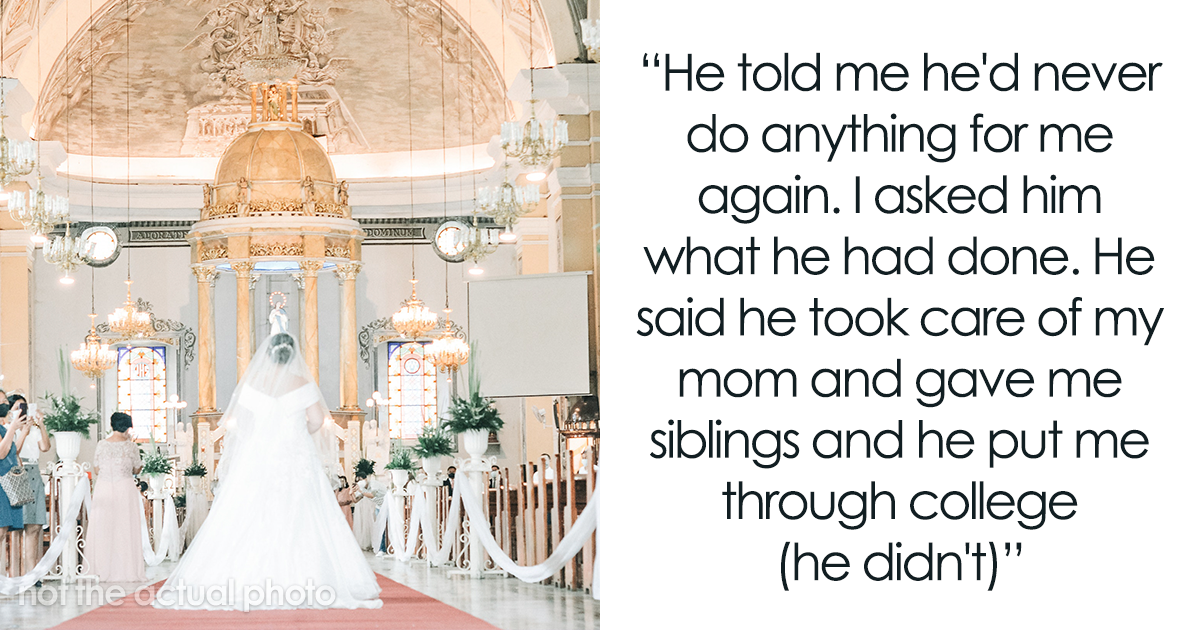

Few wedding traditions carry as much emotional baggage as the walk down the aisle. On paper, it looks simple: one person escorts the bride, everyone smiles, violins do their thing, and nobody trips over a flower arrangement. In real life, however, this short walk can turn into a family summit, a loyalty test, and occasionally a dramatic episode worthy of its own streaming series.
The story behind the title “Mom Gets Mad Over Daughter’s Refusal To Let Stepdad Walk Her Down The Aisle” touches a very familiar nerve. A bride-to-be wanted her uncle, the brother of her late biological father, to walk her down the aisle. Her mother and stepfather expected the stepfather to receive that honor. When the bride said no, emotions flared. The mother saw rejection. The stepfather felt overlooked. The bride felt pressured on a day that was supposed to reflect her own heart.
At the center of the conflict is a question many modern families face: Who gets to stand in a symbolic role when family history is complicated? The answer sounds simple, but families have a special talent for turning simple answers into group projects with tears.
Why the Aisle Walk Still Matters So Much
The tradition of a father walking his daughter down the aisle has old roots, and not all of them are romantic. Historically, the act was tied to ideas of a daughter moving from one household to another. Modern couples often reinterpret it as a gesture of love, support, blessing, or emotional transition. For many brides, it is not about being “given away” at all. It is about choosing someone who helped them feel safe, supported, and seen.
That is exactly why the role can become so sensitive. It is not just a seating chart decision. It is not the same as choosing between buttercream and fondant. The person walking beside the bride becomes part of a memory, a photo, and a public statement. That person’s presence can say, “This is who stood by me.” When a family member assumes they are entitled to that role, they may be forgetting the most important detail: symbolism only works when it feels true.
The Bride’s Choice Was About Relationship, Not Revenge
In the viral story, the bride did not describe her stepfather as a villain. That detail matters. She was not rejecting him because he had been cruel or because she wanted to cause a scene. She simply did not have the kind of father-daughter bond with him that would make the aisle walk feel meaningful. He entered her life when she was older, and she spent much of her time with other relatives. Her uncle, connected to her late father and deeply important to her, represented a more personal choice.
That is a crucial distinction. Saying “I want my uncle to walk me” is not the same as saying “I hate my stepdad.” Families often confuse preference with punishment. A wedding decision can be deeply personal without being an attack. Unfortunately, when people feel insecure about their place in a family, they may hear a boundary as an insult.
Why Mom May Have Reacted So Strongly
The mother’s anger may have come from several emotional places. She may have wanted her new family to feel officially recognized. She may have believed her husband deserved public appreciation. She may have felt embarrassed that guests would wonder why the stepfather was not escorting the bride. Or she may have interpreted the bride’s decision as a rejection of the life she built after loss.
None of those feelings are unusual, but feelings do not automatically become rights. A mother can feel disappointed and still respect her daughter’s choice. She can support her husband emotionally without turning her daughter’s ceremony into a repayment plan. A wedding is not the right place to collect emotional invoices.
The Problem With “After All He Did For You”
One of the most uncomfortable parts of stories like this is the phrase “after all he did for you.” It suggests that love, care, or basic family support should be repaid with symbolic honors. That can make a relationship feel transactional. Stepparents can absolutely become beloved parent figures, and many do. But the bond has to grow naturally. It cannot be demanded like a receipt at customer service.
If a stepfather truly wants to be honored, the most powerful response is humility. A loving answer might sound like, “I understand. I would have been honored, but I want your day to feel right for you.” That kind of response often builds more closeness than pressure ever could.
Modern Wedding Etiquette Gives Couples More Freedom
Today, couples are no longer locked into one version of ceremony etiquette. A bride may walk with her father, mother, stepfather, grandfather, brother, sister, uncle, best friend, child, both parents, or no one at all. Some couples walk in together. Some walk alone as a statement of independence. Some skip the aisle entirely and begin the ceremony already standing together.
This flexibility is especially important for blended families. A traditional script often assumes one mother, one father, one straightforward childhood, and zero awkward Thanksgiving history. Real families are more layered. Some people were raised by grandparents. Some lost a parent young. Some have stepparents who became true parents. Some have stepparents who remained cordial adults in the house. The ceremony should reflect the real relationship, not a template.
What the Stepdad’s Reaction Reveals
The stepfather’s disappointment is understandable. If he hoped to walk the bride down the aisle, hearing no may have hurt. But the reaction after the no is what reveals the health of the relationship. A mature stepparent understands that love is not measured by public recognition. A less mature one may treat the bride’s decision as betrayal.
Stepparenting is complicated because the title can arrive before the bond. A person may become “stepdad” legally or socially, but the emotional role develops through time, trust, patience, and respect. Especially when a stepparent enters a child’s life during the teenage years, the relationship may never feel the same as a parent-child bond formed in early childhood. That does not make the relationship worthless. It just makes it different.
The Late Father’s Place in the Wedding
In this story, the bride’s biological father had passed away. Her choice of uncle was not random; it preserved a connection to her father’s side of the family. For someone grieving a parent, major milestones can bring old loss back to the surface. A wedding can be joyful and painful at the same time. The empty chair, the missing dance, the absent voice saying “I’m proud of you” can all be felt sharply.
By choosing her uncle, the bride may have been honoring both her relationship with him and her connection to her father. That is not a rejection of the stepfather. It is a way of carrying memory into the ceremony. Families should be careful not to compete with the dead. Nobody wins that contest, and the cake usually suffers from the tension.
Healthy Ways To Include a Stepparent Without Forcing the Aisle Walk
If the bride does not want her stepfather to walk her down the aisle, that does not mean he must be invisible. There are many meaningful ways to include a stepparent without giving him the exact role he wanted.
- A special boutonniere: A small visual honor can show he is part of the family circle.
- A reserved front-row seat: Placement can communicate respect without rewriting the bride’s emotional history.
- A reception toast: If the relationship is warm enough, he may share a brief blessing.
- A private first look: Some brides choose a quiet moment with a parent or stepparent before the ceremony.
- A family dance: Not every dance has to be the traditional father-daughter dance.
- Processional participation: He could escort the bride’s mother or another relative to their seat.
The key is consent. An alternate role should not be used as a consolation prize with guilt attached. It should feel sincere, comfortable, and appropriate to the relationship.
How Brides Can Handle Family Pressure
When wedding pressure starts building, brides may feel tempted to over-explain. That often backfires. The more you argue, the more other people treat your choice as negotiable. A calm boundary works better.
For example, the bride could say, “I care about you, and I respect the role you have had in my life. I have decided that Uncle Mark will walk me down the aisle because that feels most meaningful to me. I’m not discussing changes to that decision, but I would like to include you in another way if you are comfortable.”
This kind of statement does three things. It acknowledges feelings, states the decision clearly, and offers a respectful alternative. It does not apologize for having a preference. It also avoids turning the wedding into a courtroom drama where everyone submits evidence of who loved whom more.
What Parents and Stepparents Should Remember
Parents and stepparents often want weddings to validate the family. That desire is human. But a wedding is not a performance review for parenting. The couple’s choices may reflect many factors: grief, closeness, comfort, tradition, faith, personality, and the kind of ceremony they want to create.
The best thing a parent can do is support the couple’s emotional reality. If a daughter says, “This is what feels right to me,” the healthiest response is not, “But what about me?” It is, “I love you, and I want your day to feel like yours.” That sentence may not make the family group chat more exciting, but it will probably make the relationship stronger.
The Bigger Lesson: Titles Do Not Replace Trust
This story became popular because it reflects a common truth: family titles can be complicated. “Mom,” “dad,” “stepdad,” “uncle,” and “father figure” are not interchangeable labels. Each one carries its own history. A stepfather may be a true dad in one family and a respectful relative in another. An uncle may be more emotionally present than a parent. A grandparent may be the person who actually raised the child.
The bride’s decision does not erase the stepfather’s existence. It simply names the relationship honestly. And honesty is far better than a forced photo where everyone is smiling like they just heard the photographer say, “Pretend this isn’t awkward.”
Experiences Related to This Topic
Many people who have planned weddings in blended families describe the same emotional pattern: the ceremony becomes a mirror. It reflects who showed up, who stayed distant, who made sacrifices, who offered comfort, and who expects recognition. That mirror can be beautiful, but it can also be brutally honest.
One bride might choose her stepfather because he packed school lunches, attended every soccer game, fixed her first car, and was the person she called when life fell apart. In that case, the aisle walk feels natural. Another bride might choose her biological father even if he was imperfect because the relationship still matters deeply. Another may walk with her mother because her mother carried the family through years of hardship. Another may walk alone because she wants to enter marriage as her own person, not as someone being transferred from one guardian to another.
In families where a parent has died, the choice can be even more emotional. A bride may ask her late father’s brother, her grandfather, or even her sibling to escort her. That choice can feel like bringing a piece of the missing parent into the room. Guests may see only a walk. The bride may feel years of memory in every step.
Stepparents who handle these moments gracefully often become more respected over time. The most beloved stepfamily stories usually involve patience. A stepdad who says, “I’m here in whatever way you want me to be,” may not get the aisle walk, but he may get something better: trust. A stepmom who does not force the title of “mother” may eventually become the person a stepchild calls during a crisis. Real bonds rarely grow well under pressure. They grow through consistency.
On the other hand, when adults demand ceremonial roles, they can damage the very closeness they want to prove. A bride who once felt warmly neutral toward a stepfather may begin to feel resentment if he turns her wedding into a test. A mother who pressures her daughter may unintentionally communicate that her husband’s feelings matter more than her daughter’s comfort. That is a painful message to receive during wedding planning, a season already filled with budgets, guest lists, dress fittings, and at least one relative who thinks the buffet needs “more personality.”
The best experiences come from open conversations held early. Couples can say, “Here is what we are planning, and here is why it matters to us.” Parents can say, “I had hoped for something different, but I respect your decision.” Stepparents can ask, “Is there a way you would like me to be involved?” These sentences do not erase disappointment, but they prevent disappointment from becoming control.
At its heart, the aisle walk is not about rewarding the adult with the strongest opinion. It is about supporting the person getting married. If a bride wants her uncle beside her, that choice deserves respect. If she wants her stepfather, wonderful. If she wants both parents, her dog, or nobody at all, the same rule applies: the walk should match the life she actually lived and the love she actually feels.
That is why the daughter in this story has a strong case. She did not try to humiliate her stepfather. She made a meaningful decision about her own wedding. Her mother’s anger may be understandable on an emotional level, but it should not override the bride’s autonomy. Weddings are full of traditions, but the healthiest tradition is still simple: honor love without forcing people to pretend.
Conclusion
The conflict over whether a stepdad should walk a bride down the aisle is not really about a few steps on a wedding runner. It is about grief, loyalty, blended-family expectations, emotional boundaries, and the difference between being assigned a title and earning a place in someone’s heart. In this story, the bride’s choice of her uncle was deeply personal and connected to her late father. Her mother and stepfather may have felt hurt, but hurt feelings do not automatically make the bride wrong.
Modern wedding etiquette gives couples room to create ceremonies that reflect their real relationships. That freedom matters. A wedding should not become a stage where adults compete for symbolic proof of importance. It should be a celebration where the couple feels supported, respected, and emotionally safe. The aisle belongs to the person walking it. Everyone else is invited to love them well enough to let that be true.