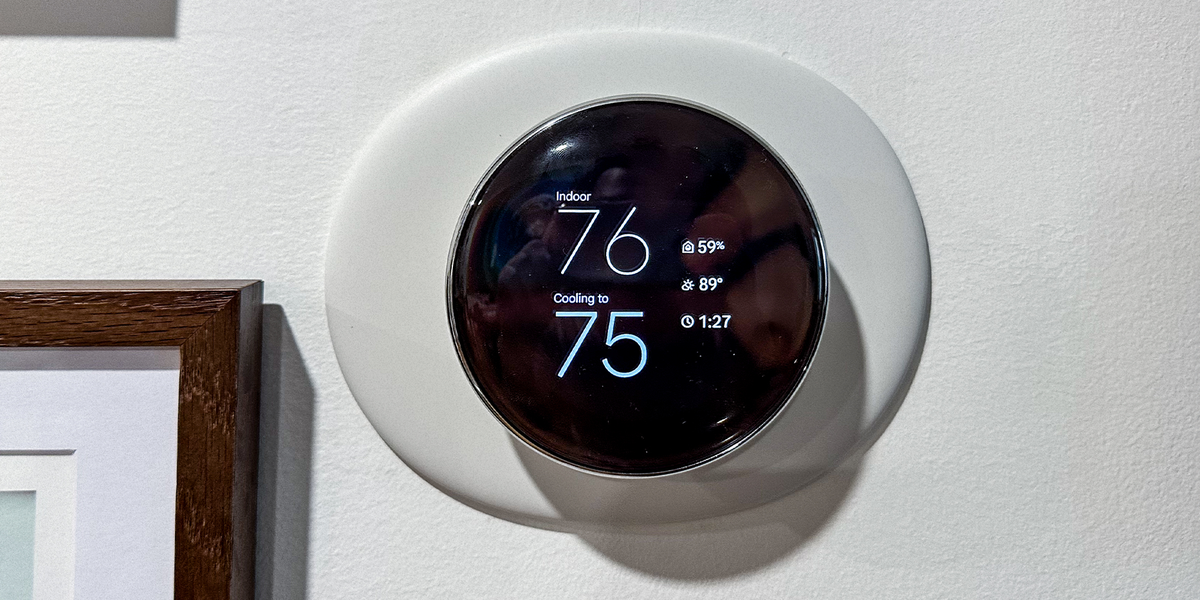

Let’s clear the air before we start heating it: when most people say “Google Nest 4,” they’re usually talking about the Google Nest Learning Thermostat (4th gen). And honestly, that makes sense. “Nest Learning Thermostat (4th gen)” sounds like a product name written by a committee, while “Google Nest 4” sounds like something a normal human would say while standing in a hallway, squinting at a thermostat, and wondering why their living room feels like a Florida parking lot in July.
Names aside, this is Google’s most polished Nest thermostat in years. It looks better, feels smarter, supports more HVAC setups, includes a temperature sensor in the box, and finally behaves like a device built for a modern smart home instead of a very fancy round wall ornament with commitment issues. It is also expensive enough to make you whisper, “That thing better do taxes too.”
So, is the so-called Google Nest 4 actually worth it? After looking at the latest official specs, retailer details, and review coverage across the smart home world, the answer is pretty simple: yes, for the right home. This is one of the best-looking and most capable smart thermostats you can buy today, but it’s not the automatic slam dunk it might appear to be in glossy promo shots. If your HVAC system is compatible, your budget is healthy, and you want your smart home to feel meaningfully smarter, this thermostat delivers. If you just want to stop touching the old beige box on the wall, there are cheaper ways to achieve that dream.
First Impressions: Finally, a Thermostat with Main Character Energy
The first thing people notice about the Nest Learning Thermostat (4th gen) is not the software. It’s the design. Google gave this generation a more refined, more premium look, with a larger borderless display and a sleeker physical presence that feels more like modern home tech and less like an appliance you apologize for during dinner parties. Previous Nest models looked good for thermostats. This one looks good, period.
That matters more than some people admit. Thermostats live in visible places: hallways, entryways, kitchens, living room walls. Unlike routers, they don’t get to hide behind furniture like ashamed goblins. The Nest 4 is clearly designed to be seen. It looks intentional, and in a smart home full of plastic boxes and anonymous sensors, that alone gives it an edge.
The display upgrades are not just cosmetic, either. The bigger screen makes it easier to read temperature, time, weather, and status information from across the room. The interface feels more informative without becoming cluttered. It still has the simple Nest philosophy at its core, but it now feels more confident about showing useful information instead of playing hard to get.
Setup and Installation: Surprisingly Civilized
One of the biggest reasons Nest remains popular is that installation is not a horror movie for most homeowners. The fourth-generation model continues that tradition. Google routes setup through the Google Home app, which walks users through compatibility checks, installation steps, and configuration. That’s great news for people who enjoy smart devices but do not enjoy staring at thermostat wires like they’re trying to defuse a bomb in a low-budget action film.
For many homes, installation should be manageable as a DIY project. The Nest 4 works with most 24V systems, including common gas, electric, oil, forced-air, heat pump, and radiant setups. It also supports more advanced equipment than older models, including more heating and cooling stages, plus humidifier, dehumidifier, and ventilation control. That added compatibility is a quiet but important upgrade because it makes the thermostat more viable for homes with more sophisticated HVAC systems.
Google also says the thermostat does not require a C wire in most homes, which is a major selling point. Still, that should not be interpreted as “C wires are for cowards.” If your system is fussy, older, or prone to power-related hiccups, a C wire or Nest Power Connector can make the whole experience more stable. In plain English: yes, you can often install it without one, but the most reliable setup is still the one that gives your thermostat proper power instead of crossing its fingers and hoping for the best.
Smart Features: Where the Nest 4 Actually Earns Its Ego
Plenty of smart thermostats let you change the temperature from your phone. That’s useful, sure, but it’s also table stakes now. The real question is whether a thermostat can reduce fiddling, improve comfort, and save energy without becoming another needy gadget demanding constant attention. That’s where Google’s latest Nest does its best work.
Smart Schedule and Learning Behavior
The signature Nest feature is still its learning behavior. Over time, the thermostat builds a schedule around how you adjust the temperature and when you tend to be home, asleep, or away. The latest version improves on that idea with a more transparent and polished approach to Smart Schedule. Instead of acting like a secretive robot butler making unilateral climate decisions in the shadows, the newer model makes its changes easier to understand through the app and on-device prompts.
That sounds small, but it solves one of the classic smart thermostat frustrations: “Why did this thing do that?” Smart homes are at their best when they feel helpful, not mysterious. The Nest 4 feels closer to helpful.
Adaptive Eco and Energy Awareness
Like other Nest models, this one uses occupancy-related intelligence to shift into energy-saving temperatures when you leave. That feature is still one of the biggest reasons to buy a Nest at all. You save energy not because you suddenly became a more disciplined person, but because the thermostat quietly compensates for the fact that humans are forgetful little creatures who leave the house with the AC still blasting.
That energy-saving angle is not just marketing fluff. ENERGY STAR notes that certified smart thermostats can save the average household around 8% on heating and cooling bills, or about $50 per year, though real savings depend heavily on climate, home efficiency, HVAC equipment, and how chaotic your family’s schedule is. In other words, the Nest 4 can help, but it is not wizardry. If your house leaks conditioned air like a colander leaks pasta water, start with insulation.
Temperature Sensor Included
One of the smartest changes is that Google includes a Nest Temperature Sensor in the box. This is not just a nice freebie tossed in so the packaging feels more luxurious. It solves a real comfort problem. Many homes have one thermostat in a hallway that doesn’t reflect how the bedroom, nursery, upstairs office, or sun-blasted living room actually feels. With the sensor, the system can prioritize the temperature in the room that matters most at a given time.
That makes the Nest 4 feel less like a wall thermostat and more like a basic comfort-management system. If your bedroom always feels warmer than the hallway, or your office turns into a toaster oven by 2 p.m., the sensor is the feature that turns the thermostat from “pretty good” into “oh, now we’re getting somewhere.”
Matter Support and Smart Home Integration
This is where the “bringing your home into the 21st century” part actually becomes more than headline decoration. The Nest Learning Thermostat (4th gen) adds Matter support, which is important because smart home buyers are tired of living in ecosystem feudalism. Nobody wants one device that only speaks Google, another that only speaks Apple, and a third that only responds under a full moon.
Matter support makes the Nest 4 more flexible in mixed-platform homes and helps future-proof it better than older Nest generations. It still fits most naturally inside the Google Home ecosystem, of course. If you already use Google Home routines, speakers, displays, or other Nest gear, the thermostat feels especially well integrated. But Matter makes it less of an island, which is exactly what modern smart home buyers want.
Control through the Google Home app is now central to the experience. That is good news for users who want one app to rule the house, but it may irritate longtime Nest fans who preferred the old Nest-first identity. Google has clearly decided that the future of Nest is as a piece of the broader Google Home platform, not a separate little kingdom. Whether that feels streamlined or vaguely corporate depends on your tolerance for app transitions.
Performance in Everyday Use
In real-world terms, the Nest 4 succeeds because it reduces mental overhead. Once installed, it does not ask you to become a thermostat hobbyist. It learns, nudges, adapts, and largely gets out of the way. That’s the ideal smart home outcome. The best devices don’t constantly remind you that they are smart. They just remove friction from daily life.
The larger display helps at a glance. The dial remains intuitive. The app experience is more mature than it used to be. Notifications and schedule adjustments feel more sensible. It also helps that the fourth-gen model supports more advanced HVAC systems than earlier versions, which means the device can grow with more modern heating and cooling equipment instead of aging out the minute your home gets an upgrade.
Another underrated feature is system monitoring. The thermostat can help surface potential HVAC issues, which adds value beyond comfort alone. No, it is not replacing a technician. But if a thermostat can give you an early clue that your system is behaving strangely before your house becomes a sad climate experiment, that is genuinely useful.
What’s Not So Great
Now for the less glamorous part: the price. At around $279.99 MSRP, the Nest Learning Thermostat (4th gen) is playing in premium territory. That would be easier to swallow if every buyer used every advanced feature, but many won’t. Some people just want remote control, a schedule, and fewer arguments about who touched the thermostat. For those households, a cheaper thermostat may be the more rational choice.
There is also the broader trust issue that hangs over smart home hardware. Google’s track record can make buyers a little twitchy, especially after the company ended support for some earlier Nest thermostat generations. To be fair, long product lifespans in connected home tech are tricky across the industry, not just at Google. Still, spending premium money on a thermostat means buyers are justified in asking how long the smart part will remain smart.
Another caveat is that while the Nest 4 is more flexible than before, it still makes the most sense for users who are reasonably comfortable with the Google Home ecosystem. Matter helps, yes, but the best experience is still clearly designed around Google’s world. If you want total platform neutrality, you may not love that reality.
Who Should Buy the Google Nest 4?
You should seriously consider the Nest 4 if you want a premium smart thermostat, care about design, have a compatible HVAC system, and are willing to pay extra for comfort features that actually change day-to-day life. The included temperature sensor, improved learning tools, cleaner interface, and broader compatibility make it a strong upgrade for people coming from older thermostats, especially older Nest models.
You should probably skip it if you are shopping primarily on price, live in a smaller home where one temperature reading is “good enough,” or just want basic app control and scheduling. In those cases, the standard Nest Thermostat or a competing midrange model may deliver most of the practical value for much less money.
In short, this is the smart thermostat for people who want their thermostat to feel like a thoughtful part of their home, not a grudging concession to adulthood.
Final Verdict: A Premium Upgrade That Mostly Justifies Itself
The Google Nest Learning Thermostat (4th gen) is the clearest sign in years that Google still knows how to make compelling smart home hardware when it decides to show up fully dressed for the occasion. It is elegant, easier to live with, smarter about comfort, and more capable with modern HVAC systems than the models that came before it.
It is not cheap. It is not the best value for every home. And it is not so magical that it can compensate for bad insulation, ancient ductwork, or a family member who treats thermostat settings like performance art. But if you want a thermostat that feels like a meaningful step forward rather than a minor upgrade wrapped in marketing glitter, this one earns the praise.
Bottom line: the so-called Google Nest 4 does a very good job of dragging one of the most boring devices in your house into the modern era. And somehow, against all odds, it makes climate control feel a little glamorous.
Living with It: What the Experience Really Feels Like
What makes the Nest 4 stand out over time is not one flashy feature. It is the gradual sense that your house has become a little less annoying. That may not sound romantic, but in the smart home world, reducing annoyance is practically poetry.
Imagine a weekday morning. You wake up, shuffle toward the kitchen, and the house already feels right. Not “sauna because someone cranked the heat at midnight” right. Not “Arctic research station with throw pillows” right. Just right. That’s the kind of experience people actually want from a smart thermostat. They do not want to admire the settings menu. They want the room to stop picking fights with their body temperature.
The included sensor changes the emotional tone of the product more than you might expect. In many homes, the hallway thermostat has always been the bossiest liar in the building. It says the house is comfortable while the bedroom is too warm and the upstairs office feels like it was designed for bread proofing. With the Nest Temperature Sensor, the system can pay attention to the room that matters right now, and that makes the whole product feel less theoretical and more personal.
There is also something satisfying about the visual experience. The bigger display gives the thermostat an almost ambient quality. It feels less like a control panel and more like part of the room. Visitors notice it. Homeowners check it from across the space. It contributes to the feeling that the home is coordinated instead of patched together from random tech purchases made during late-night sales.
Day to day, the Nest 4 works best when you stop micromanaging it. That sounds obvious, but it is a genuine shift for many people. The old thermostat model was pure command-and-control: you changed it, it obeyed. The Nest approach is more like training a competent assistant. At first, you make adjustments. Then it starts anticipating what you want. Then, if it is working well, you think about it less and less. That is the real luxury here. Not the polished finish. Not the app. Not the fancy branding. The luxury is not having to think about your thermostat every afternoon.
Of course, no smart device is flawless. There will always be homes with weird wiring, rooms with stubborn airflow issues, or users who want more direct manual control than a learning thermostat naturally encourages. But even with those caveats, the lived experience of the Nest 4 feels meaningfully modern. It blends convenience, comfort, and design in a way that makes the product feel like a part of daily life rather than another gadget auditioning for attention.
That is why the Nest 4 is easy to recommend to the right buyer. Not because it transforms your home into a science-fiction movie set. Not because it makes you cool. Thermostats do many things, but they do not fix your social life. It is easy to recommend because it solves real problems in a polished way and makes a basic household task feel smarter, smoother, and just a little more human.