
Ever tried to catch your keys after dropping them, only to watch them bounce away like they have somewhere important to be? That little moment is all about hand-eye coordination. This skill helps you catch balls, type emails, chop vegetables, thread a needle, drive safely, play video games, write neatly, and avoid turning a simple task into a tiny circus act.
Hand-eye coordination is not reserved for athletes, surgeons, gamers, or people who can juggle flaming bowling pins. It is a practical skill that supports everyday independence at every age. The good news is that it can often improve with consistent practice, movement, attention, and the right level of challenge.
This guide explains how hand-eye coordination works, why it sometimes feels rusty, and which exercises and activities can help sharpen your visual-motor skills without making your living room look like an Olympic training center.
What Is Hand-Eye Coordination?
Hand-eye coordination is the ability to use visual information to guide your hand movements accurately and efficiently. Your eyes identify a target, your brain estimates where it is and how it is moving, and your hands respond. It sounds simple, but it is actually a fast-moving conversation between the eyes, brain, nerves, muscles, joints, attention, and body awareness.
For example, when you reach for a coffee mug, your brain must judge the mug’s location, size, distance, and orientation. Then it must guide your hand toward the handle with enough control to avoid knocking over the mug, spilling coffee, or creating a dramatic Monday morning situation.
Hand-eye coordination is closely connected to several other abilities, including:
- Visual tracking, or following a moving object with your eyes
- Depth perception, or judging how far away something is
- Fine motor skills, such as writing, buttoning, drawing, and using utensils
- Reaction time, especially during sports and driving
- Balance and proprioception, which is your awareness of where your body is in space
- Focus, attention, and motor planning
In other words, better hand-eye coordination is not just about catching a baseball. It is about helping your brain and body work together with fewer awkward detours.
Why Hand-Eye Coordination Can Feel Challenging
Coordination changes throughout life. Children develop it gradually through play, drawing, building, throwing, catching, climbing, and trying to put toys into containers that are somehow always too small. Adults may notice changes when they stop practicing certain activities, spend long hours at a desk, recover from an injury, experience vision changes, or simply become less physically active.
Stress, fatigue, dehydration, poor sleep, medication side effects, hand pain, vision problems, and lack of regular movement can also affect precision and reaction time. Aging may bring slower reflexes or reduced dexterity, but that does not mean improvement is off the table. Regular physical activity, coordination practice, balance training, and task-specific exercises can support function and confidence.
For children, coordination develops at different rates. One child may catch a ball easily but struggle with scissors. Another may build elaborate block towers but dislike handwriting. Differences do not automatically mean there is a problem; skill development is rarely a neat straight line. It is more like a toddler drawing with crayons: enthusiastic, colorful, and occasionally headed in the wrong direction.
How to Improve Hand-Eye Coordination
The most useful training principle is simple: practice the skill you want to improve. If you want better ball control, work with balls. If you want steadier hands for crafts, practice drawing, threading, cutting, or building. If you want more confidence in daily activities, use movements that resemble daily activities.
Start Slow and Make the Target Bigger
Do not begin with fast tennis serves, tiny objects, or a three-ball juggling routine unless your goal is to make gravity feel smug. Start with large, slow-moving objects. Balloons, foam balls, beanbags, scarves, and oversized targets give your brain more time to process visual information and plan movement.
As your accuracy improves, gradually increase the challenge by using smaller objects, increasing distance, changing speed, adding movement, or practicing with your non-dominant hand.
Practice Little and Often
Short, regular sessions tend to work better than one heroic workout followed by two weeks of forgetting. Try 10 to 20 minutes of focused coordination practice several times per week. Small doses are easier to maintain, and repetition gives your nervous system opportunities to refine timing, accuracy, and control.
Think of coordination practice as brushing your teeth for your nervous system. It does not need to be glamorous. It just needs to happen often enough that your brain gets the message.
Use Both Hands
Most people have a dominant hand, but using both hands can improve overall control and awareness. Try tossing and catching with your non-dominant hand, brushing your teeth with the opposite hand, stirring with your weaker side, or using a computer mouse with the other hand for a few minutes.
Expect awkwardness at first. Your non-dominant hand may behave like it just woke up from a long nap, but that is part of the training process.
Train Your Eyes, Not Just Your Hands
Good hand-eye coordination depends on useful visual information. Practice looking directly at the target before moving your hand. When catching a ball, watch the ball rather than staring at your hands. When reaching for an object, visually locate it first, then move with purpose.
For sports and fast-moving activities, visual tracking is especially important. Follow the object smoothly with your eyes, notice its speed, and predict where it will be rather than reacting only after it arrives.
Add Balance and Body Awareness
Coordination is not only an arm-and-hand issue. Your trunk, shoulders, hips, and feet provide the stable base that allows your hands to work accurately. Activities that challenge balance, posture, and controlled weight shifting can improve overall movement quality.
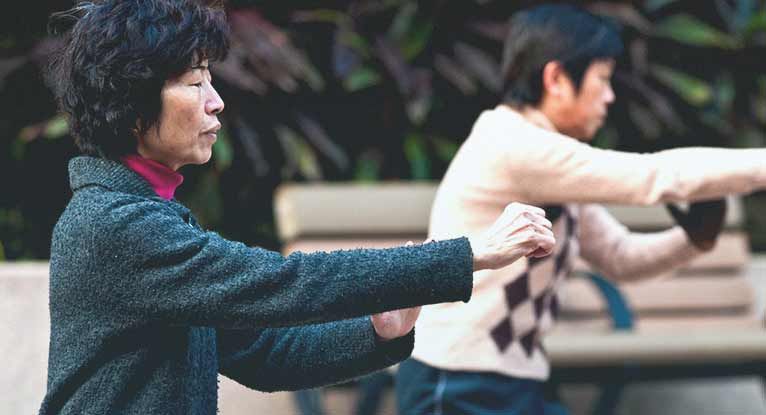
Examples include tai chi, yoga, dancing, standing on one leg near a stable support, stepping patterns, gentle martial arts drills, and controlled reaches while seated or standing.
Best Exercises for Hand-Eye Coordination
1. Balloon Taps
Keep a balloon in the air using one hand, then alternate hands. Because balloons move slowly, they are ideal for beginners, children, older adults, or anyone returning to movement after a break.
To make it harder, try tapping with only your non-dominant hand, walking while keeping the balloon up, or calling out the number of taps as you go.
2. Wall Toss
Stand a few feet from a wall and toss a soft ball against it. Catch the rebound with two hands, then one hand, then alternate hands. You can also mark a target on the wall with tape and aim for it.
This drill builds timing, visual tracking, reaction speed, and catching accuracy. A foam ball is a smart choice if you value both your coordination and your lamps.
3. Beanbag Toss
Set up a basket, bucket, laundry hamper, or target board. Toss beanbags or soft balls from a comfortable distance. Keep score if you enjoy a little friendly competition, but focus on smooth technique rather than launching objects like you are auditioning for a medieval siege crew.
Increase the difficulty by stepping farther back, using a smaller target, changing the throwing hand, or tossing while standing on one foot near support.
4. Catch and Clap
Toss a soft ball upward, clap once, and catch it. Start with a low toss. As your timing improves, clap twice or add a turn before catching.
This exercise trains prediction, rhythm, visual attention, and quick hand movement. It is also a humbling reminder that the ball does not care about your confidence.
5. Juggling Scarves or Balls
Scarves are a beginner-friendly alternative to juggling balls because they fall slowly. Practice tossing one scarf from hand to hand, then progress to two scarves. Once that feels comfortable, consider soft juggling balls.
Juggling challenges timing, eye tracking, bilateral coordination, and attention. It is a more advanced activity, so embrace dropped objects as data, not as personal betrayal.
6. Drawing, Tracing, and Coloring
Fine motor coordination improves through controlled visual tasks. Try tracing shapes, copying simple patterns, coloring inside outlined areas, drawing mazes, connecting dots, or sketching objects from observation.
These exercises are particularly helpful for people who want to improve handwriting, craft skills, painting, design work, or detailed hand control.
7. Building and Assembly Activities
Building blocks, model kits, puzzles, pegboards, magnetic tiles, stacking games, and simple woodworking projects can all train visual-motor integration. These activities require your eyes to judge size and position while your hands manipulate pieces with precision.
Choose an activity that feels enjoyable enough to repeat. The best coordination exercise is often the one you will actually do more than once.
8. Racquet Sports and Table Games
Ping-pong, pickleball, tennis, badminton, and racquetball challenge tracking, timing, and reaction speed. For a lower-impact option, try paddle-ball, tabletop games, card games, dominoes, or magnetic darts.
These activities can be scaled to different skill levels. A large paddle, slower ball, shorter distance, or relaxed pace can make the experience more approachable.
9. Dance and Rhythm Drills
Dancing asks your eyes, ears, brain, and body to cooperate. Learning simple footwork patterns, following a dance video, or practicing rhythmic hand movements can improve timing and whole-body coordination.
Even basic moves count. You do not need to become a ballroom champion. You only need enough space to avoid negotiating with the coffee table.
10. Everyday Skills Practice
Daily activities can become useful training opportunities. Try folding laundry neatly, arranging coins, sorting buttons, preparing vegetables carefully, using chopsticks, gardening, wrapping gifts, or practicing handwriting.
The goal is not to turn every household task into boot camp. It is to notice that ordinary movement can provide meaningful practice when done with attention and control.
A Simple 10-Minute Hand-Eye Coordination Routine
This beginner-friendly routine can be done at home with a balloon, soft ball, wall, and a few household items.
- Balloon taps: Two minutes, alternating hands.
- Wall toss: Two minutes with a soft ball.
- Target toss: Two minutes into a basket or bucket.
- Cross-body reaches: Two minutes, reaching one hand toward the opposite side of the body.
- Fine motor task: Two minutes of tracing, stacking coins, or placing small objects into a container.
Repeat this routine three to five days per week. Once it feels easy, adjust one variable at a time. Move farther from the wall, use a smaller target, increase speed slightly, or add a simple mental challenge such as counting backward while tossing.
Hand-Eye Coordination Tips for Children
Children usually learn coordination best through play. Focus on fun, repetition, and encouragement rather than perfection. Games that include tossing, catching, kicking, stacking, drawing, building, climbing, rolling, and simple obstacle courses can support motor development.
Useful activities include:
- Rolling and catching large balls
- Beanbag games
- Bubble popping
- Play dough and clay activities
- Drawing, coloring, and sticker books
- Building blocks and puzzles
- Simple ball-and-bat games
- Age-appropriate cutting and craft activities with supervision
Keep activities age-appropriate. Young children often benefit from large, lightweight objects and simple instructions. More complex sports skills, fast-moving balls, and advanced rules can come later. Early success builds confidence, and confidence makes practice much more likely.
Hand-Eye Coordination Tips for Adults and Older Adults
Adults can benefit from a mix of fine motor tasks, physical activity, balance work, and recreational games. The most effective plan is one that matches your interests and physical ability.
Consider trying:
- Pickleball, table tennis, or casual catch
- Painting, knitting, sewing, or woodworking
- Tai chi, yoga, or dance classes
- Gardening and potting plants
- Playing an instrument
- Handwriting practice or calligraphy
- Video games that require controlled movement and visual attention
- Balance drills performed near a sturdy chair or counter
For older adults, safety matters more than intensity. Use stable footwear, clear tripping hazards, choose soft objects, and keep a chair or wall nearby for support during balance exercises. Coordination training should leave you feeling challenged, not one wobble away from an unexpected floor inspection.
When to Talk to a Health Professional
Coordination practice can be useful, but sudden or severe changes in coordination should not be ignored. Seek urgent medical care for sudden weakness, facial drooping, speech trouble, severe dizziness, confusion, new vision changes, trouble walking, or sudden loss of coordination. These symptoms can be associated with serious neurological conditions and need prompt evaluation.
For children, consider speaking with a pediatrician, occupational therapist, eye doctor, or physical therapist when coordination difficulties consistently interfere with school tasks, self-care, sports, play, handwriting, dressing, eating, or confidence. A professional evaluation can identify whether vision, motor planning, strength, sensory processing, developmental coordination disorder, injury, or another issue may be involved.
Adults who notice persistent clumsiness, tremors, frequent dropping of objects, worsening balance, hand pain, numbness, or major changes in vision should also discuss symptoms with a qualified clinician. Practice is helpful, but it should not replace medical care when something feels new, unusual, or progressively worse.
Real-World Experiences: What Hand-Eye Coordination Practice Often Feels Like
Improving hand-eye coordination rarely feels dramatic on day one. Most people do not wake up after three balloon taps and suddenly catch a flying tennis ball while making breakfast. Progress is usually quieter. You notice that you spill less while pouring coffee. You catch a falling phone before it hits the floor. You can thread a needle without giving it a motivational speech. These small wins are often the real evidence that practice is working.
A common beginner experience is frustration with timing. Someone may throw a ball toward a wall, watch it bounce back, and realize their hands are somehow still living in the previous moment. This is normal. The eyes often see the object first, but the hands need repetition to learn how quickly to respond. Slowing the task down helps. A larger ball, a shorter distance, or a balloon can turn a discouraging drill into something manageable.
Parents often notice that children improve most when activities feel like games rather than assignments. A child who resists handwriting worksheets may happily spend 20 minutes tossing beanbags into a laundry basket or building an elaborate block tower. The same visual-motor skills are still being used, but the child is focused on play instead of performance. That difference matters. Fun creates repetition, and repetition creates learning.
Adults who return to sports after a long break often describe a similar pattern. The first few pickleball games may involve missed swings, late reactions, and a surprising number of balls traveling in directions nobody predicted. After a few sessions, the eyes begin to track the ball more naturally, the body anticipates movement sooner, and the hands stop feeling like they received the instructions by mail.
Creative activities can also reveal improvement. People who take up drawing, knitting, woodworking, sewing, or gardening often find that their movements become smoother with regular practice. At first, fine details may feel slow and mentally tiring. Over time, the hands begin to move with less conscious effort. This is one reason hobbies can be powerful coordination tools: they combine repetition with enjoyment, attention, and a clear goal.
Older adults may notice progress through everyday independence. Opening jars, sorting medication, using utensils, carrying groceries, navigating stairs, or reaching for objects can feel steadier when strength, balance, vision, and coordination are supported together. The goal is not to become faster than everyone else at the grocery store. It is to feel more secure, capable, and comfortable doing the things that matter.
There can also be plateaus. A person may practice for a week and feel better, then have a day when every toss misses the target. That does not mean the skill disappeared. Sleep, stress, pain, fatigue, hydration, distractions, and mood can all affect coordination. On those days, reduce the difficulty instead of quitting. Use a bigger target, slow the movement, or switch to a calming fine motor activity such as coloring or simple stacking.
The most successful approach is usually flexible. Some days, a focused wall-toss drill feels right. Other days, gardening, dancing, cooking, or playing catch with a child may provide the same kind of useful challenge. Coordination is not built only in formal exercise sessions. It grows through repeated opportunities to look, plan, reach, adjust, and try again.
The biggest lesson from real-world practice is that improvement does not require perfection. Dropped balls, crooked drawings, missed targets, and tangled yarn are not proof that you are bad at coordination. They are proof that you are practicing. Your nervous system learns from the near-misses, the corrections, and the repeated attempts. Keep the task safe, keep it interesting, and keep going.
Final Thoughts
Hand-eye coordination affects far more than sports performance. It supports writing, cooking, driving, hobbies, work tasks, play, mobility, and confidence in daily life. The best way to improve it is not to chase complicated drills or expensive gadgets. It is to practice meaningful movement consistently, progress gradually, and choose activities you genuinely enjoy.
Start with what feels manageable: a balloon, a ball, a pencil, a puzzle, a dance step, or a basket and a few beanbags. Over time, those small sessions can help your eyes, brain, and hands become a more reliable team. They may never stop you from occasionally dropping your keys, but at least you will have a better chance of catching them before they escape under the couch.
SEO Tags