
If you’ve ever watched a phone go from 12% to “good luck out there” in five minutes, you already understand the emotional stakes of energy storage.
Now scale that feeling up to an entire state’s power grid, add heat waves, storms, and a lot of wind power, and you’re basically in South Australia circa 2016–2017.
Enter the project often nicknamed Elon Musk’s Australian battery farma grid-scale battery that responds so fast it makes most power plants look like they’re still tying their shoes.
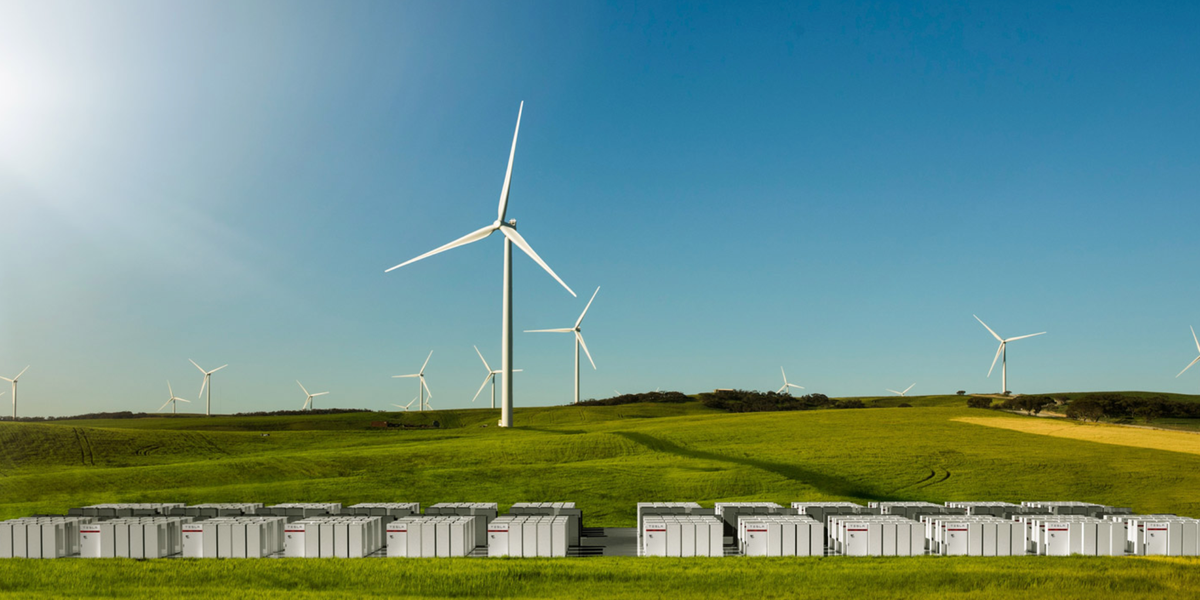
The headline version: Tesla supplied a massive lithium-ion battery system at the Hornsdale Power Reserve (near Jamestown, South Australia),
built with Neoen as the developer/owner. The deeper versionthe one you’re here foris how a “battery farm” can stabilize a grid, lower certain costs,
and even make money without being a traditional power plant.
The backstory: why South Australia wanted a giant battery
South Australia has abundant wind and solar resources, and it moved quickly to build renewables. That’s good news for emissions and fuel costs,
but it changes the grid’s physics and economics. Conventional generators (coal, gas) are big spinning machines that naturally provide “inertia,”
helping keep frequency steady. Wind and solar connect through power electronics, and while they can support the grid, they don’t behave exactly like
giant rotating turbines by default.
After high-profile reliability events and political pressure, the state pursued solutions that could respond instantly to sudden supply-demand mismatches.
That’s where Musk’s famous “100 days or it’s free” promise helped turn a technical procurement into a global spectator sport.
But the real win wasn’t the tweetit was proving that large batteries can deliver serious grid services in the real world.
What the “battery farm” actually is: Hornsdale Power Reserve
Hornsdale Power Reserve is a utility-scale Battery Energy Storage System (BESS) connected to the grid near the Hornsdale Wind Farm.
It first entered operation in late 2017 at 100 MW / 129 MWh and was later expanded to about 150 MW / ~194 MWh.
Translation: it can push up to 150 megawatts onto the grid at once (power), and it can sustain output until its stored energy (megawatt-hours) is used up.
MW vs. MWh (the easiest way to stop mixing them up)
- MW (megawatts) is how fast electricity can be deliveredlike the width of a water pipe.
- MWh (megawatt-hours) is how much total energy is storedlike the size of the water tank.
A battery can be extremely powerful (wide pipe) but not super long-duration (smaller tank). Hornsdale’s “tank” is designed for fast grid support and
market services, not for powering the whole state overnight.
Inside the battery farm: the four big parts that make it work
1) The battery packs (DC energy stored as chemistry)
At the core are lithium-ion battery packsthink industrial-scale versions of what’s in electronics, engineered for power delivery, thermal control,
and predictable performance. These packs store energy as direct current (DC). Because batteries prefer a comfortable temperature range (like humans,
but with fewer opinions), they use thermal managementcooling and monitoring to keep cell temperatures stable and reduce stress.
2) The Battery Management System (BMS) and safety controls
A BMS monitors voltage, temperature, and state of charge at the cell/module level, balancing cells and enforcing safe operating limits.
It also works with protective equipment (breakers, isolation, fault detection) so the system can shut down sections if something goes wrong.
Modern grid batteries are engineered with layered protection because “it’s probably fine” is not a legitimate grid reliability strategy.
3) Inverters and transformers (turning DC into grid-ready AC)
The grid runs on alternating current (AC), so the system needs a Power Conversion System (PCS)high-power inverters that convert DC to AC
and synchronize with grid frequency. Transformers then step voltage up to match the transmission network. This is where a lot of the “magic” lives:
the inverter can change output extremely fast, which is why batteries can respond in milliseconds to stabilize frequency.
4) Control software (how the battery decides what to do every second)
Hardware is only half the story. A battery farm needs real-time control and market bidding logic. Tesla’s energy software (including platforms like
Autobidder) is designed to automate bidding and dispatch decisions in electricity markets while respecting constraints like battery health,
state-of-charge targets, and contractual obligations.
In plain terms: the software helps answer questions like:
“Do we discharge now to help the grid and earn revenue?” “Do we charge because prices are low (or even negative)?” “How much charge should we hold back
in case a frequency event hits?”
What Hornsdale does for the grid (and why it gets paid)
A grid battery isn’t just a big rechargeable box; it’s a multi-tool. Hornsdale participates in services that support reliability and efficiency,
especially in fast-response roles where conventional generators can’t move quickly enough.
Frequency control: the battery’s signature move
Power grids must keep frequency tightly controlled (50 Hz in Australia). If supply suddenly dropssay, a generator tripsfrequency dips.
If demand suddenly falls or generation surges, frequency rises. Either way, large deviations can trigger protective systems and cascading outages.
Hornsdale provides Frequency Control Ancillary Services (FCAS), injecting or absorbing power rapidly to counter these swings.
Batteries shine here because inverters can respond nearly instantlyno fuel valves, no steam pressure ramping, no “give me a minute, I just woke up.”
Energy arbitrage: buy low, sell high (with electrons)
The battery can also charge when electricity is cheap (often when wind output is high or demand is low) and discharge when prices spike.
This is energy arbitragebasically coupon-clipping, but with wholesale electricity prices instead of cereal boxes.
Arbitrage doesn’t just create revenue; it can reduce price volatility and help meet peak demand without firing up additional fossil generators.
In markets around the world, this “shift energy from low-price hours to high-price hours” pattern has become a common battery use case.
Virtual inertia and grid-forming capability: the newer superpower
Traditional grids relied on the physical inertia of spinning turbines to resist sudden frequency changes. As grids add more inverter-based resources,
operators increasingly value technologies that can mimic that stabilizing behavior.
Hornsdale has been involved in advanced modes that emulate aspects of synchronous generatorsoften described as grid-forming behavior
or “virtual inertia.” Instead of merely following the grid, a grid-forming inverter can help set voltage and frequency behavior, contributing
to system strength during disturbances. This is a big deal for high-renewables systems because it helps keep the grid stable even as conventional
spinning generation declines.
A real-world walkthrough: what happens when a generator trips
Let’s make this concrete. A large generator trips offline unexpectedly. The grid instantly has less supply than demand.
Frequency begins to fall. Here’s what a battery farm like Hornsdale can dostep by step:
-
Sensors detect the disturbance.
The battery’s control systems monitor grid frequency and other electrical signals in real time. -
The inverter ramps power output.
Within fractions of a second, the inverters increase active power injection (or reduce charging) to counter the frequency dip. -
Frequency stabilizes faster.
That fast injection buys time for slower resourceslike gas turbines or interconnectorsto respond. -
The battery “hands off” gracefully.
As other resources ramp up, the battery can taper output, preserving state of charge for the next event.
Reports on Hornsdale’s early performance highlight response times measured in fractions of a second after major plant eventsspeed that’s hard for
conventional generators to match because they’re mechanical systems with inertia and ramp limits.
Why it mattered: reliability benefits and cost impacts
Hornsdale’s public story often focuses on “big battery saves the day,” but the wonkier (and arguably more important) story is what happened to
ancillary service costs. When a grid has limited fast-response competition, certain services can become expensive. Add a battery that
can respond instantly and bid competitively, and the market dynamics change.
Project materials and market reporting have credited Hornsdale with substantial consumer benefits tied to FCAS and system security services,
including large reductions in specific FCAS cost categories during key periods. Even if you never think about frequency regulation in your daily life
(which, honestly, good for you), you may still feel it indirectly through reduced system costs and fewer “emergency mode” price spikes.
Limitations and tradeoffs (because physics always sends an invoice)
Duration: a battery isn’t a season-long pantry
Hornsdale is fantastic for fast response and short-duration shifting, but it’s not designed to cover multi-day lulls in wind and solar.
Long-duration energy storage is a different category with different technologies and economics. For many grids, batteries handle seconds-to-hours,
while other tools (transmission, demand response, firm generation, and emerging long-duration storage) handle longer gaps.
Degradation: batteries age, even if you’re nice to them
Cycling and heat gradually reduce battery capacity over time. Smart controls manage depth of discharge, temperature, and charge windows to slow
degradationbecause replacing giant battery modules is not a hobby you want to pick up on weekends.
Safety and siting: it’s industrial infrastructure
Grid batteries require robust safety design, monitoring, and emergency response planning. Modern BESS deployments include detection, isolation,
and operational rules to reduce risk. The goal is simple: keep energy storage boring. Boring is the highest compliment in power engineering.
What the Hornsdale story teaches the rest of the world
The most transferable lesson isn’t “build exactly this battery.” It’s that a battery farm becomes truly valuable when three things line up:
- A grid need (fast frequency support, price smoothing, renewable integration, contingency response).
- A market or contract structure that pays for those services (FCAS, capacity, system security, arbitrage).
- Controls that can deliver performance reliably (fast inverters, proven protection systems, and smart dispatch software).
Hornsdale also helped make “grid-forming” and “virtual inertia” mainstream conversation topics among grid operators, not just PhD dissertations.
As inverter-based resources grow, the grid increasingly depends on advanced inverter controls and well-defined performance requirements.
Experiences: what it’s like to watch a giant battery do its job (without pretending you’re an electrical engineer)
If you drive into South Australia’s Mid North and head toward the Hornsdale area, the landscape feels wide openbig sky, long roads, wind turbines in
the distance. A battery farm doesn’t announce itself with smokestacks or roaring machinery. It’s quieter than you expect, more “industrial campus”
than “power plant.” From the outside, it can look like rows of large equipment enclosures behind security fencingbecause that’s basically what it is:
a tightly managed collection of electronics and energy storage that prefers not to be touched, thanked, or photographed too up close.
The most interesting “experience” isn’t a dramatic visual moment; it’s the absence of drama when the grid gets stressed. That’s the point.
When a conventional generator trips, a normal person doesn’t feel the frequency wobble. They feel it only if it cascades into flickering lights,
dropped loads, or a news alert that begins with “unprecedented.” A grid battery changes that story by reacting before the disturbance becomes
everybody’s problem.
Imagine a hot day when air conditioners are working overtime. Prices rise, the grid runs tighter, and operators watch supply margins like hawks.
A battery in this situation is both a firefighter and a bargain hunter: it can stand by to inject power if something fails, and it can also discharge
strategically when the market value is highprovided it keeps enough charge in reserve to meet reliability obligations. That constant balancing act
is where the software-and-operations layer becomes the real main character.
People often assume the battery is “storing wind for later,” which is partly true, but it understates the operational nuance. In fast frequency support
mode, the battery is less like a pantry and more like a shock absorber. It smooths bumps that happen in seconds. The human experience of that is subtle:
fewer emergency interventions, less reliance on the most expensive last-minute resources, and a grid that can tolerate higher shares of renewables
without feeling fragile.
For energy geeks, the fun moment is reading event reports and seeing response times measured in fractions of a second. For everyone else, the fun moment
is never knowing those fractions of a second matteredbecause the lights stayed on and your phone stayed charged (which, ironically, is still the least
reliable battery in this entire story).
The biggest takeaway from the Hornsdale “experience” isn’t that batteries are a silver bullet. It’s that modern grids are becoming smarter:
software-driven, sensor-rich, and increasingly built around fast, flexible resources that can respond instantly. In that world, a battery farm isn’t
just a backup planit’s a new kind of grid infrastructure that makes the whole system feel calmer, even when the weather and the market are not.