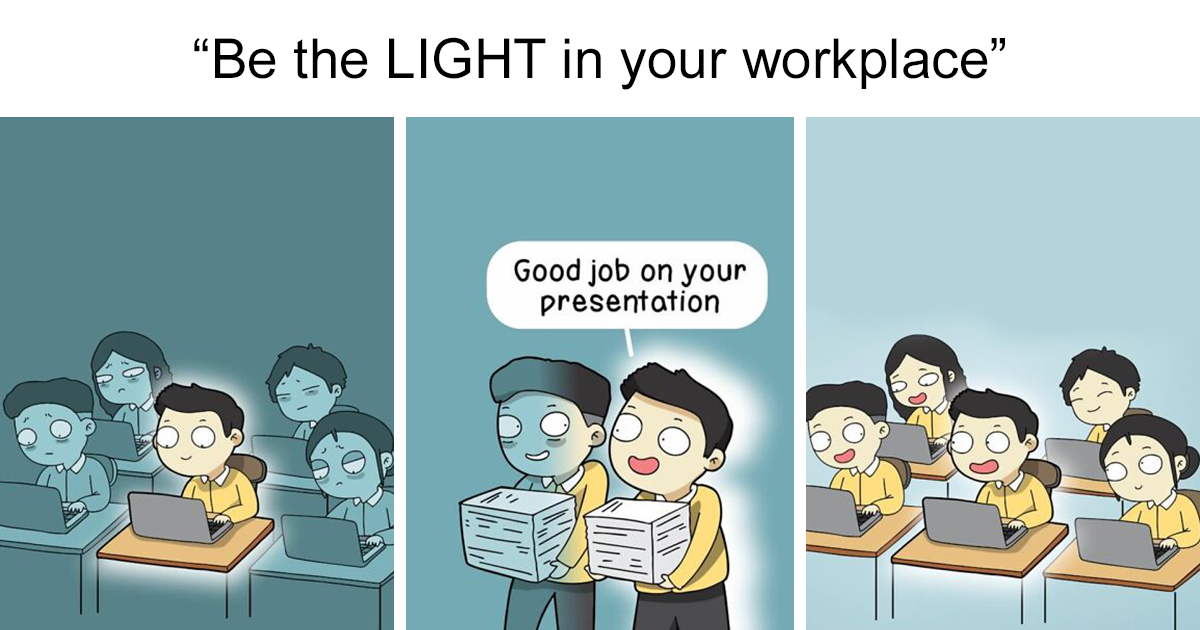

Some people write pep talks. Some people make playlists. And some people somehow manage to squeeze comfort, humor, and a tiny emotional rescue boat into a single comic panel. That is the sweet spot of inspiring comics, and it is exactly why readers keep returning to the work of artist John Euclid Templonuevo, better known online as Arkitekyuklid. His comics do not arrive with a marching band or a neon sign screaming “HEALING JOURNEY.” They show up more like a friend who slides into the seat next to you, shares a relatable thought, and reminds you that being human is messy, exhausting, funny, and still somehow worth it.
The appeal of wholesome comics is easy to underestimate. At first glance, they can look simple, light, even snack-sized. But that is part of their power. In a world built on doomscrolling, attention fragmentation, and inboxes that reproduce like rabbits, a short comic can cut through the noise faster than a long lecture ever could. It delivers an emotion quickly, clearly, and memorably. When an artist pairs humor with self-awareness, the result is not just cute content. It becomes a small, portable form of encouragement.
That is what makes this latest collection of 30 new pictures so appealing. These comics are not trying to be loud. They are trying to be useful. They offer gentle reminders about rest, identity, struggle, perspective, and hope. And honestly, that may be the internet’s best trade in years.
Who Is the Artist Behind These Inspiring Comics?
John Euclid Templonuevo has built a recognizable online voice by creating comics that mix warmth, simplicity, and emotional honesty. His work often reads like a cross between a motivational note, a relatable diary entry, and a cartoon hug. That combination is why his audience keeps growing. People are not just looking at the drawings. They are seeing themselves in them.
What makes his style stand out is the way it avoids unnecessary clutter. The characters are expressive without being fussy. The layouts are easy to follow. The messages are direct, but not robotic. He knows how to land a thought in a way that feels casual rather than preachy. That matters. Readers can smell fake inspiration from three time zones away. If a comic feels like it was assembled in a motivational quote factory, people scroll past. If it feels personal, they stay.
Templonuevo’s comics often pull from everyday experiences: stress, doubt, emotional fatigue, the pressure to keep going, and the need to be reminded that your worth is not tied to constant productivity. These are not exotic themes. They are Tuesday themes. That is exactly why they work. The best uplifting comics do not pretend life is always glowing and cinematic. They say, “Yes, things are weird. Yes, you are tired. Yes, grace still exists.”
His body of work also shows how modern comic artists thrive online. Social platforms have turned webcomics into a daily ritual for millions of readers. Instead of waiting for a newspaper strip or a bookstore release, audiences now discover artists in the middle of a lunch break, during a stressful commute, or while hiding from responsibility under a blanket. It is not glamorous, but it is real. And real is where memorable art tends to win.
Why Uplifting Comics Work So Well
There is a reason inspiring comics travel so quickly across social media. They fit the way people consume emotion online. A long article may offer depth, but a comic offers speed plus feeling. It can create a tiny emotional shift in seconds. That matters more than it sounds. A small lift in mood can change how you think, respond, and relate to other people for the rest of the day.
Researchers and educators who study humor, positive emotion, and visual storytelling have long pointed to the value of comics and laughter in helping people cope, connect, and process experience. Art and humor do not replace therapy, medical care, or serious support systems. But they can make difficult feelings feel more nameable. They can create distance from stress. They can offer relief without demanding that readers ignore reality. That is a big difference.
Inspiring comics also succeed because they are emotionally efficient. That sounds a bit mechanical, but stay with me. A strong comic combines image, pacing, and language in one compact package. Instead of telling readers what to feel, it lets them arrive there on their own. One expression, one visual metaphor, one punchline, one turn in perspective, and suddenly the message lands harder than a thousand fluffy captions ever could.
They Make Big Feelings Feel Smaller
Stress has a nasty habit of making everything feel oversized. A mistake becomes a catastrophe. A delay becomes a life failure. An awkward conversation becomes a personal documentary called Why I Should Never Speak Again. Inspiring comics shrink that emotional inflation. They frame a feeling, add a bit of humor or tenderness, and remind readers that they are not the only ones spiraling over a minor inconvenience or carrying invisible weight.
They Turn Self-Compassion Into Something Visual
Many people struggle to talk kindly to themselves. Yet the same people will instantly understand a cartoon character who needs rest, reassurance, or a reality check. That is the secret sauce. When self-compassion is externalized through a character, it becomes easier to accept. The message slips past resistance. You are not being lectured. You are recognizing a truth in a drawing.
They Are Easy to Share Without Feeling Heavy
Sometimes you want to tell a friend, “Hey, I see you. Please drink water, unclench your jaw, and remember that your entire identity is not your to-do list.” But texting that can feel oddly intense. Sending a wholesome comic? Much easier. Feel-good comics become a kind of emotional shorthand. They let people care for one another without turning every exchange into a formal intervention.
What These 30 New Pics Likely Offer Readers
If you have followed this artist’s work before, you already know the pattern in the best possible way. The new comics are likely to revolve around familiar emotional territory, but with fresh phrasing, new visual setups, and the same gentle intention. That is not repetition. That is consistency. Readers return to uplifting webcomics for the same reason they return to favorite songs or comfort food: not because they need constant surprise, but because they want reliable resonance.
Here are the kinds of themes that make collections like this so effective:
1. Rest Without Guilt
One of the most common messages in wholesome comics today is that rest is not laziness. In an always-on culture, that reminder hits hard. People are tired of being treated like unfinished productivity appliances. Comics that normalize slowing down feel rebellious in the nicest possible way.
2. Humor About Everyday Struggle
Good uplifting comics do not avoid struggle. They reframe it. Work stress, overthinking, insecurity, disappointment, and burnout all become more bearable when an artist captures them with honesty and a wink. A comic can say, “Yes, this is hard,” and still leave room for a smile.
3. Encouragement Without Corniness
This is harder than it looks. Plenty of content wants to inspire. Very little does it without sounding like it was generated by a coffee mug. The strongest comics keep their messages specific, visual, and emotionally grounded. They earn their optimism instead of spraying it around like glitter at a craft fair.
4. Hope That Feels Personal
Readers can tell when an artist means what they make. That sincerity gives positive comics their staying power. Hope lands differently when it feels lived-in rather than mass-produced. The message is not, “Everything is perfect.” It is, “You can keep going. There is still meaning here.”
The Internet’s Ongoing Love Affair With Wholesome Comics
It is not an accident that feel-good comics perform so well online. Digital life is emotionally chaotic. Every feed is a buffet of outrage, bad news, hot takes, flexing, comparison, and videos of people renovating kitchens they clearly financed with moon dust. Against that backdrop, wholesome comics function like a visual exhale.
They also satisfy a very modern craving: emotional clarity. The internet gives people more information than ever, but not always more understanding. Inspiring comics succeed because they simplify without becoming shallow. They distill an experience to its emotional core. That makes people stop scrolling, because clarity is rare and relief is even rarer.
There is also a community factor. Comics are highly shareable, and shared laughter or shared recognition tends to build connection. Readers tag friends, repost favorites, and save panels for bad days. Over time, a comic artist is not just posting content. They are building a library of emotional bookmarks. That kind of relationship with an audience is powerful.
And let’s be honest: the format is friendly. A comic does not ask for much. It does not require a 45-minute commitment or a graduate seminar in symbolism. It meets readers where they are. On rough days, accessible art wins.
What Other Creators Can Learn From This Artist
There is a practical lesson here for artists, bloggers, marketers, and anyone else trying to make content people actually remember. The lesson is not “be more positive” in some vague, glittery sense. The lesson is to be more human.
Templonuevo’s work shows that audiences respond to content that is emotionally legible. People want honesty, not polish for its own sake. They want voice, not empty branding. They want something that feels crafted by a person with a point of view, not processed by a machine that read a list called “10 Ways to Go Viral Before Lunch.”
His comics also show the value of restraint. The images are not overloaded. The ideas are not buried under jargon. The emotional target is clear. That is smart creative discipline. In the best inspiring comics, every choice serves the message. Nothing is there just to show off.
For writers especially, this is a useful reminder. If a four-panel comic can communicate comfort, perspective, and humor in under a minute, then the real challenge is not saying more. It is saying the right thing with clarity and heart.
Why This Kind of Comic Matters More Than It Seems
It is easy to dismiss uplifting comics as soft content. Cute. Pleasant. Disposable. But that misses the point. Small emotional interventions matter. A comic that makes someone feel seen for 20 seconds may not change the whole week, but it can absolutely change the next decision, the next mood, or the way someone talks to themselves for the next hour. That is not trivial. That is impact on a human scale.
Comics also carry a special kind of empathy. Because they merge words and images, they can show inner life in a uniquely accessible way. They let readers feel a thought, not just read about it. That makes them especially good at translating emotional experiences into something others can understand quickly and remember later.
In that sense, this collection of 30 new pictures is more than a roundup of nice drawings. It is part of a much bigger tradition of cartooning that helps people laugh, reflect, and reconnect. Sometimes that happens through satire. Sometimes through absurdity. And sometimes through gentle reminders that being overwhelmed does not make you broken. It makes you human, and humans, as it turns out, occasionally need a comic strip and a snack.
Experiences That Show Why Inspiring Comics Really Do Brighten a Day
There is something oddly specific about the moment a wholesome comic finds you at exactly the right time. Maybe it appears when your brain is overheating from work, when your coffee has gone cold for the third straight hour, and when your internal monologue has become a full-time critic with no union contract. Then you scroll past a comic that says, in one way or another, “Take a breath. You are allowed to be tired. You are still worthy.” And suddenly the day does not feel fixed, but it does feel softer.
That is the real experience behind inspiring comics. They do not swoop in like superheroes and solve rent, deadlines, traffic, or family drama. They do something smaller and sometimes more useful: they interrupt the spiral. They break the momentum of stress. They create a pause long enough for perspective to sneak back in.
For a lot of readers, these comics become part of daily routine. They are read in line at the grocery store, between meetings, before bed, or during those five stolen minutes when the world is loud and the phone is somehow both the problem and the solution. Over time, a collection of uplifting comics starts to feel less like entertainment and more like a tiny emotional toolkit. One comic reminds you to rest. Another reminds you not to compare your timeline to someone else’s highlight reel. Another makes you laugh at your own overthinking, which is often the first crack in a wall of tension.
There is also a social side to the experience. People send these comics to friends going through hard weeks, to siblings who need encouragement, to partners who need a smile, or to coworkers hanging on by a thread and a granola bar. That sharing matters. Sometimes we do not know how to talk about emotions directly. A comic gives us a way in. It says, “I saw this and thought of you,” which can mean, “I care about you,” without making the moment feel too heavy.
And then there is the longer effect. A single comic may be quick, but the emotional residue can stick around. A joke can reduce tension. A kind line can reshape self-talk. A visual metaphor can stay in your head all day and quietly change the way you frame a problem. That is why artists who make positive comics build loyal audiences. Readers are not just consuming content. They are collecting reminders. They are building a folder, literal or mental, of things that help them feel steadier, kinder, and less alone.
So yes, 30 new pics might sound like a simple internet feature. But in practice, it can feel like 30 small chances to reset your mood, laugh at the nonsense, and remember that even on a chaotic day, something gentle can still reach you. That is not a bad deal for a few drawings and a little truth.
Conclusion
John Euclid Templonuevo’s comics work because they understand something basic but important: people do not always need bigger messages, louder content, or more complicated advice. Sometimes they just need a clear image, a relatable thought, and a reminder that hope does not have to be dramatic to be real. These inspiring comics brighten the day not by pretending life is perfect, but by making life feel a little more manageable, a little more shared, and a little less heavy.
That is why collections like this keep finding an audience. They are funny without being cynical, thoughtful without becoming heavy-handed, and encouraging without losing personality. In other words, they do what the best wholesome comics have always done: they help people breathe a little easier. On the internet, that may be one of the most useful art forms around.