
Editorial note: This article is written as an original, publication-ready cost guide based on current U.S. home improvement pricing, water treatment standards, and practical homeowner experience. It does not copy Bob Vila or any other source; it uses real market information and rewrites it in a fresh, helpful style.
Clean water is one of those home upgrades that sounds simple until you start shopping. Suddenly, you are staring at terms like activated carbon, reverse osmosis, UV purification, sediment filters, NSF certification, point-of-entry, point-of-use, and “multi-stage whole-house solution.” At that point, a glass of tap water begins to feel like it needs a college degree.
So, how much does a home water filtration system cost? In the United States, most homeowners spend anywhere from about $150 for a basic under-sink or countertop setup to $1,500 to $10,000 for a whole-house water filtration system, depending on the system type, water quality problems, home size, labor, plumbing complexity, and ongoing filter replacement needs.
The short answer: a simple drinking-water filter is affordable; a full-home system is a serious home improvement project. The smarter answer: the “right” cost depends less on fancy equipment and more on what is actually in your water. Buying a giant system without testing your water first is like buying snow tires in Miamitechnically possible, emotionally dramatic, and probably unnecessary.
Average Home Water Filtration System Cost
A home water filtration system can cost as little as the price of a nice dinner or as much as a used car that still has cup holders. The wide price range exists because “water filtration system” can mean several different things.
Typical Cost Ranges by System Type
| System Type | Typical Cost Range | Best For |
|---|---|---|
| Pitcher or dispenser filter | $20 to $100 | Basic taste and odor improvement |
| Faucet-mounted filter | $40 to $150 | Renters and small kitchens |
| Countertop filter | $100 to $400 | No-plumbing drinking water filtration |
| Under-sink carbon filter | $150 to $600 | Kitchen drinking and cooking water |
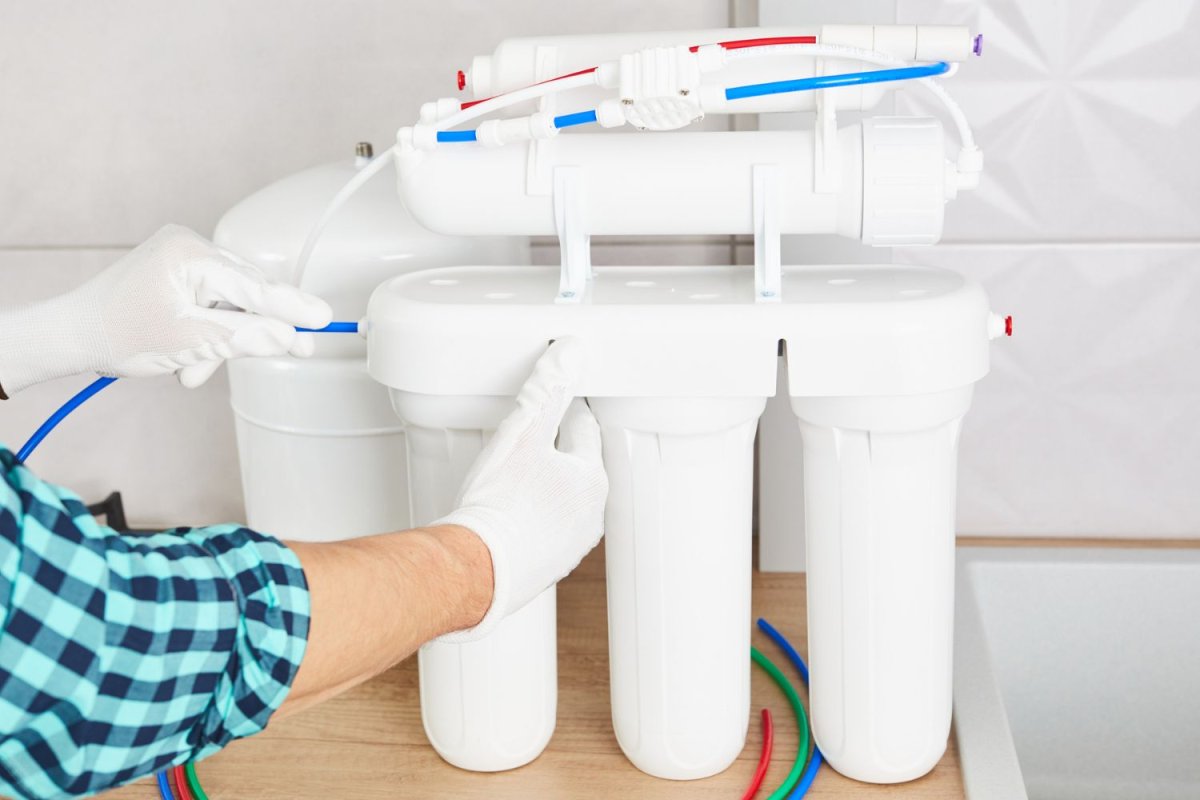
| Under-sink reverse osmosis system | $300 to $2,500 | More advanced contaminant reduction |
| Whole-house carbon or sediment system | $850 to $5,400 installed | Filtering water throughout the home |
| Whole-house reverse osmosis system | $4,000 to $10,000 or more | Serious water quality issues, often well water |
| Water softener | $700 to $3,000 | Hard water, scale, appliance protection |
| UV purification system | $500 to $2,000 | Bacteria and microorganism control |
For many homes, a practical setup lands somewhere between $500 and $3,500. That might include an under-sink reverse osmosis system for drinking water, a whole-house sediment filter for visible particles, or a carbon filtration system to reduce chlorine taste and odor. Homes with private wells, old plumbing, iron staining, sulfur smells, hard water, or bacterial concerns can spend more because the solution usually requires multiple treatment stages.
Point-of-Use vs. Whole-House Filtration
The first big decision is whether you need to filter water at one location or throughout the entire home.
Point-of-Use Systems
A point-of-use water filter treats water at a specific spot, usually the kitchen sink. These include faucet filters, countertop systems, under-sink carbon filters, and under-sink reverse osmosis units. They are popular because they cost less, take up less space, and focus on the water you actually drink and cook with.
If your main complaint is “my tap water tastes like a swimming pool had a midlife crisis,” a carbon filter may be enough. If you are concerned about lead, PFAS, arsenic, nitrates, or dissolved solids, a certified reverse osmosis system may make more sense.
Whole-House Systems
A whole-house water filtration system, also called a point-of-entry system, treats water as it enters the home. That means the water going to showers, washing machines, toilets, sinks, and appliances passes through the system.
Whole-house systems are useful when the water problem affects more than taste. Examples include sediment that clogs fixtures, hard water that leaves scale, chlorine odor in showers, iron stains in sinks, or well water that needs disinfection. These systems cost more because they handle higher water volume and usually require professional installation near the main water line.
Cost Factors That Affect the Final Price
Two homeowners can buy similar-looking water filtration systems and still end up with very different bills. The reason is simple: water is local, plumbing is personal, and contractors do not accept payment in compliments.
1. Water Quality Testing
Before buying a filtration system, test the water. Municipal customers can start with their annual Consumer Confidence Report, but older pipes or private plumbing can still affect what comes out of the tap. Private well owners should test more carefully because wells are not regulated like public water systems.
Basic test kits may cost around $20 to $100. More detailed laboratory testing can cost $100 to $500 or more, especially when checking for bacteria, lead, arsenic, nitrates, pesticides, PFAS, hardness, iron, manganese, sulfur, and total dissolved solids.
2. Type of Filter Technology
Activated carbon filters are usually the most affordable. They are commonly used to improve taste and reduce chlorine, odors, and certain chemicals. Sediment filters trap particles such as sand, rust, and dirt. Reverse osmosis systems use a membrane to reduce many dissolved contaminants. UV systems use ultraviolet light to help inactivate microorganisms. Water softeners remove hardness minerals through ion exchange.
Each technology solves different problems. A carbon filter will not automatically fix hard water. A water softener will not remove every chemical contaminant. A UV system will not remove sediment unless paired with pre-filtration. In other words, do not ask one filter to do seven jobs and then act surprised when it files a complaint.
3. Installation Labor
Labor costs vary by region and complexity. A simple under-sink system may take one to two hours. A whole-house system can require several hours, especially if the main water line is hard to access, the home has older plumbing, or the installer needs to add shutoff valves, bypass loops, drains, pressure gauges, or electrical connections.
Professional installation for a whole-house water filter often adds $300 to $1,500 or more. Complex well-water systems or whole-house reverse osmosis setups can cost substantially more because they may involve storage tanks, booster pumps, pre-treatment, post-treatment, and careful pressure management.
4. Permits and Code Requirements
Some areas require permits for whole-house systems because they connect to the main water line. Permit costs can range from about $100 to $600, depending on local rules. Even when permits are not required, proper installation matters. A poorly installed system can reduce water pressure, leak, contaminate plumbing, or turn your utility room into a very expensive indoor pond.
5. Household Size and Water Usage
A family of five generally needs more capacity than a single person living in a condo. Higher flow rates, larger tanks, bigger media beds, and longer filter life all affect cost. Whole-house systems must be sized so they do not slow showers, laundry, dishwashing, and simultaneous water use.
6. Maintenance and Filter Replacement
The sticker price is only part of the story. Filters need replacing. RO membranes wear out. UV bulbs need changing. Softener salt must be refilled. A system that is cheap upfront but expensive to maintain can become the home improvement version of a free puppy.
Annual maintenance may cost $50 to $300 for many under-sink systems, $100 to $600 for typical whole-house filtration, and $300 to $1,200 or more for larger multi-stage systems or well-water setups.
Common Home Water Filtration Systems and Their Costs
Pitcher and Faucet Filters
Pitcher filters and faucet-mounted filters are the budget-friendly starting point. They usually cost under $150, install without a plumber, and improve taste quickly. They are good for renters, dorms, apartments, and households that want a low-commitment option.
The trade-off is limited capacity. Filter cartridges may need frequent replacement, and these systems are not designed to solve every water quality concern. They are convenient, but they are not a magic wand with a spout.
Under-Sink Carbon Filters
Under-sink carbon systems typically cost $150 to $600. They are installed beneath the kitchen sink and may connect to the existing faucet or a dedicated drinking-water faucet. They are a great middle-ground choice for homeowners who want better-tasting water without filtering the entire house.
Reverse Osmosis Systems
Reverse osmosis systems commonly cost $300 to $2,500 for point-of-use installation. Basic under-sink RO systems are much cheaper than whole-house RO systems. RO is often chosen for drinking water because it can reduce many dissolved contaminants that carbon alone may not handle.
The downsides are slower flow, filter maintenance, possible water waste, and space requirements under the sink. Tankless RO systems may save space but often cost more and may require electricity.
Whole-House Carbon and Sediment Systems
Whole-house systems typically range from $850 to $5,400 installed. A simple sediment filter may be closer to the low end, while a large carbon media tank or multi-stage system will cost more. These systems are popular for municipal water with chlorine taste, sediment, or general aesthetic issues.
Water Softeners
A water softener usually costs $700 to $3,000. It is not technically the same as a filter, but it is often installed alongside filtration. If your faucets have crusty buildup, your shower doors look foggy five minutes after cleaning, or your water heater seems to be aging in dog years, hard water may be part of the problem.
UV Purification Systems
UV systems generally cost $500 to $2,000. They are commonly used for well water when bacteria or microorganisms are a concern. UV works best when water is already clear, so sediment pre-filters are often required.
City Water vs. Well Water: Why Costs Differ
Municipal water and well water have different challenges. City water is treated and monitored, but it may contain chlorine, chloramine, disinfection byproducts, old-pipe metals, or taste and odor issues. Many city-water homes can get excellent results with an under-sink filter or a whole-house carbon system.
Well water can be more complicated. It may contain sediment, iron, manganese, sulfur odor, bacteria, hardness minerals, acidity, nitrates, arsenic, or other regional contaminants. A well-water treatment system can cost $1,200 to $3,600 on average, while more complex setups can reach $8,000 to $10,000 or more.
The key lesson: with well water, do not guess. Test first, design second, install third, brag to neighbors fourth.
How to Avoid Overpaying
The easiest way to overspend is to buy the biggest system because the sales brochure made your tap water sound like a science-fiction villain. Instead, match the filter to the specific problem.
- Bad taste or chlorine smell: Start with carbon filtration.
- Cloudy water or visible particles: Consider sediment filtration.
- Lead, PFAS, arsenic, or dissolved solids: Look into certified reverse osmosis.
- Hard water scale: Consider a water softener.
- Bacteria in well water: Consider UV purification after proper testing.
- Multiple issues: Use a staged system designed around lab results.
Also check certifications. NSF/ANSI standards help confirm whether a product has been tested for the claims it makes. For example, NSF/ANSI 42 is commonly associated with aesthetic effects such as taste and odor, NSF/ANSI 53 with certain health-related contaminants, and NSF/ANSI 58 with reverse osmosis drinking water systems.
Example Homeowner Budgets
Budget Setup: $100 to $300
A renter or apartment dweller may choose a pitcher, faucet-mounted filter, or countertop system. This is good for improving taste and reducing reliance on bottled water. It is not ideal for whole-home problems or serious contamination concerns.
Practical Kitchen Upgrade: $300 to $1,200
A homeowner who wants better drinking water may install an under-sink carbon filter or reverse osmosis system. This is often the best value because it targets drinking and cooking water without paying to filter toilet water. Your toilet does not need artisanal reverse osmosis water. It has not earned that lifestyle.
Whole-House Comfort Upgrade: $1,500 to $5,000
A household dealing with chlorine odor, sediment, or general whole-home water quality issues may install a whole-house carbon and sediment system. If hard water is also present, adding a softener can increase the total cost but may protect plumbing fixtures and appliances.
Advanced Well-Water System: $3,000 to $10,000+
A private well with iron, bacteria, sulfur smell, hardness, and sediment may need a multi-stage system. This could include sediment pre-filtration, an iron filter, softener, carbon filtration, UV disinfection, and possibly reverse osmosis at the kitchen sink.
Is a Home Water Filtration System Worth It?
For many homeowners, yesbut not always for the same reason. Some people want better taste. Others want to reduce bottled water purchases. Some need to protect appliances from hard water or sediment. Others have specific health-related concerns based on testing.
A filtration system is most worth it when it solves a verified problem, fits your household size, has reasonable maintenance costs, and comes from a reputable manufacturer with clear certifications. It is least worth it when it is bought out of panic, installed without testing, or chosen only because the salesperson said “premium” fourteen times.
Homeowner Experience: What the Real Cost Feels Like After Installation
Here is the part many cost guides skip: the price of a home water filtration system is not just the number on the invoice. It is the experience of living with it every day. A filter can be a quiet hero, or it can become that thing in the basement you avoid making eye contact with because it needs another cartridge.
In a typical home, the biggest “wow” moment usually comes from taste. Homeowners who install an under-sink carbon or reverse osmosis system often notice that coffee tastes cleaner, ice cubes smell less like chlorine, and kids stop making dramatic courtroom objections to tap water. That alone can make a few hundred dollars feel worthwhile, especially if the family had been buying bottled water by the case.
Whole-house systems feel different. The benefits are less about one glass of water and more about daily comfort. Showers may smell better. Clothes may feel cleaner. Sediment may stop clogging faucet aerators. If a water softener is included, soap lathers more easily, glassware may come out clearer, and shower doors may stop looking like they are covered in ancient cave minerals. These improvements are not always flashy, but they add up.
The maintenance experience matters. A pitcher filter is cheap, but replacing cartridges constantly can become annoying. An under-sink system is more convenient, but you still need to remember filter changes. A whole-house system may only need attention a few times a year, but when it does, the replacement filters can cost more. The best system is one the homeowner will actually maintain. A neglected filter is not a filter; it is a decorative plumbing accessory.
Installation can also surprise people. Under-sink systems may seem simple until the cabinet is packed with cleaning supplies, mystery cords, and one oddly sticky bottle nobody wants to identify. Whole-house systems need space near the main water line, and older homes may require plumbing updates before installation. That is why a professional inspection can save money, even if it feels like an extra step.
Another real-world lesson: bigger is not always better. Many homeowners do not need whole-house reverse osmosis. In fact, for most households, filtering drinking water at the kitchen and using a simpler whole-house system for sediment or chlorine is more cost-effective. Treat the problem, not the anxiety.
The most satisfying purchases usually start with water testing. When homeowners know exactly what they are trying to reducelead, chlorine, hardness, iron, PFAS, bacteria, sulfur, or sedimentthey make better decisions and avoid expensive guesswork. Testing turns a confusing shopping trip into a targeted plan.
Finally, the long-term value depends on habits. If the system helps a family drink more tap water and buy less bottled water, it may pay back faster than expected. If it protects appliances from sediment or scale, it may reduce repair costs. If it simply makes the home feel cleaner and more comfortable, that has value too. Water is used all day, every day. When the system is chosen wisely, the upgrade quietly earns its keep one glass, shower, and load of laundry at a time.
Conclusion
A home water filtration system can cost anywhere from under $100 for a simple pitcher to $10,000 or more for a complex whole-house or well-water treatment system. Most homeowners will find the best value somewhere in the middle: a certified under-sink system for drinking water, a whole-house sediment or carbon filter for broader comfort, or a water softener when hardness is the main villain.
The smartest move is not buying the most expensive system. It is testing your water, identifying the real problem, choosing certified equipment, budgeting for installation, and remembering maintenance. Clean water should feel refreshingnot like you accidentally enrolled in a plumbing finance seminar.