
There comes a moment in many homes when a kid who was recently asking where socks disappear to suddenly announces, “I think I could babysit.” It is one of those parenting milestones that can feel equal parts sweet, surprising, and mildly terrifying. On one hand, babysitting can build confidence, responsibility, and real-world problem-solving skills. On the other hand, this is not the right time for optimism to put on a cape and make bad decisions.
The truth is that there is no perfect babysitting birthday. A child does not wake up at a magical age and become instantly qualified to handle bedtime, sibling arguments, snack requests, and an unexpected nosebleed all at once. Readiness depends on maturity, judgment, safety skills, communication, and the type of job they will be doing. Watching a school-age sibling for 45 minutes while you run to the store is a very different assignment from caring for a toddler at night while parents are out to dinner.
If you are wondering how to know when your child is old enough to babysit, the smartest approach is to think in steps, not leaps. Start small, build skills, and treat babysitting like a responsibility that is earned and practiced, not handed over because your child hit middle school and can now roll their eyes with professional flair.
Step 1: Check Your State and Local Rules First
Before you think about maturity charts, chore lists, or CPR classes, check the law where you live. Some states and local agencies set rules or guidance about when a child can stay home alone or supervise younger children. Even where there is no exact legal age, child welfare agencies may still expect parents to use sound judgment based on the child’s maturity, the length of time alone, and the ages of the children involved.
This matters because babysitting is not just a family decision. It can also become a safety and legal issue if something goes wrong. A good rule of thumb is simple: look up your state guidance, then build your plan from there. If your area is vague, do not treat that vagueness as a green light. Treat it as a request for extra caution.
Step 2: Make Sure Your Child Can Stay Home Alone Successfully
A child usually should be able to handle being home alone before they are expected to care for someone else. Think of solo time as Babysitting Lite. If your child cannot yet manage their own safety, follow house rules, and stay calm without adult supervision, they are not ready to supervise another child.
Ask yourself a few practical questions. Can your child stay focused without getting distracted by screens, snacks, or sudden inspiration to reorganize the pantry? Do they know not to open the door to strangers? Can they call or text you when needed without panicking? Can they handle a small problem without turning it into a dramatic production worthy of primetime television?
If the answer is “sometimes, depending on their mood and whether the Wi-Fi is working,” keep practicing home-alone readiness first.
Step 3: Look at Maturity, Not Just Age
Age matters, but maturity matters more. Two kids who are the same age can be miles apart in judgment. One may be calm, dependable, and careful. The other may be wonderful and lovable but still think “I’ll just wing it” is a legitimate emergency strategy.
A mature potential babysitter usually shows a few clear signs:
- They follow rules without needing constant reminders.
- They can stay calm when something unexpected happens.
- They tell the truth, even when it is awkward.
- They understand that younger children need supervision, not just entertainment.
- They can put another child’s needs ahead of their own convenience.
That last one is a big deal. Babysitting is not hanging out in someone else’s house while occasionally shouting, “You good?” from the couch. It is active supervision. If your child still needs frequent reminders to finish simple responsibilities, babysitting may be a little ahead of schedule.
Step 4: Match the Child to the Job
Not all babysitting jobs are created equal. A child may be ready for one kind of babysitting and nowhere near ready for another. This is where many parents get tripped up. They ask, “Is my child old enough to babysit?” when the better question is, “Old enough to babysit whom, for how long, under what conditions?”
For example, watching a calm eight-year-old sibling for 30 minutes in the afternoon is one level of responsibility. Caring for a baby, a toddler, a child with medical needs, or multiple children is a different beast entirely. Infants and toddlers require constant attention, fast reaction time, and more advanced care skills. They are adorable, but they are not known for their respect for safety plans.
If your child is just starting out, choose the easiest version of the job. That usually means:
- One child, not multiple children.
- An older child, not an infant or toddler.
- A short daytime shift, not a late-night job.
- A familiar home, not a brand-new setting.
- Parents nearby, not 40 minutes away and hard to reach.
Step 5: Test Emergency Judgment Before There Is an Emergency
This step is huge. A child can seem responsible right up until the moment something unexpected happens. Then you find out whether they can think clearly or whether they mentally blue-screen.
Walk through realistic scenarios and ask what they would do. Not in a scary way. In a practical way. Try questions like:
- What would you do if the child falls and hits their head?
- What if there is a fire alarm?
- What if someone knocks on the door?
- What if the child says they cannot find their inhaler?
- What if the toddler gets very quiet in the other room? (Correct answer: investigate immediately. Silence from a toddler is often suspicious.)
- What if the parent does not answer right away?
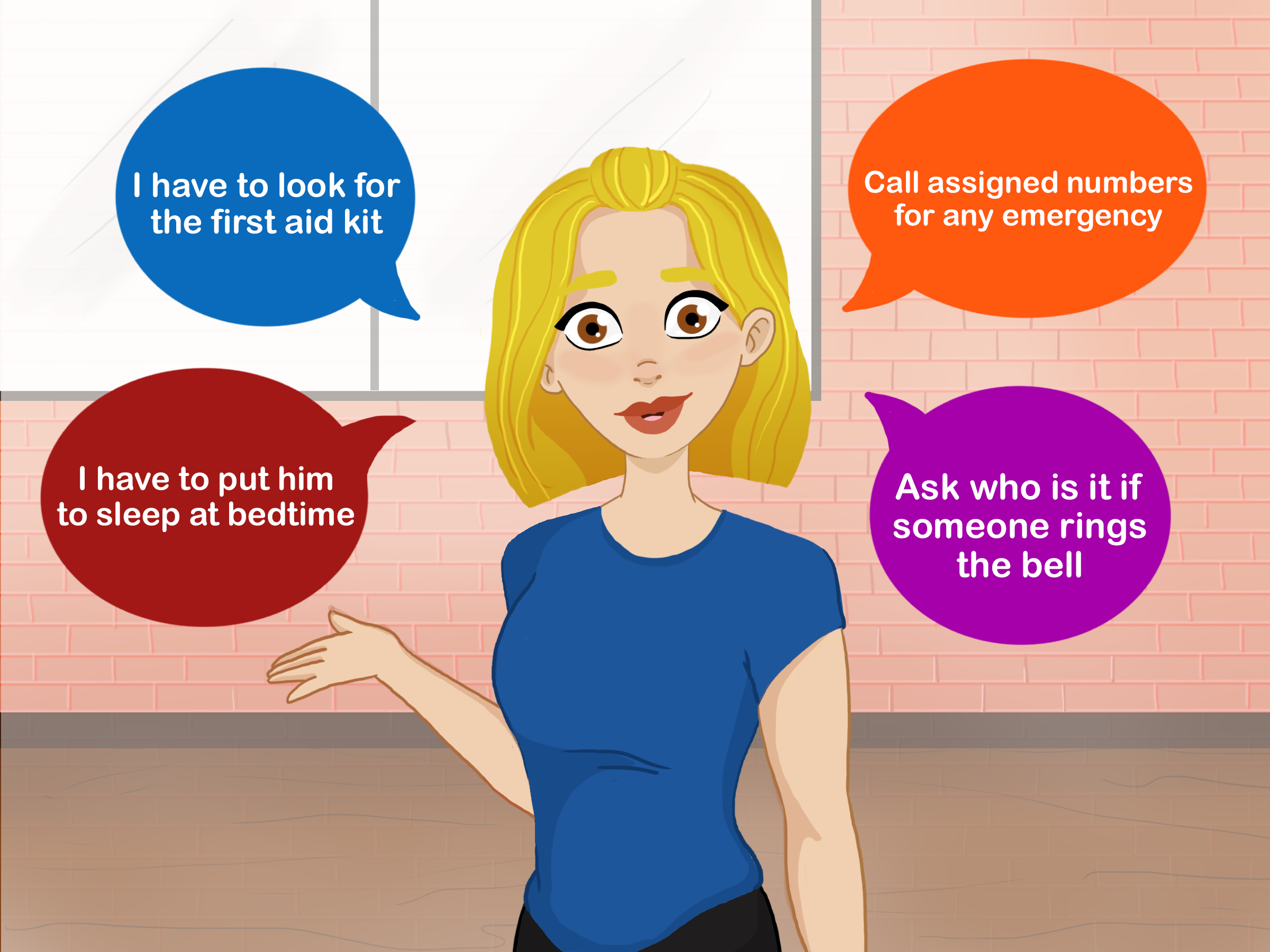
You are looking for calm, sensible answers: get the children safe, call 911 for emergencies, contact parents, use the emergency contact list, and never try to hide a problem. A child does not need to know everything. They do need to know when to get help fast.
Step 6: Check Communication and Safety Skills
A ready babysitter should know how to communicate clearly and follow basic personal safety rules. That means knowing their full name, address, phone number, parents’ contact information, and what to say in an emergency call. They should also know how to answer the phone without oversharing, how to keep doors locked, and how to avoid telling anyone they are alone with children.
They also need a simple communication plan with you. Some families use regular check-ins. Others use a code phrase that means, “Come get me now.” That kind of plan is incredibly useful because it gives your child a graceful exit if they feel uncomfortable, overwhelmed, or unsafe.
If your child struggles to speak up, freezes when adults ask questions, or gets flustered on the phone, work on those skills before moving forward.
Step 7: Make Sure They Can Handle Basic Child Care Tasks
A child does not need to be a tiny professional nanny, but they should be able to handle basic care without improvising wildly. Depending on the ages of the children, that may include:
- Making a simple snack safely.
- Following bedtime routines.
- Helping with handwashing and bathroom breaks.
- Changing a simple diaper, if appropriate and trained.
- Comforting a crying child.
- Using age-appropriate activities instead of turning on endless screen time.
- Following rules about food allergies, medicines, and off-limits areas.
One especially important rule: your child should never give medicine unless a parent has clearly instructed them how and when. They should also understand that young children should never be left alone near water, outside, or in another room “just for a minute.” In childcare, one minute has a reputation for becoming chaos surprisingly fast.
Step 8: Get Training, Especially First Aid and CPR
Formal babysitting training can make a major difference. A good course covers basic child care, safety, behavior management, feeding, diapering, emergency response, and confidence-building. CPR and first aid are especially valuable because they replace vague panic with actual steps.
Training also helps your child understand something important: babysitting is a real responsibility, not a casual favor with juice boxes. Even a short course can help them think more like a caregiver and less like a kid who assumes everything will probably be fine.
If your child is eager to babysit, signing up for a babysitting class is often one of the best ways to channel that energy. It says, “Great, let’s take this seriously.”
Step 9: Practice With Supervised Experience
Nobody becomes confident by teleporting straight into the hard part. Let your child practice while you are still nearby. They can watch younger siblings while you do chores in another room, help with bedtime while you observe, or supervise play for short stretches while you stay within earshot.
This kind of practice shows you what your child actually does, not what they say they would do. Some kids sound very confident in theory and then discover that keeping a preschooler from painting the dog is more complicated than expected.
Use supervised experience to coach gently. Show them how to redirect behavior, how to keep routines moving, and how to avoid power struggles. Babysitting is part safety, part common sense, and part amateur diplomacy.
Step 10: Start Small and Keep the First Jobs Boring
For a first real babysitting job, boring is beautiful. You want a short, predictable shift with low stakes. Choose a familiar child, a familiar home, and parents who are close by. This is not the time for twin toddlers, a new puppy, and a bedtime routine that reads like a Broadway production schedule.
Good first jobs often look like this:
- Watching younger siblings while a parent takes a quick walk.
- Staying with one school-age child for an hour in the afternoon.
- Helping a family friend while the parent is nearby or easy to reach.
- Babysitting during the day instead of late at night.
Afterward, ask what went well and what felt hard. A strong start builds confidence. A miserable first experience can make a child feel defeated or, worse, falsely confident for the wrong reasons.
Step 11: Debrief, Adjust, and Increase Responsibility Gradually
Babysitting readiness is not a one-time yes-or-no decision. It is a process. After each experience, talk it through. Did your child follow the rules? Did they stay calm? Did they know when to ask for help? Did they enjoy it, or did they come out looking like they had aged 12 years in one evening?
If things went well, increase responsibility slowly. Maybe the next job is a little longer. Maybe there are two children instead of one. Maybe the shift includes dinner or bedtime. Keep building one layer at a time.
If something felt shaky, that is useful information, not failure. It just means more practice is needed. Babysitting is one of those roles where “not yet” can be the smartest answer in the room.
Red Flags That Your Child Is Not Ready Yet
Sometimes the clearest answer comes from the warning signs. Hold off on babysitting if your child:
- Panics easily under pressure.
- Ignores rules when adults are not watching.
- Gets distracted by screens or friends.
- Has trouble resolving minor conflicts calmly.
- Does not like being around younger children.
- Minimizes safety concerns.
- Is uncomfortable calling for help.
- Wants the job mainly for money but has little interest in the actual caregiving.
There is nothing wrong with not being ready. Babysitting is not a personality test or a parenting trophy. It is a specific responsibility, and some kids are ready earlier than others.
A Simple Babysitting Readiness Checklist for Parents
If you want a quick gut-check, ask yourself whether your child can confidently do most of the following:
- Stay home alone safely for a short period.
- Follow household rules without reminders.
- Use a phone well in normal and emergency situations.
- Stay calm and ask for help when needed.
- Handle simple child care tasks.
- Understand food allergies, medicine rules, and safety boundaries.
- Keep doors locked and avoid strangers.
- Supervise actively instead of getting lost in a screen.
- Show patience with younger children.
- Take the job seriously.
If you answered “yes” to most of those, your child may be close. If several answers are “not really,” that is your roadmap for what to practice next.
Conclusion
Knowing when your child is old enough to babysit is less about finding the perfect age and more about spotting the right mix of maturity, safety awareness, training, and steady judgment. The best babysitters are not necessarily the oldest kids. They are the kids who understand that caring for another child means paying attention, staying calm, and knowing exactly when to ask for help.
Start with the law, be honest about your child’s abilities, and resist the temptation to skip steps. A gradual approach gives your child the chance to grow into the role with confidence. That is good for them, good for the children they care for, and very good for your blood pressure.
Real-World Experiences Parents Often Have With Babysitting Readiness
One of the most common experiences parents describe is being surprised by the gap between independence and caregiving. A child may be excellent at handling their own homework, making a sandwich, and texting when they get home from school, yet still struggle to supervise a younger sibling without getting annoyed or distracted. That does not mean they are irresponsible. It usually means they are still learning that babysitting is less about being self-sufficient and more about being tuned in to someone else every minute.
Another common experience is the “trial run reality check.” A parent leaves an older child in charge for 20 minutes while taking a walk, fully expecting everything to go smoothly. The house is still standing when they return, but the toddler has eaten crackers on the couch, the older sibling forgot about handwashing, and everyone is somehow upset. That kind of low-stakes rehearsal is actually gold. It reveals exactly which skills need work before a real babysitting job begins.
Many families also find that siblings can be the hardest practice clients. A child may do beautifully helping a neighbor’s sweet first grader but instantly lose all professional composure when babysitting their own little brother, who knows every available button to push. This is normal. Familiar sibling dynamics can make babysitting harder, not easier. Parents often learn that success with siblings requires extra coaching on patience, boundaries, and how to avoid sliding into old arguments.
Parents also talk about how much confidence can grow after one good early experience. A short daytime babysitting job with a familiar child often changes everything. The new babysitter realizes they can handle snack time, keep a younger child entertained, and call a parent if needed. That first success tends to turn nerves into maturity. It also helps parents relax because they are no longer guessing. They have seen their child do the job.
There are also the moments that teach caution. Some parents realize their child is not ready after the child admits they were too embarrassed to call for help, forgot an important instruction, or got completely absorbed in a phone. As disappointing as that feels, it is useful information. Families who respond well usually do not treat it as failure. They treat it as training data. They review what happened, tighten the rules, and try again later.
Perhaps the most reassuring experience parents share is this: readiness rarely arrives all at once. It builds. A child who is not ready at 11 may be solid at 12. A child who can babysit one easy child for an hour may be able to handle two children for an evening six months later. Progress often looks ordinary while it is happening, then suddenly obvious in hindsight. That is why the best approach is patient, practical, and honest. Babysitting readiness is usually not discovered in one dramatic moment. It is built in small, steady wins.
Note
This article is for general informational purposes and should be paired with your state or local rules, your family’s specific needs, and your child’s actual abilities. When in doubt, start smaller, stay closer, and move up gradually.
SEO Tags