
Note: Body-only HTML, English content, copy-ready, and written for web publishing.
If your kitchen smells less like fresh cookies and more like a science lab with attitude, you are not alone. Oven cleaner can leave behind a sharp, chemical odor that lingers long after the scrubbing ends. The good news is that the smell usually does not mean your oven is ruined. In most cases, it means there is still cleaner residue, trapped moisture, or leftover grime heating up inside the appliance.
The fix is not complicated, but it does require patience. You do not want to throw random products at the problem and accidentally create a much bigger one. In fact, the fastest way to make the smell worse is to mix cleaners, rush the rinse, or fire up the self-clean cycle too soon. Your oven needs a gentle reset, not a chemical encore.
This guide walks you through how to remove the smell of oven cleaner in nine practical steps. You will also learn which mistakes to avoid, when the odor is a sign of leftover residue, and what real households often experience after a deep oven cleaning session. Let us get your kitchen back to smelling like dinner instead of drama.
Why Does Oven Cleaner Smell Linger?
Most oven cleaners are powerful for a reason. They are designed to break down baked-on grease, food splatters, and carbonized messes that laugh in the face of ordinary soap. But that strength comes with a downside: fumes and residue. Even after you wipe the oven, a thin film can remain on the walls, floor, door, corners, or rack supports. When the oven heats up, that film can release an unpleasant odor all over again.
Sometimes the smell is not just the cleaner itself. It can also be cleaner mixed with loosened grease, old spills, or residue hiding in hard-to-see spots. That is why a one-and-done wipe often is not enough. If your oven still smells chemical after cleaning, think of it as a clue: something is still inside that should not be there.
The smartest approach is simple: ventilate well, rinse thoroughly with plain water, use only gentle follow-up methods, and avoid mixing products. Slow and boring wins this race. Yes, it is rude that the oven gets the last word after you cleaned it. But not for long.
How to Remove the Smell of Oven Cleaner: 9 Steps
Step 1: Open windows, turn on ventilation, and pause the cooking plans
Before you do anything else, get fresh air moving through the room. Open nearby windows, switch on the range hood if it vents outside, and run a fan to push air out of the kitchen. If the odor is strong, leave the oven off for the moment. This is not the time to test-bake garlic bread and hope for the best.
Fresh air helps dilute fumes and makes it easier for you to tell whether the smell is fading or staying stubborn. If anyone in the house has asthma, breathing sensitivities, or irritation from the fumes, move them away from the kitchen while you work.
Step 2: Let the oven cool completely and remove racks, trays, and thermometers
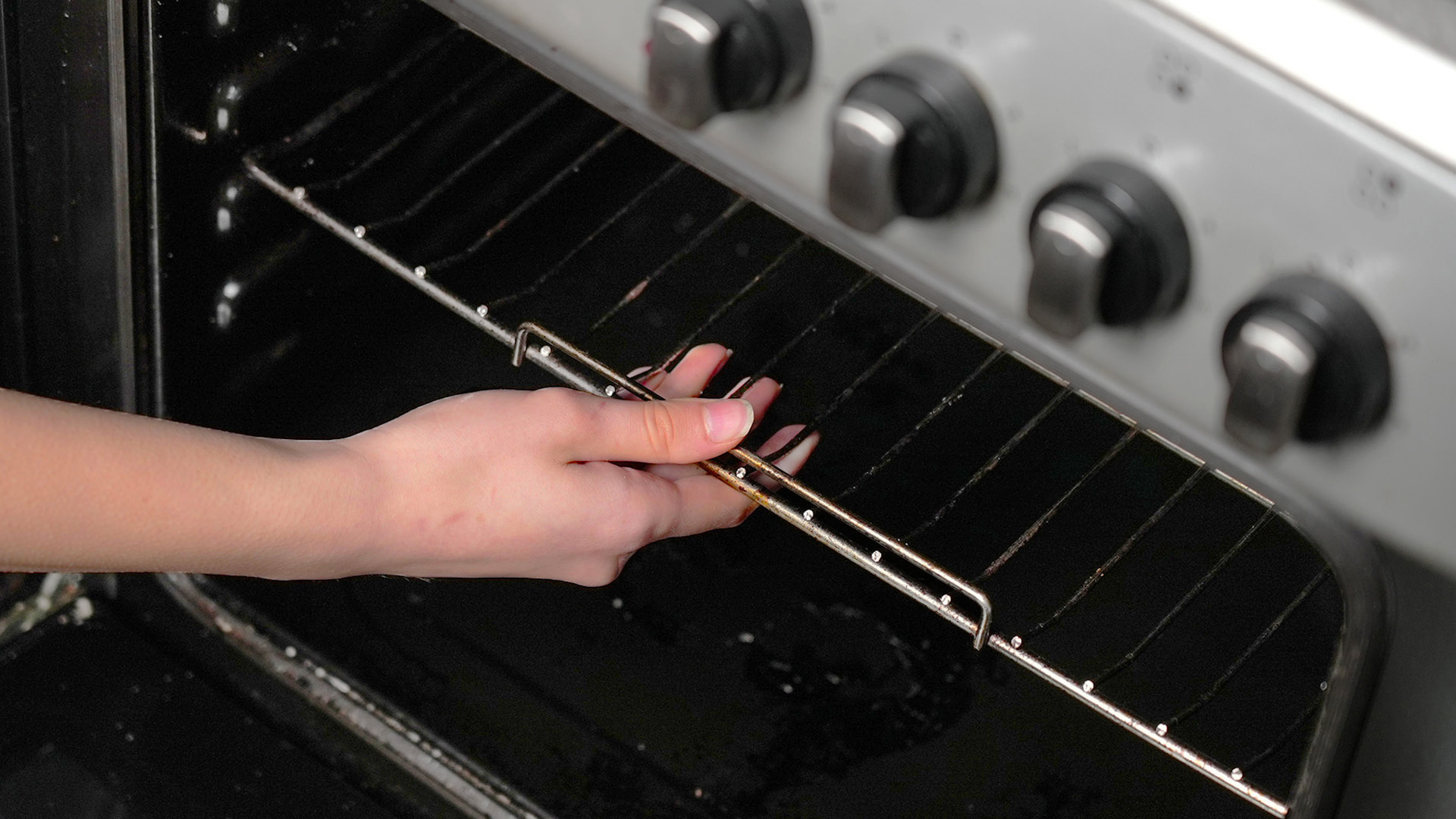
Never try to fix an oven-cleaner smell while the oven is hot. Wait until everything is fully cool, then take out the oven racks, sheet pans, pizza stones, thermometers, and any removable accessories. Odor can cling to all of them, especially if cleaner splashed or dripped onto their surfaces.
This step matters because many people focus only on the oven cavity and forget the racks. Then they reheat the oven later and wonder why the smell came back like an unwelcome sequel. Remove anything that can hold residue so you can clean and rinse each part properly.
Step 3: Wipe every interior surface with plain water, then wipe it again
This is the big one. Use a clean, damp cloth or sponge and wipe the inside of the oven from top to bottom. Pay special attention to the oven floor, the back wall, the corners, the inside of the door, and the edges where the door seal meets the frame. Rinse your cloth often and change the water when it looks dirty.
Then do it again. And if the surface still feels slippery, tacky, or unusually squeaky in spots, do it a third time. Lingering oven cleaner smell is often caused by residue that was never fully removed. Plain water is your safest first move because it reduces the chance of mixing chemicals that should not meet.
A good rule is this: if you can still smell the cleaner strongly while wiping, keep rinsing. Your oven may be cleaner than before, but it is not fully finished until the residue is gone.
Step 4: Wash the racks and removable parts separately
Soak oven racks in warm water with a small amount of dish soap, then scrub them with a non-abrasive sponge or brush. Rinse thoroughly and dry them well. If cleaner was used directly on the racks, do not rush this step. Rack wires and corners love to hide residue like it is paying rent.
Also wipe down removable trays and accessories with warm, soapy water, then rinse with plain water. Dry everything before putting it back. If the parts go back in damp or still coated, the smell can return the next time heat hits them.
Step 5: Tackle stubborn film with a gentle method, not another harsh cleaner
If you still see a cloudy film, white residue, or greasy patches after repeated damp wipe-downs, switch to a mild method. A baking soda paste made with water can help loosen stubborn spots without adding a new wave of harsh fumes. Apply it lightly to problem areas, let it sit, then wipe it away with a damp cloth.
Be careful not to put paste on heating elements, gas vents, sensors, or any area your owner’s manual says to avoid. The goal is to lift what is left, not create another mess to rinse out later.
This is where many people go wrong. They smell cleaner, assume the first product “did not work,” and spray more chemical cleaner. That usually gives the kitchen an even stronger odor and can damage some oven interiors. Gentle wins here.
Step 6: Use steam to loosen leftover grime and help freshen the oven
Once you have wiped out the cleaner residue, a light steam treatment can help with whatever remains. If your oven has a manufacturer-approved steam-clean setting, follow the manual. If it does not, place an oven-safe dish with water inside and warm the oven on a low setting for a short period, then let it cool before wiping again.
Steam can soften thin films and help lift lingering grime that contributes to odor. It is also a much better follow-up than blasting the oven with a high-temperature self-clean cycle right away. In fact, if your oven is self-cleaning and you used a commercial cleaner in it, make sure every trace of that cleaner is gone before you even think about using self-clean.
Think of this step as a spa day for your oven, not boot camp.
Step 7: Dry the oven fully and do a short, low-heat test run
After the final wipe, leave the oven door cracked open for a while so moisture can evaporate. Then reinsert the clean, dry racks and run the oven empty at a low temperature for a short test. Keep the windows open during this step.
If the smell is mild and fades quickly, you are probably in the clear. If the odor suddenly turns harsh, acrid, or intensely chemical again, turn the oven off and repeat the water-wipe process after it cools. That usually means residue is still hanging around somewhere.
A low-heat test is much safer than jumping straight into high heat. It gives you a chance to catch any leftover issue before your kitchen turns into a chemistry pop quiz.
Step 8: Absorb the last traces of odor overnight
If the cleaner smell is mostly gone but not completely, place an open bowl or shallow dish of baking soda in the cool oven overnight. Baking soda is a classic odor absorber and can help with that final bit of lingering funk. You can also leave a bowl nearby on the counter if you prefer.
This is not a substitute for proper rinsing, but it is a helpful finishing move. It is especially useful when the oven is clean, the odor is faint, and you just want your kitchen to stop smelling like “industrial lemon thunder.”
Step 9: Know when the smell is not normal
A mild odor that fades after a careful rinse and short test run is one thing. A strong smell that burns your nose, makes your eyes water, causes coughing, or keeps coming back no matter what you do is another. If fumes are causing symptoms, stop using the oven and seek expert guidance. If you think there has been a significant chemical exposure, contact poison help or emergency services right away.
You should also stop and check your owner’s manual or contact the manufacturer if your oven has a self-clean lining, special enamel interior, or steam-clean feature with specific instructions. Some oven surfaces do not play nicely with commercial cleaners, and forcing the issue can make the odor problem worse.
Mistakes to Avoid When Removing Oven Cleaner Odor
Even smart people make weird choices when standing in a smelly kitchen. Here are the biggest mistakes to skip:
- Do not mix cleaners. Never combine oven cleaner with bleach, ammonia, acids, vinegar, or random “hacks” from the internet.
- Do not run self-clean too soon. High heat can intensify fumes if cleaner residue is still inside.
- Do not ignore the racks. They can hold more residue than you think.
- Do not mask the smell instead of fixing it. Sprays and candles may cover the odor, but they do not remove the cause.
- Do not scrub sensitive parts. Heating elements, vents, seals, and sensors need careful treatment.
If you remember only one thing, let it be this: the smell usually means rinse more, not spray more.
Real-World Experiences With Lingering Oven Cleaner Smell
In real homes, the experience usually follows one of a few familiar patterns. The first is the “I cleaned it, why does it still smell?” situation. Someone sprays the oven, waits the suggested time, wipes out the grime, and assumes the job is over. Then the next evening they preheat for frozen pizza and get hit with a sharp chemical odor. The immediate reaction is often panic. Did the cleaner ruin the oven? Is something burning? Usually, the answer is much less dramatic: the cleaner worked, but a thin film was left behind in the corners or on the door.
The second common experience is the “the racks betrayed me” story. The oven cavity seems fine, but the smell returns every time the oven warms up. After a frustrating round of extra wiping, the person finally realizes the odor is coming from the racks or a forgotten broiler pan. Those removable parts often keep residue longer than the oven walls, especially if they were sprayed heavily or not rinsed well. Once they are soaked, scrubbed, and rinsed properly, the smell finally fades.
Another very common pattern is the “I tried to fix it too fast” problem. Someone smells the cleaner, gets impatient, and turns the oven on high to burn the smell away. That move almost always backfires. High heat can make leftover residue smell stronger, not weaker. What would have been a simple rinse-and-repeat job turns into a kitchen that smells like a cleaning aisle exploded. A short, low-heat test after a careful rinse is usually the better move.
There is also the surprisingly common experience of realizing the smell is not all from the cleaner. Once the oven is scrubbed, hidden grease and old food splatters start loosening up. That residue can add its own smoky or sour smell when heated. In those cases, people often describe the odor as “chemical at first, then weirdly burnt.” That is a clue that the oven needs one more gentle cleaning pass, not a stronger product.
Finally, many homeowners end up discovering that a simple, boring routine works better than fancy tricks. Open windows. Wipe with water. Wash the racks. Let the oven dry. Test on low heat. Place baking soda inside overnight. It is not glamorous, and it will never trend as thrilling content, but it works. The lesson from real kitchens is clear: when it comes to getting rid of oven cleaner fumes, patience beats panic, and rinsing beats improvising.
If that sounds almost annoyingly practical, welcome to appliance care. The oven does not want your creativity. It wants a clean rinse, a gentle hand, and a little time to stop being offended.
Conclusion
When your oven smells like cleaner after scrubbing, the solution is usually straightforward: ventilate the room, remove all accessories, rinse every surface with plain water several times, clean the racks separately, use gentle follow-up methods, and test the oven on low heat before returning to normal cooking. Most lingering odors come from leftover residue, not from some mysterious appliance curse.
The key is resisting the urge to overcorrect. More chemicals rarely solve a chemical-smell problem. A patient rinse, a mild steam treatment, and overnight odor absorption usually do far more. And if the fumes are harsh or irritating, trust that signal and stop using the oven until the issue is resolved.
Your kitchen should smell like roasted vegetables, cinnamon rolls, or maybe an overly ambitious lasagna. It should not smell like a cleaning product that still has unresolved feelings. Fix the residue, and the odor usually goes with it.
SEO Tags