
The Sun looks like the ultimate solo act: one blazing star, eight planets, a few dwarf planets, countless asteroids, and enough comets to keep the outer solar system looking like a cosmic storage closet. But astronomy has a funny way of ruining our simple assumptions. Many stars in the Milky Way are not single at all. They live in binary star systems, where two stars orbit a shared center of mass, or in even messier family arrangements with three or more stars.
That leads to one of the most charmingly awkward questions in modern astronomy: if stars are often born in pairs, why is our Sun single? Did the Sun once have a stellar sibling? Was there a long-lost “solar twin” that wandered away billions of years ago? And if so, where did it godid it storm out of the nursery like a dramatic roommate with a suitcase full of hydrogen?
The short answer is: our Sun may not have started out alone. A major idea in star formation research suggests that Sun-like stars often begin life with a companion, but many partnerships are broken apart early by gravity, crowded stellar nurseries, and the general chaos of being born inside a giant cloud of gas and dust. The Sun may be single today not because it was always lonely, but because its possible companion was separated long ago.
What Does It Mean for Stars to Be “Born in Pairs”?
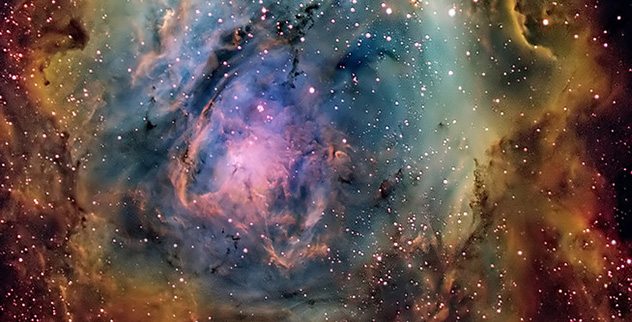
Stars are born inside huge, cold molecular clouds. These clouds are made mostly of hydrogen gas, with dust mixed in like seasoning in a very large, very dark soup. Over time, gravity pulls denser regions inward. Those regions collapse into cores, and the cores can become protostarsyoung stars still gathering material from the cloud around them.
But star formation is rarely neat. A collapsing cloud does not always produce one tidy star in the middle, like a candle on a birthday cake. The cloud can fragment into multiple dense pockets. Each pocket may grow into its own protostar. If two of those young stars form close enough together, gravity can bind them into a binary system.
Binary Stars Are Common, Not Weird
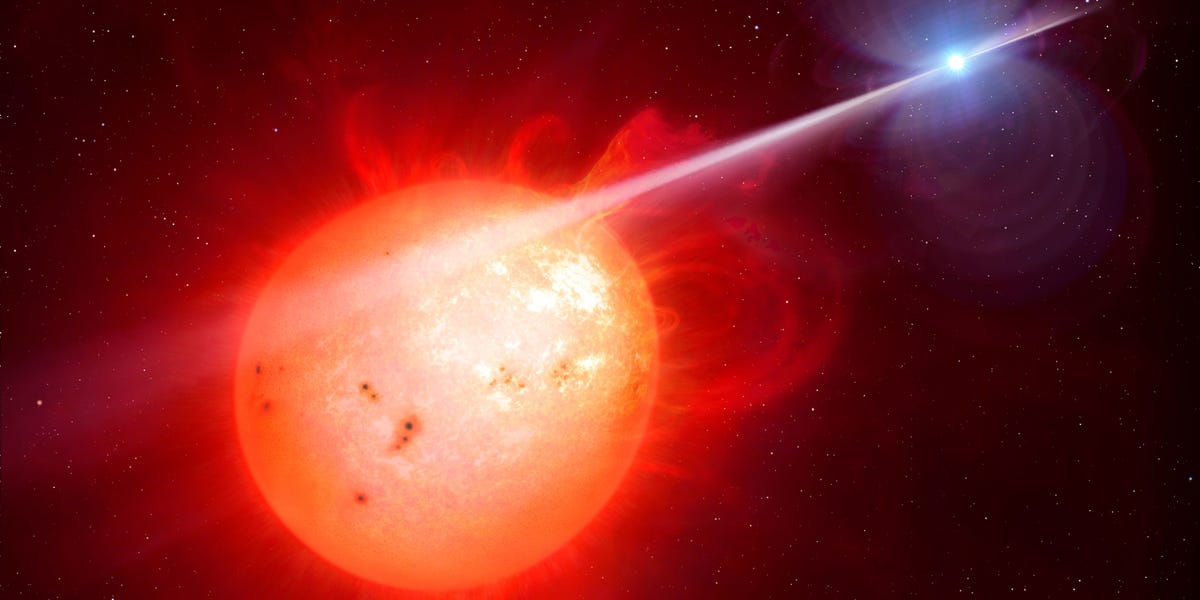
To human eyes, a single star may seem normal because the Sun dominates our sky. But the galaxy is packed with double-star systems. In a binary system, two stars orbit a shared gravitational center. Sometimes they are far apart, moving around each other at a leisurely cosmic pace. Sometimes they are close enough to exchange material, distort each other’s shapes, or create dramatic events later in life.
In other words, “two suns” is not just science fiction. The fictional planet Tatooine from Star Wars made binary sunsets famous, but real planets can exist in systems with two stars. Astronomers have found planets orbiting binary stars, proving that planet formation can be more flexible than early models once assumed.
The Big Idea: Did the Sun Have a Twin?
In 2017, researchers studying young stars in the Perseus molecular cloud proposed a striking idea: low-mass stars like the Sun may commonly form with wide companions. The study compared observations of young single and binary stars with models of how stars form inside dense cores. Their conclusion was not that every star keeps a partner forever, but that many stars may begin as part of a pair before the partnership breaks apart.
That means our Sun may once have had a companion star. This possible companion is sometimes casually called the Sun’s “twin,” although that term can be misleading. It probably would not have been an identical copy of the Sun. It may have been smaller, cooler, dimmer, or simply born nearby from the same stellar nursery.
A better phrase might be “solar sibling.” Like siblings on Earth, stars born in the same nursery can share a birthplace without being identical. One may grow up massive and flashy; another may be modest and long-lived. The Sun’s hypothetical sibling may have shared the same original cloud, then drifted away as gravity rearranged the young cluster.
So Why Is the Sun Alone Now?
The early solar neighborhood was probably not a peaceful suburb. It was more like a crowded school hallway during a fire drill: young stars, gas, dust, disks, jets, and gravitational nudges everywhere. Stars form in groups, and those groups can be unstable. When several young stars are born in the same region, their gravity can tug on one another. A close pass from another star can stretch a binary orbit, tighten it, or break it apart entirely.
Gravity Can Break Up Young Star Pairs
A wide binary pair is especially vulnerable. If two stars are separated by thousands of astronomical units, their gravitational bond is weak compared with a tight binary. One passing star, or the shifting gravity of the surrounding cloud, can give the pair just enough of a shove to separate them. Once that happens, both stars continue orbiting the galaxy, but no longer as a couple.
This is likely the simplest explanation for our single Sun. If it had a companion, the pair may have been wide and fragile. In the Sun’s busy birth cluster, that companion could have been pulled away within the first few million years. In cosmic time, that is practically a breakup during the opening credits.
The Sun’s Birth Cluster Probably Dispersed
The Sun did not form in its current quiet neighborhood by itself. Like other stars, it likely formed in a cluster or association of young stars. Over time, such groups can spread out. The original gas cloud gets blown away by stellar winds, radiation, and supernova shocks. Without the cloud’s mass helping hold the group together, stars drift apart and join the general flow of the Milky Way.
After 4.6 billion years, any solar siblings would be extremely hard to identify. They would have moved far from the Sun, mixed with billions of other stars, and circled the galaxy many times. Finding one would be like trying to locate your kindergarten classmate in a packed stadium after everyone has changed clothes, moved seats, and possibly become a red dwarf.
Is the Sun’s Missing Companion the Same as “Nemesis”?
Whenever the idea of a solar companion appears, the word “Nemesis” often follows. Nemesis was a hypothetical companion star proposed decades ago to explain a possible cycle of comet impacts and mass extinctions on Earth. The idea was dramatic: a dim star or brown dwarf might orbit far beyond the planets, occasionally disturbing comets in the Oort Cloud and sending some toward the inner solar system.
It was a great science-fiction setup, but modern evidence has not supported the classic Nemesis idea. Infrared sky surveys, including NASA’s WISE mission, found many brown dwarfs and cool objects in the Sun’s broader neighborhood, but they did not find evidence for a large hidden planet or small companion star in the outer solar system. In plain English: if the Sun has a secret star buddy nearby, it is doing an excellent job of not existing.
The “born with a companion” idea is different. It does not require a companion star to still be orbiting the Sun today. It suggests the Sun could have had a partner in infancy that left billions of years ago. That lost companion would not be lurking just beyond Neptune wearing sunglasses. It would likely be somewhere else in the Milky Way, indistinguishable from countless ordinary stars unless astronomers could trace its motion and chemistry back to the Sun’s birthplace.
How Could Astronomers Look for the Sun’s Lost Sibling?
Searching for a solar sibling is difficult, but not impossible in principle. Astronomers can compare stars using several clues: age, chemical composition, motion through the galaxy, and orbit around the Milky Way. Stars born from the same cloud should carry similar chemical fingerprints, because they formed from the same mixture of gas and dust.
Chemical Fingerprints Matter
Stars preserve information about the gas that made them. By studying starlight with spectroscopy, astronomers can identify the elements in a star’s atmosphere. If a star has nearly the same chemical pattern as the Sun and appears to be the same age, it becomes a more interesting candidate for a solar sibling.
But chemistry alone is not enough. Many stars can have Sun-like compositions, especially if they formed in similar parts of the galaxy. Astronomers also need motion data. A true sibling should have a plausible galactic path that could connect back to the Sun’s birthplace billions of years ago.
Gaia Changed the Game
The European Space Agency’s Gaia mission has mapped positions and motions for enormous numbers of stars with remarkable precision. This kind of data helps astronomers reconstruct stellar movements and identify stars that may have common origins. Even so, rewinding the Milky Way for 4.6 billion years is hard. Galactic gravity, stellar encounters, and measurement limits make the past blurry.
So far, astronomers have found candidates for solar siblings, but no confirmed long-lost twin. The search remains active because it could reveal not only where the Sun formed, but also what kind of environment shaped the early solar system.
Would a Solar Twin Have Changed Earth’s History?
If the Sun had a wide companion early on, it may have influenced the outer edges of the young solar system. Some scientists have explored whether a companion could help explain the structure of distant objects beyond Neptune or the early delivery of comets. A temporary companion might have helped trap distant bodies or shape the Sun’s birth environment before leaving.
However, this does not mean Earth owes its existence to a missing twin. Planet formation around the Sun mainly happened in the disk of gas and dust surrounding the young Sun. The planets formed from leftover material in that disk. A distant stellar companion, if it existed, may have played a background role rather than acting like a cosmic project manager with a clipboard.
Why Single Stars Can Still Form Planets Beautifully
The Sun’s current singleness may have been very good news for Earth. A single-star system provides a relatively stable gravitational environment for planets with wide, long-lasting orbits. Binary systems can host planets too, but their dynamics can be more complicated. In close binary systems, planets may orbit both stars. In wide binary systems, planets may orbit one star while the second star tugs from afar.
Our solar system’s architecturerocky planets inside, gas giants farther out, icy worlds beyonddeveloped around one dominant star. That simplicity may have helped Earth remain in a stable orbit within the Sun’s habitable zone for billions of years. Stability matters. Life does not enjoy being repeatedly flung into deep space. Very rude. Zero stars.
The Sun Is Single, But Not Isolated
Calling the Sun “single” can be misleading if it makes the Sun sound disconnected from the galaxy. The Sun is single in the sense that it does not currently have a bound stellar companion. But it is not alone in a larger cosmic sense. It orbits the center of the Milky Way with hundreds of billions of other stars. It travels through interstellar gas, passes near other stars over long timescales, and belongs to a galaxy with a long history of star birth, death, and recycling.
The atoms in the Sun were not created from nothing. Many heavier elements formed inside earlier generations of stars and were scattered into space by stellar winds and supernova explosions. The Sun is part of a grand cosmic inheritance. It may be single today, but its story is deeply social.
Why This Question Captures the Imagination
The idea of a missing solar sibling is irresistible because it turns the Sun from a familiar object into a character with a backstory. We see the Sun every day. It rises, sets, warms the planet, ruins unattended chocolate, and makes beach umbrellas economically necessary. Yet it may also be the survivor of an ancient stellar family that dispersed before Earth fully formed.
That is the beauty of astronomy: the ordinary becomes astonishing when given enough time. A bright disk in the daytime sky becomes a 4.6-billion-year-old star born in a cold molecular cloud. A single star becomes a possible former binary. A quiet solar system becomes evidence of early chaos that somehow settled into a stable home for life.
Experience Notes: Thinking About a Single Sun in a Galaxy of Pairs
One of the best ways to connect with this topic is to go outside at sunset and watch the Sun disappear with the question in mind: what would this sky look like if the Sun still had a companion? It sounds like a small thought experiment, but it changes the mood of the whole scene. A sunset is already dramaticorange light, long shadows, birds acting like they have urgent appointmentsbut imagining a second star adds a new layer of wonder. Would Earth have two shadows? Would calendars be stranger? Would poets be twice as busy?
For students, this question is a perfect gateway into real astronomy because it begins with curiosity rather than equations. “Why is the Sun alone?” feels simple, almost childlike. But answering it leads directly into molecular clouds, protostars, binary systems, stellar clusters, gravitational encounters, spectroscopy, planet formation, and the history of the Milky Way. It is the kind of question that opens a trapdoor into the universe.
It also helps correct a common misunderstanding. Many people picture star birth as a calm event: a cloud collapses, a star appears, planets line up politely, and the universe moves on. In reality, star formation is noisy, turbulent, and competitive. Young stars feed from disks, launch jets, heat nearby gas, and interact gravitationally with neighbors. The Sun’s early environment may have been much more crowded than the peaceful solar system we know today.
For skywatchers, learning about binary stars can make ordinary stargazing more exciting. Some points of light that look single are actually double or multiple systems. With binoculars or a small telescope, famous doubles can become visible as separate stars. Suddenly, the night sky stops looking like a flat scattering of dots and starts looking like a population of systems, relationships, and gravitational dances.
The Sun’s singleness also gives us a useful sense of perspective. We often treat our solar system as the default model for how planets and stars should behave. But the universe is not built around what seems normal from Earth. Binary stars are common. Red dwarfs are more common than Sun-like stars. Planetary systems can be compact, tilted, crowded, or orbiting two suns. Our home is not boring, but it is not the template for everything else.
The emotional pull of the Sun’s possible lost sibling comes from the same place as old family photographs. We want to know where we came from. The Sun’s birth environment shaped the raw materials that formed Earth, the early orbits of planets, and perhaps the outermost edges of the solar system. If astronomers ever identify a convincing solar sibling, it would not just be another star in a catalog. It would be a surviving clue from the Sun’s childhood.
Until then, the best answer is both scientific and poetic: the Sun is single now because the galaxy is dynamic. Stars are born in groups, pushed and pulled by gravity, and scattered over time. Our Sun may have begun with a companion, but the Milky Way had other plans. That ancient separation left us with one steady star in the skysimple enough for stable planets, bright enough for life, and mysterious enough to keep astronomers asking questions.
Conclusion
If stars are born in pairs, our Sun may be single because its original partnership did not survive the chaos of stellar childhood. Modern star formation research suggests that many Sun-like stars may begin with companions, especially wide companions that can later drift away. The Sun likely formed in a crowded stellar nursery, where gravity, gas, and passing stars could have separated it from a possible sibling early in its history.
There is no strong evidence that a hidden companion star still orbits the Sun today. The famous Nemesis idea remains unsupported by modern surveys. But the possibility of an ancient solar sibling remains scientifically interesting because it could help explain the Sun’s birth environment and the early history of the solar system.
So, why is ours single? Because the universe is excellent at making familiesand equally excellent at scattering them across the galaxy.