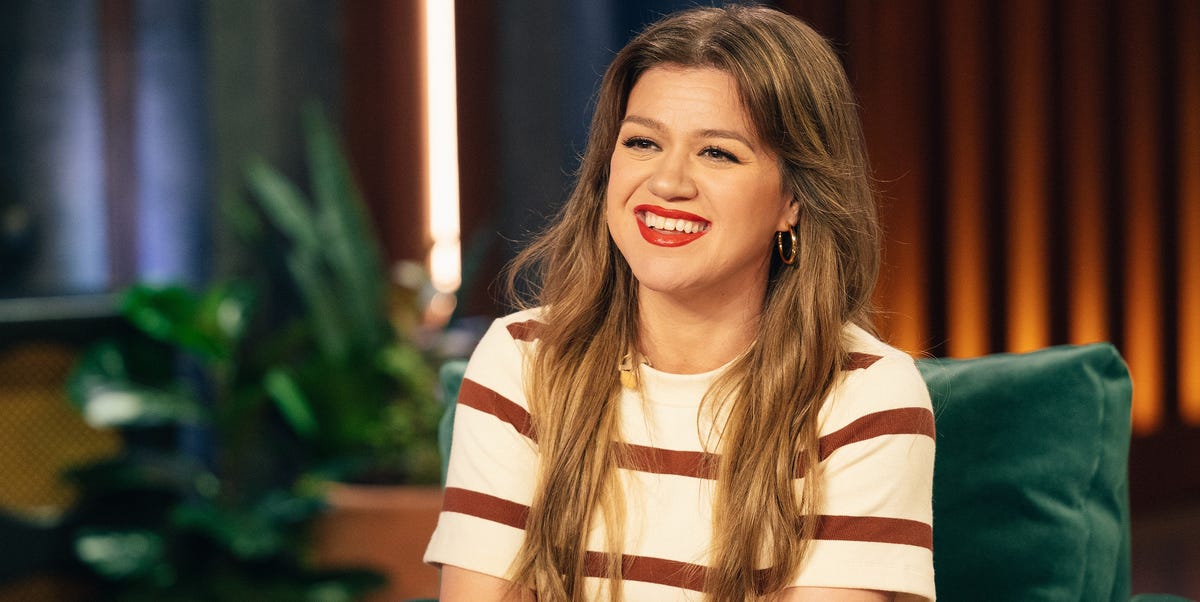

Kelly Clarkson has spent more than two decades doing something most pop stars only dream about: changing lanes without losing the steering wheel. She has been the original American Idol, a Grammy-winning powerhouse, a daytime talk show host, a coach on The Voice, a Vegas headliner, a children’s book author, and the unofficial queen of singing other people’s songs better than they expected. So when Clarkson casually revealed that she had started her own music label, fans did what fans do best: they sprinted straight into theory mode.
Was she launching a full-blown record company? Was she signing new artists? Was this the beginning of a music mogul era? Were resumes being accepted? Should somebody’s cousin with a SoundCloud page start warming up? Clarkson heard the noise and, in a new interview, decided it was time to clear the air. Her message was simple: yes, she created a label, but no, it is not currently a giant artist-signing machine. The label exists primarily as a way for her to release her own music with more creative freedom.
That clarification matters because Kelly Clarkson career news rarely lands quietly. She is one of the rare entertainers whose audience follows her across formats: pop radio, Christmas playlists, daytime TV, live concerts, reality competition shows, and viral Kellyoke clips. When she says something about her career, it does not just become news; it becomes a group chat emergency.
What Did Kelly Clarkson Actually Clarify?
The career news began when Clarkson revealed on The Kelly Clarkson Show that she had started her own label. While speaking with Keke Palmer, who has experience running her own label, Clarkson said she was putting out her own music and enjoying the feeling of independence after years of working with major-label teams.
That statement quickly grew legs, put on sneakers, and ran around the internet. Some listeners interpreted it as Clarkson opening the doors to a traditional record label that would sign new talent, hire a full staff, and possibly become a major new force in the music business. In her interview with Kylie Kelce on Not Gonna Lie, Clarkson explained that the reaction became bigger than she expected.
The Label Is a Vessel for Her Own Music
Clarkson clarified that the label was created because she needed a structure through which to release her own work. In other words, it is less “Kelly Clarkson Records is now auditioning America” and more “Kelly Clarkson finally has the keys to her own creative garage.”
That distinction is important. Artists often need a business entity, label imprint, or distribution setup to release music independently. For Clarkson, who has already spent years inside the major-label system, creating her own label gives her a practical home for new songs, videos, promotion, and creative decisions. It does not automatically mean she is building the next massive label roster.
She Is Not Currently Taking Artists
The most direct point Clarkson made was that she is not taking artists right now. She acknowledged that there are many talented artists she admires, but she also pointed out a very real limitation: she is a single mother with two children and a packed professional life. Translation: the woman can hit a high note that could rearrange furniture, but even she cannot manufacture more hours in the day.
This clarification gives the story a more grounded shape. Clarkson is not rejecting the idea of helping artists forever. She is saying that, for now, her cup is already full. Between music, live performances, family, and television commitments, the new label is about autonomy rather than empire-building.
Why the News Got So Big So Fast
Kelly Clarkson has always had an unusually personal relationship with her audience. Fans have watched her grow from a small-town Texas singer into one of the most recognizable voices in American pop. Her brand is built on talent, honesty, humor, and a refreshing inability to sound fake. When she talks about career moves, fans tend to believe they are hearing the real story, not a polished publicist paragraph with lip gloss.
That is why the label news caused such a stir. It suggested a new chapter for Clarkson: one where she might own more of her music, make more decisions herself, and release songs without the same commercial pressure that often comes with traditional label structures.
Fans Love a “Miss Independent” Moment
There is also a delicious full-circle quality to the news. Clarkson’s early career included the massive hit “Miss Independent,” and now, years later, she is literally moving into a more independent business model. You could not script it better unless you hired a room full of pop-culture writers and fed them espresso.
Her move also reflects a broader trend in the music industry. Established artists increasingly want control over how their music is released, marketed, and monetized. For newer artists, independence can mean building from scratch. For a superstar like Clarkson, it can mean reclaiming the joy of creation after years of commercial expectations.
Her Career Has Never Been One-Dimensional
Another reason people jumped to conclusions is that Clarkson’s career is unusually wide-ranging. She is not only a singer. She is a host, coach, performer, interviewer, personality, and live entertainer. Her daytime show made her feel like America’s funny, emotionally intelligent neighbor who happens to have one of the best voices alive. Her run on The Voice showcased her as a mentor. Her Vegas residency gives fans the concert experience. Her own label gives her another layer of creative control.
When someone with that many lanes announces a new venture, people naturally wonder how all the pieces fit together. The answer, at least for now, seems to be balance. Clarkson is not disappearing from one world to dominate another. She is reorganizing her career around the things that matter most: family, music, creative freedom, and meaningful live performance.
How High Road Records Fits Into Kelly Clarkson’s Career
Clarkson’s newly formed label, High Road Records, represents a major symbolic shift. She built her career through the traditional post-American Idol pipeline, signing with major labels and releasing albums that helped define 2000s pop-rock radio. She later moved through different label chapters, released emotionally rich albums, and continued to prove that her voice could handle pop, country, soul, rock, Broadway-style belting, and whatever Kellyoke decided to throw at her before lunch.
With High Road Records, Clarkson appears to be choosing a more personal path. The phrase “high road” itself feels very Kelly: direct, a little cheeky, and emotionally mature. It suggests moving forward without bitterness, choosing freedom without drama, and making music because it still feels alive.
“Where Have You Been” and the Start of a New Era
Clarkson’s single “Where Have You Been” became an important part of this new chapter. Released through High Road Records, the song signaled that the label was not just a vague business idea. It was a functioning platform for new music. The track showed Clarkson leaning into romance, drama, and vocal warmth, reminding listeners that when she releases a ballad, the safest place to be is emotionally prepared.
The release also helped explain why she needed her own label structure. When an artist reaches Clarkson’s level, the question is not simply, “Can she release music?” Of course she can. The better question is, “How does she want to release it?” High Road Records gives her a more direct answer.
Creative Freedom Without Chasing Every Chart
One of the most interesting parts of Clarkson’s recent comments is the idea that she no longer needs to chase every commercial expectation. That does not mean she is indifferent to success. It means she has earned the right to define success differently.
For a younger artist, every single may feel like a make-or-break moment. For Clarkson, the stakes are different. She has already had the breakthrough, the awards, the tours, the TV success, and the songs that still make grocery-store shoppers suddenly believe they are in a music video. Now she can release music because it matters to her creatively, not because an executive calendar says the market needs a fourth-quarter single.
Is Kelly Clarkson Leaving Television?
Whenever Clarkson discusses a music move, fans immediately wonder what it means for her television career. The short answer: her schedule is changing, but she is not vanishing. In 2026, reports confirmed that The Kelly Clarkson Show would end after seven seasons. Clarkson described the decision as difficult but connected to her desire to prioritize her children and family life.
That news understandably created emotional reactions. The show became a bright spot in daytime TV because it mixed celebrity interviews, everyday heroes, humor, and Kellyoke performances that regularly reminded viewers that Clarkson could sing a tax form and still make it chart. Ending the show does not erase that legacy. If anything, it shows that Clarkson is making a deliberate choice about where her energy goes next.
Her Return to The Voice Keeps Her on TV
At the same time, Clarkson’s return to The Voice for Season 30 shows that she is not closing the television door. Coaching on The Voice is a natural fit for her because it combines performance, mentorship, humor, and musical instinct. She has always been especially good at translating technical vocal advice into language contestants can actually use.
There is also a poetic element to her coaching role. Clarkson became famous through a singing competition, then returned years later to help guide other singers through the pressure, nerves, and weird lighting of televised dreams. Her presence on The Voice lets her stay connected to rising talent without needing to run a full record label roster herself.
What the Vegas Residency Says About Her Priorities
Clarkson’s Las Vegas residency, Studio Sessions, is another clue to her current direction. Rather than building a tour schedule that sends her zigzagging across cities for months, a residency allows her to perform in a controlled setting while maintaining more stability. For an artist balancing motherhood, music, and television, that setup makes sense.
The residency also reflects the kind of performer Clarkson has become. She does not need fireworks every twelve seconds to prove she can hold a room. Her voice, band, stories, and catalog are enough. A studio-inspired residency gives fans the feeling of being invited into the creative process rather than simply watching a greatest-hits machine in motion.
Stability Can Be a Power Move
In entertainment, people often mistake constant motion for success. But sometimes the smarter move is choosing the format that protects the artist’s life while still serving the audience. Clarkson’s residency, label, and TV adjustments all point toward the same idea: she is designing a career that fits the person she is now.
That may be the most grown-up pop-star move of all. The goal is not to do everything. The goal is to do the right things well.
Why Clarkson’s Clarification Feels Refreshing
Celebrity career news is often wrapped in vague phrases: “new chapter,” “exciting evolution,” “strategic expansion,” and other terms that sound like they were assembled in a boardroom during a lunch break. Clarkson’s clarification felt different because it was practical. She essentially said: I needed a way to release my own music, people misunderstood how big this was becoming, and I am not currently taking artists.
That kind of honesty is part of why people trust her. She does not pretend that independence is effortless. She has admitted that putting out music herself involves a learning curve, from videos to logistics to the many tiny tasks most listeners never see. That transparency makes the new label feel less like a glamorous headline and more like a real working decision.
The Human Side of a Superstar Career
Clarkson’s comments also remind fans that even major stars have limits. She can have a legendary voice, a beloved TV presence, and a thriving live career while still needing to say, “Not that, not right now.” That boundary may be one of the most relatable things about the whole story.
In a culture that rewards overwork, Clarkson’s approach feels quietly radical. She is not framing every opportunity as something she must grab. She is choosing what aligns with her life. For fans, that may be just as inspiring as a high note.
What Fans Should Expect Next
Based on Clarkson’s recent career moves, fans can reasonably expect more music, more live performances, and more selective television appearances. High Road Records gives her a platform for future releases. Studio Sessions gives her a live outlet. The Voice keeps her connected to mentoring and music television. The end of her talk show marks a transition, not an exit sign.
The biggest takeaway is that Clarkson is not stepping away from her career. She is reshaping it. That difference matters. Stepping away sounds like retreat. Reshaping sounds like control. Clarkson appears to be doing the latter with the same mix of humor, emotion, and vocal firepower that has defined her public life from the beginning.
Experiences Related to Kelly Clarkson “Clearing the Air” on Career News
One reason this story connects with so many people is that it mirrors a familiar experience: saying something simple and watching everyone turn it into a much larger event. Anyone who has ever told coworkers, “I’m thinking about a new project,” only to hear by Friday that they are quitting, moving to Montana, and starting a goat cheese company can understand why Clarkson wanted to clarify things quickly.
Career transitions are often messy from the outside because people fill in the blanks with their own expectations. If a successful singer starts a label, fans imagine a roster. If a talk show host ends a show, viewers imagine retirement. If a celebrity schedules a residency, people wonder whether touring is over. The truth is usually more ordinary and more interesting: priorities change, logistics matter, and adults with families, teams, contracts, and calendars make decisions one practical step at a time.
For creators, Clarkson’s situation offers a useful lesson in communication. When a new venture launches, people may not understand its scope unless the creator explains it clearly. A label can be a personal imprint. A business can be a small platform. A new chapter can be focused rather than massive. Clarkson’s clarification worked because it set boundaries without sounding defensive. She did not say fans were wrong to be excited; she simply explained what the label is and what it is not.
There is also a strong work-life lesson here. Many people reach a point in their careers where the old definition of success no longer fits. Early on, success may mean saying yes to every opportunity. Later, success may mean protecting time, choosing meaningful projects, and refusing to build something just because other people think it would look impressive. Clarkson’s comments about motherhood and her full plate make that point feel especially real. Ambition does not disappear when someone sets boundaries. Sometimes boundaries are what allow ambition to survive.
Fans also experience this story emotionally because Clarkson has been part of their lives for years. Some remember voting for her on American Idol. Others found her through breakup anthems, Christmas songs, Kellyoke performances, or her talk show interviews. When a public figure has been around that long, audiences can feel personally invested in every shift. That investment is sweet, but it can also create pressure. Clarkson’s calm explanation reminds everyone that the person at the center of the headline is still a person making human choices.
The most encouraging part of this career news is that it does not feel like an ending. It feels like editing. Clarkson is cutting what no longer fits, keeping what still sparks, and building a structure that lets her release music on her own terms. That is not just celebrity news; it is a very relatable blueprint for anyone trying to build a life that sounds more like their own voice.
Conclusion
Kelly Clarkson clearing the air on her career news is less about shutting down excitement and more about putting the right frame around it. She did start her own label, and that is a meaningful step. But the label is currently a vehicle for her own music, not a wide-open call for new artists or staff. At the same time, Clarkson’s broader career remains active and evolving, with new music, live performances, a Las Vegas residency, and a return to The Voice all showing that she is still very much in the game.
The real story is creative control. Clarkson has earned a rare position in entertainment: she can make choices based not only on opportunity, but on fit. Her latest moves suggest an artist who knows her value, understands her limits, and still loves the work enough to keep finding new ways to do it. For fans, that is the best kind of update. Kelly Clarkson is not disappearing. She is taking the high road, literally and professionally.