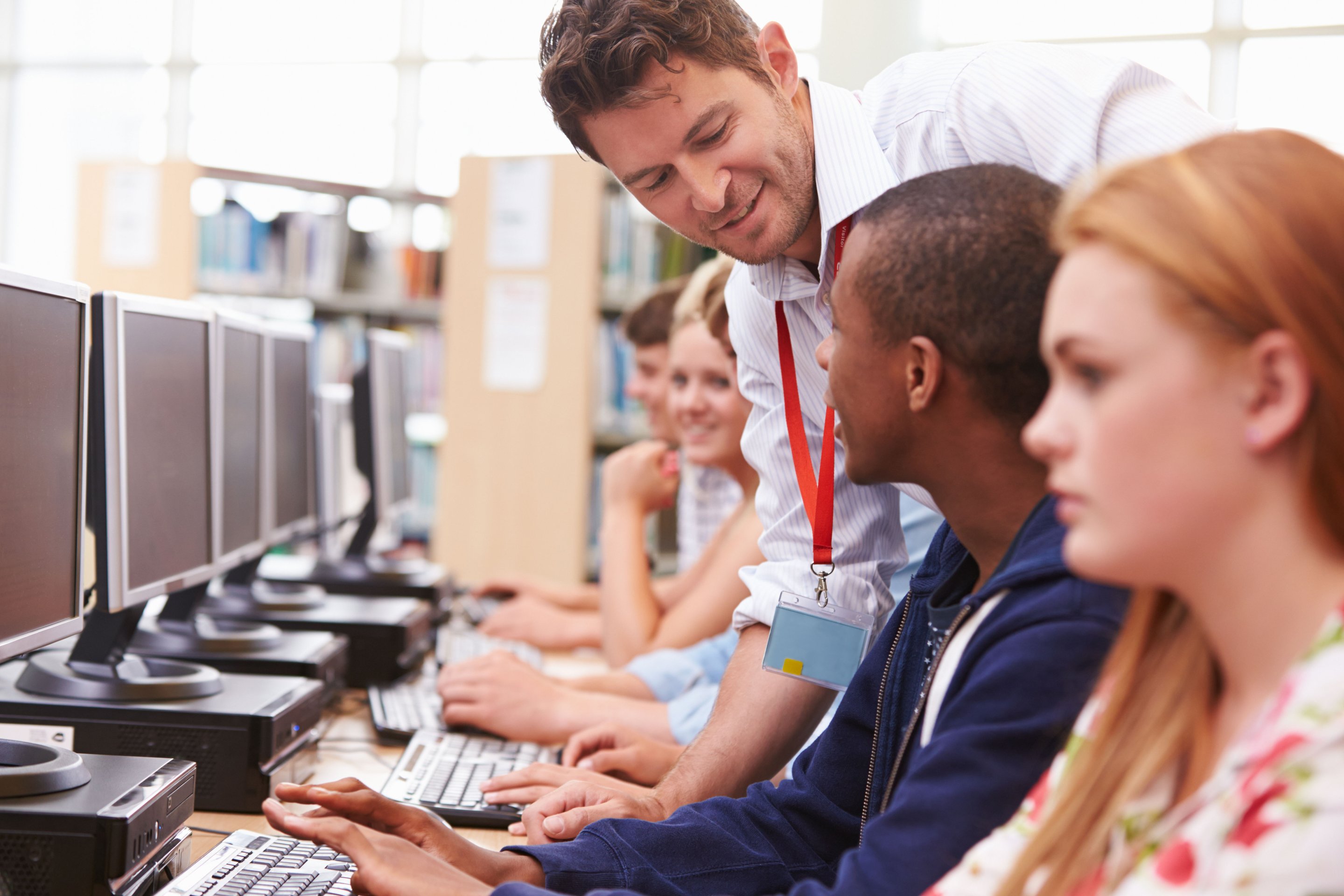

Learning in the 21st century is not exactly a quiet walk through a library with a sharpened pencil and a heroic sandwich packed for lunch. It is more like trying to read a textbook while your laptop updates, your group chat explodes, artificial intelligence offers to “help,” and someone somewhere insists that the future of work has changed again before breakfast.
Still, the heart of learning has not disappeared. Students still need curiosity, discipline, courage, and the ability to explain an idea without sounding like they swallowed a dictionary. What has changed is the environment. Today’s learners need academic knowledge, digital literacy, emotional intelligence, creativity, collaboration, and the confidence to keep learning long after a class ends.
The best lessons for 21st-century learners are not about memorizing every answer. They are about learning how to ask better questions, evaluate information, solve real problems, work with people, use technology wisely, and adapt when life moves the furniture around without asking permission.
What Does It Mean to Be a 21st-Century Learner?
A 21st-century learner is someone who can use knowledge in flexible, meaningful ways. That means more than passing tests. It means understanding how ideas connect, how evidence works, how technology shapes choices, and how people learn together.
In the past, education often rewarded students for remembering information. That still matters, because facts are the bricks of thinking. But modern learners also need to build with those bricks. They must analyze, question, create, communicate, and apply knowledge in unfamiliar situations. A student who can define climate change, for example, has learned something. A student who can compare local energy choices, evaluate sources, explain trade-offs, and design a community awareness project has moved into deeper learning.
This is why schools, colleges, and employers increasingly talk about transferable skills. These are abilities that travel well from one subject to another and from school into life: critical thinking, problem-solving, communication, collaboration, self-management, digital citizenship, and lifelong learning.
Lesson 1: Learn How to Think, Not Just What to Think
Critical thinking is one of the most important skills for 21st-century learners because information is everywhere. Unfortunately, not all information arrives wearing a name tag that says, “Hello, I am trustworthy.” Some of it is biased, outdated, oversimplified, or confidently wrong. The internet has many wonders, but it also has comment sections, miracle cures, and videos explaining history with the accuracy of a raccoon operating a calculator.
To think critically, learners should practice asking simple but powerful questions: Who created this information? What evidence supports it? What is missing? Is this fact, opinion, interpretation, or advertising wearing a fake mustache? Does another reliable source agree?
Example: Critical Thinking in Action
Imagine a student researching whether social media improves learning. A weak approach would be to grab the first article that agrees with their opinion. A stronger approach would compare academic research, student experiences, teacher perspectives, and data about attention, collaboration, and mental health. The student may discover that social media can support learning communities but can also distract students and spread misinformation. That balanced conclusion is more useful than a dramatic “always good” or “always terrible.”
Critical thinking does not make learning boring. It makes learning safer, sharper, and more interesting. It turns students from information collectors into meaning makers.
Lesson 2: Build Digital Literacy Before Digital Confidence
Many students are comfortable with technology, but comfort is not the same as digital literacy. A learner may know how to edit a video, post a story, and find a meme in six seconds, yet still struggle to identify a credible source, protect personal data, or understand how algorithms influence what they see.
Digital literacy includes the ability to find, evaluate, create, and communicate information using digital tools. It also includes digital citizenship: behaving ethically online, respecting others, understanding privacy, giving credit, and knowing when to log off before your brain starts feeling like a browser with 47 tabs open.
For 21st-century learners, technology should be a tool, not a steering wheel. Students should learn how to use search engines effectively, verify images and claims, manage passwords, cite digital sources, and understand the difference between helpful automation and lazy thinking.
Smart Digital Habits for Students
Good digital learners slow down before sharing information. They check sources before believing headlines. They separate popularity from accuracy. They understand that online actions can affect real-world relationships, reputations, and opportunities. Most importantly, they know that technology is powerful, but human judgment is still the adult in the room.
Lesson 3: Use AI as a Learning Partner, Not a Shortcut Machine
Artificial intelligence has quickly become part of modern learning. Students can use AI tools to brainstorm ideas, summarize complex topics, generate practice questions, translate text, organize notes, and explore unfamiliar concepts. Used well, AI can make learning more accessible and personalized.
But there is a catch, because of course there is. If students use AI only to avoid thinking, they may finish assignments without building skills. That is like watching a fitness video while eating chips and declaring leg day complete.
The best approach is to use AI as a coach, not a ghostwriter. A learner might ask an AI tool to explain photosynthesis at three difficulty levels, then compare the explanation with a science textbook. Another student might ask for feedback on an essay outline, then revise the structure using their own evidence and voice. In both cases, the student remains responsible for understanding, accuracy, and originality.
Questions Learners Should Ask When Using AI
Did the tool make a factual error? Did it leave out important context? Does the answer sound generic? Can I explain this idea without the tool? Have I followed my school’s rules for AI use? These questions help students become AI-literate instead of AI-dependent.
The future will likely reward learners who can combine human strengths with intelligent tools: curiosity, ethics, communication, creativity, and careful judgment.
Lesson 4: Communication Is Still a Superpower
No matter how advanced technology becomes, communication remains essential. Learners need to express ideas clearly in writing, speaking, visuals, and digital formats. They also need to listen well, which is harder than it sounds, especially when someone nearby is loudly opening a bag of chips.
Strong communication helps students explain reasoning, ask for help, participate in teams, resolve conflict, and share creative work. It also improves academic performance because students who can explain an idea often understand it more deeply.
Modern communication is not limited to essays and speeches. Students may create slides, podcasts, videos, infographics, discussion posts, emails, project pitches, and multimedia portfolios. Each format requires choices about audience, tone, structure, evidence, and design.
Practical Communication Lesson
A useful classroom activity is the “explain it three ways” challenge. Students explain a concept first to a teacher, then to a classmate, then to a younger student. This forces them to adjust language, examples, and depth. If they can make the idea clear without making it childish, they have truly learned it.
Lesson 5: Collaboration Is More Than Group Work With Snacks
Collaboration is a major 21st-century skill, but students know the dark side of group projects. One person does all the work, one disappears into the mist, one makes the title slide, and one says, “Sorry, I was busy” at 11:58 p.m.
Real collaboration requires structure. Learners need shared goals, clear roles, deadlines, respectful communication, and accountability. They also need to understand that disagreement is not failure. In fact, productive disagreement often improves ideas.
Project-based learning is one powerful way to build collaboration because students work over time to investigate meaningful questions or solve authentic problems. A team designing a school recycling plan, for example, must research waste habits, interview staff, analyze costs, create persuasive materials, and present recommendations. That project teaches content, but it also teaches leadership, negotiation, planning, and resilience.
How Students Can Collaborate Better
Effective student teams begin by defining success. They divide tasks based on strengths while making sure everyone learns. They schedule check-ins, document decisions, and give feedback early enough for it to matter. They also learn to say, politely but firmly, “Can we return to the goal?” which is the academic version of steering a shopping cart with one bad wheel.
Lesson 6: Creativity Belongs in Every Subject
Creativity is not only for art class. It belongs in math, science, history, language arts, business, technology, and everyday problem-solving. Creativity means making connections, imagining alternatives, testing ideas, and producing something useful or meaningful.
A creative science student might design a model to show how ecosystems respond to change. A creative history student might build a mock museum exhibit about migration. A creative math student might explain exponential growth through a story about a rumor spreading through school. Creativity helps learners move from “I know this” to “I can do something with this.”
Creativity also teaches students to tolerate uncertainty. First drafts are messy. Prototypes fail. Good ideas often begin as suspicious little blobs. The creative process helps learners revise, experiment, and improve.
Lesson 7: Social and Emotional Skills Support Academic Success
Learning is not only cognitive. It is emotional, social, and physical too. Students learn better when they can manage stress, set goals, build relationships, make responsible decisions, and recover from setbacks.
Social and emotional learning, often called SEL, focuses on skills such as self-awareness, self-management, social awareness, relationship skills, and responsible decision-making. These skills are not “extra.” They are part of how students persist through difficult reading, handle feedback, participate in discussions, and keep going when a math problem looks like it was assembled by a committee of confused aliens.
A learner with strong self-management can break a large assignment into smaller steps. A learner with social awareness can work respectfully with classmates from different backgrounds. A learner with responsible decision-making can consider consequences before acting online or offline.
Emotional Intelligence in Real Life
Consider a student who receives a disappointing grade. One response is to decide, “I’m just bad at this.” A stronger response is to review mistakes, ask for feedback, adjust study methods, and try again. That shift requires emotional regulation, reflection, and a growth mindset.
Lesson 8: Develop a Growth Mindset, But Keep It Honest
A growth mindset is the belief that abilities can improve through effort, strategies, feedback, and persistence. It does not mean pretending everyone will become a genius overnight by writing “I can do hard things” on a sticky note. Sticky notes are nice, but they are not magic spells.
For 21st-century learners, a growth mindset means treating mistakes as information. If a study strategy fails, the learner changes the strategy. If a presentation goes poorly, the learner practices delivery and improves the structure. If coding produces 19 errors, the learner debugs one line at a time and maybe develops a dramatic relationship with semicolons.
Growth mindset works best when paired with real support: clear instruction, useful feedback, practice opportunities, and high expectations. Learners need encouragement, but they also need tools.
Lesson 9: Learn How Learning Works
One of the most practical lessons for modern students is learning how to learn. Many students reread notes, highlight entire pages, and hope knowledge enters the brain through decorative color coding. While reviewing has a place, research-informed strategies are often more effective.
Retrieval practice is one example. Instead of simply rereading information, students try to recall it from memory. Practice quizzes, flashcards, brain dumps, and self-explanations can strengthen learning. Spaced practice also helps because studying over several days usually beats cramming the night before, even if cramming has excellent dramatic tension.
Better Study Habits for 21st-Century Learners
Students can improve learning by testing themselves, spacing study sessions, mixing problem types, teaching concepts to someone else, connecting new ideas to prior knowledge, and reflecting on what worked. These habits make students less dependent on last-minute panic and more capable of long-term growth.
Lesson 10: Personalization Matters Because Learners Are Not Robots
Every learner brings a different mix of strengths, challenges, interests, cultures, languages, experiences, and goals. A one-size-fits-all approach may be simple to organize, but it rarely fits everyone well. Personalized learning recognizes that students may need different pathways, supports, pacing, or formats to reach high standards.
This does not mean every student gets a completely separate curriculum while the teacher turns into an air traffic controller with a coffee addiction. It means learning can include choice, flexible grouping, targeted support, accessible materials, and opportunities for students to show understanding in different ways.
For example, in a unit about environmental science, one student might write a research brief, another might create a data visualization, and another might produce a short documentary. All students still need evidence, accuracy, and analysis. The path may vary, but the expectations remain strong.
Lesson 11: Career Readiness Starts With Adaptability
The world of work is changing quickly. Some careers will evolve, some will disappear, and some future jobs do not yet have names. Somewhere, a child may be preparing for a career called “synthetic ecosystem ethicist” or “AI personality repair specialist.” We are not fully sure, but it sounds like there will be forms to fill out.
Because of this uncertainty, learners need adaptability. They should build strong foundations in reading, writing, math, science, technology, and civic understanding, while also developing flexible skills that apply across careers. These include problem-solving, communication, teamwork, ethical reasoning, leadership, financial literacy, and the ability to learn new tools.
Career readiness does not mean forcing every student to choose a life path at age 14. It means helping students understand themselves, explore possibilities, build practical skills, and connect school learning to real-world opportunities.
Lesson 12: Global Awareness Begins With Local Curiosity
21st-century learners live in a connected world. Decisions about food, energy, health, technology, business, and culture often cross borders. Students need global awareness, but that does not require memorizing every capital city while staring bravely into a map.
Global awareness begins with curiosity about people, systems, and perspectives. Why do communities solve similar problems differently? How do economic choices affect the environment? How does culture shape communication? What can local communities learn from global examples?
Students can build global competence through language learning, international news analysis, cultural studies, virtual exchanges, service learning, and projects connected to real-world challenges. The goal is not to make learners feel small in a big world. The goal is to help them act thoughtfully within it.
Experiences and Reflections: What 21st-Century Learning Looks Like in Real Life
The lessons for 21st-century learners become clearer when we look at everyday learning experiences. Picture a high school student named Maya who is assigned a project about clean water. In an older model of learning, Maya might read a chapter, answer questions, and take a test. In a modern learning environment, she does much more. She studies water systems, compares sources, interviews a local official, analyzes data, creates a presentation, and works with classmates to propose a realistic solution for reducing waste at school.
At first, Maya feels overwhelmed. The project does not come with one neat answer hiding at the back of the book. Her group disagrees about what to focus on. One source says one thing; another source says something more complicated. The spreadsheet refuses to behave. The presentation design looks like it was assembled during an earthquake. In other words, real learning has arrived.
Through the process, Maya learns more than environmental science. She learns how to divide tasks, check the credibility of sources, ask better interview questions, revise claims, and explain evidence. She also learns that frustration is not a stop sign. Sometimes it is just the brain sweating.
Another example is a college student named Jordan who uses AI to study economics. At first, Jordan asks the tool to summarize everything. The summaries are fast, but exam scores do not improve much because Jordan recognizes the explanations without truly owning the ideas. Then Jordan changes strategy. He asks AI to quiz him, challenge his assumptions, generate practice scenarios, and explain why his answers are incomplete. He checks important claims against course materials and writes his own examples. Suddenly, AI becomes a learning gym instead of an academic vending machine.
For adult learners, 21st-century learning often looks like reinvention. A parent returning to school may need digital skills, time management, confidence, and flexible study routines. A worker learning new software may need patience and practice more than perfect talent. A teacher adapting to new tools may need professional learning communities and room to experiment. These experiences remind us that 21st-century learning is not only for children. Everyone is living in the same fast-moving century, whether we downloaded the update willingly or not.
One of the most important experiences learners can have is completing a meaningful project that matters beyond a grade. When students publish a podcast, build a garden, mentor younger children, create a business plan, design an accessibility improvement, or present research to a real audience, they learn that knowledge has consequences. Their work can inform, persuade, help, entertain, or solve. That sense of purpose often creates motivation that worksheets alone cannot provide.
Another valuable experience is failure with support. A failed prototype, a weak first draft, a confusing debate, or a disappointing quiz can become powerful if learners receive feedback and time to improve. In fact, revision may be one of the most underrated 21st-century skills. The first version of anything important is rarely the best version. Students who learn to revise without shame become more resilient, more creative, and more prepared for real-world work.
The final experience is reflection. Learners need time to ask: What did I learn? How did I learn it? What strategy helped? Where did I struggle? What will I try next time? Reflection turns activity into growth. Without it, students may complete tasks but miss the lesson hiding inside them.
Conclusion: The Future Belongs to Learners Who Keep Learning
The most important lesson for 21st-century learners is simple: learning is no longer something people finish. It is something they practice for life. The world will keep changing, and learners will need to keep asking questions, building skills, evaluating information, and adapting with courage.
Successful learners will not be the ones who know everything. Nobody knows everything, and anyone who claims otherwise should probably be asked to fix the printer. The strongest learners will be those who can think critically, communicate clearly, collaborate wisely, use technology ethically, manage emotions, create boldly, and keep growing when the path becomes uncertain.
Education in the 21st century should prepare people not just to pass exams, but to participate in society, solve problems, build meaningful careers, and live thoughtful lives. That is a big assignment, but it is also an exciting one. The classroom is no longer just a place to receive information. It is a launchpad for curiosity, creativity, and lifelong learning.