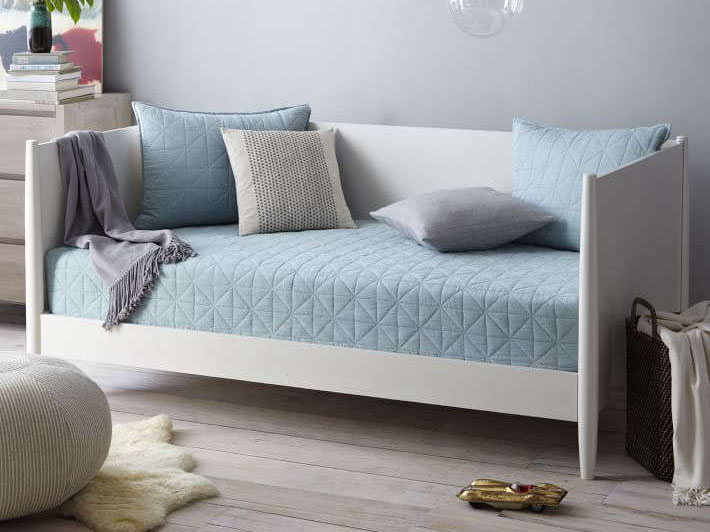

A mid-century daybed is what happens when smart design, good posture, and a love of naps decide to collaborate. It has the easy charm of a sofa, the practicentury modern daybed does not scream for attention. It just sits there looking polished, useful, and suspiciously photogenic. In a guest room, it keeps things flexible. In a home office, it quietly says, “Yes, I can host visitors, but I can also hold your reading pile and your dramatic throw blanket.” In a small apartment, it may be the hardest-working square footage hero in the entire home.
That balance of form and function is exactly why the style still works today. Mid-century design has always loved clean lines, practical living, warm wood, and furniture that earns its keep. A daybed fits that philosophy beautifully. It is streamlined without being cold, stylish without being fussy, and useful without looking like it came from the sad aisle of compromise furniture.
What Makes a Daybed “Mid-Century”?
Not every daybed with wooden legs gets to wear the mid-century crown. A true mid-century daybed usually borrows from the design language that became popular in the United States during the postwar decades: clean profiles, tapered or elegant legs, minimal ornamentation, natural materials, and shapes that feel simple but never boring.
In plain English, that means the best examples tend to have:
1. Clean, low-fuss lines
Mid-century furniture avoids bulky drama. Instead, it leans into sleek frames, slim arms, crisp edges, and a lighter visual footprint. Even upholstered versions usually feel tailored rather than overstuffed. Think “well-dressed and calm,” not “trying too hard.”
2. Warm wood tones
Walnut, oak, teak-inspired finishes, and other natural wood looks are a big part of the appeal. Wood gives the piece warmth and helps it feel timeless instead of trendy. A wooden daybed frame can make a room feel grounded even when the rest of the décor is modern and minimal.
3. A light profile
Mid-century furniture often appears slightly lifted, thanks to legs that expose more floor. That detail matters. It keeps a daybed from looking heavy, which is especially important in smaller rooms where bulky furniture can make the walls feel like they are inching closer out of spite.
4. Practical beauty
Mid-century style has always favored furniture that works hard. A daybed is already a multitasker by nature, so it fits right in. It can function as seating by day, sleeping space by night, and a design feature around the clock. That is a stronger résumé than most office interns.
Why a Mid-Century Daybed Works So Well in Modern Homes
Homes today are expected to do more than ever. A spare bedroom may also be an office. A den may double as a guest room. A living room corner may become a reading nook, streaming zone, or unofficial snack headquarters. That is where the daybed shines.
Unlike a traditional bed, a daybed usually has three sides, which helps it read more like a lounging piece when styled properly. Unlike a sleeper sofa, it often uses a real mattress, which means guests are less likely to wake up feeling like they spent the night wrestling a folded pretzel. For anyone who values comfort and flexibility, that is a big win.
A daybed for small spaces is especially useful because it can sit against a wall and visually behave like a sofa. It gives you seating without sacrificing the ability to host an overnight guest. Add a trundle or storage drawers, and suddenly one piece is doing the work of three. Honestly, it deserves a tiny trophy.
Best Rooms for a Mid-Century Daybed
Home office + guest room
This is probably the most popular setup, and for good reason. A guest room daybed keeps the room functional during the week while still being guest-ready. Pair it with a desk, a floor lamp, and a compact side table, and the room feels intentional rather than “we shoved a bed beside the printer and hoped for the best.”
Studio apartment
In a studio, every furniture decision matters. A mid-century daybed helps separate “sleeping” from “living” without adding visual clutter. Styled with pillows during the day, it feels like seating. At night, it transforms into a real bed setup with much less drama than a fold-out sofa.
Living room or den
A daybed in a living space creates an elegant lounging zone. It can replace a chaise, complement a sofa, or stand alone in a sunny corner. In wood or leather, it often feels architectural. In upholstery, it can be cozy and sculptural. Either way, it is the furniture equivalent of someone who knows exactly how to hold a martini glass.
Teen room or kid room
A twin-size wooden daybed with a trundle is a smart option for sleepovers, changing needs, and rooms that have to function as both hangout space and sleep zone. It grows up nicely, which is more than we can say for every neon beanbag chair.
How to Choose the Right Mid-Century Daybed
Measure first, fall in love second
Most daybeds are designed around a twin mattress, though some are made for full-size mattresses. A twin is often perfect for one sleeper and works well in compact rooms. A full-size version gives you more lounging room and can be a better pick if adults will use it regularly.
Also measure the room around the piece, not just the wall where it sits. You want space for walking, side tables, and the visual breathing room that keeps a mid-century silhouette looking airy. A beautiful daybed loses some of its magic if it looks wedged in like the final suitcase on a family vacation.
Pick a frame material that matches your lifestyle
If you love a classic look, a wood frame is hard to beat. It highlights the natural-material side of mid-century design and feels crisp and timeless. Upholstered frames are softer and often more lounge-friendly, especially if you expect people to sit on the daybed often. Leather can look especially sharp in a mid-century room, bringing a tailored, slightly Mad Men energy without requiring actual martinis at noon.
Think about how often it will be slept on
If the daybed is mostly for reading, scrolling, and pretending to answer emails while actually watching videos, you can prioritize style and seating comfort. If guests will sleep on it often, invest in a quality mattress. This is not the place to save money and then hand your visitors an apology blanket.
Consider a trundle or storage
A mid-century modern trundle daybed is ideal if you need extra sleeping capacity. Storage drawers are also useful for linens, pillows, or the mysterious collection of throws every stylish home seems to accumulate. Function does not have to look boring, and boring does not deserve your floor space.
Styling Tips That Keep the Look Polished
Use pillows strategically
The quickest way to make a daybed feel like seating is with pillows. If the frame has a back, layer larger pillows first and add a few smaller accent cushions in front. If the frame is more open, keep the styling lighter so the shape stays visible. Mid-century design likes personality, but it does not want to be buried under sixteen random throw pillows and a crocheted existential crisis.
Choose the right bedding
For a clean look, use a fitted sheet, a slim coverlet, and one folded throw. That keeps the daybed guest-ready without making it look overly bed-like during the day. In mid-century spaces, the goal is usually tailored comfort, not an avalanche of ruffles.
Add a side table and lamp
A daybed becomes more useful when it has company. A small walnut side table, a ceramic lamp, or a sculptural floor lamp instantly turns it into a reading nook. Bonus points if you add one object that looks clever enough to make people assume you own art books you have actually finished.
Play with color the smart way
Mid-century rooms often look best with a warm neutral base and controlled hits of color. Olive, rust, mustard, navy, cognac, and deep green all pair beautifully with wood tones. You do not need every color in the retro rainbow. One or two accents will do the job without making your room look like a time-traveling bowling alley.
Popular Mid-Century Daybed Looks
Walnut frame with neutral mattress
This is the classic. Clean lines, warm wood, minimal fuss. It works in guest rooms, offices, and open-plan spaces because it feels refined without becoming visually loud.
Leather daybed with tufting
For a moodier look, leather adds sophistication and structure. Tufted details can nod to the 1960s while still feeling current. This style works beautifully in dens, libraries, and spaces that want a little masculine edge.
Fully upholstered sculptural daybed
This version softens the mid-century profile while keeping the silhouette sleek. It is comfortable, elegant, and often works well in homes where the daybed will be used more like a sofa or lounge piece than a nightly bed.
Daybed with trundle for multifunction rooms
If flexibility is your love language, this is the pick. It keeps the room clean and stylish while making space for extra guests. It is especially handy in family homes, vacation spaces, and any room that needs to perform without making a fuss about it.
Common Mistakes to Avoid
Buying based on looks alone
Yes, aesthetics matter. No, aesthetics are not enough. A stunning frame with a poor mattress or awkward height will lose its charm fast. You are buying a piece to live with, not just to impress your camera roll.
Ignoring proportions
A long daybed in a tiny room can feel overwhelming. A tiny daybed in a large room can look lonely. Mid-century design relies on balance, so proportions matter more than people think.
Overdecorating it
The silhouette is part of the beauty. If you hide every clean line under giant cushions, thick throws, and decorative clutter, you lose what made the piece special in the first place.
Forgetting the mattress budget
Some daybeds are sold without a cushion or mattress, which can surprise buyers. Budget for the full setup from the start so the final result feels intentional and comfortable.
Is a Mid-Century Daybed Worth It?
For many homes, absolutely. A mid-century daybed combines flexibility, comfort, and timeless design in a way few furniture pieces can. It works for overnight guests, everyday lounging, reading corners, office conversions, and small-space living. It also manages to look stylish while doing all that, which is frankly more than can be said for most problem-solving furniture.
If you want one piece that adds character without clutter, helps a room multitask, and taps into the enduring appeal of mid-century modern furniture, a daybed is a smart buy. It is practical, polished, and just a little bit glamorous in that low-key, “I definitely know my way around a design magazine” sort of way.
Living With a Mid-Century Daybed: Real-Life Experiences and Everyday Use
The best thing about a mid-century daybed is not how it looks in a staged photo. It is how naturally it settles into everyday life. In real homes, this piece tends to become a favorite faster than expected. Someone buys it for guests, then discovers the dog has claimed one corner, the kids use it as a fort headquarters, and the adults mysteriously keep drifting toward it with coffee, a book, and exactly zero intention of being productive.
In a small apartment, the experience is often about relief. A bulky sofa can dominate the room, but a slim, raised daybed with tapered legs feels visually lighter. The room suddenly breathes better. During the day, it works as a place to sit, read, or answer messages. At night, it feels more like a proper bed than a typical pull-out couch. That difference matters. People notice when a room feels flexible instead of cramped, and a daybed tends to create that effect quietly.
In a home office, the experience is different but equally useful. The room keeps its daily identity as a workspace, but when family visits or friends stay over, the switch is easy. Add fresh sheets, a folded throw, and a reading lamp, and the room becomes guest-ready without any theatrical furniture wrestling. Many homeowners like that a daybed does not force the whole room to revolve around a bed. It lets the room stay balanced.
There is also the styling experience, which sounds less exciting than it is. A mid-century daybed is one of those rare pieces that looks good with very little effort. A neutral mattress, two large pillows, one patterned cushion, and a throw are often enough. It does not demand constant rearranging. Even better, it can handle seasonal changes well. In cooler months, it looks cozy with wool textures and warm colors. In warmer months, swap in lighter linen and one crisp accent pillow, and it suddenly feels breezy and fresh.
Guests usually appreciate the difference too. A real mattress feels more welcoming than an emergency sleep surface. That turns a polite overnight stay into an actually comfortable one. And unlike some guest beds that make a room feel permanently occupied, a daybed gives the space back to you the next morning.
Emotionally, that may be the hidden charm of the piece. A mid-century daybed makes a home feel prepared without looking stiff, stylish without looking precious, and lived-in without looking messy. It invites use. It says, “Please sit down,” instead of “Please admire me from a respectful distance.” In a world full of furniture that is either all function or all fashion, that kind of balance feels refreshingly human.
Conclusion
A mid-century daybed is more than a stylish extra. It is a practical, flexible, and enduring furniture choice that works in guest rooms, home offices, apartments, dens, and just about any corner that could use more comfort and character. With its warm wood tones, clean lines, and multitasking personality, it captures the spirit of mid-century design perfectly: beautiful, useful, and never overdone.
Choose the right size, invest in a comfortable mattress, style it with restraint, and your daybed can become one of the most versatile pieces in your home. It will host naps, guests, reading sessions, and lazy Sundays with equal grace. And really, any furniture that can do all that while still looking cool deserves a little respect.