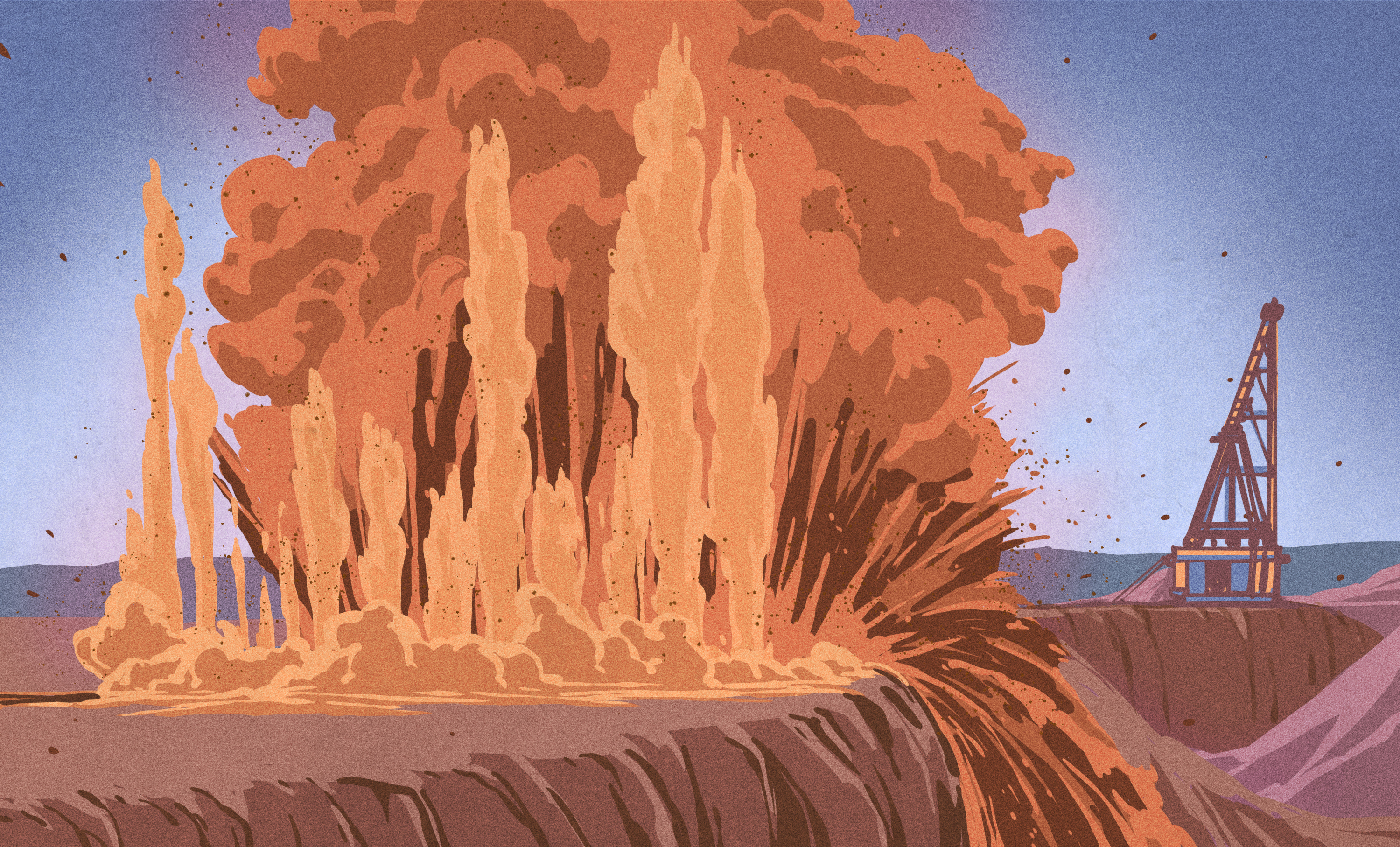

Mining begins with a surprisingly simple question: how do you persuade a mountain, orebody, or stubborn bench of rock to become small enough to move? The answer is not “ask politely,” although every mine engineer has probably tried that internally at least once. In hard-rock mining, quarrying, and many surface operations, the practical answer is drilling and blastinga controlled, engineered process that breaks rock so it can be loaded, hauled, crushed, processed, and eventually refined into usable metals, minerals, aggregates, and industrial materials.
Drilling and blasting sits near the beginning of the mining value chain, but its influence reaches all the way downstream. A good blast can improve shovel productivity, reduce crusher bottlenecks, lower energy use, and help create safer benches and roadways. A poor blast can leave oversized boulders, unstable walls, floor humps, flyrock hazards, fumes, vibration complaints, and a production meeting where everyone suddenly finds their coffee extremely interesting.
This article explains how drilling and blasting work in mining and refining, why blast design matters, how modern technology is changing the field, and why safety is the loudest voice in the roompreferably before anything else gets loud.
What Is Drilling and Blasting in Mining?
Drilling and blasting is the planned use of drilled holes and commercial explosives to fragment rock. The process is widely used in surface mines, underground mines, quarries, tunneling, and major civil construction projects. In mining, the goal is not simply to “blow up rock.” The goal is to create the right size distribution of broken material, known as fragmentation, while controlling vibration, airblast, fumes, dust, flyrock, wall damage, and cost.
In a typical production cycle, engineers and geologists first study the rock mass. Drill operators then create blastholes according to a blast design. Licensed blasting professionals load approved explosive products into those holes, add stemming material to confine the energy, clear the blast area, initiate the blast under strict procedures, inspect the result, and then allow loading and hauling to begin.
That sounds straightforward, but the rock has opinions. Granite, limestone, coal overburden, copper ore, iron formation, and gold-bearing volcanic rock all behave differently. Natural joints, bedding planes, faults, water, weathering, and mineral hardness can change how a blast performs. In drilling and blasting, geology is not background scenery. It is the boss battle.
Why Drilling and Blasting Matter to Refining
Refining may happen later in the chain, but it is affected by decisions made at the blast pattern. The size and consistency of blasted rock influence crushing, grinding, screening, sorting, leaching, smelting, and other mineral-processing steps. If the blast produces too many oversized rocks, equipment may need secondary breaking. If it produces excessive fines, valuable material may be harder to handle or process efficiently.
In metal mining, ore must often pass through crushing and grinding circuits before minerals can be separated from waste rock. Grinding is energy-intensive, so anything that improves feed consistency can matter. In aggregate production, customers want specific sizes for concrete, asphalt, road base, ballast, drainage stone, and other uses. A well-designed blast helps the plant produce those sizes with less rework.
Think of drilling and blasting as the first rough cut in a long manufacturing process. If the first cut is sloppy, everyone downstream has to work harder. If it is clean and controlled, the whole operation breathes easier.
The Main Stages of Drilling and Blasting
1. Site Investigation and Geology Review
Before any blasthole is drilled, mine planners review the bench, orebody, geologic structure, rock strength, water conditions, nearby infrastructure, and environmental limits. The question is not only “Where is the rock?” but “How will this rock break, move, and behave after the blast?”
Geologic structures can be helpful or troublesome. Natural cracks may assist fragmentation, but they can also create pathways for explosive gases, cause uneven energy distribution, or contribute to flyrock if not accounted for. Water in holes may require different explosive products or handling procedures. Weak seams may cause drill deviation or unstable blastholes. A blast design that ignores geology is basically a strongly worded guess.
2. Blast Design
Blast design is the engineering plan for how the rock will be drilled, loaded, and initiated. Important design concepts include hole diameter, hole depth, bench height, burden, spacing, stemming, subdrilling, explosive type, initiation timing, expected fragmentation, and safe exclusion zones.
Because explosives are hazardous and highly regulated, blast design is handled by trained, certified, and licensed professionals. The design must satisfy production goals while meeting legal, safety, and environmental requirements. In the United States, agencies such as MSHA, OSHA, OSMRE, ATF, and state authorities help shape the regulatory landscape depending on mine type, location, and activity.
3. Drilling the Blast Pattern
Drilling translates the blast design from a plan into the ground. Surface mines often use rotary blasthole drills, down-the-hole drills, or top-hammer systems depending on rock type, hole size, and bench geometry. Underground mines may use jumbo drills to create face patterns, production holes, or development rounds.
Accurate drilling is critical. A hole that is too shallow can leave a hard toe at the floor. A hole that deviates from its planned angle can change the burden, reduce fragmentation quality, or increase risk. A hole that collapses or intersects a void can create loading problems. Modern drill rigs increasingly use GPS, onboard sensors, automated drill controls, digital drill plans, and data recording to improve precision.
4. Loading and Stemming
After drilling, qualified blasting personnel inspect the blastholes and load them according to the approved plan. Commercial explosives used in mining may include products such as bulk emulsions, water gels, packaged explosives, or ANFO-type blasting agents, depending on conditions and regulations. The explosive column is usually confined with stemming material, which helps direct energy into the rock rather than letting it vent uselessly upward like a very expensive sneeze.
Loading is not a casual activity. It requires strict control of products, personnel, communication, weather conditions, exclusion areas, misfire procedures, and documentation. Mines treat this stage with serious attention because errors can affect not only production but also lives.
5. Initiation and Firing
Blasts are initiated using controlled systems designed for industrial blasting. Timing matters because it affects how the rock breaks and moves. Proper delay timing can help create free faces, reduce vibration, improve fragmentation, and control the direction of movement.
Before firing, the blast area must be cleared, warnings must be given, access must be controlled, and people and equipment must be placed at safe distances or under proper protection. The blaster in charge has responsibility for ensuring conditions are safe. In blasting, “probably fine” is not a procedure. It is a sentence starter that should make everyone nervous.
6. Post-Blast Inspection and Muckpile Assessment
After a blast, trained personnel inspect the area before work resumes. They look for misfires, unstable ground, fumes, flyrock, wall damage, floor conditions, and the shape of the muckpile. The broken rock is then evaluated for fragmentation and diggability. If the muckpile is too tight, too coarse, or poorly displaced, loading equipment may lose productivity. If the blast performs well, shovels and loaders can work efficiently, crushers receive more consistent feed, and the mine plan stays on track.
Key Blast Design Terms Explained
Burden
Burden is the distance from a blasthole to the nearest free face or the direction where the rock is expected to move. If burden is excessive, the explosive energy may not break the rock effectively. If burden is too small, the blast may vent energy too quickly and create hazards. Getting burden right is one of the classic challenges in blast design.
Spacing
Spacing is the distance between adjacent blastholes. It affects how energy overlaps between holes and how uniformly the rock breaks. Proper spacing helps avoid both boulders and excessive fines. In practical terms, spacing is one of the knobs engineers adjust to make the blast behave less like chaos and more like expensive, noisy geometry.
Stemming
Stemming is inert material placed in the top portion of a blasthole to confine gases and improve energy transfer into the rock. Good stemming helps reduce flyrock, airblast, and poor fragmentation. Poor stemming can waste energy and create serious safety risks.
Subdrilling
Subdrilling means drilling slightly below the planned floor elevation to help break rock at the base of the bench. Without adequate floor breakage, a hard toe may remain, making loading difficult and creating uneven working surfaces.
Powder Factor
Powder factor describes the relationship between explosive quantity and the amount of rock broken. It is a performance indicator, not a magic number. The right powder factor depends on geology, design goals, explosive type, regulations, and practical results.
Surface Mining vs. Underground Mining
Surface mining drilling and blasting usually involves benches, large patterns, wide access, and heavy equipment. The blast must control rock movement, bench stability, wall damage, vibration, airblast, and public impact. Surface operations may include metal mines, coal mines, limestone quarries, granite quarries, and aggregate pits.
Underground drilling and blasting is more constrained. Mines must manage ventilation, ground support, confined spaces, equipment access, gas exposure, and the shape of tunnels or stopes. Underground blasts may be used for development headings, production stopes, raises, shafts, and drawpoints. Ventilation is especially important because blasting can generate fumes such as carbon monoxide and nitrogen oxides. Crews must follow re-entry rules and gas testing procedures before returning to the area.
In both settings, the principle is the same: use controlled energy to fracture rock safely and efficiently. The details, however, change dramatically. A blast pattern that works beautifully in a wide limestone quarry might be completely inappropriate in a narrow underground heading. Mining is not a copy-and-paste industry, no matter how much spreadsheets try to convince us otherwise.
Safety Risks in Drilling and Blasting
Flyrock
Flyrock is rock thrown beyond the intended blast area. It is one of the most serious blasting hazards because it can damage equipment, buildings, and vehicles, and it can injure or kill people. Preventing flyrock requires proper blast design, accurate drilling, correct loading, sufficient stemming, good communication, exclusion zones, and strict control of the blast area.
Ground Vibration and Airblast
Blasting creates ground vibration and air overpressure. These effects must be managed, especially near homes, roads, utilities, pipelines, historical structures, or sensitive equipment. Mines may use seismographs, monitoring programs, adjusted timing, smaller blast sizes, or modified designs to keep vibration and airblast within regulatory and site-specific limits.
Fumes and Dust
Blasting can produce fumes, including carbon monoxide and nitrogen oxides. Dust can also affect visibility and air quality. Underground mines require careful ventilation and gas testing before re-entry. Surface mines must also consider wind direction, weather, nearby communities, and worker exposure.
Misfires
A misfire occurs when part of a blast does not detonate as intended. Misfires are dangerous and must be handled only by trained blasting professionals using established procedures. No one should approach, investigate, drill, dig, or disturb a suspected misfire unless the site’s authorized safety process has been followed.
Highwalls, Benches, and Ground Control
Blasting changes the ground. It can create loose rock, damaged faces, unstable slopes, or overbreak. After a blast, inspection is essential before equipment and workers return. Stable ground is not a decorative feature in mining. It is the difference between a productive day and a very bad report.
Technology Is Changing Drilling and Blasting
Modern drilling and blasting is increasingly digital. Mines use GPS-guided drills, automated drill cycles, high-precision hole navigation, drone surveys, laser scanning, fragmentation analysis, vibration monitoring, and blast-management software. These tools help compare planned holes with actual holes, adjust designs, document performance, and improve future blasts.
Automation is especially important in drilling. Semi-autonomous and autonomous drilling systems can improve consistency, reduce operator exposure, and record detailed information about hole depth, angle, penetration rate, material changes, and drilling conditions. This “as-drilled” data can help blasting teams adapt to real field conditions rather than relying only on the original plan.
Digital blasting systems also support better timing control, traceability, and design flexibility. The future of drilling and blasting is not just bigger machines. It is better data. The rock may still be ancient, but the workflow around it is becoming very modern.
Environmental and Community Considerations
Mining operations must manage the effects of blasting on the surrounding environment and community. Common concerns include noise, vibration, dust, airblast, flyrock, traffic, visual impact, and water quality. In quarrying, especially near populated areas, blasting may be scheduled at consistent times, monitored with instruments, and communicated to nearby residents.
Good community relations often depend on predictability and transparency. People may tolerate a controlled blast at a known time far better than a surprise boom that rattles windows and pets. Mines that document blasts, monitor vibration, respond to complaints, and explain procedures tend to build more trust than operations that treat the public like an annoying background app.
Environmental control also includes water management. Wet blastholes, runoff, sediment, and explosive residues must be handled carefully. Responsible operations treat drilling and blasting as part of a larger environmental management system, not as an isolated production event.
How Drilling and Blasting Improve Mine Economics
Blasting is not just a cost. It is an investment in the entire mining process. A well-optimized blast can reduce digging time, increase truck and shovel productivity, improve crusher throughput, reduce secondary breaking, improve slope stability, and lower energy use in comminution. A poorly designed blast may appear cheaper on paper but become expensive once oversized rock, delays, maintenance, and safety issues arrive.
Mine-to-mill thinking looks at the whole process rather than each department in isolation. The blasting team, geology team, mine planners, maintenance crew, crusher operators, and processing plant all influence one another. When these groups communicate, the mine can optimize total cost instead of simply minimizing blasting cost. That is important because the cheapest blast is not always the most economical blast. Sometimes it is just the opening act for a very expensive headache.
Best Practices for Responsible Drilling and Blasting
Responsible drilling and blasting begins with professional planning. Designs should account for geology, equipment capability, nearby hazards, environmental limits, and production targets. Drill operators need accurate plans and feedback. Blasting crews need clear communication, secure handling procedures, weather awareness, and authority to stop work when conditions are unsafe.
Monitoring and measurement are also essential. Mines should compare planned patterns with as-drilled data, measure blast vibration where needed, inspect post-blast results, track fragmentation, and investigate any unusual outcomes. Continuous improvement turns each blast into a lesson rather than a one-time event.
Training is another cornerstone. Blasters, drillers, supervisors, engineers, and equipment operators all need to understand their roles. In the best operations, the driller does not simply “make holes,” and the blaster does not simply “load holes.” They work as a team, because the blast does not care which department made the mistake.
Field Experience: What Drilling and Blasting Teaches on the Ground
Anyone who has spent time around mining operations learns that drilling and blasting is equal parts engineering, discipline, and humility. On a computer screen, a blast pattern can look perfect: tidy rows, clean spacing, crisp design notes, and a production forecast that smiles politely. Out on the bench, the real world adds weather, broken ground, water-filled holes, drill steel wear, shifting priorities, and rock that behaves like it read the plan and disagreed out of principle.
One common lesson is that communication saves money and prevents trouble. A driller who notices unusually soft ground, a void, excessive water, or abnormal penetration rates is holding valuable information. If that information reaches the blasting team early, the plan can be reviewed before loading begins. If it does not, the blast may deliver poor fragmentation, uneven floors, or unexpected movement. The humble radio call can be worth more than a beautiful spreadsheet.
Another field lesson is that precision compounds. A small hole-location error may not seem dramatic. A slight depth variation may look harmless. A bit of stemming inconsistency may appear minor. But when these small issues repeat across a pattern, they can affect the entire blast. Mining rewards consistency. The best crews develop routines: checking drill setup, confirming hole depth, marking problem holes, documenting changes, and reviewing blast performance afterward. None of this is glamorous, but neither is waiting for a hydraulic breaker to chew through boulders that should have been fragmented the first time.
Experienced crews also learn to respect weather. Wind can influence dust and fumes. Rain can change road conditions and fill blastholes. Lightning can stop operations completely. Heat, cold, and mud all affect people and equipment. A good blasting schedule includes flexibility because nature rarely accepts calendar invites.
Perhaps the biggest lesson is that safety culture is visible in small behaviors. Are access roads blocked before the blast? Are warning signals clear? Does everyone know the blast time? Are contractors included in the communication loop? Are people comfortable stopping the job if something looks wrong? The safest operations do not rely on luck or loud personalities. They rely on systems, training, accountability, and the shared understanding that no tonnage target is worth a life.
There is also a deep satisfaction in seeing a well-executed blast. The sound rolls across the pit, the bench lifts and settles, dust clears, and the muckpile looks exactly as planned. The shovel operator gets good digging. The crusher sees steady feed. The engineers get useful data. The supervisors get fewer surprises. For a moment, rock, math, machinery, and teamwork all agree. In mining, that counts as poetryjust with more hard hats.
Conclusion
Drilling and blasting is one of the most important links between geology and production. It transforms hard rock into manageable material, shapes the efficiency of loading and hauling, influences crushing and refining, and affects safety, cost, environmental performance, and community trust. Done well, it is controlled engineering. Done poorly, it becomes a chain reaction of problems that travels through the entire mining operation.
The modern mining industry is moving toward smarter drilling, better blast design, improved monitoring, and more integrated mine-to-mill optimization. Yet the fundamentals remain unchanged: understand the rock, drill accurately, design responsibly, communicate clearly, control hazards, measure results, and never treat explosives casually. The mountain may be old, but the best mining teams keep learning every time they break a piece of it.
Note: This article is for educational publishing purposes only. Drilling and blasting must be designed and performed exclusively by trained, certified, and legally authorized professionals following all applicable federal, state, local, and site-specific safety regulations.