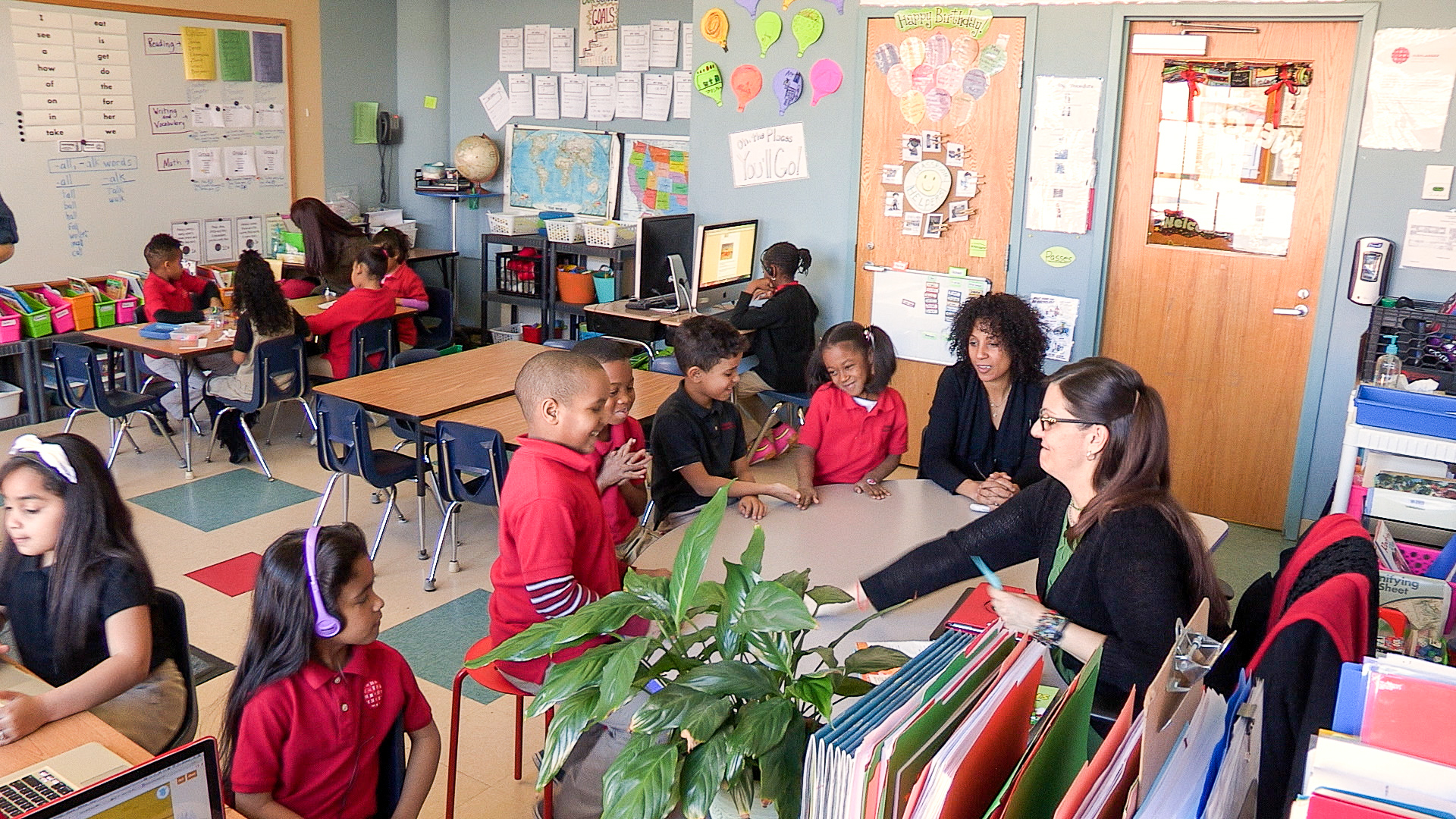

Station rotations in blended learning can feel a little like running an airport: one group is landing at the teacher table, another is taking off into an online activity, and a third is circling the runway with sticky notes, scissors, or a collaborative task. When the system works, the classroom hums. When it does not, students drift, transitions eat instructional time, and the teacher wonders why the “simple rotation plan” now resembles a spaghetti diagram drawn by a caffeinated raccoon.
The good news is that station rotation is one of the most practical blended learning models because it does not require a complete classroom makeover. At its core, the model asks students to rotate through a set of learning experiences, usually including a teacher-led station, an online learning station, and an offline or collaborative station. The goal is not to use technology for the sake of looking modern. The goal is to create a flexible structure where students receive targeted instruction, practice independently, collaborate meaningfully, and build ownership of their learning.
Optimizing station rotations in blended learning means designing the system with intention: clear learning goals, smart grouping, strong routines, useful data, and activities that actually deserve students’ time. A station should never be educational wallpaper. Every station should help students move closer to the objective.
What Is the Station Rotation Model?
The station rotation model is a blended learning strategy in which students move through different stations on a fixed schedule or teacher-directed sequence. At least one station includes online learning, while other stations may involve teacher-led instruction, peer collaboration, independent practice, hands-on activities, discussion, reading, writing, problem solving, or reflection.
In a typical classroom, a station rotation might look like this:
- Teacher-led station: The teacher works with a small group on targeted instruction, feedback, reteaching, enrichment, or guided practice.
- Online station: Students use digital tools, adaptive software, videos, simulations, quizzes, or learning management system assignments.
- Offline station: Students complete collaborative tasks, hands-on activities, reading responses, math practice, experiments, graphic organizers, or discussion prompts.
The beauty of the model is that it breaks the “one teacher, thirty students, one lesson, one pace” problem. Instead of trying to meet every learner’s needs from the front of the room, the teacher creates smaller learning communities within the classroom. That makes differentiation more realistic and less like juggling flaming bowling pins.
Why Station Rotations Work in Blended Learning
Station rotations support blended learning because they combine the strengths of face-to-face instruction with the flexibility of digital learning. Students do not sit passively while the teacher delivers the same lesson to everyone. They move, think, practice, talk, receive feedback, and use technology in purposeful ways.
They Make Differentiation Manageable
Differentiation is easy to praise and hard to execute. In a whole-group lesson, a teacher may notice that five students need reteaching, six are ready for a challenge, and three are pretending to understand while quietly developing a deep emotional relationship with the ceiling tiles. Station rotation gives teachers time to meet students in smaller groups and adjust instruction based on need.
For example, in a middle school math class, the teacher-led station might provide step-by-step support on solving equations for one group, error analysis for another, and extension problems for students who are ready to apply the concept in a real-world scenario. The rotation structure allows the teacher to teach the same standard at different levels of support.
They Increase Student Engagement
Students often engage more deeply when they experience variety. A strong station rotation might include a short video, a teacher conference, a partner challenge, a hands-on task, and an exit reflection. This variety gives students multiple ways to process content and demonstrate understanding.
However, variety alone is not enough. A classroom can have many stations and still produce very little learning. Engagement comes from meaningful tasks, clear expectations, appropriate challenge, and student accountability.
They Create More Opportunities for Feedback
Feedback is one of the biggest advantages of station rotations. During whole-group instruction, teachers often provide general feedback. During small-group instruction, feedback becomes more precise. A teacher can listen to student thinking, identify misconceptions, ask follow-up questions, and adjust instruction immediately.
Online stations can also generate useful data. Digital quizzes, practice platforms, discussion boards, and short formative assessments can show which students are ready to move forward and which need more support. The key is using that data quickly, not admiring it like a museum exhibit.
Start With the Learning Goal, Not the Technology
The fastest way to weaken a station rotation is to begin with the question, “What app should I use?” Technology is a tool, not the lesson’s main character. The better question is, “What do students need to learn, practice, discuss, or create?”
Before designing stations, identify the learning objective. Then decide which learning experience best supports each part of that objective. If students are learning how to analyze theme in literature, one station might involve teacher-led modeling with a short passage, another might use an online annotation tool, and a third might ask pairs to compare theme statements and defend their reasoning.
If students are learning fractions, the teacher station might target misconceptions, the online station might provide adaptive practice, and the offline station might use fraction tiles or real-world recipe problems. The station design should make the learning more accessible, not simply more colorful.
Designing Effective Stations
Each station should have a clear purpose. A helpful way to plan is to assign each station a role: instruction, practice, collaboration, application, assessment, or reflection.
The Teacher-Led Station
The teacher-led station is often the highest-value station because it gives students direct access to expert guidance. But teacher-led does not mean teacher-monologue. The small-group table should not become a miniature lecture hall with fewer chairs.
Use the teacher-led station for:
- Targeted mini-lessons based on student data
- Guided practice with immediate feedback
- Conferencing on writing, projects, or problem-solving strategies
- Reteaching difficult concepts
- Enrichment for advanced learners
- Academic language support for multilingual learners
Keep teacher talk focused and interactive. Ask students to explain their thinking, compare approaches, correct sample errors, or apply a strategy while you coach. The teacher station should feel like a workshop, not a sermon.
The Online Station
The online station should do something valuable that technology does especially well. That may include self-paced practice, instant feedback, multimedia instruction, adaptive tasks, simulations, digital collaboration, or quick checks for understanding.
Strong online station activities include:
- Short instructional videos with embedded questions
- Adaptive practice aligned to the lesson objective
- Digital exit tickets or quick quizzes
- Interactive simulations in science or math
- Online discussion prompts with sentence starters
- Research tasks with curated resources
Avoid using the online station as a digital babysitter. If the task is low-level, unrelated, or impossible to monitor, students will notice immediately. And by “notice,” we mean they will finish in six minutes and spend the remaining time testing the structural limits of your classroom management plan.
The Offline or Collaborative Station
The offline station is where students can talk, build, sort, debate, solve, write, sketch, and apply learning away from screens. This station is especially useful for collaboration, hands-on learning, peer explanation, and deeper processing.
Examples include:
- Card sorts for vocabulary, concepts, or examples
- Partner problem-solving with explanation roles
- Close reading with annotation prompts
- Lab observation tasks
- Gallery walks with feedback notes
- Discussion circles using academic conversation stems
- Project planning or design challenges
For collaborative stations, assign roles when needed: facilitator, recorder, materials manager, reporter, or checker. Roles reduce confusion and prevent one student from doing all the thinking while another becomes the unofficial pencil security guard.
How to Group Students for Station Rotations
Grouping can make or break station rotation. The best grouping strategy depends on the lesson purpose. Sometimes students should be grouped by readiness so the teacher can provide targeted support. Other times, mixed-ability groups are better because students benefit from peer modeling, discussion, and varied perspectives.
Use readiness groups when the teacher-led station is focused on specific skill gaps. Use mixed groups when the task requires discussion, creativity, problem solving, or peer support. Use interest-based groups when motivation and student choice are central to the activity.
Most importantly, keep groups flexible. A student who needs support with one standard may be advanced in another. Fixed labels can quietly lower expectations. Flexible grouping communicates a healthier message: groups are based on today’s learning need, not permanent identity.
Optimizing Timing and Transitions
Station timing should match the task, the age of the students, and the complexity of the learning objective. Many teachers begin with 10- to 15-minute stations, then adjust based on what they observe. Younger students may need shorter stations and more explicit routines. Older students may handle longer blocks, especially for deeper reading, writing, labs, or projects.
Build transition time into the plan. If every station is scheduled for exactly 15 minutes, do not pretend students will teleport silently from one area to another. They will stand, gather materials, ask if they need their notebook, remember they own a water bottle, and occasionally move with the urgency of a sleepy parade.
Effective transitions usually include:
- A visible timer
- A clear signal for stopping
- Written station directions
- Materials prepared in advance
- Assigned movement paths
- A short reset routine before the next station begins
Practice the routine before expecting perfection. The first few rotations should focus as much on procedures as content. Once students know the system, instructional time increases dramatically.
Accountability: The Secret Ingredient
Independent learning time can be powerful, but only when students know what success looks like. Every station needs an accountability tool. This does not mean every task must produce a worksheet. It means students should have a way to show thinking, progress, or completion.
Useful accountability tools include:
- Station recording sheets
- Digital checks for understanding
- Reflection prompts
- Exit tickets
- Peer feedback forms
- Teacher observation checklists
- Student goal trackers
Accountability should not feel like surveillance. The goal is to help students become more aware of their learning. A simple reflection such as “What strategy helped you today?” or “Where did you get stuck?” can give the teacher valuable information while helping students build metacognition.
Using Data Without Drowning in It
Blended learning can produce a lot of data, but more data does not automatically mean better teaching. Teachers need a simple system for collecting, reviewing, and acting on information.
Focus on a few useful data points:
- Who mastered the objective?
- Who needs reteaching?
- Which misconception appeared most often?
- Which students need enrichment?
- Which station needs redesign?
Use quick formative assessments to adjust groups for the next lesson. For example, after an online quiz, students who missed questions about identifying evidence might meet with the teacher first during the next rotation. Students who showed mastery might move into an extension task where they evaluate the strength of different pieces of evidence.
Data should help the teacher make better instructional decisions. It should not become a second full-time job with worse snacks.
Common Mistakes to Avoid
Too Many Stations
More stations do not automatically create better learning. In fact, too many stations can create shallow tasks, rushed transitions, and exhausted students. Start with three stations. Add more only when there is a clear instructional reason.
Unclear Directions
If students ask the same question nine times, the problem may not be student attention. It may be the directions. Use task cards, slides, icons, checklists, or example products so students know what to do without interrupting the teacher-led station every 45 seconds.
Busywork at Independent Stations
Independent does not mean unimportant. If the task does not connect to the learning goal, students will treat it like filler. Every station should be worth doing.
No Plan for Early Finishers
Some students will finish early. Plan extension options before the lesson begins. These might include challenge problems, reflection questions, vocabulary review, independent reading, peer coaching, or project work.
Technology Without Purpose
A digital activity is not automatically blended learning. The online station should enhance learning through feedback, pacing, interaction, accessibility, or data. Otherwise, it is just a worksheet wearing a Wi-Fi hat.
Examples of Optimized Station Rotations
Elementary Reading Example
Objective: Students will identify the main idea and supporting details in an informational text.
- Teacher-led station: The teacher models how to identify the main idea using a short paragraph, then guides students through another example.
- Online station: Students complete a short digital reading passage with embedded comprehension questions.
- Collaborative station: Partners sort sentence strips into “main idea” and “supporting detail” categories and explain their choices.
Middle School Science Example
Objective: Students will explain how energy transfers in an ecosystem.
- Teacher-led station: Students analyze misconceptions about food chains and energy pyramids.
- Online station: Students use an interactive simulation to observe how changes in one population affect the ecosystem.
- Offline station: Students build a food web using organism cards and write cause-and-effect statements.
High School English Example
Objective: Students will analyze how an author develops a claim.
- Teacher-led station: The teacher works with students on identifying claims, evidence, and reasoning in a complex paragraph.
- Online station: Students annotate a digital article and respond to embedded prompts.
- Collaborative station: Small groups evaluate which evidence is strongest and prepare a brief explanation.
Classroom Management Tips for Smooth Rotations
Strong station rotations depend on strong routines. Students should know where to go, what to bring, what to do when stuck, how loud to be, how to ask for help, and what finished work looks like.
Consider creating a “before you ask the teacher” routine. Students might reread the directions, ask a partner, check the example, or place a help card on their desk. This protects the teacher-led station from constant interruptions while still giving students support.
Noise expectations also matter. Use clear voice levels for each station. A collaborative station will sound different from an independent online station, and that is fine. Productive noise is not the enemy. Random shouting about someone’s missing glue stick, however, may need a policy.
Making Station Rotation More Student-Centered
Once students understand the basic routine, add more agency. Give students limited choices within stations, such as choosing which practice set to complete, which article to read, which tool to use, or which product to create. Choice increases motivation when the options are meaningful and aligned to the objective.
Students can also help track their progress. A simple goal sheet can ask students to identify what they are working on, what evidence shows progress, and what support they need next. Over time, station rotation can shift from teacher-managed movement to student-owned learning.
Experiences and Practical Lessons From Optimizing Station Rotations
One of the most important lessons about optimizing station rotations in blended learning is that the first version is rarely the best version. A teacher may plan three beautiful stations, color-code the slides, prepare the materials, and imagine students rotating with the grace of a synchronized swim team. Then real life enters the room. The online platform needs a login reset. One group finishes early. Another group debates whether “analyze” means “write a sentence” or “stare thoughtfully at the page.” This is not failure. This is field research with backpacks.
In many classrooms, the first breakthrough comes when teachers stop trying to make every station equal. Equal time does not always mean equitable support. Some students may need more time with the teacher, while others need more time to apply skills independently. A strong rotation plan allows the teacher to make smart adjustments. For example, one group may spend extra minutes in guided practice while another begins an enrichment challenge. The schedule should serve the learning, not the other way around.
Another practical experience is that students need explicit training in independence. Teachers sometimes assume students know how to work independently because they are old enough to own hoodies, phones, and strong opinions about lunch. But independence is a skill. Students need models, practice, feedback, and routines. They need to know what to do when technology fails, when a partner is absent, when they are confused, or when they finish early. The more predictable the system is, the more freedom students can handle.
Teachers also discover that station quality matters more than station quantity. A three-station rotation with purposeful activities is stronger than a six-station circus. When teachers begin with fewer stations, they can monitor student behavior, collect better data, and refine tasks. Once routines are stable, they can add complexity. The best station rotations often look simple from the outside because the planning is doing quiet heavy lifting behind the scenes.
One experience that consistently improves rotations is using student feedback. After a lesson, ask students which station helped them learn most, which station confused them, and where they needed more time. Their answers are often refreshingly direct. A student might say, “The video helped, but the questions were too easy,” or “The group task was good, but nobody knew who was supposed to write.” That kind of feedback helps teachers improve design faster than guessing.
Finally, optimized station rotations work best when teachers see themselves as designers, not traffic controllers. The purpose is not merely to move students around the room. The purpose is to create a learning environment where instruction is targeted, technology is meaningful, collaboration is structured, and students become more responsible for their progress. When station rotations are planned with care, the classroom becomes more flexible, more responsive, and, yes, a little less like an airport during a thunderstorm.
Conclusion
Optimizing station rotations in blended learning is not about creating a trendy classroom layout or adding technology to every corner of the room. It is about designing purposeful learning experiences that help students receive the right support at the right time. The strongest station rotations begin with clear objectives, use flexible grouping, include meaningful online and offline work, protect teacher-led small-group instruction, and build routines that students can actually follow.
When done well, station rotation gives teachers a practical way to differentiate instruction without cloning themselves, which remains both scientifically complicated and professionally frowned upon. More importantly, it gives students multiple pathways into learning: direct instruction, digital practice, peer collaboration, hands-on application, and reflection. That is the real power of blended learning. It turns the classroom into a more responsive place where every station has a purpose and every student has a better chance to succeed.
SEO Tags