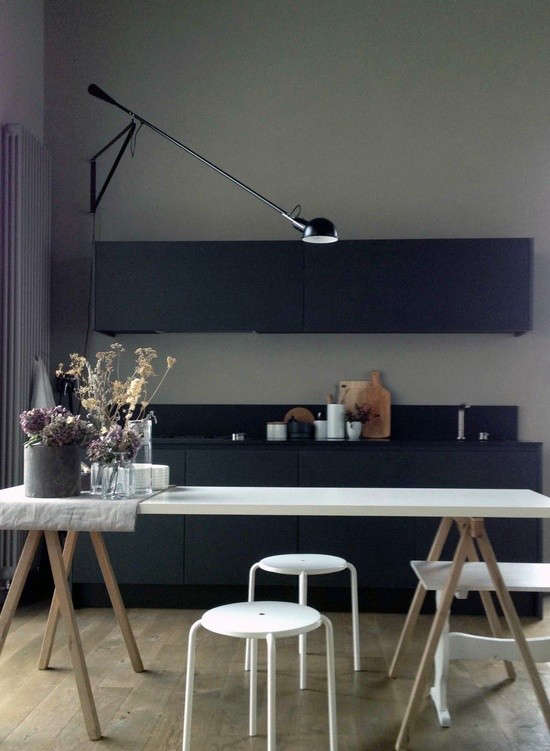

The Model 265 Wall Light is what happens when a sconce refuses to stay politely besideo in 1973, it stretches a slender arm deep into a room, balances that reach with a cast-iron counterweight, and aims light wherever it is needed. The result is part task lamp, part kinetic sculpture, and part architectural exclamation point.
Often called the Flos 265, this celebrated fixture can reach over a sofa, dining table, desk, or reading chair without occupying floor space or requiring a pendant directly above the activity. Its visual drama comes from practical engineering rather than decorative fuss, which is one reason the design still looks remarkably current more than half a century after its introduction.
Research note: Design history, construction, dimensions, movement, electrical variations, and available versions were cross-checked through manufacturer documentation, design publications, museum retail information, and authorized design retailers.
What Is the Model 265 Wall Light?
The Model 265 is a wall-mounted lamp that produces direct, adjustable light. Its structure is easy to understand at a glance: a painted steel arm, rotating metal reflector, chrome-plated brass support, tapered cast-iron counterweight, and steel wall fixture. Instead of hiding its mechanics, the lamp turns them into the design.
The regular version has an arm roughly 80.7 to 80.8 inches long. Its wall assembly measures about 33.4 inches by 13.7 inches, while plug-in models commonly include a cord close to 80 inches long. The Model 265 Small reduces the arm to approximately 60 inches while preserving the original balancing concept. Exact measurements and electrical details can vary slightly by market and product version. n>
The Story Behind the Design
Rizzatto created the lamp while exploring light as an element of architecture rather than a static household accessory. The design was originally associated with Arteluce before entering the Flos catalog. Its unusual form blurred familiar categories: it attached to the wall like a sconce, extended into space like a pendant, and adjusted like a task lamp.
Early drawings assigned primary colors to the major components. The reflector was red, the arm blue, and the counterweight yellow. Those colors were not random decoration; they explained the job of each part. Neutral black and white versions became better known, but Flos later revived the original logic through the Model 265 Chromatica. The colorful edition makes the lamp’s engineering read like a three-dimensional diagram. n>
Why the Model 265 Still Feels Modern
Function Creates the Form
The lamp’s shape follows balance, reach, and direction. The long line carries the light source; the counterweight controls movement; the reflector shapes the beam. Nothing looks added merely to make the product fashionable. That functional honesty gives the Model 265 a timeless quality.
It Uses Empty Space
Although the fixture is physically large, most of its apparent volume is air. The narrow arm draws a crisp line across the room without creating the mass of a floor lamp. Against a plain wall, it can resemble an architectural sketch made from steel.
Movement Is Part of Its Personality
The arm pivots and the reflector rotates through 360 degrees, so one fixture can serve several activities. It may illuminate a reading chair, swing toward a desk, or point at a table later in the day. Most sconces choose one location and remain loyally committed to it. The 265 keeps its options open. n>
Light Quality and Bulb Choice
The Model 265 provides focused direct light rather than broad ambient illumination. It is well suited to reading, writing, working, dining, and highlighting a particular zone. The rotating reflector can send the beam downward for task lighting or toward a wall for a softer reflected effect.
A warm-white LED near 2700K usually creates a relaxed residential mood, while 3000K gives a slightly crisper working light. A high color-rendering bulb is useful near artwork, food, fabrics, or richly finished furniture. Bulb shape also matters because the compact shade makes an awkward lamp more noticeable than it would be inside a deep diffuser.
Regional versions differ. U.S. listings commonly specify a 120-volt LED bulb with an E26 medium base, while international models may use an E27 base at 220–250 volts. Some plug-in versions have an on/off switch at the socket rather than a built-in dimmer. Always match the bulb to the exact product label and local electrical requirements. n>
Best Places to Use the Model 265
Over a Sofa
Mounted behind or beside a sofa, the lamp can bring light toward the middle of a seating area without placing a floor-lamp base in the traffic path. Black creates a bold graphic line; white feels quieter and more architectural.
Above a Dining Table
The long arm can behave like a movable pendant when ceiling wiring is inconvenient. It can illuminate the table during dinner, then swing aside when the furniture is rearranged or the visual space needs to open up.
In a Home Office
Wall mounting clears both the desktop and floor. Position the light to reduce hand shadows and screen glare. Right-handed users often prefer light arriving from the left, with the arrangement reversed for left-handed users.
Beside a Bed
The smaller version is generally easier to manage in a bedroom. The regular model can work in a generous space, but its full sweep should be checked against closet doors, ceiling fans, and sleepy heads.
In an Open-Plan Room
The fixture is especially effective where one area serves several purposes. Its arm can visually connect a lounge, dining zone, or workspace while the beam establishes a temporary center of attention.
Black, White, or Chromatica?
Black emphasizes the silhouette and suits minimalist, industrial, or high-contrast interiors. Against a pale wall, it looks almost like a line drawing.
White allows the structure to merge more gently with bright architecture. It is ideal when the lamp should feel important without dominating every photograph.
Chromatica is the expressive option. Its red reflector, blue arm, and yellow counterweight reveal the lamp’s functional composition while adding a playful modernist accent. Neutral furniture and uncluttered walls give this version room to perform.
Installation and Space Planning
The Model 265 requires more preparation than a conventional sconce. Its bracket is substantial, the arm has a wide movement radius, and the counterweight creates real loads. It should be secured to a structurally suitable wall with appropriate hardware. When the wall construction or required blocking is uncertain, professional installation is the sensible choice. A designer lamp is delightful; a designer lamp introducing itself to the floor is less so.
Before drilling, mark the bracket with painter’s tape and simulate the arm using a measured pole, string, or cardboard strip. Check doors, cabinets, curtains, artwork, ceiling fans, and walking paths. Decide where the reflector will rest when the lamp is not in active use, because its parked position remains part of the room’s composition.
Plug-in versions simplify wiring but leave a visible cord. That cord can remain exposed as an industrial detail or be organized in a surface raceway. Confirm voltage, bulb base, maximum wattage, certification, warranty, and mounting instructions before purchasing from an international seller.
Model 265 vs. Other Lighting Types
Compared with a floor lamp, the 265 saves floor space and reaches farther without placing a heavy base beside the furniture. Compared with a typical swing-arm sconce, it covers a much larger zone and has greater sculptural impact. Compared with a pendant, it avoids a fixed ceiling point and can move out of the way, although a pendant may provide calmer, more even downward light.
The Model 265 is therefore most convincing when flexibility, reach, and visual character matter more than symmetry or discreetness. It is not background lighting pretending to be invisible. It is a functional centerpiece.
Care and Long-Term Value
Dust the painted arm, reflector, bracket, and counterweight with a soft dry cloth. Avoid abrasive pads or aggressive cleaners that could damage painted and plated surfaces. Unplug the lamp before cleaning around the socket, and periodically check that the moving parts and wall hardware remain secure.
The 265 is priced as an authentic design object, not a budget reading lamp. Its value lies in the combination of lighting performance, adaptable movement, durable materials, visual identity, and design history. Buying through an authorized dealer also provides better assurance regarding authenticity, spare parts, warranty service, and regional electrical compatibility.
A Real-World Experience With the Model 265 Wall Light
The following ownership perspective is a practical composite based on the lamp’s documented scale, movement, installation needs, and common residential uses rather than a claim of personal ownership.
The first surprise is scale. “Wall light” sounds modest, but the regular Model 265 behaves more like a small architectural intervention. Its arm is long enough that furniture placement, wall structure, nearby doors, and the usual route through the room all become part of the lighting plan.
A full-size mock-up is invaluable. On a specification sheet, an arm around 80 inches long seems reasonable. In a living room, it is substantial. Painter’s tape can outline the wall bracket, while a telescoping pole or measured strip of cardboard previews the sweep. This simple rehearsal may prevent the classic design mistake of installing an expensive object beautifully in exactly the wrong place.
Once the lamp is mounted securely, the counterbalance becomes the star. The reflector appears to hover far from the wall, yet the weight at the opposite end clearly explains the equilibrium. Adjusting the fixture feels less like moving a conventional sconce and more like repositioning a giant drawing compass. Guests tend to test it almost immediately. Some ask thoughtful questions about engineering. Others move the arm and say, “Whoa.” Both are reasonable responses.
During normal use, the greatest benefit is being able to move the center of light without moving furniture. The beam can serve a reading chair in the evening, shift toward a coffee table for a board game, or reach a temporary home-office setup the next morning. Above a dining table, it creates an intimate pool of light and then swings aside when the table is extended.
After the initial novelty fades, repositioning the lamp can become an ordinary part of the room’s routine. Its usefulness is most noticeable when plans change unexpectedly: a guest needs task light, a project spreads across the table, or the sofa becomes a temporary office.
Bulb selection quickly becomes important. A cool, harsh source can make direct light uncomfortable, while a warm, high-quality LED produces a calmer cone. Because the reflector is compact, the visible proportions of the bulb matter too. The correct shape disappears into the design; the wrong one can look as though it escaped from a garage-door opener.
There are compromises. The cord may remain visible. The full-size model can overwhelm a narrow room. The broad arm requires people to remember that a movable object occupies the air above them. Homes with very active children, athletic pets, or dramatically gesturing dinner guests may benefit from the smaller version or a more protected mounting position.
Still, the lamp’s daily pleasure comes from combining spectacle with genuine utility. It clears the floor, adapts to changing tasks, and gives the room a recognizable identity even when switched off. Many statement lights look magnificent in photographs but become inconvenient in real life. The Model 265 is unusual because its theatrical appearance is created by the same mechanism that makes it useful. The drama earns its keep.
Final Verdict
The Model 265 Wall Light solves an ordinary problem with extraordinary clarity. It delivers direct, adjustable illumination across a wide area while freeing the floor and avoiding a permanent ceiling position. Its mechanics are readable, its materials feel purposeful, and its silhouette can organize an entire room.
It is not ideal for every space. Compact rooms may favor the Model 265 Small, renters must consider mounting restrictions, and every buyer should verify regional electrical specifications. Where the scale fits, however, the 265 offers something rare: a practical light that changes both the illumination and the architecture around it.
Note: Product specifications can vary by region and production version. Confirm dimensions, voltage, bulb base, maximum wattage, wall construction, and installation requirements with Flos or an authorized U.S. dealer before ordering.