Museum Asks Breastfeeding Mom To Cover Her Nipple, And Now They Wish They Hadn’t

There are bad public-relations decisions, and then there is the spectacularly awkward choice to ask a breastfeeding mother to cover up inside a museum filled with nude sculptures, paintings, and centuries of artistic breasts minding their own marble business. That is exactly why one museum breastfeeding incident became an internet lightning rod: it exposed a cultural contradiction many parents know too well. Society can admire a carved breast under a spotlight, print it on a tote bag, and call it “heritage,” but let a real baby use a real breast for its original job and suddenly someone starts clutching pearls hard enough to sprain a finger.
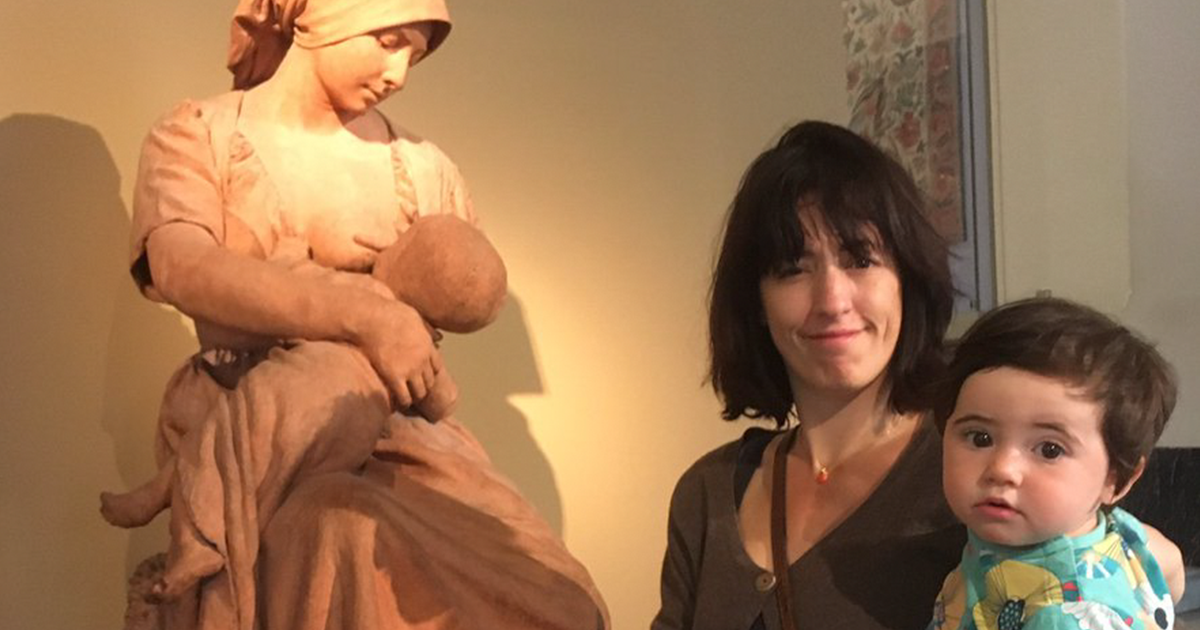
The story centers on a mother who said she was breastfeeding her child at London’s Victoria and Albert Museum when she was asked to cover up after a brief glimpse of nipple. Instead of quietly accepting the shame, she responded with wit, photos, and a point so obvious it practically walked itself into the gallery: why is a nipple acceptable when it is made of stone, canvas, or bronze, but scandalous when it is feeding a hungry child?
The museum later apologized, and the episode became more than a viral “gotcha.” It turned into a useful case study in public breastfeeding rights, parenting in public spaces, staff training, gender double standards, and the strange way modern society still argues with biology. Let’s unpack why this moment hit such a nerve, why public breastfeeding is protected in many places, and why museums, restaurants, malls, airports, and every other public space should learn from it before their own policy becomes tomorrow’s trending headline.
The Incident: A Breastfeeding Mom, A Museum Courtyard, And One Very Awkward Request
According to widely reported accounts, the mother was breastfeeding her child in the courtyard of the Victoria and Albert Museum when a staff member asked her to cover up. The detail that made the situation unforgettable was not just the request itself, but the setting. The V&A is one of the world’s great art and design museums, a place where visitors can see nude statues, paintings, classical bodies, religious imagery, and historic depictions of motherhood.
In other words, this was not exactly a bunker reserved for people terrified of anatomy. It was a museum. A museum full of anatomy. A museum where breasts have been curated, cataloged, framed, lit from flattering angles, and admired by people holding tiny audio guides.
The mother, known online by the handle Vaguechera and identified in some reporting as Kat Joyce, posted about the experience on social media. She noted that she had flashed what she described as only a “nanosecond” of nipple while nursing. Then she did something clever: she explored the museum’s many depictions of breasts and breastfeeding, sharing the irony with the internet. The response was swift, funny, furious, and overwhelmingly supportive.
Why The Museum Apology Mattered
The Victoria and Albert Museum’s leadership later apologized and clarified that mothers were allowed to breastfeed wherever they felt comfortable. That matters because apologies are not just about smoothing over hurt feelings. In a public institution, an apology can also correct misinformation, reset staff expectations, and reassure families that they are welcome.
A museum is not only a building that stores objects. It is a civic space. Families come with babies, toddlers, strollers, snacks, meltdowns, curiosity, and occasionally a diaper situation that feels like a Renaissance battle scene. If public cultural institutions want families to visit, they must accept that babies eat. Sometimes they eat from bottles. Sometimes they breastfeed. Sometimes they do both. None of this is a scandal unless someone decides to make it one.
The apology also mattered because embarrassment is not a small thing for breastfeeding parents. Being corrected, stared at, or told to hide can make a parent feel unwelcome in public. It can also discourage breastfeeding, especially for mothers who are already exhausted, recovering physically, or worried about being judged. The moment may last thirty seconds, but the message can linger: “Your baby’s needs are inconvenient. Your body is inappropriate.” That is a terrible message, and it deserves to be retired with the same energy we reserve for fax machines and low-rise jeans.
The Irony: Nude Art Is Culture, But Nursing Is “Too Much”?
The reason this story traveled so far online is simple: the irony was impossible to miss. Museums regularly ask visitors to contemplate the human body. Art history is full of bare chests, exposed skin, fertility symbols, maternal figures, and saints, goddesses, queens, peasants, and mythical beings who appear to have misplaced their shirts. We are taught to see those images as beautiful, serious, symbolic, or historically important.
But a breastfeeding parent is not symbolic. She is practical. A baby is hungry, and the food is ready. No curator’s label required.
The double standard reveals something uncomfortable. Many people are comfortable with breasts when they are aesthetic, sexualized, decorative, distant, or safely trapped behind glass. They become uncomfortable when breasts are functional, maternal, and attached to a living woman who has not asked for permission to exist in public. That discomfort says more about the observer than the parent.
Breastfeeding is not a performance. It is not an invitation to stare, comment, advise, police, or conduct an unsolicited seminar on modesty. It is infant feeding. The fact that people can pass a twelve-foot marble nude without blinking but panic over a nursing baby suggests the problem is not exposure. The problem is context.
Public Breastfeeding Rights: What Parents Should Know
Public breastfeeding laws vary by country, but the general direction in many places is clear: breastfeeding parents should not be pushed out of public life. In the United States, all 50 states, the District of Columbia, Puerto Rico, and the Virgin Islands have laws allowing women to breastfeed in public or private locations where they are otherwise authorized to be. Federal and state protections also increasingly recognize lactation needs at work, including break time and private pumping spaces.
In the United Kingdom, where the V&A incident took place, the Equality Act 2010 protects breastfeeding mothers from discrimination in many public and service settings. In plain English: a parent feeding a child should not be treated as a problem to be hidden behind a potted plant.
Of course, legal protection does not automatically create social comfort. A parent may have the right to breastfeed, and still receive stares. A business may have a policy supporting breastfeeding, and still have an employee who has not been trained. That gap between policy and practice is where viral disasters are born.
Why Breastfeeding Support Is A Public Health Issue
Breastfeeding is not the only valid way to feed a baby, and no parent should be shamed for using formula, combination feeding, pumping, donor milk, or any safe feeding method that keeps a child nourished. Fed is essential. Supported is essential. Healthy parents matter too.
Still, major health organizations, including the American Academy of Pediatrics and the Centers for Disease Control and Prevention, recognize breastfeeding as beneficial for many babies and mothers. Breast milk provides nutrition, antibodies, and health protections, and breastfeeding has been associated with reduced risks of certain infections and illnesses for infants, as well as health benefits for mothers.
The problem is that breastfeeding can be hard even on a good day. Latch issues, pain, supply concerns, pumping schedules, work demands, sleep deprivation, and recovery from birth can all make feeding complicated. Public judgment adds one more obstacle, and it is completely unnecessary. Nobody needs a side order of shame with their baby’s lunch.
The Real Cost Of “Just Cover Up”
People who ask breastfeeding parents to cover up often present the request as tiny and reasonable. “Just use a blanket.” “Just go somewhere private.” “Just be discreet.” “Just sit in the bathroom.” The word “just” is doing a lot of heavy lifting there.
Some babies refuse covers. Some parents overheat under them. Some mothers need to see the latch. Some children are toddlers who treat nursing covers like a personal enemy. Some parents simply do not want to hide, because feeding a baby is not indecent. And bathrooms? Bathrooms are for washing hands and regretting airport coffee, not for feeding infants.
Privacy should be available, never mandatory. A nursing room can be wonderful for a parent who wants quiet, but it becomes discriminatory when it is treated like a holding pen for bodies that make other people uncomfortable.
What Businesses And Museums Can Learn
The lesson for museums and public-facing organizations is simple: do not wait for a viral embarrassment to discover your breastfeeding policy. Put it in writing. Train staff. Train volunteers. Train security guards. Train the person at the information desk who knows where the elevators are but somehow has strong opinions about nipples.
1. Make The Policy Clear
Every public venue should have a simple breastfeeding policy: parents may breastfeed anywhere they and their child are allowed to be. If private nursing spaces are available, staff may offer them as an option, not a requirement.
2. Teach Staff What Not To Say
Staff should never ask a breastfeeding parent to stop, cover, move, leave, or use a restroom. If another visitor complains, the correct response is not to police the parent. It is to inform the complainant that breastfeeding is permitted.
3. Design Family-Friendly Spaces Without Creating Shame
Comfortable seating, stroller access, clean changing tables, and lactation rooms can make a venue more welcoming. But the language matters. “You are welcome to feed anywhere; we also have a quiet family room if you would like it” is supportive. “Please go hide over there” is not.
4. Remember That Babies Are Visitors Too
Family inclusion is not just about discounted tickets and cute activity sheets. It means accepting the realities of family life. Babies cry. Toddlers negotiate like tiny lawyers. Parents feed children. That is not a disruption of culture. It is culture.
Why The Internet Sided With The Mom
The mother’s response worked because it combined humor, evidence, and moral clarity. She did not need a twenty-page manifesto. She simply pointed to the museum’s own collection. Her message was essentially: “You are fine with all of these breasts, but not this one?” That is a very difficult argument to defeat without sounding ridiculous.
Social media often turns minor incidents into bonfires, but in this case, public attention served a useful purpose. It forced a respected institution to clarify its policy. It reminded other venues to train staff. It validated parents who had experienced similar treatment. And it made a broader cultural point with a joke sharp enough to hang in the gift shop.
There is also something powerful about a parent refusing to absorb shame that was never hers to carry. Instead of shrinking, she documented. Instead of apologizing, she questioned. That shift matters. Public breastfeeding becomes more normal when people see it, discuss it, and defend it as ordinary.
Public Breastfeeding And The Myth Of “Discretion”
Discretion is often used as a polite-sounding way to control women’s bodies. In practice, it can mean anything from “please use a nursing cover” to “please disappear completely.” The trouble is that discretion is subjective. A parent may think she is being discreet. A stranger may disagree. A baby may unlatch at the exact wrong moment because babies have comedic timing.
Public standards that depend on everyone’s personal comfort are impossible to enforce fairly. One person is offended by breastfeeding. Another is offended by crying. Another is offended by children in restaurants. Another is offended by adults who chew loudly, which, frankly, is more understandable but still not a legal framework.
The fair standard is simple: if the parent and child have a right to be in the space, they have a right to feed there. Other people can look away. Looking away remains free, portable, and available in most lighting conditions.
Experiences Related To Breastfeeding In Public: What Parents Often Face
Many breastfeeding parents describe a strange mix of confidence and vulnerability when nursing outside the home. On one hand, feeding a baby is routine. On the other, public spaces can feel unpredictable. A mother may scan a café before sitting down, not because she is doing anything wrong, but because she is calculating sightlines, chair comfort, stroller placement, and whether someone nearby has the energy of a person about to say, “I’m not judging, but…” which is usually the official opening ceremony of judging.
One common experience is the search for a “safe” seat. Parents often choose corners, booths, benches near exits, or quiet gallery rooms because they want fewer eyes on them. This is not always about modesty. Sometimes it is about concentration. Newborn feeding can require both hands, patience, and the kind of calm usually reserved for bomb disposal. A crowded environment can make that harder, especially if the parent is still learning.
Another familiar experience is the emotional math of deciding whether to respond to comments. If a stranger says, “Can’t you do that somewhere else?” the parent has to choose between ignoring it, explaining the law, finding a manager, leaving, or giving the kind of comeback they will only perfect three hours later in the shower. That mental burden is exhausting. Parents should not need a debate-club certificate to feed a child in public.
There are also positive experiences, and they matter. Many parents remember the waitress who quietly brought extra water, the museum guard who pointed out a comfortable bench, the grandmother who smiled instead of stared, or the store manager who handled a complaint by supporting the nursing parent. Small gestures can turn public breastfeeding from stressful to ordinary. Sometimes inclusion is not a grand campaign. Sometimes it is simply saying, “Take your time.”
Some parents prefer nursing covers, and that choice should be respected. Others do not use them, and that choice should also be respected. Some pump and bottle-feed in public. Some combination-feed. Some stop breastfeeding earlier than planned. Some never start. The point is not to create a new hierarchy of “good” parents. The point is to remove unnecessary shame from feeding babies.
The museum incident resonates because nearly every parent has had a moment when public space suddenly felt less public for them. Maybe it was a diaper blowout in a restaurant restroom with no changing table. Maybe it was a baby crying on a flight while strangers sighed theatrically, as if they personally invented silence. Maybe it was trying to warm a bottle while balancing a stroller, a bag, and a tiny sock that keeps vanishing like a magician. Parenting in public is already an athletic event. Nobody needs extra hurdles.
Public breastfeeding becomes easier when communities treat it as normal. The more often people see babies being fed without drama, the less remarkable it becomes. That is why incidents like the V&A story are not just internet entertainment. They are reminders that normalization is built one ordinary moment at a time: one café, one park bench, one museum courtyard, one staff training session, one stranger choosing kindness over commentary.
Conclusion: The Nipple Was Never The Real Problem
The museum that asked a breastfeeding mother to cover up probably did not expect to become a global example of what not to do. But that is the lesson: public institutions cannot celebrate the human body in theory while shaming it in practice. A breast in a painting can be art. A breast feeding a child can be care. Neither requires panic.
The mother’s response worked because it revealed a contradiction with humor and grace. She did not just defend herself; she defended the right of parents to move through the world without being treated like feeding a baby is a public offense. Museums, businesses, and public venues should take note: if your walls can handle centuries of nude art, your courtyard can handle lunch.
Breastfeeding in public is not a trend, a provocation, or a parenting stunt. It is one of the oldest forms of childcare on earth. The real scandal is not a flash of nipple. The real scandal is that anyone still thinks a hungry baby should wait because an adult forgot how to look away.