My Husband Creates Amazing Steampunk Sculptures Of Pop Culture Characters From Recycled Materials

Some husbands collect tools. Some husbands collect vintage gadgets. Mine, apparently, looked at a pile of forgotten scrap metal and thought, “Yes, this rusty thing could definitely become Darth Vader.” That is how a garage, a basement, and a few generous friends with suspiciously full storage rooms became the birthplace of amazing steampunk sculptures made from recycled materials.
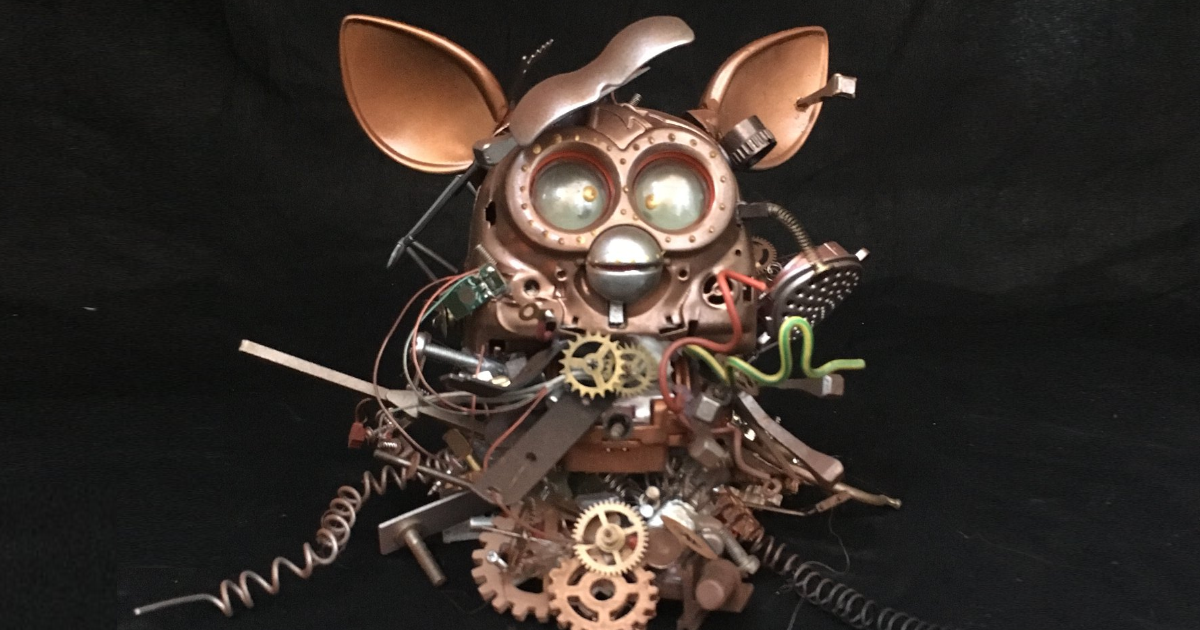
This story is about more than clever fan art. It is about imagination, sustainability, craftsmanship, and the strangely emotional moment when an old typewriter key suddenly becomes an eye, a vacuum part becomes armor, and a discarded candlestick graduates from “junk drawer resident” to “dramatic robot shoulder.” My husband creates steampunk sculptures of pop culture characters by giving everyday objects a second life, and the results feel like they stepped out of a Victorian time machine with a toolbox in one hand and a movie ticket in the other.
His work celebrates the magic of upcycled art: the idea that discarded materials can become something meaningful, funny, nostalgic, and beautiful. Instead of hiding the past life of each object, these sculptures proudly display it. Screws, springs, pipes, car parts, old cans, typewriter pieces, and bits of household hardware all keep their personality. They do not disappear into the sculpture; they become the sculpture’s soul.
What Makes Steampunk Sculpture So Addictive?
Steampunk is one of those styles that looks as if history and science fiction met for coffee, accidentally spilled gears everywhere, and decided to call it art. It mixes Victorian elegance, industrial machinery, retro-futuristic imagination, brass tones, exposed mechanics, and a love of “what if?” design. What if robots were built by 19th-century inventors? What if superheroes wore copper rivets? What if a movie villain had been assembled in a workshop powered by steam, caffeine, and questionable decisions?
That is the charm. Steampunk does not simply decorate an object; it gives it a fictional backstory. A sculpture is not just Iron Man with gears. It becomes an alternate-universe Iron Man, perhaps built by a brilliant inventor in a candlelit workshop where every machine hisses, clanks, and looks slightly too dramatic for normal office use.
The Power of Recycled Materials
Using recycled materials makes steampunk art feel even more authentic. Brand-new plastic would look too clean, too smooth, too innocent. Steampunk needs patina. It needs scratches, dents, tarnish, and parts that look like they have seen things. A gear from an old mechanism already carries a sense of movement. A rusty bracket already has character. A cracked knob can become a perfect detail because perfection, frankly, can be a little boring.
Recycled art also changes how we look at waste. A broken appliance is no longer just a broken appliance. It is a supply box in disguise. Old metal scraps become jawlines, helmets, wings, boots, antennas, and armor plates. The creative process turns “What should we throw away?” into “What could this become?” That single question is where the fun begins.
From Basement Junk to Pop Culture Heroes
The project began with a bold challenge: create more than 25 steampunk-style sculptures of pop culture characters in a short amount of time, using only recycled materials. For most people, that would sound like an excellent reason to panic politely. For my husband, it sounded like permission to dive into boxes of scrap, raid basements, and look at every abandoned household object as a future celebrity.
The characters included familiar icons from movies, animation, comics, and science fiction. Think Darth Vader, R2-D2, Yoda, Iron Man, Batman, Optimus Prime, Wall-E, Mr. Incredible, Ant-Man, a Minion, Lightning McQueen, and even the Millennium Falcon. Each one had to be recognizable, but not copied in a flat or predictable way. The goal was not to make ordinary replicas. The goal was to reimagine them as if they belonged in a brass-and-bolts universe where every hero and villain had been assembled by an inventor with a dramatic mustache.
Why Pop Culture Characters Work So Well in Steampunk
Pop culture characters are perfect subjects because people already know their shapes, colors, poses, and personalities. Darth Vader has that unmistakable helmet and imposing presence. R2-D2 has a rounded, mechanical silhouette that practically begs for rivets. Iron Man already lives in the world of armor and technology, so a steampunk version feels like a cousin from another century. Wall-E, being a lovable machine with a junkyard heart, may be the spiritual mascot of recycled sculpture.
The fun lies in balancing recognition with reinvention. Too little resemblance, and the viewer squints like they are solving a metal crossword puzzle. Too much resemblance, and the sculpture becomes a copy rather than an interpretation. The sweet spot is where the viewer says, “Wait, is that Batman?” followed quickly by, “Why does he look like he owns a steam-powered motorcycle?” That is when the sculpture wins.
The Art of Seeing Potential in Strange Objects
Assemblage art depends on the ability to see a new meaning in found objects. A spoon can become a cheekbone. A hinge can become a knee. A spring can suggest muscle, tension, or movement. A typewriter part can become an eye with more personality than some people at Monday morning meetings.
My husband’s process usually begins with the silhouette. Before the details, he studies the character’s shape. Is the head round, angular, tall, heavy, elegant, goofy, threatening, or heroic? Once the main structure is clear, he starts hunting for objects that already speak the same visual language. For a robot, he might use compact mechanical parts. For a masked character, he may search for curved metal pieces. For a vehicle, old appliance parts and hardware can suddenly become wheels, wings, panels, or engines.
Texture Is the Secret Ingredient
Texture is what makes recycled steampunk sculpture feel alive. Smooth metal, scratched paint, aged brass, dull steel, rubber, wire, mesh, and worn leather all create contrast. These materials tell the eye where to travel. A sculpture built from one uniform material can look flat, but a sculpture made from varied scraps feels like a tiny city of details.
That is why old objects are so useful. They bring their own surfaces. A new screw is just a screw. An old screw, slightly darkened and worn, looks like it has survived a dramatic airship battle. That kind of natural aging is hard to fake. In steampunk art, time is not a flaw; it is a collaborator.
Recycling as Creative Storytelling
One of the best parts of recycled sculpture is that every piece has two stories. First, there is the story of the character being created. Second, there is the hidden story of the materials used to build it. A car carpet might become part of a costume. A broken vacuum part might become a chest plate. A candlestick might become a leg, a weapon-like prop, or an elegant decorative accent. Old typewriter pieces might form facial details that immediately give the sculpture a vintage personality.
This layered storytelling is why upcycled art feels warmer than mass-produced decor. You are not just looking at a figure; you are looking at a rescue mission. Materials that might have been forgotten, buried in a storage room, or sent away as trash are placed back in the spotlight. They become valuable again, but in a new language.
Eco-Friendly Art Without the Lecture
The sculptures also make a quiet environmental point without wagging a finger. Nobody wants art that yells, “Recycle!” while making you feel guilty about yesterday’s coffee cup. These works are more charming than that. They show reuse in action. They prove that sustainability can be playful, stylish, and full of personality.
That matters because reducing and reusing materials helps lower waste and gives objects a longer useful life. In the studio, this principle becomes practical and poetic at the same time. The artist saves materials from being discarded, and the viewer gets a sculpture that is much more interesting than something made from factory-fresh parts.
The Challenge of Making 25 Sculptures in Less Than Five Weeks
Creating one detailed steampunk sculpture can take patience, problem-solving, and a healthy relationship with glue, welding, screws, and trial-and-error. Creating more than 25 in less than five weeks is a different beast entirely. That is not a casual weekend hobby. That is a creative marathon with metal shavings.
The biggest challenge is not simply building fast. It is making each sculpture feel individual. When working with pop culture characters, every figure needs its own personality. Batman should not feel like R2-D2 wearing a cape. Yoda should not look like a small pile of parts having an identity crisis. Each piece needs a strong silhouette, thoughtful material choices, and enough recognizable details to make the viewer smile.
Planning, Sorting, and Controlled Chaos
The workshop process often looks chaotic from the outside. There are boxes of parts, trays of screws, metal scraps, old tools, half-built figures, sketches, dust, and probably at least one mysterious object no one can name. But underneath the mess is a system. Materials must be sorted by shape, size, color, texture, and possible function.
A good recycled sculpture artist does not only ask, “What is this?” He asks, “What could this pretend to be?” That mental shift is everything. A small metal cap could become an eye. A long bracket could become a spine. A circular lid could become a shield, wheel, or droid panel. The studio becomes a library of possibilities, except the books are rusty and occasionally sharp.
Why These Sculptures Connect With Viewers
People love these steampunk sculptures because they combine three powerful pleasures: nostalgia, surprise, and craftsmanship. Nostalgia comes from the characters. Surprise comes from the recycled materials. Craftsmanship comes from the way all the pieces are assembled into something balanced and expressive.
There is also a delightful “treasure hunt” effect. Viewers lean closer to identify the parts. Is that a can? Is that part of a typewriter? Was that once from a vacuum cleaner? Suddenly the sculpture becomes interactive. The audience is not just admiring the finished piece; they are decoding it.
The Beauty of Imperfection
Modern life is full of polished screens and perfectly smooth products. Steampunk sculpture offers the opposite: visible joints, worn surfaces, odd shapes, and handmade decisions. That imperfection feels human. You can sense the artist’s choices. You can imagine the moment when a certain scrap finally found its place.
In a world where many objects are designed to be replaced quickly, recycled sculptures feel refreshingly stubborn. They refuse to disappear. They say, “I was something before, and now I am something else.” Honestly, that is more character development than some movie sequels manage.
Steampunk as a Love Letter to Making Things by Hand
At its heart, steampunk art honors craftsmanship. It celebrates the visible mechanism, the handmade detail, the beauty of materials, and the joy of invention. Even when the sculptures are based on modern pop culture, the steampunk treatment makes them feel older, stranger, and more tactile.
That handmade quality is especially important in fan-inspired art. A mass-produced collectible might be accurate, shiny, and neatly packaged. A recycled steampunk sculpture is different. It has quirks. It carries evidence of the maker’s imagination. It does not just sit on a shelf; it starts conversations.
When Art Direction Meets Sculpture
My husband’s background in art direction helps explain why the sculptures feel cinematic. Art directors think about setting, mood, proportion, and storytelling. They understand how objects contribute to atmosphere. That experience transfers beautifully into sculpture, especially when the goal is to build characters that feel like they belong in a complete world.
Each figure suggests a larger universe. You can imagine the room it came from, the story it belongs to, and the strange machine that might be parked just outside the frame. That is what separates a clever craft project from a memorable artwork. The best pieces do not only show a character; they imply a whole adventure.
What Recycled Steampunk Art Teaches Us
These sculptures teach a simple but powerful lesson: creativity often begins with looking again. The object you almost ignored might be exactly what the artwork needs. The piece that seems useless in one context may become essential in another. Art is not always about buying better materials. Sometimes it is about seeing better possibilities.
They also remind us that sustainability does not have to be plain or serious. Eco-friendly art can be dramatic, funny, nostalgic, and wildly imaginative. A reused object can become a hero, a villain, a robot, a spaceship, or a tiny mechanical creature with more attitude than expected.
Personal Experiences: Living With a Steampunk Sculptor
Living with someone who creates steampunk sculptures from recycled materials changes the way you see your own home. At first, a broken toaster is just a broken toaster. After a while, you catch yourself holding it up and wondering whether it has “helmet energy.” This is how normal people slowly become assistants in a secret scrap-metal art movement.
The experience is funny, messy, and surprisingly touching. Friends begin saving odd objects because they know they might be useful. Someone brings over a box of old keys. Another person donates a lamp that no longer works. A neighbor offers metal bits from a renovation. Nobody is completely sure what the objects will become, but everyone enjoys the possibility. The studio becomes a community recycling station with better lighting and more imagination.
There are also moments of domestic comedy. You learn not to throw away anything too quickly. A bottle cap may have “potential.” A bent spoon may be “perfect.” A cracked plastic part may be “exactly the shape I needed.” These phrases sound suspicious at first, but then you see the finished sculpture and realize he was right. The strange little object really did belong there.
The most rewarding part is watching the transformation happen. At the beginning, the table is covered with scraps that seem unrelated. Then a shape appears. A face emerges. A posture forms. The character slowly becomes recognizable, and suddenly the pile of leftovers has a personality. It is like watching a magic trick, except the magician is covered in dust and asking where the pliers went.
Another unforgettable experience is seeing people react to the finished sculptures. Some viewers recognize the pop culture character first. Others notice the recycled parts first. Children often spot the funny details quickly, while adults tend to lean in and analyze the construction. Everyone finds a different doorway into the work, which is one reason these sculptures are so engaging.
I have also learned that creative work requires trust. There are stages when a sculpture looks awkward, unfinished, or frankly a little confused. That middle phase is dangerous for outside opinions. The artist can see where it is going, but everyone else may see a metal creature having a bad day. Patience matters. The final result often depends on pushing through that uncertain stage until the details begin to connect.
Most of all, this experience has made me appreciate the emotional value of making things by hand. In a fast digital world, there is something grounding about physical creation. The artist touches every part, tests every angle, adjusts every connection, and solves problems in real time. The finished sculpture carries that effort. You can feel it.
My husband’s steampunk sculptures are not just decorative objects. They are proof that imagination can rescue materials, that pop culture can be reinterpreted with humor and heart, and that art can turn a basement full of forgotten things into a small universe of heroes, machines, and mechanical mischief.
Conclusion
Steampunk sculptures made from recycled materials are more than clever visual mashups. They combine environmental awareness, fan culture, assemblage art, and old-fashioned craftsmanship into something fresh and memorable. By transforming scrap metal, household leftovers, and forgotten objects into pop culture characters, my husband gives waste a second life and gives viewers a reason to look twice at the ordinary things around them.
The real beauty of this work is not only in the finished figures. It is in the mindset behind them. Every discarded object becomes a possibility. Every dent and scratch becomes texture. Every recycled part becomes a tiny piece of a larger story. In the end, these amazing steampunk sculptures remind us that creativity is not about having perfect materials. It is about having curious eyes, patient hands, and the courage to believe that even an old vacuum part might secretly want to become a superhero.