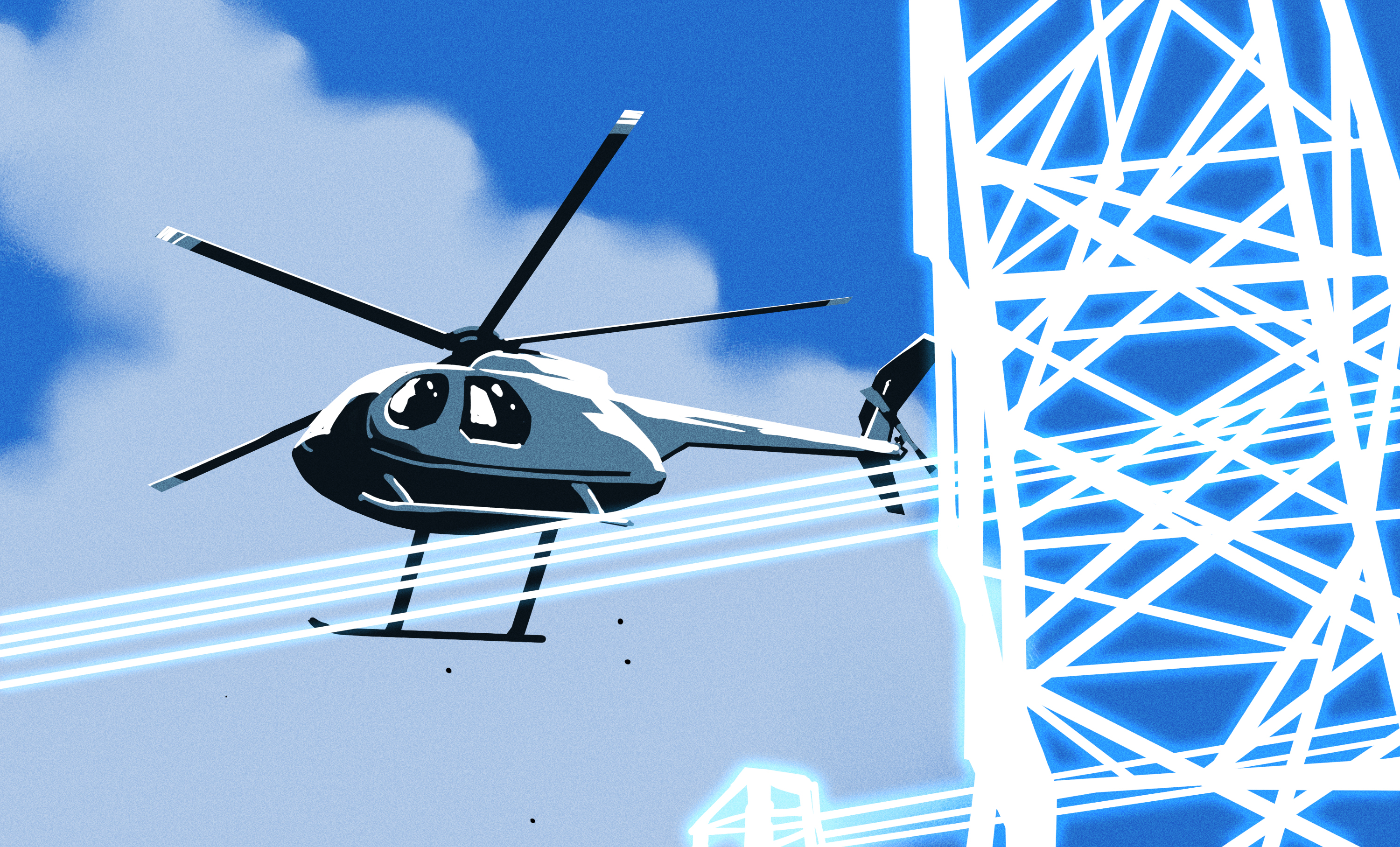

Power lines are not exactly famous for drama. They stand in fields, cross mountains, cut through forests, and hum quietly above highways like giant metal introverts. But behind that calm appearance is a nonstop inspection effort that keeps electricity moving safely from power plants, substations, solar farms, wind projects, and transmission corridors to homes and businesses. That effort is called power line patrol, and it has become one of the most important maintenance practices in the modern electric grid.
Today’s power line patrols are far more advanced than a person with binoculars and a clipboard saying, “Yep, still a wire.” Utilities now use helicopters, drones, LiDAR, infrared cameras, high-resolution photography, artificial intelligence, vegetation mapping, and field crews to inspect electrical infrastructure before small problems become expensive outages. Think of it as the grid getting an eye exam, a physical checkup, and a very serious haircut around the trees.
In the United States, where the electric grid includes high-voltage transmission lines, local distribution lines, substations, transformers, and millions of connected assets, inspection is not optional. It is a frontline defense against outages, equipment failure, wildfire risk, storm damage, and public safety hazards. Power line patrols help utilities spot cracked insulators, leaning poles, loose hardware, damaged conductors, corrosion, bird nests, vegetation encroachment, and anything else that might turn a peaceful Tuesday into a neighborhood-wide “Where did the Wi-Fi go?” event.
What Are Power Line Patrols?
Power line patrols are scheduled or emergency inspections of overhead electric lines and related equipment. The goal is simple: find problems early, document their location, prioritize repairs, and keep the grid reliable. The methods vary depending on the terrain, voltage level, weather conditions, risk level, and urgency.
For high-voltage transmission corridors, aerial patrols are especially valuable because the lines may stretch across mountains, deserts, wetlands, private land, forests, and other places where driving a truck is about as practical as bringing a sofa to a canoe race. Helicopters can cover long distances quickly, while drones can hover close to structures and capture detailed imagery without requiring workers to climb towers. Ground crews remain essential, especially for close inspections, vegetation work, repairs, and follow-up verification.
Common Types of Power Line Patrols
Utilities usually combine several inspection methods rather than relying on one perfect tool. There is no magic flying robot that fixes everythingyet, and frankly, the linemen would probably still want to check its work.
- Ground patrols: Crews inspect poles, towers, wires, vegetation, and equipment from roads, trails, rights-of-way, or private access routes.
- Helicopter patrols: Pilots and inspectors fly along transmission routes to identify visible damage, vegetation threats, and structural issues.
- Drone inspections: Unmanned aircraft capture close-up photos, thermal images, and video of equipment that may be difficult or risky to access.
- LiDAR surveys: Laser-based mapping measures the distance between conductors, trees, terrain, and structures with impressive accuracy.
- Infrared inspections: Thermal cameras detect abnormal heat signatures that may indicate failing connections, overloaded components, or equipment defects.
- Storm patrols: After severe weather, crews inspect circuits to identify fallen trees, broken poles, damaged wires, and unsafe conditions.
Why Power Line Patrols Matter More Than Ever
The electric grid is under growing pressure. Electricity demand is rising in many regions due to electrification, manufacturing growth, data centers, air conditioning load, electric vehicles, and the daily human need to charge six devices while claiming we are “simplifying life.” At the same time, extreme weather, wildfires, aging infrastructure, and vegetation growth are making grid maintenance more complex.
Power lines are exposed to everything nature can throw at them: wind, ice, heat, lightning, animals, tree limbs, salt air, dust, flooding, and the occasional mystery balloon. Even well-built infrastructure wears down. Bolts loosen, crossarms crack, insulators fail, conductors sag, and poles shift. Without regular inspection, these small issues can remain hidden until they cause outages or safety hazards.
Vegetation is one of the biggest concerns. Trees growing too close to lines can cause outages, fires, and dangerous electrical contact. That is why utilities maintain rights-of-way and use integrated vegetation management programs to control incompatible vegetation near transmission and distribution lines. Power line patrols help identify where trimming, removal, or further review is needed.
The Role of Drones in Modern Power Line Patrols
Drones have changed the inspection game. They are not replacing utility workers; they are giving them better eyes, safer access, and richer data. A drone can fly close to an insulator string, capture a detailed image of a cracked component, and return without anyone climbing a tower or sending a bucket truck into difficult terrain.
For utilities, drones offer several advantages. They can inspect energized equipment from a safe distance, reduce the need for risky climbs, document assets with high-resolution imagery, and reach areas where road access is limited. In some cases, drones can be deployed after storms to quickly identify damage before crews enter unsafe areas.
Modern inspection drones may carry multiple sensors, including optical cameras, thermal cameras, LiDAR systems, and zoom lenses. Some inspection programs also use artificial intelligence to flag possible defects in images. AI is not perfectit can still mistake unusual shadows or background clutter for problemsbut it is getting better at sorting thousands of images and helping engineers focus on the highest-priority findings.
What Drones Can Detect
Drone-based power line inspections can help detect:
- Cracked, chipped, contaminated, or broken insulators
- Loose or missing hardware
- Corrosion on towers, pole attachments, or connectors
- Damaged conductors or shield wires
- Bird nests or foreign objects on structures
- Vegetation growing too close to energized lines
- Thermal abnormalities in connectors or equipment
- Storm damage after high winds, ice, or lightning
The best part is that drones create a visual record. Instead of relying only on field notes, utilities can compare images over time. A cracked crossarm, a rust pattern, or a tree branch creeping toward a conductor can be tracked like a very slow-motion suspense movie.
Helicopter Patrols: Still a Workhorse of the Grid
Drones get plenty of attention, but helicopters are still widely used for power line patrols, especially across long transmission routes. A helicopter can cover many miles in a single flight and give inspectors a broad view of structures, rights-of-way, terrain, and vegetation conditions.
Helicopter patrols are especially useful in remote regions, mountainous areas, and corridors where hundreds of structures need to be reviewed quickly. Inspectors can look for lightning damage, broken hardware, leaning towers, vegetation concerns, conductor issues, and access problems. Low-altitude flights may look dramatic from the ground, but they are often planned inspection operations performed by trained pilots and utility personnel.
In wildfire-prone regions, aerial patrols play an even more serious role. Utilities may inspect lines before fire season, after wind events, or following public safety shutoffs. These inspections can help identify equipment that needs repair, replacement, hardening, or additional vegetation clearance.
LiDAR: The Grid’s Measuring Tape With Superpowers
LiDAR stands for Light Detection and Ranging. In normal human language, it is a laser-based mapping technology that measures distances with high accuracy. Mounted on aircraft, drones, or vehicles, LiDAR can create detailed 3D maps of power line corridors.
For power line patrols, LiDAR is especially useful because it can measure clearance between conductors and vegetation. It can also help identify terrain changes, sag conditions, structure locations, and potential encroachments. Since power lines expand and sag under heat and load, clearance analysis is not as simple as looking up and saying, “That seems fine.” LiDAR gives engineers data they can model and verify.
Vegetation management teams use this information to prioritize tree trimming and right-of-way maintenance. That means utilities can focus resources where risk is highest instead of treating every mile of line exactly the same. It is smarter, safer, and less likely to create unnecessary tree drama with property owners.
Infrared Inspections: Finding Heat Before Trouble Finds You
Infrared inspections use thermal cameras to detect heat. In electrical systems, abnormal heat can be a warning sign. A loose connection, overloaded component, failing connector, or damaged piece of equipment may run hotter than nearby equipment under similar conditions.
Thermal inspections are valuable because many electrical problems are invisible to the naked eye. A component can look normal in a standard photograph but show a bright heat signature through an infrared camera. Finding that issue early allows crews to schedule repairs before the component fails.
This is one reason power line patrols are not just about “seeing” lines. They are about sensing the grid in multiple ways. Visual imagery, thermal data, LiDAR measurements, and field notes all work together to form a clearer picture of asset health.
Vegetation Management: The Unofficial Battle With Trees
Trees are beautiful. Trees provide shade, habitat, clean air, and autumn leaves that make people buy pumpkin-flavored things. Trees near power lines, however, require serious management. A branch contacting a conductor can cause outages, fires, or dangerous conditions. During storms, trees and limbs are among the most common causes of distribution outages.
Power line patrols help utilities identify vegetation risk before it becomes an emergency. Crews look for fast-growing species, dead trees, leaning trees outside the right-of-way, and branches growing within required clearance zones. In transmission corridors, vegetation standards are tied to reliability and public safety. For distribution lines, utilities follow state regulations, local requirements, and internal maintenance programs.
Modern vegetation patrols increasingly use data analytics. Utilities may combine aerial imagery, LiDAR, weather history, tree species data, fire-risk maps, and outage records to decide where trimming should happen first. The result is more targeted maintenance and fewer surprises from trees that apparently signed up for pole-vaulting lessons.
Power Line Patrols and Wildfire Risk
In many parts of the western United States, power line patrols are closely connected to wildfire prevention. Utilities inspect equipment, poles, conductors, transformers, vegetation, and rights-of-way to identify conditions that could increase ignition risk. Drones and helicopters can help inspect remote or high-risk areas where ground access is slow or hazardous.
Wildfire mitigation is not one single action. It often includes vegetation management, covered conductor, undergrounding in selected areas, stronger poles, weather monitoring, faster fault detection, public safety power shutoffs, and detailed inspection programs. Power line patrols support these strategies by identifying what needs attention and where investment should be prioritized.
No inspection program can remove all risk. Weather can change quickly, equipment can fail unexpectedly, and landscapes can dry out under extreme heat and wind. But regular patrols give utilities better information, and better information leads to better decisions.
From Patrol Data to Real Repairs
A successful power line patrol does not end when the aircraft lands or the drone battery runs out. The real value comes from turning inspection data into action. Utilities must review images, classify defects, assign priority levels, schedule work, dispatch crews, complete repairs, and document the results.
Defects are often ranked by severity. A missing cotter pin may need attention, but a damaged conductor near a high-load area may need urgent repair. A tree outside the right-of-way leaning toward a line may be handled differently from routine brush growth. The best inspection programs connect field data with asset management systems, outage history, geographic information systems, and work-order platforms.
This is where digital transformation enters the picture. Utilities are increasingly building “asset health” records that track equipment condition over time. Instead of treating inspections as isolated snapshots, they create a living history of each pole, tower, circuit, and corridor. It is basically a medical chart for the grid, except the patient is 80 feet tall and occasionally gets hit by lightning.
Safety Benefits for Utility Workers and the Public
Power line patrols improve safety in two major ways. First, they help prevent failures that could harm the public. Second, they reduce unnecessary exposure for utility workers. Climbing towers, working near energized equipment, driving through rough terrain, and responding after storms all carry risk. A drone or helicopter inspection can provide information before crews enter the area.
For example, after a major storm, a drone can help identify whether a line is down, whether access roads are blocked, or whether trees are tangled in equipment. That information helps crews arrive with the right tools, vehicles, and safety plan. Faster assessment can also shorten outage restoration times.
Public safety matters too. A damaged line is not something residents should approach, photograph up close, or investigate for social media glory. Utility patrols help identify hazardous conditions, but customers should always report downed wires, damaged poles, sparking equipment, or trees contacting lines to the utility or emergency services.
Challenges in Power Line Patrols
Power line patrols sound straightforward until reality shows up wearing muddy boots. Inspectors face weather delays, restricted airspace, steep terrain, dense forests, private property access, changing light conditions, wildlife, data overload, and the technical difficulty of inspecting thin wires against complex backgrounds.
Drones also have operational limits. Battery life, wind, rain, regulations, pilot training, sensor quality, and line-of-sight requirements can affect how and where drones are used. Helicopters are powerful tools but expensive to operate and require careful planning. Ground patrols provide detailed confirmation but can be slower and more physically demanding.
Data management is another major challenge. A single inspection program can generate thousands of images and large mapping files. Without good organization, utilities can end up with a digital attic full of unlabeled photos. The future of power line patrols depends not only on better aircraft and cameras, but also on smarter workflows that turn raw data into reliable decisions.
The Future: AI, Automation, and Predictive Grid Maintenance
The next generation of power line patrols will likely be more automated, more data-driven, and more predictive. Artificial intelligence can assist with defect detection, vegetation classification, storm damage assessment, and risk scoring. Drones may increasingly operate beyond visual line of sight where approved, allowing longer inspection routes and faster emergency response.
Predictive maintenance is the big prize. Instead of waiting for equipment to fail, utilities want to predict which assets are most likely to fail and repair them first. That requires inspection data, sensor data, weather data, age records, loading history, and engineering judgment. It is not science fiction; it is the logical next step for a grid that must become more resilient.
Future power line patrols may include autonomous drone docks near substations, AI-assisted image review, real-time thermal alerts, satellite monitoring, and digital twins of transmission corridors. But even with all that technology, human expertise will remain essential. Someone still has to understand what the data means, decide what work matters most, and make sure repairs are done correctly.
Real-World Examples of Power Line Patrol Value
Imagine a transmission corridor crossing a dry, windy region before peak fire season. Aerial patrols identify a cracked insulator, a leaning hazard tree, and a section of conductor with suspicious wear. The utility prioritizes repairs, removes the tree, and schedules follow-up inspection. Nothing dramatic happens afterwardand that is exactly the point. The best power line patrols are successful when customers never notice them.
Or consider a coastal area after a major storm. Salt spray, wind, and debris may damage equipment. Drone inspections can quickly capture images of poles, crossarms, and wires. Thermal scans may reveal a heating connector. Ground crews then repair the issue before it causes an outage during the next high-load period.
In rural areas, patrols can help utilities avoid long restoration times. A single fault on a remote line may affect customers miles away. A helicopter or drone can narrow down the problem location much faster than a crew driving every access road. That means less guesswork and quicker restoration.
Experience Section: What Power Line Patrols Feel Like From the Field
Anyone who has spent time around power line patrol work knows it is a strange mix of patience, precision, and constant alertness. From the outside, it may look like a helicopter following wires or a drone buzzing near a pole. From the field, it feels more like solving a giant outdoor puzzle where every piece matters and some of the pieces are hidden behind trees.
A typical patrol day often starts before the aircraft or truck moves. Crews review maps, weather, circuit details, access points, safety hazards, airspace limits, and inspection goals. If the job involves drones, pilots check batteries, sensors, flight plans, communication equipment, and emergency procedures. If helicopters are involved, coordination becomes even more detailed because flight routes, fuel, visibility, and ground communication all matter.
Once the patrol begins, the work requires sharp observation. A good inspector is not simply looking for broken things. They are looking for small changes that could become broken things. A slight lean in a pole, a missing piece of hardware, a fresh burn mark, unusual sag, a vine creeping up a guy wire, or a dead tree leaning toward the right-of-way can all matter. The best inspectors develop a kind of grid sixth sense. They notice what looks “off” before they can fully explain why.
Drone patrols create their own rhythm. The pilot positions the aircraft carefully, avoiding conductors, structures, trees, and changing wind. The camera operator or inspector may zoom in on insulators, clamps, crossarms, arresters, transformers, or tower members. The challenge is capturing enough detail without wasting time or creating unnecessary risk. A blurry photo of a suspected defect is about as useful as a weather forecast that says, “Maybe sky.”
Ground follow-up is where the aerial findings become real work. A drone image may show corrosion, but a crew may need to verify severity. A LiDAR report may flag vegetation clearance, but arborists must decide the safest and most appropriate trimming method. A thermal image may indicate heating, but electricians and lineworkers determine the repair. Good patrol programs depend on teamwork between pilots, engineers, vegetation specialists, dispatchers, data analysts, and field crews.
One of the most memorable parts of power line patrol work is how much geography matters. A line crossing flat farmland is very different from one running through steep forest, desert, canyon, or suburban neighborhoods. In cities, access and public communication may be the hardest part. In mountains, weather and terrain dominate the planning. In wildfire zones, dry vegetation and wind can turn small findings into urgent work. The grid may look connected on a map, but each corridor has its own personalitysome polite, some dramatic, and some clearly raised by coyotes.
The experience also teaches respect for electricity. Power lines are everyday infrastructure, but they are not ordinary objects. They carry energy that demands distance, training, and discipline. That is why patrol work follows strict safety procedures. Technology helps, but it does not remove the need for caution. The smartest crews are the ones that treat every inspection as important, even when the day seems routine.
In the end, power line patrols are quiet work with loud consequences. When done well, they prevent outages, reduce risk, protect workers, support wildfire mitigation, and help utilities invest in the right repairs. Customers may never know a drone found a cracked insulator or a helicopter crew spotted a hazard tree. They simply flip a switch and the lights come on. That silent success is the real reward of the grid’s eye in the sky.
Conclusion: The Grid Needs Watchful Eyes
Power line patrols are one of the most practical and important tools in modern utility maintenance. They combine old-fashioned field knowledge with advanced technology, from helicopter surveys and drone inspections to LiDAR mapping, infrared imaging, and AI-assisted analysis. Together, these methods help utilities find defects, manage vegetation, reduce wildfire risk, improve reliability, and protect public safety.
As the electric grid carries more demand and faces more extreme weather, inspection programs will only become more important. The future of power line patrols is not just about flying cameras. It is about building a smarter, safer, more resilient gridone inspection, one image, and one repaired component at a time.
Note: This article is written in original wording and synthesized from current public information from U.S. energy agencies, utility inspection programs, aviation safety resources, grid reliability standards, and power systems research. No external source links or citation placeholders are embedded in the publishable article body.