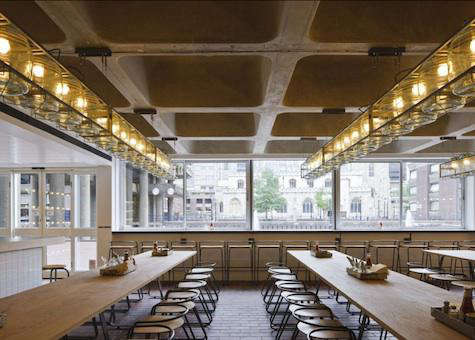

London has many restaurants that shout for attention. Some wink with neon signs. Some wave a menu the size of a bedsheet. Some charge for “deconstructed” food that looks suspiciously like someone forgot to finish cooking. Then there is the Barbican Foodhall experience: calm, concrete, cultured, and wonderfully odd in the best possible way.
Set inside the Barbican Centre, one of London’s most recognizable Brutalist landmarks, the foodhall-style dining experience is not just about grabbing lunch. It is about eating in a place where architecture, theater, cinema, music, art, coffee, pizza, and slightly confused navigation all meet under one very serious concrete roof. The current ground-floor dining venue is best known as Barbican Kitchen, while the broader food-and-drink scene includes foyer cafés, bars, and the Barbican Bar & Grill. For visitors searching for “Barbican Foodhall in London,” this is the experience they are usually looking for: casual all-day food in the middle of a major cultural complex.
This guide explores what makes a restaurant visit to Barbican Foodhall worth planning, what to eat, when to go, who it suits, and why this place feels less like a typical London café and more like a civilized refueling station for people who enjoy art, architecture, and lunch that does not require a bank loan.
What Is Barbican Foodhall in London?
Barbican Foodhall is best understood as the casual dining heart of the Barbican Centre. Historically, the name “Barbican Foodhall” was associated with a ground-floor restaurant and deli concept. Today, visitors will more commonly encounter Barbican Kitchen, an all-day, family-friendly dining space located on the ground floor of the Barbican. The spirit remains the same: fresh food, flexible seating, quick bites, relaxed meals, and easy access to the wider cultural venue.
The Barbican Centre itself is a major arts and learning destination in the City of London. It includes concert halls, theaters, cinemas, galleries, a library, bars, restaurants, public spaces, and the famous Conservatory. In other words, it is not simply a place where you eat. It is a place where you may accidentally spend half a day after saying, “Let’s just stop for coffee.” London has a talent for turning simple plans into cultural expeditions.
The foodhall-style setup is especially useful because Barbican visitors often arrive with different needs. One person wants a coffee before a film. Another wants a proper lunch after an exhibition. A parent wants something child-friendly. A theatergoer wants pre-show food without panic-chewing a sandwich on the Tube. Barbican Kitchen answers these needs with an easygoing menu that ranges from barista-made coffee and pastries to toasted sandwiches, build-your-own salads, hand-stretched pizzas, hot specials, and street-food-inspired dishes.
Why the Barbican Setting Makes the Meal Different
Plenty of restaurants serve coffee. Not many serve coffee beside one of Europe’s great concrete dreamscapes. The Barbican Centre opened in 1982 and is globally recognized as an icon of Brutalist architecture. The building’s bold geometry, elevated walkways, water features, terraces, and heavy concrete textures give the whole place a cinematic mood. You do not simply walk into the Barbican. You enter it like you are joining a very tasteful spy movie in which everyone is carrying tote bags.
This setting changes the dining experience. At Barbican Foodhall, the atmosphere is not glossy or overly polished. It is bright, practical, modern, and social. The architecture gives it weight; the food gives it warmth. One minute you are looking at a slice of pizza, the next you are staring at the surrounding structure and wondering whether concrete has secretly been stylish all along.
The Barbican’s layout is famously complex, and that complexity adds a small adventure to the visit. It is wise to arrive a little early, especially if you are eating before a concert, theater performance, or cinema screening. Even regular Londoners have been known to take a wrong turn here. The good news is that getting slightly lost inside the Barbican usually leads to something interesting: a terrace, a view, a quiet corridor, a poster for an experimental film, or a sudden urge to pretend you understand avant-garde dance.
The Food: Casual, Flexible, and Built for Real Visitors
The best thing about the Barbican Foodhall experience is its flexibility. This is not the kind of restaurant where you need to whisper the name of the chef before being allowed to sit down. It is practical, accessible, and designed for different moments of the day.
Breakfast and Coffee
Morning visitors can start with barista-made coffee and a freshly baked pastry. This is ideal if you are attending an early event, visiting the library, exploring the area, or simply using the Barbican as a civilized hideout from London weather. A coffee at the Barbican feels more intentional than a rushed takeaway cup. There is space to pause, look around, and remind yourself that breakfast does not have to be eaten while walking aggressively down a pavement.
Lunch and Light Meals
At lunchtime, Barbican Kitchen offers the kind of options that work well for mixed groups. Toasted sandwiches are good for visitors who want something simple and familiar. Build-your-own salads suit those looking for a lighter meal. Hand-stretched pizzas provide comfort without turning lunch into a three-hour event. Rotating hot specials and street food favorites add variety, which is helpful for repeat visitors or anyone who has already eaten too many identical museum sandwiches in one lifetime.
Afternoon Snacks and Pre-Show Dining
As the day moves toward evening, the Barbican becomes a natural stop for pre-show dining. The food options are casual enough for a quick bite but satisfying enough to count as a real meal. Visitors can also use the foyer cafés and bars for drinks, snacks, and light meals before or after performances. The result is a dining ecosystem rather than a single restaurant: you can choose the level of commitment your appetite deserves.
Barbican Bar & Grill: A More Restaurant-Led Option
If Barbican Kitchen is the relaxed all-day dining option, Barbican Bar & Grill by Searcys is the more restaurant-focused choice. It celebrates modern British dining with a relaxed, informal charm, making it a strong option for visitors who want a sit-down meal before or after a cultural event.
The Bar & Grill is useful when the occasion calls for something a little more polished than a quick coffee and pizza. Think date night before a concert, dinner with friends after an exhibition, or a meal where you want cocktails and conversation instead of balancing a tray while looking for napkins. It still fits the Barbican mood: cultured, social, and unfussy.
Together, Barbican Kitchen, the foyer cafés, and Barbican Bar & Grill create a layered dining experience. You can go casual, light, family-friendly, or full restaurant mode depending on your schedule and budget. This is exactly what a major arts venue needs. Nobody wants to debate where to eat for 40 minutes when the curtain rises in 35.
Who Should Visit Barbican Foodhall?
Barbican Foodhall is especially good for cultural travelers, architecture fans, families, remote workers, solo diners, and anyone attending an event at the Barbican Centre. It is also a smart stop for visitors exploring the City of London who want something more interesting than a chain café but less formal than a reservation-only restaurant.
For Art and Architecture Lovers
If you love architecture, the Barbican is part restaurant visit and part field trip. The concrete surfaces, raised walkways, lakeside views, and dramatic interior volumes give the meal a strong sense of place. You could eat a simple salad here and still feel like you have done something culturally responsible.
For Families
The casual format works well for families because the food is varied and the environment is not stiff. Children can eat familiar dishes, adults can get proper coffee, and nobody needs to perform restaurant etiquette like they are auditioning for a period drama. The surrounding public spaces also make it easier to combine food with a walk, a family film, or a visit to one of the Barbican’s accessible cultural areas.
For Solo Visitors
Solo dining at the Barbican is comfortable. The arts-center atmosphere means people are often reading, working, waiting for events, or simply enjoying time alone. You can sit with a coffee and a book without feeling as if the restaurant is silently asking when your mysterious second guest will arrive.
Planning a Visit: Timing, Location, and Practical Tips
The Barbican Centre is located on Silk Street in London, EC2Y 8DS. It is accessible by public transportation, bicycle, foot, and car, though most visitors will find public transportation easiest. Because the Barbican layout can be confusing, especially for first-time visitors, it is smart to check the venue map before arriving and leave extra time before ticketed events.
For a relaxed restaurant visit, late morning and mid-afternoon can be pleasant times. Lunch hours may be busier, especially on event days, while pre-show periods can bring crowds looking for fast meals. If you are visiting specifically for dinner before a concert or theater performance, arriving earlier than you think you need is not paranoia. It is Barbican wisdom.
Another excellent strategy is to pair your meal with a cultural activity. Visit an exhibition, see a film, explore the public spaces, book a Conservatory ticket when available, or simply walk around the lakeside terrace. The Barbican is one of those places where the food tastes better because the surroundings have personality.
What Makes the Experience SEO-Worthy and Traveler-Friendly?
From a travel and restaurant-guide perspective, “Restaurants Visit: Barbican Foodhall in London” works as a topic because it combines three things people actively search for: where to eat, what to expect, and what else to do nearby. The Barbican is not just another dining address. It is a destination with a built-in itinerary.
Visitors want to know whether the food is convenient, whether the venue is suitable before a show, whether the atmosphere is worth the trip, and whether it fits different types of diners. The answer is mostly yes. Barbican Foodhall is not trying to be London’s most luxurious restaurant. It is trying to be useful, welcoming, and good enough to match a day of culture. That is a harder job than it sounds.
Its strongest advantage is context. A sandwich in a normal café is just lunch. A sandwich inside the Barbican is lunch with architectural drama. A coffee near the Lakeside Terrace is not just caffeine; it is caffeine with a concrete backdrop and the faint possibility that you may discover a hidden staircase leading to modern art.
The Atmosphere: Calm, Creative, and Slightly Mysterious
The atmosphere at Barbican Foodhall is one of its biggest selling points. It is relaxed but not boring, spacious but not empty, stylish but not smug. The crowd changes throughout the day. In the morning, you may see workers, students, and visitors with coffee. At lunch, families, gallerygoers, and office workers appear. In the evening, the mood shifts toward pre-theater energy: people checking tickets, comparing show times, and deciding whether they have enough time for dessert. The answer, spiritually, is always yes.
The design helps create this feeling. The Barbican’s interiors mix public-building functionality with cultural ambition. There is a sense that the building was designed for people to gather, think, talk, and occasionally ask, “Are we on Level G or Level 1?” That question may become part of the memory.
Foodhall vs. Traditional Restaurant: What to Expect
Visitors should approach Barbican Foodhall with the right expectations. This is not a white-tablecloth tasting-menu restaurant. It is not a tiny chef-owned bistro where every carrot has a biography. It is a practical, attractive, all-day dining space inside a major arts venue.
That means the strengths are convenience, variety, comfort, and setting. The menu is designed for real human schedules. You can eat quickly before a performance, linger with coffee after an exhibition, or feed a group without launching a diplomatic mission over everyone’s preferences. The food is approachable, and the location does much of the magic.
For visitors who want a more formal meal, Barbican Bar & Grill is the better fit. For visitors who want a coffee, pastry, pizza, salad, sandwich, or simple meal in a cultural setting, Barbican Kitchen is the natural choice.
Nearby Things to Do After Eating
One of the best reasons to visit Barbican Foodhall is that you are already inside the Barbican Centre. After eating, you can see a film, attend a concert, visit an exhibition, explore the library, browse the shop, or walk around the public spaces. When open to the public, the Conservatory is one of the most memorable parts of the complex, offering a lush tropical contrast to the surrounding concrete.
The wider Barbican area also places you near Smithfield, Clerkenwell, St. Paul’s, Moorgate, and the City of London. This makes Barbican Foodhall a useful stop during a larger day out. You might begin with coffee, visit the Conservatory, eat lunch, see an afternoon film, and then wander toward St. Paul’s feeling unusually cultured for someone who mainly came for pizza.
Is Barbican Foodhall Worth Visiting?
Yes, especially if you value atmosphere as much as the menu. Barbican Foodhall is worth visiting because it delivers a balanced London experience: convenient food, cultural surroundings, flexible dining, and architecture that gives the whole visit character. It may not be the flashiest restaurant in London, but it is one of the more distinctive places to eat casually inside a major arts venue.
The best visit is one that combines food with exploration. Do not rush in, eat, and leave. Give yourself time. Look at the building. Find the terrace. Check the event listings. Get a coffee. Take the long route by accident and pretend it was intentional. The Barbican rewards curiosity, and Barbican Foodhall works best when treated as part of that larger adventure.
Extra Experience Guide: A Longer Visit to Barbican Foodhall in London
A memorable visit to Barbican Foodhall begins before the first bite. The approach to the Barbican Centre already feels different from a typical London restaurant trip. Instead of a simple storefront, you enter a layered cultural complex where signs, stairs, terraces, and concrete walkways create a sense of discovery. For first-time visitors, this can feel slightly puzzling. That is part of the charm. The Barbican is not a place that reveals itself instantly. It asks you to slow down, look around, and accept that getting oriented may take a few minutes.
The most enjoyable way to experience Barbican Foodhall is to treat it as a pause in a larger cultural day. Arrive before lunch, order a coffee, and spend a little time watching the building come alive. The crowd is usually a mix of locals, office workers, students, tourists, artists, families, and people with the calm expression of someone who has successfully found the correct entrance. The atmosphere feels public and creative rather than commercial. You are not being rushed through a dining machine. You are part of the daily rhythm of the Barbican.
For lunch, choose something that fits your plan. A pizza is ideal if you want comfort before a long afternoon. A salad works well if you are planning to walk around the complex or continue sightseeing. A toasted sandwich is the dependable option for visitors who want lunch without turning it into a committee meeting. The food is not trying to reinvent dining. It is trying to feed people well in a place where schedules matter. That practicality is underrated. In a city where some restaurants seem designed for people with unlimited time and dramatic lighting needs, Barbican Foodhall feels refreshingly useful.
After eating, walk toward the Lakeside Terrace if weather allows. The contrast between water, greenery, concrete, and glass is one of the Barbican’s quiet pleasures. It gives the meal a sense of place that most casual restaurants cannot offer. Even a simple coffee feels more memorable when the view includes one of London’s most distinctive cultural landscapes. If the Conservatory is open and you have booked a ticket, it makes an excellent companion experience. Moving from foodhall to tropical plants inside a Brutalist arts center is exactly the kind of strange and wonderful London moment travel articles are invented to describe.
Evening visits have a different personality. Before a concert, film, or theater performance, the dining spaces become more energetic. People compare tickets, scan menus, and calculate whether they can finish dinner without sprinting to their seats. This is when the Barbican’s food options become especially valuable. You can eat on-site, avoid transport stress, and keep the evening centered in one destination. For a smoother experience, arrive early, especially if you are new to the building. The Barbican is many things, but “impossible to get lost in” is not one of them.
The final pleasure of a Barbican Foodhall visit is that it does not feel like a generic restaurant stop. It feels connected to London’s cultural life. You leave not only with the memory of a meal, but with impressions of architecture, people, performances, posters, terraces, and maybe one wrong turn that became a story. That is the secret. Barbican Foodhall is not just where you eat before doing something interesting. It is part of the interesting thing.
Conclusion
Restaurants Visit: Barbican Foodhall in London is a reminder that good dining does not always need velvet chairs, dramatic sauces, or a waiter explaining foam. Sometimes the best restaurant visit is flexible, friendly, well-located, and surrounded by enough cultural energy to make lunch feel like an event. Barbican Foodhall, through today’s Barbican Kitchen and the wider Barbican food-and-drink scene, offers exactly that.
For travelers, locals, families, solo visitors, and culture lovers, it is a practical and memorable place to eat inside one of London’s great architectural landmarks. Go for coffee, lunch, pizza, salads, snacks, pre-show dining, or simply the pleasure of eating somewhere that feels unmistakably like the Barbican. Just arrive with curiosity, a little extra time, and a forgiving attitude toward concrete corridors. They are part of the flavor.
Note: Menus, opening hours, event access, and venue names may change. Check the current Barbican listings before planning a special visit.