
Every so often, a hardware project comes along that makes you stop, squint, and ask, “Wait, you can build that yourself?” SatNOGS was one of those projects. In 2014, it did not just win the Hackaday Prize. It also won the much rarer contest of making advanced space technology feel weirdly reachable to normal humans with soldering irons, 3D printers, and stubborn optimism.
That mattered because space tech has long suffered from a branding problem. It tends to look like a members-only club for governments, giant contractors, and institutions with budgets large enough to frighten spreadsheets. SatNOGS kicked in the door with a very different idea: what if satellite ground stations could be open source, affordable, connected, and shared across a global network? Instead of treating satellite communication like a luxury suite, the team treated it like infrastructure that more people should be able to build, understand, and use.
That mix of practicality, openness, and real-world usefulness is exactly why the project stood out. SatNOGS was not just another cool gadget with flashy demo energy. It was a system with a mission, a community, and a painfully clear answer to the question, “Why should anybody care?” In the world of engineering competitions, that is catnip.
The Moment SatNOGS Took the Prize
When Hackaday announced the winner of the 2014 Hackaday Prize on November 13, 2014, SatNOGS beat out a field that had started with more than 800 entries and narrowed through semifinal and finalist rounds. By the time the dust settled, SatNOGS stood above four other impressive finalists, including ChipWhisperer, PortableSDR, Open Source Science Tricorder, and ramanPi. That is not exactly a weak bracket. Winning in that crowd meant SatNOGS did more than impress; it convinced judges that it represented the spirit of the competition better than anything else on the table.
The contest itself was built around open, connected devices, so SatNOGS showed up wearing the right uniform from day one. It was open source. It was connected by design. And it solved a real access problem in a field that desperately needed more access. That is a pretty strong recipe for victory, even before you factor in the romance of satellite tracking, radio signals from orbit, and the undeniable cool factor of antennas pointing at the sky like they are trying to overhear the universe.
The prize was famous for offering a trip to space or a cash alternative, which sounds like the setup to a science-fiction game show. SatNOGS chose the cash route, and that decision turned out to be one of the most important parts of the project’s story. Instead of cashing out and taking a victory lap, the team used the win to build something larger than the original project itself.
What SatNOGS Actually Is
SatNOGS stands for Satellite Networked Open Ground Station, and the name is refreshingly honest. The project was designed as a complete open-source platform for building and linking satellite ground stations into a global network. It was not just a fancy antenna mount. It was a full stack.
From the beginning, the team described SatNOGS as a modular, scalable platform based on open standards. Its early design included hardware, software, documentation, scheduling, signal reception, processing, and the network logic needed to make multiple stations cooperate. In plain English, SatNOGS was trying to turn satellite observation from a lonely one-station hobby into a connected, shareable system.
The Problem It Was Solving
Ground stations matter because satellites are not decorative. They have to send telemetry down, receive commands, and move data back and forth with Earth. NASA’s own CubeSat guidance makes this point with refreshing bluntness: if your ground station is inadequate, your mission is in trouble. For small satellites especially, ground communication is not an optional extra. It is the difference between “look, we launched it” and “look, we can actually use it.”
Here is the core problem SatNOGS tackled: a single ground station only gets a small communication window when a satellite passes overhead. If the satellite is in low Earth orbit, that window can be short and infrequent. That means a school, small lab, nonprofit, or amateur satellite operator may only get a few useful minutes at a time. Miss the pass, and congratulations, you are now professionally annoyed until the next one.
SatNOGS attacked that limitation with a network mindset. Instead of one ground station trying to do everything, many stations in many locations could share coverage, schedule observations, and pool collected data. Suddenly, satellite access stopped looking like a geography problem and started looking like a collaboration problem. That is a much more hackable situation.
How the System Worked
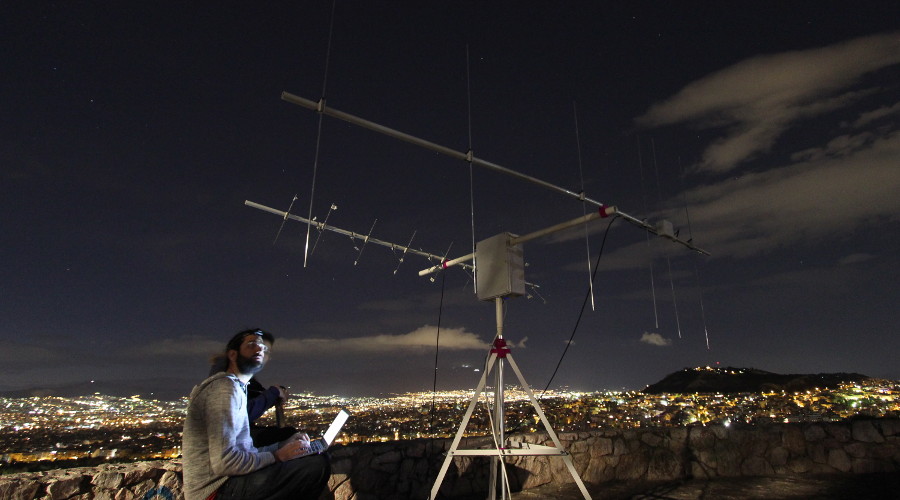
The early SatNOGS concept included automatic retrieval of orbital data, visibility calculations, an observation scheduler, remote pointing, signal reception, and processing. The hardware side featured an affordable tracking ground station with a mostly 3D-printed alt-azimuth rotator, tripod design, and antennas for common amateur satellite bands. The software side handled the logic that made the whole thing feel less like a pile of parts and more like a platform.
This is where SatNOGS got sneaky-smart. The project did not merely say, “Here is a blueprint; good luck.” It built an ecosystem that could support both individual makers and shared network use. One station owner could schedule observations, but the design also supported outside requests and collaborative usage. That turned the project from a private tool into public infrastructure.
And because the hardware relied on commodity electronics, accessible fabrication, and open documentation, the build was far more approachable than traditional satellite ground systems. Space hardware suddenly stopped feeling like a locked vault and started feeling like a difficult but possible weekend obsession. A very long weekend, sure, but possible.
Why SatNOGS Was So Compelling to Judges
Hackaday has always had a soft spot for projects that combine brains, utility, and open documentation. SatNOGS hit all three with the confidence of a project that knew exactly what it was doing. It had engineering depth, a real mission, and a clear social benefit. It also had that magical thing judges love: scale.
A lot of hardware projects are impressive in isolation. SatNOGS was impressive in multiplication. One station is interesting. Ten stations are useful. A global network of stations is transformative. The more people who built nodes, the more valuable the system became for everyone. That network effect made SatNOGS feel less like a prototype and more like the opening chapter of a movement.
It also helped that the project was deeply aligned with open-design values. The Hackaday Prize was not just rewarding cleverness; it was rewarding openly shared cleverness. SatNOGS did not keep its know-how behind a curtain. It published, documented, and invited others in. In the maker world, that is the difference between a neat trick and a legacy.
Then there was the emotional factor. SatNOGS made space feel participatory. Not symbolic. Not “maybe one day.” Participatory now. A student team, amateur radio operator, or small community lab could look at the project and see a path into satellite communications that was technical, demanding, but not absurdly out of reach. That is powerful. It changes who gets to imagine themselves in the story.
From Contest Winner to Open-Space Infrastructure
Winning the 2014 Hackaday Prize did not freeze SatNOGS in amber as a feel-good contest memory. The team used the momentum and the prize money to help establish the Libre Space Foundation, a nonprofit focused on advancing open-source technologies in space. That move is one of the clearest reasons the project still matters.
Plenty of contest winners disappear into the warm fog of old blog posts and broken links. SatNOGS did the opposite. It became an anchor project for a wider open-space mission. Hackaday later described the foundation’s vision in broad terms: not just open ground stations, but an open ecosystem for space technologies, including hardware, software, and data. That is ambitious in the best way. It says, essentially, “What if space infrastructure did not have to be closed by default?”
Later work connected to the Libre Space Foundation, including the open-source satellite UPSat, reinforced the idea that SatNOGS was not a one-hit wonder. It was a proof of philosophy. If you can open the ground segment, you can start pushing on the rest of the stack too.
By the late 2010s, SatNOGS was being referenced not just as a prize winner but as a living platform. Hackster highlighted its role in tracking and command-and-control operations. ARRL promoted hands-on seminars teaching people how to build and operate their own SatNOGS ground stations. WIRED later pointed to SatNOGS as an established precedent for decentralized, open satellite tracking. Those are the kinds of breadcrumbs that tell you a project did not merely win attention. It earned durability.
Why the 2014 Win Still Matters
SatNOGS won at an interesting moment. CubeSats and small satellites were becoming more common, more affordable, and more attractive to universities, researchers, and smaller organizations. NASA’s own ground-systems writing makes clear that the future of small-satellite operations demands more capable, more flexible ground infrastructure. SatNOGS recognized that early and answered it with an open-source model before the broader market fully caught up.
That is part of why the project still feels fresh. It was not just solving a 2014 problem. It was anticipating a bigger trend: more satellites, more data, more operators, and more need for distributed communication capacity. In that sense, the Hackaday Prize win looks less like a lucky contest result and more like an early public recognition of where the industry and the maker community were heading.
There is also a lesson here for open hardware in general. People often assume openness means compromise, as if sharing designs automatically makes a project less serious. SatNOGS helped demolish that idea. Its openness was not a side feature. It was the reason the project could scale, attract contributors, and stay relevant. Closed systems can be polished. Open systems can become ecosystems.
What Makers, Students, and Startups Can Learn From SatNOGS
First, solve a real bottleneck. SatNOGS was not built around novelty for novelty’s sake. It addressed a clear pain point in small-satellite communication.
Second, design for participation. The project got stronger as more people joined, built, tested, and contributed. That is a smarter growth engine than trying to do everything alone.
Third, document like your future depends on it. Because sometimes it does. Open hardware without strong documentation is just an expensive scavenger hunt.
Fourth, think in systems, not widgets. SatNOGS was compelling because it connected hardware, software, scheduling, network logic, and community. The sum was much bigger than the parts.
And finally, choose mission over spectacle. Yes, a trip to space is objectively hard to top at parties. But turning prize money into a foundation that supports open space technology? That is how you build something with staying power.
Experiences Related to “SatNOGS Wins The 2014 Hackaday Prize”
One of the most interesting experiences connected to SatNOGS is not the moment it won, but the feeling the project creates for people who discover it. For many makers, students, amateur radio operators, and open-source believers, SatNOGS triggers a rare kind of excitement. It is the excitement of realizing that a field you assumed was closed off might actually have a side door. Not a fake side door painted on a wall. A real one, with screws, documentation, and a Git repository.
Imagine being the kind of person who loves space but has mostly experienced it through finished products: NASA livestreams, glossy launch coverage, mission patches, and carefully edited science videos. Then you stumble onto SatNOGS and realize that ground-station hardware can be built from accessible components, that antenna tracking can be automated, and that signals from satellites are not just the domain of giant institutions. That moment lands hard. It turns space from spectacle into practice.
There is also the experience of building. Anyone who has worked on real hardware knows the emotional sequence: excitement, confusion, confidence, panic, cable management regret, and finally a tiny breakthrough that feels bigger than winning a medal. SatNOGS lives right in that zone. It invites people into the deeply educational experience of making something physical that must align mechanics, radio, software, timing, and patience. You are not just reading about orbital communication. You are wrestling with it on your workbench.
Then there is the community side, which may be the most important experience of all. Open-source projects can feel abstract until you see other people building, improving, troubleshooting, and teaching around them. SatNOGS became the kind of project that communities could gather around. Workshops, tutorials, forum posts, conference talks, and collaborative testing all turned the project into something social. That matters because difficult technical fields become much more welcoming when the culture says, “Come in, here’s how this works,” instead of, “Good luck, genius.”
There is even a strange emotional charm in the project’s mix of low-cost parts and high-ambition goals. SatNOGS does not pretend that space work is easy. But it does prove that meaningful participation in space infrastructure does not always begin with a giant procurement contract. Sometimes it begins with a 3D printer, a radio, an antenna, a pile of open documentation, and a person who is willing to learn. That combination is intoxicating because it restores agency. It tells people they do not have to wait for permission to be curious.
And for teams building mission-driven technology, the SatNOGS story offers another experience entirely: validation. Winning the 2014 Hackaday Prize sent a message that open, collaborative, public-interest engineering can compete with flashier projects and still come out on top. That kind of validation matters. It can help a team go from “we think this is important” to “the wider world sees the value too.” For startups, nonprofits, research groups, and student teams, that shift can be the difference between an idea that fades and an idea that finds its people.
In the end, the experience surrounding SatNOGS is about more than one contest win. It is about what happens when people see an advanced technology field become legible, buildable, and shareable. That is a rare feeling, and once people get it, they usually want more of it. Honestly, that may be the project’s greatest achievement. It did not just track satellites. It tracked down a little piece of the future and handed the rest of us a screwdriver.
Conclusion
SatNOGS won the 2014 Hackaday Prize because it did something the best engineering projects always do: it made a hard problem easier, a closed system more open, and a specialized tool more useful to more people. It was technically strong, socially meaningful, and perfectly matched to the spirit of the competition.
More importantly, the win meant something after the applause ended. SatNOGS grew from a brilliant project into part of a broader open-space effort through the Libre Space Foundation, helping prove that open hardware can do more than inspire admiration. It can build infrastructure, attract communities, and change who gets to participate in serious technology. That is not just a great contest story. That is a great technology story, period.