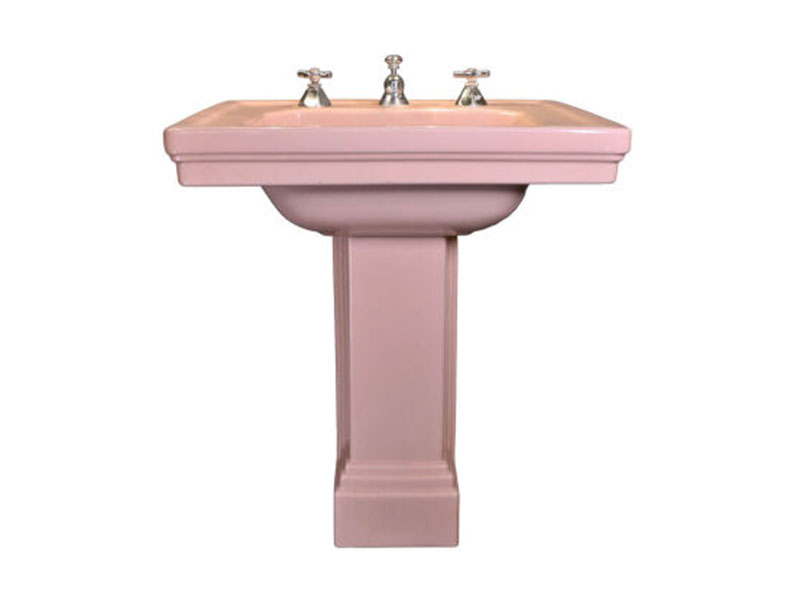

A Standard Pink Pedestal Sink sounds like something pulled from a stylish grandmother’s powder room, a 1930s catalog, or the dream board of someone who owns at least one brass mirror and refuses to apologize for it. And honestly? Good. The pink pedestal sink deserves its little comeback parade. It is charming, compact, sculptural, and surprisingly practical when used in the right bathroom.
Unlike a bulky vanity, a pedestal sink stands on a narrow base that supports the basin and visually opens the floor. In pink, it becomes more than a plumbing fixture. It becomes a design choice with personality. It says, “Yes, this bathroom has opinions,” but in the most delightful way possible.
The phrase Standard Pink Pedestal Sink can refer to a vintage Standard or American Standard-style porcelain fixture, often found in salvage shops, antique plumbing collections, and historic home renovations. It may also describe a standard-size pink pedestal bathroom sink used as a period-inspired statement piece. Either way, the appeal is the same: color, character, and space-saving elegance wrapped into one unforgettable fixture.
What Is a Standard Pink Pedestal Sink?
A pedestal sink is made of two main pieces: the upper basin and the lower pedestal column. The basin usually attaches to the wall for structural support, while the pedestal helps conceal plumbing and gives the fixture its classic freestanding silhouette. A pink pedestal sink adds a distinctive color layer to that traditional form, turning a functional wash basin into a focal point.
Vintage examples are commonly made from porcelain, vitreous china, or porcelain-enameled cast iron. A known antique listing for a Standard Pink Pedestal Sink describes a two-piece porcelain fixture from the 1920s or 1930s with an original pink finish, measuring approximately 26.5 inches wide, 31 inches tall, and 21.5 inches deep. Those dimensions place it right in the sweet spot for a powder room, guest bath, or historic small bathroom where a full vanity would feel like parking a refrigerator in a phone booth.
Why Pink Works Better Than People Expect
Pink bathrooms have a long American design history. The color became especially popular in mid-century homes, when cheerful tile, pastel fixtures, and coordinated bathrooms represented comfort, optimism, and domestic style. Today, designers are treating pink less like a novelty and more like a warm neutral. Soft blush, shell pink, dusty rose, and Venetian pink can feel elegant when paired with the right materials.
The trick is balance. A standard pink pedestal sink can look sweet with white beadboard, charming with floral wallpaper, bold with black accents, or quietly luxurious with brass fixtures and natural stone. Pink is not the problem. The problem is when pink gets abandoned in a room with bad lighting, plastic accessories, and a shower curtain that looks like it has seen three presidential administrations.
Best Bathroom Styles for a Pink Pedestal Sink
Vintage and Art Deco Bathrooms
A pink pedestal sink fits beautifully into Art Deco, 1920s, 1930s, and early mid-century bathrooms. Look for geometric mirrors, chrome cross-handle faucets, black-and-white floor tile, and simple wall sconces. The sink becomes the soft curve in a room full of clean lines.
Cottage and Whimsical Bathrooms
For cottage interiors, a pink porcelain pedestal sink can feel playful without becoming childish. Pair it with painted trim, small-scale wallpaper, woven baskets, and a skirted window treatment. Add a vintage medicine cabinet and you have a bathroom that looks collected, not decorated in one frantic weekend.
Modern Powder Rooms
In a modern powder room, the same sink can become an intentional statement piece. Use matte white walls, a sculptural mirror, polished nickel or unlacquered brass, and minimal accessories. The pink does all the talking, so the rest of the room can politely stop interrupting.
Standard Sizing: What to Measure Before Buying
Most pedestal sinks fall within a compact range, often about 16 to 30 inches wide, 18 to 22 inches deep, and 32 to 36 inches high. Vintage pieces can vary, so never trust a photograph alone. Measure the width, depth, basin height, faucet hole spacing, drain position, and distance from the wall to the center of the drain.
If you are replacing an existing pedestal sink, your job may be easier because the plumbing might already be in a workable position. If you are replacing a vanity, expect more planning. Vanities are forgiving because they hide pipes, supply lines, patchy flooring, and the questionable decisions of previous owners. A pedestal sink is more honest. It shows what is behind it, beneath it, and around it.
Installation Considerations
Installing a pedestal sink is often more demanding than installing a drop-in sink or standard vanity top. The basin must be securely anchored to the wall, and many installations require blocking or a mounting brace behind the finished wall. The pedestal is important, but it is not usually the only structural support. In plain English: do not balance a heavy vintage porcelain sink on hope and caulk.
Plumbing alignment is another major detail. The drain and water supply lines should fit neatly behind or within the pedestal. If pipes are exposed, choose attractive finishes such as chrome, polished nickel, brass, or copper. Plastic drain parts may function perfectly, but visually they can make a beautiful pink sink look like it borrowed hardware from a basement laundry tub.
Experienced DIYers may be able to install a pedestal sink in a day when plumbing is already correctly placed. However, first-time installations, wall reinforcement, floor repair, and pipe relocation are usually best handled by professionals. This is especially true with vintage porcelain or cast iron pieces, which can be heavy, fragile, and expensive to replace if dropped.
Pros of a Standard Pink Pedestal Sink
It Saves Visual Space
A pedestal sink keeps the floor open, which makes a small bathroom feel larger. This is especially useful in narrow bathrooms, guest baths, and powder rooms where every inch matters.
It Adds Immediate Character
A white sink is safe. A pink pedestal sink is memorable. It gives the room a story, and in interior design, a good story beats another gray vanity almost every time.
It Works With Many Finishes
Pink pairs well with chrome for vintage authenticity, brass for warmth, black for drama, white for freshness, and green for a charming garden-inspired palette.
Porcelain Is Easy to Clean
Porcelain and vitreous china surfaces are generally smooth, nonporous, and low-maintenance. A gentle bathroom cleaner, soft cloth, and regular wiping usually keep the sink looking bright.
Cons to Consider Before You Commit
Storage Is Limited
The biggest tradeoff is storage. A pedestal sink has little to no cabinet space and very limited countertop area. If you need room for twelve skincare bottles, three hair tools, and a backup toothpaste collection, add storage elsewhere.
Plumbing May Be Visible
Because there is no vanity cabinet, pipes can show. That is not always bad, but it does require cleaner planning and better-looking plumbing parts.
Vintage Pieces Need Inspection
Older pink sinks may have chips, crazing, worn enamel, rust near the drain, or incompatible faucet holes. Some flaws are cosmetic and charming. Others are expensive little gremlins. Inspect carefully before buying.
How to Style a Pink Pedestal Sink
For a clean vintage look, pair the sink with white subway tile, a small chrome faucet, a beveled mirror, and black hex floor tile. This combination lets the pink feel historic rather than loud.
For a romantic powder room, use soft wallpaper, a brass faucet, warm sconces, and a framed oval mirror. Keep towels white or cream so the room feels intentional, not like a cupcake shop exploded.
For a modern take, surround the sink with matte walls, minimal shelving, and a single strong accent color. Deep green, navy, oxblood, charcoal, and matte black all make pink feel grown-up and design-forward.
Storage Ideas That Actually Work
Since a pedestal sink does not provide cabinet storage, plan smart vertical solutions. Install a recessed medicine cabinet for daily essentials. Add a slim wall shelf above the toilet for extra towels. Use a narrow freestanding cabinet if floor space allows. For a powder room, a small tray on the sink rim may be enough for soap and a candle.
Do not overcrowd the base of the sink. The whole point of a pedestal fixture is its graceful shape. If you bury it under baskets, bins, and emergency toilet paper towers, you lose the effect. Storage should support the sink, not tackle it in the hallway.
Buying Tips for Vintage Pink Pedestal Sinks
When shopping for a vintage pink bathroom sink, ask for clear photos of the basin, pedestal, drain area, back side, faucet holes, and underside. Check whether the basin and pedestal are original matching pieces. Confirm the dimensions in writing. Ask if the finish is original, reglazed, or repaired. Original finish is often more desirable to preservation-minded buyers, but a professional refinish can make sense for a bathroom that will see daily use.
Also check faucet compatibility. Vintage sinks may have single-hole, 4-inch centerset, or 8-inch widespread faucet drilling. Some antique pieces were designed for wall-mounted faucets or separate hot and cold taps. Modern plumbing can usually be adapted, but adaptation costs money, and money has a rude habit of leaving quickly during bathroom renovations.
Care and Cleaning
Clean a pink porcelain pedestal sink with non-abrasive cleaners and a soft cloth or sponge. Avoid harsh scouring powders, steel wool, and aggressive acidic products that may dull the finish. For mineral deposits, use a gentle bathroom-safe cleaner and rinse well. If the sink is antique, test any cleaner in a small hidden area first.
If you notice chips near the drain or rim, repair kits may help with small cosmetic flaws. Larger chips, rusting cast iron, or failing enamel may require professional restoration. Treat old fixtures kindly. They have survived decades of toothbrushes, plumbing changes, and questionable wallpaper. They deserve respect.
Real-Life Experience: Living With a Standard Pink Pedestal Sink
The first thing you notice when living with a Standard Pink Pedestal Sink is that guests always comment on it. Nobody walks into a powder room with a pink pedestal sink and says, “Ah yes, a sink.” They say, “Oh! This is cute.” Or, if they are very polite and slightly confused, “Wow, this is original, right?” That reaction is part of the charm. The sink becomes a small conversation piece in a room that is usually ignored unless something is leaking.
In everyday use, the pedestal design feels wonderfully open. Cleaning the floor around it is easier than cleaning around a bulky vanity. A quick mop can glide around the base, and the room feels less crowded. In a small bathroom, that open floor makes a real difference. The space feels lighter, and the sink looks almost like a piece of furniture or sculpture instead of a cabinet with plumbing attached.
The tradeoff, of course, is storage. After a week, you learn not to leave everything on the rim. A toothbrush cup, soap pump, and maybe a small dish are fine. Add moisturizer, sunscreen, hair clips, and a half-used tube of mystery ointment, and suddenly the graceful sink looks like a pharmacy shelf having a nervous breakdown. The best solution is to keep daily items in a medicine cabinet and reserve the sink area for only the essentials.
Color coordination also becomes surprisingly fun. Pink is more flexible than people assume. White towels make it crisp. Brass makes it warm. Chrome makes it historically believable. Black frames and hardware make it sharper and more adult. Green plants are especially good companions, because the leaves freshen the pink and keep the room from feeling too sweet. Even one small pothos or fern can make the sink look styled rather than merely old.
Maintenance is straightforward if the finish is in good condition. The main habit is wiping the basin often so toothpaste, soap residue, and hard-water spots do not build up. Vintage pink porcelain can show scratches or dull spots if abused, so gentle cleaning matters. If the fixture has age marks, accept some of them as character. A tiny chip on an antique pedestal sink is not always a disaster; sometimes it is just proof that the sink has had a longer social life than most appliances.
The biggest lesson is this: a pink pedestal sink works best when the whole bathroom respects it. It does not need everything else to match. In fact, matching pink toilet, pink tub, pink tile, pink towels, and pink rug can be a lot unless the goal is “strawberry milk palace.” But when the surrounding materials are edited, the sink shines. It feels nostalgic, warm, and personal. In a world full of safe white fixtures and copy-paste vanities, that is a pretty excellent thing to wash your hands over.
Conclusion
A Standard Pink Pedestal Sink is not just a bathroom fixture. It is a design decision with history, function, and a wink of personality. It saves space, adds charm, and works beautifully in vintage, cottage, Art Deco, and modern powder rooms. The key is to measure carefully, plan the plumbing, respect the storage limitations, and style the pink intentionally. Do that, and this once-overlooked fixture can become the most memorable detail in the room.