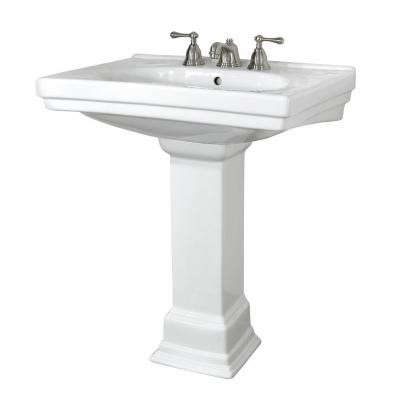

A bathroom sink does not need a cabinet the size of a studio apartment to make an impression. The Structure Lavatory and Pedestal Combo proves the point with a broad rectangular basin, a sculpted pedestal, and a design that blends vintage geometry with cleaner modern lines.
Originally associated with the Foremost Structure collection, this pedestal sink was designed for homeowners who wanted something more substantial than a tiny powder-room basin but visually lighter than a full vanity. Its Art Deco influence gives it personality without making the bathroom look like a movie set from 1932.
This guide examines the sink’s construction, dimensions, benefits, limitations, installation requirements, faucet compatibility, maintenance, styling potential, and real-world usability. It also explains what to check when purchasing remaining inventory, replacement parts, or a secondhand Structure lavatory and pedestal combo.
Product identification and historical design context:
What Is the Structure Lavatory and Pedestal Combo?
The Structure Lavatory and Pedestal Combo is a two-piece bathroom fixture consisting of a glazed sink basin and a matching floor-standing pedestal. The pedestal creates the visual impression that it supports the entire sink while also helping conceal the drain trap and water-supply connections.
Archived product information describes the combo as a modern interpretation of a traditional pedestal sink. The rectangular basin, softened corners, recessed soap areas, and flared pedestal create a style that falls somewhere between Art Deco architecture and contemporary minimalism.
Depending on the exact model and finish, versions were produced with either 4-inch centerset or 8-inch widespread faucet drilling. Black and white finishes have appeared in product listings, although availability now varies considerably. Anyone buying old stock should verify the model number instead of assuming that every Structure basin fits every Structure pedestal.
Typical Structure Combo Specifications
The most commonly documented 8-inch widespread version has an assembled width of approximately 28.25 inches, a depth of about 20 inches, and an overall height near 34 inches. The assembled fixture weighs more than 70 pounds, so this is not a “carry it under one arm while holding coffee” kind of sink.
The basin is made from vitreous china, a ceramic material covered with a hard, glossy, nonporous glaze. It also includes a rear overflow opening and a generously sized deck around the bowl. Exact measurements can vary by model, finish, or production run, so the original specification sheet should always outrank a reseller’s abbreviated description.
Specifications and construction details:
Why Pedestal Sink Design Still Works
Pedestal sinks have survived decades of changing bathroom trends because they solve a basic design problem: how to provide a comfortable washbasin without visually filling the room with cabinetry.
A vanity is useful, but it is also a large rectangular object sitting on the floor. In a narrow bathroom, that mass can make the room feel tighter. A pedestal sink exposes more flooring and wall area, allowing the eye to travel around the fixture. The bathroom may not gain a single square inch, but it often feels less boxed in.
The Structure model goes beyond the extremely small pedestal sinks commonly installed in half baths. Its wide deck provides usable space for hand soap, a toothbrush cup, or a small tray. That feature makes it more practical for daily use than a compact basin with barely enough room for one heroic bar of soap.
Pedestal sinks work particularly well in powder rooms, guest bathrooms, historic homes, compact apartments, and renovations where visual openness matters more than built-in storage. They are less convenient in busy family bathrooms where every person owns twelve bottles labeled “essential.”
General pedestal-sink benefits and tradeoffs:
Advantages of the Structure Lavatory and Pedestal Combo
Distinctive Architectural Style
The basin has enough width and visual weight to become a focal point. Its geometric form pairs naturally with subway tile, marble, beadboard, hexagonal flooring, paneled walls, and simple plaster finishes.
One documented commercial installation paired the Structure pedestal sink with beadboard wainscoting and light marble flooring. The combination demonstrated how the fixture can bridge traditional materials and a modern retail interior without looking overly formal.
More Visual Space
Because there is no full cabinet beneath the basin, more of the floor remains visible. This can make a modest bathroom appear wider and easier to navigate. Cleaning around the pedestal is also simpler than reaching under a bulky vanity with a narrow toe kick.
Useful Basin Deck
Many compact pedestal sinks sacrifice every horizontal surface in the name of saving space. The Structure basin is comparatively broad, giving users room for soap, lotion, or small bathroom accessories. That extra deck space is especially helpful in a guest bathroom where visitors should not have to balance their phone on the toilet tank.
Durable, Easy-to-Clean Surface
Vitreous china has a smooth glazed finish that resists routine staining and is easy to wipe clean. The finish does not require sealing like natural stone, and ordinary bathroom maintenance is usually enough to preserve its shine.
Flexible Style Pairings
The white version works with traditional, transitional, coastal, industrial, and minimalist interiors. The black version produces a stronger graphic statement and looks especially effective with white walls, brass hardware, polished nickel, marble, or black-and-white tile.
Styling, surface, and space-planning support:
Potential Drawbacks to Consider
There Is No Built-In Storage
The most obvious limitation is the absence of drawers and cabinets. Towels, cleaning products, extra toilet paper, and grooming supplies must live somewhere else. A recessed medicine cabinet, wall-mounted shelves, a narrow linen tower, or baskets placed nearby can restore storage without destroying the room’s open appearance.
Plumbing Placement Matters
The pedestal hides some plumbing, but it does not magically swallow pipes placed wherever a previous installer felt inspired to put them. Supply valves and the drain connection must align with the cavity behind the pedestal. Pipes that sit too far apart, too low, or too far forward may remain visible or prevent the pedestal from fitting correctly.
Installation Requires Solid Wall Support
A pedestal sink is not simply placed against the wall like a decorative plant stand. The basin must be anchored securely. Depending on the fixture design, the pedestal carries some or most of the vertical load while wall fasteners prevent movement and tipping.
Manufacturer instructions commonly require solid backing behind framed walls. If the anchor locations fall between studs, the wall may need to be opened so blocking or reinforced plywood can be installed. Mounting a heavy vitreous-china basin with a pair of optimistic drywall anchors is not a renovation strategy; it is the opening scene of a plumbing disaster.
Older Models May Be Difficult to Match
The Structure line is commonly encountered through archived listings, leftover inventory, architectural salvage stores, and secondhand marketplaces. A basin without its correct pedestalor a pedestal without its matching basinmay not form a stable combination. Shapes, contact points, heights, and mounting holes are not universally interchangeable.
Storage and installation limitations:
How to Measure Before Buying
Before purchasing a Structure lavatory and pedestal combo, mark its approximate footprint on the bathroom floor with painter’s tape. Check the basin width, front-to-back projection, finished rim height, doorway clearance, and distance from nearby fixtures.
Open the bathroom door fully. Confirm that it will not hit the sink. Stand in front of the taped outline and imitate ordinary handwashing. This five-minute exercise can reveal more than an hour spent admiring a product photograph.
Check the Plumbing Centerline
Locate the drain pipe and hot and cold supply valves. Compare their positions with the rough-in diagram for the exact Structure model. The trap and supply lines should fit within or behind the pedestal without sharp bends, crushed hoses, or valves that cannot be operated.
Confirm Faucet-Hole Spacing
A 4-inch centerset sink uses faucet holes measured four inches from the center of the left handle opening to the center of the right handle opening. An 8-inch widespread version uses separate hot, cold, and spout components distributed across an eight-inch span.
Do not order a faucet based only on appearance. Confirm the drilling pattern first. A widespread faucet will not squeeze into a centerset basin through the power of positive thinking.
Consider Accessibility Requirements
Traditional full-pedestal sinks generally do not provide the knee and toe clearance required for a wheelchair user to approach directly beneath a lavatory. In public, commercial, rental, or accessibility-focused projects, verify the applicable building code and ADA requirements before choosing the fixture.
Accessible lavatories typically require clear floor space, controlled mounting height, and unobstructed knee and toe areas. A decorative pedestal may interfere with those clearances even when the basin height appears suitable.
Faucet compatibility, layout, and accessibility:
Structure Pedestal Sink Installation Overview
Installation methods vary, and the original instructions for the exact model should always be followed. The following overview explains the normal sequence rather than replacing the manufacturer’s manual or local plumbing code.
1. Inspect the Basin and Pedestal
Unpack both pieces and inspect the glaze, edges, mounting surfaces, faucet holes, and overflow. Small hairline cracks can grow under installation stress, especially if fasteners are overtightened.
2. Dry-Fit the Fixture
Place the pedestal in position and carefully set the basin on top with help from another person. Center the assembly on the drain, check that the basin is level, and mark the wall-anchor locations.
3. Reinforce the Wall
Confirm that the marked fastener locations have suitable backing. Framed walls may require horizontal wood blocking or reinforced plywood between the studs. Tile and masonry installations require fasteners specifically rated for the substrate and fixture weight.
4. Install the Faucet and Drain
It is often easier to install the faucet, drain body, and portions of the pop-up assembly while the basin remains accessible. Once the sink is against the wall and the pedestal occupies the center, wrench space becomes a luxury item.
5. Install Hanger Bolts or the Mounting Bracket
Drill only at the confirmed anchor points and use the hardware specified for the wall construction. Protect tile from cracking and verify that no hidden electrical wire or water pipe is behind the drilling location.
6. Set and Secure the Basin
Place the basin on the pedestal, guide it onto the hanger bolts or bracket, and check the level again. Install protective sleeves, washers, and nuts as required. Tighten gradually and evenly.
Never overtighten ceramic fixtures. Vitreous china is durable during ordinary use but can crack when compressed unevenly by a determined person holding a large wrench.
7. Connect the Plumbing
Attach the water-supply lines and connect the trap to the drain. Make sure the trap fits without forcing the pedestal out of alignment. Supply-valve handles should remain reachable and able to open fully.
8. Test for Leaks
Turn on the water slowly. Test the faucet, fill the basin, operate the stopper, and release a full basin of water while inspecting every connection. Wipe each joint with a dry paper towel; even a small leak will reveal itself quickly.
9. Apply Sealant Where Required
Once the fixture is secure and leak-free, apply bathroom-grade silicone at the wall joint or pedestal base only where the instructions recommend it. Avoid sealing access points so completely that future plumbing repairs require an archaeological excavation.
Installation sequence and safety guidance:
Choosing a Faucet for the Structure Sink
The faucet should match both the hole pattern and the visual scale of the basin. A very small faucet can look lost on a wide Structure lavatory, while an oversized spout may send water too close to the front edge.
For an 8-inch widespread model, separate hot and cold handles reinforce the sink’s architectural character. Cross handles create a traditional appearance, lever handles feel more transitional, and streamlined cylindrical hardware pushes the design toward modern minimalism.
Chrome and polished nickel brighten a white basin. Brushed nickel offers a quieter finish, while brass or bronze creates contrast. A black faucet can work well with either basin color, although black-on-black combinations benefit from lighter walls and good lighting so the fixture does not disappear into one dramatic plumbing-shaped shadow.
A WaterSense-labeled bathroom faucet can reduce water flow while maintaining suitable performance. Current EPA information identifies labeled bathroom sink faucets with maximum flow rates of 1.5 gallons per minute, with newer specification revisions under consideration. Check the current product label when purchasing.
Faucet sizing and water efficiency:
Maintenance and Cleaning
Clean the vitreous-china surface regularly with warm water, mild dish soap, or a nonabrasive bathroom cleaner. Use a soft cloth or non-scratch sponge. Harsh abrasive powders, metal scouring pads, and aggressive tools can dull or scratch the glaze.
Wipe dark-colored fixtures after use when possible. Black ceramic can look striking, but dried mineral spots and toothpaste enjoy appearing on it with the confidence of tiny white billboards.
Inspect the silicone joints, faucet base, supply valves, drain connection, and trap periodically. A slow leak hidden behind the pedestal may continue for weeks before appearing on the floor. An occasional flashlight inspection is cheaper than replacing damp drywall.
If the sink begins to rock, do not immediately tighten every nut. First determine whether the pedestal has shifted, the floor is uneven, a protective gasket has compressed, or the wall attachment has loosened. Uneven tightening can crack the basin.
Design Ideas for a Structure Pedestal Sink
Classic Black-and-White Bathroom
Pair a white Structure sink with black-and-white mosaic flooring, white subway tile, dark grout, and a black-framed mirror. The broad basin adds visual substance while the pedestal keeps the room open.
Warm Transitional Interior
Combine the white fixture with warm gray walls, brushed brass hardware, a walnut medicine cabinet, and softly veined stone tile. The result feels updated without chasing a trend that may look exhausted by next Tuesday.
Industrial Art Deco Style
Use the black Structure combo with white tile, aged-brass sconces, a geometric mirror, and charcoal flooring. Keep accessories restrained so the sink remains the focal point rather than one competitor in a room full of dramatic objects.
Storage Without a Vanity
Add a recessed medicine cabinet above the sink, floating shelves over the toilet, robe hooks behind the door, and a narrow freestanding cabinet. Choose storage that uses wall height instead of crowding the visible floor area gained by removing a vanity.
Small-bath storage and styling approaches:
Experiences With the Structure Lavatory and Pedestal Combo
Living with a pedestal sink is different from evaluating one in a showroom. In a photograph, the fixture is all symmetry, glossy ceramic, and beautifully arranged towels. In real life, someone must decide where the hair dryer goes.
Experience 1: Replacing a Bulky Vanity in a Narrow Bathroom
The biggest improvement often comes from removing visual weight. In a bathroom where the door nearly touches the old vanity, replacing the cabinet with a Structure pedestal combo can make movement feel more natural. More floor becomes visible, the corners are easier to clean, and the sink no longer resembles a large storage crate with plumbing.
The surprise usually arrives after demolition. A vanity conceals unfinished flooring, wall damage, wandering supply lines, and drain pipes installed with little concern for beauty. Once the cabinet disappears, every shortcut becomes visible. The installation may require floor patching, wall repair, new shutoff valves, and plumbing relocation before the pedestal can sit correctly.
That additional work is frustrating, but the finished result can transform the room. The Structure basin is wide enough to feel substantial, so the bathroom gains openness without looking as though a miniature sink was installed as a dare.
Experience 2: Using the Sink in a Guest Bathroom
A guest bathroom is arguably the ideal location for this fixture. Visitors generally need soap, a hand towel, a mirror, and a place to wash their hands. They rarely arrive carrying an eight-step skin-care routine and three electric grooming devices.
The basin’s deck can hold a soap dispenser and small tray without feeling crowded. The pedestal keeps the room visually tidy, and cleaning around the fixture is straightforward. A recessed medicine cabinet or nearby shelf can hold spare supplies without adding a large vanity.
The main lesson is to plan accessories before installation. A freestanding towel ring, wall hook, small shelf, or cabinet should be positioned where it is convenient but does not interfere with the basin. Without this planning, guests may end up placing personal items on the toilet tank, which is functional but not exactly five-star hospitality.
Experience 3: Installing a Secondhand Structure Combo
A used Structure lavatory can be an excellent architectural-salvage find, but it requires careful inspection. The basin and pedestal should be confirmed as a matching set. Check the underside contact surfaces, model markings, wall-mount holes, drain opening, overflow channel, and faucet drilling.
Run a fingertip around the edges and inspect the ceramic under strong light. Look for repaired cracks, chips near mounting holes, and fine lines around the drain. Cosmetic marks may be acceptable, but structural damage around load-bearing or plumbing areas is a good reason to walk away.
Also consider replacement-part availability. Standard faucets, drains, traps, and supply lines can usually be replaced, but a proprietary pedestal or uniquely shaped basin may be difficult to substitute. Buying only half of the combo because it is inexpensive can become surprisingly costly once the search for the missing half begins.
Experience 4: The Daily Storage Reality
The most common long-term complaint is not about the sink itself. It is about everything that used to live inside the vanity. Before removing bathroom cabinetry, place its contents on a table. If the resulting pile resembles inventory from a small pharmacy, create a storage plan first.
Wall cabinets, mirrored medicine cabinets, shallow shelves, and attractive containers can solve the problem. The best arrangement keeps daily items near the sink and moves backup supplies elsewhere. Done well, the bathroom feels lighter and more organized. Done poorly, the elegant pedestal sink becomes surrounded by plastic bins, defeating the entire design.
These experiences reveal the central truth about the Structure lavatory and pedestal combo: it works beautifully when the whole room is designed around it. The sink provides style, openness, and useful washing space, but it cannot compensate for badly positioned plumbing, weak wall support, or a complete absence of storage planning.
Frequently Asked Questions
Is the Structure Lavatory and Pedestal Combo suitable for a small bathroom?
It can work well in a small or narrow bathroom because the open pedestal exposes more floor than a cabinet vanity. However, the basin is relatively wide, so the room must be measured carefully.
Does the pedestal support the sink?
The pedestal provides vertical support in many installations, but the basin must also be anchored to the wall according to the manufacturer’s instructions. The wall attachment prevents shifting and tipping.
Can the Structure basin be installed without its pedestal?
It should not be installed in an unsupported configuration unless documentation for the exact model specifically permits it and an appropriate support system is engineered. The matching pedestal is part of the intended installation.
Does the combo include a faucet?
Archived listings indicate that the faucet was generally sold separately. Confirm what is included when buying new old stock or a secondhand fixture.
Is a pedestal sink difficult to install?
Installation can be challenging because the heavy basin must be aligned with wall anchors, the pedestal, and concealed plumbing at the same time. Experienced DIYers may handle a straightforward replacement, but plumbing relocation or wall reinforcement is often best left to professionals.
Conclusion
The Structure Lavatory and Pedestal Combo combines a generous rectangular basin with the airy footprint of a pedestal sink. Its softened Art Deco styling works in vintage, transitional, industrial, and modern bathrooms, while the broad deck makes it more practical than many compact pedestal designs.
Its success depends on preparation. Confirm the exact model, faucet drilling, dimensions, wall support, plumbing placement, and availability of both matching ceramic pieces. Plan alternative storage before removing a vanity, and never treat the pedestal as a substitute for proper wall anchoring.
When installed correctly, the Structure combo can make a small bathroom feel more open without making the sink feel undersized. It is attractive, durable, and refreshingly free of bulky cabinetryalthough it will not organize the twelve half-empty shampoo bottles hiding under your current vanity. That job still belongs to you.
Note: Product dimensions, faucet drilling, included hardware, and installation requirements may vary by model and production run. Verify the exact model number and manufacturer documentation before purchasing components or beginning installation.