
The English seaside has never been entirely predictable. Sunshine may arrive with theatrical confidence, only to disappear behind a gray cloud five minutes later. The beach may be pebbly, the water bracing, and the wind determined to rearrange your hair without permission. Yet that imperfect charm is precisely what makes coastal towns such as Deal, Kent, so memorable.
In the middle of Deal’s High Street stands The Rose, a historic pub transformed into a colorful boutique seaside inn, bar, and restaurant. Its traditional red-brick exterior offers little warning of what waits inside: teal tiles, deep green woodwork, candy-colored bedrooms, vintage tubs, floral fabrics, modern art, and furniture that appears to have attended several excellent parties.
The Rose is not merely a hotel decorated with bright paint. It is a thoughtful example of how historic architecture, reclaimed furnishings, bold color, local character, and modern hospitality can work together without turning a building into either a museum or a theme park.
A Historic Pub Reimagined for the Modern English Coast
From neighborhood watering hole to boutique inn
The Rose occupies a roughly 200-year-old building with a long hospitality history. During the Victorian and Edwardian eras, it was known as a popular local venue for dinners, entertainment, and social gatherings. By the 21st century, however, the old pub had lost much of its sparkle. Its eventual revival preserved the sociable spirit of the building while introducing a more contemporary approach to dining, lodging, and design.
The property reopened in 2018 under Alex Bagner and Chris Hicks. Bagner had worked in design publishing, while Hicks came from a Kent family with deep connections to brewing and pubs. Their backgrounds help explain why The Rose feels equally serious about interiors, food, and the essential business of pouring someone a good drink at the end of a windy walk.
Rather than erase the building’s history, the renovation treated its imperfections as assets. Old paneling, fireplaces, fitted seating, worn floorboards, and slightly irregular spaces became part of the final composition. The result feels collected rather than installed, as though the inn slowly acquired its personality over several eccentric generations.
Why Deal is the right setting
Deal is a compact seaside town in East Kent, close to the point where the North Sea meets the English Channel. Once associated with fishing, maritime trade, military activity, and smuggling, it is now known for independent shops, antique dealers, galleries, restaurants, narrow historic streets, a shingle beach, and its unmistakable concrete pier. The town remains less polished than some famous English resorts, which is part of its appeal.
The Rose sits only a few streets back from the water. Guests can finish breakfast, stroll past shop windows, and reach the seafront before their coffee has had time to become a personality trait. Deal Castle, the pier, the promenade, and the town’s independent businesses are all within easy exploring distance.
This location makes the hotel feel connected to everyday town life. It is not isolated behind gates or surrounded by manicured resort grounds. Step outside and you are immediately part of Deal, complete with dog walkers, cyclists, locals buying bread, visitors debating lunch, and at least one person dressed for weather that is no longer occurring.
The Color Edition: Why The Rose’s Interior Works
Color is architecture, not decoration
The interior was developed with designers Harding and Read and stylist Michelle Kelly. Their approach combined saturated paint, vintage furniture, restored architectural details, contemporary art, patterned textiles, and playful contrasts. The objective was not quiet neutrality. The Rose prefers to greet beige politely, take its coat, and then seat it beside an enormous yellow table.
Dark green doors and floorboards establish a strong visual foundation. Teal tiles energize the reception area, while a theatrical red curtain frames the staircase leading to the bedrooms. Elsewhere, pinks, ochres, blues, purples, and botanical greens appear in combinations that should theoretically argue with one another but somehow end up ordering another round together.
The success comes from balance. Strong wall colors are softened with wood, cane, velvet, and worn vintage surfaces. Floral fabrics sit beside geometric artwork. Glossy paint is offset by scuffed floors. Bright furniture is anchored by traditional fireplaces and dark architectural elements. Every room contains contrast, but the contrasts have been edited rather than randomly accumulated.
Vintage pieces without the costume-drama effect
Much of the furniture was sourced through antiques markets, local dealers, online marketplaces, and secondhand shops. Pieces were repaired, repainted, or reupholstered rather than forced into matching sets. In the lounge, antique and midcentury seating appears in jewel-like colors, while a vintage dining table was famously finished in an egg-yolk yellow associated more with a cheerful sports car than a restrained English hotel.
The original midcentury wood paneling and fitted banquettes in the bar were repaired. A local upholsterer who had worked on the earlier seating helped restore them, creating a direct link between the building’s past and present. That detail reveals the larger design philosophy: restoration is not about freezing a room in time. It is about deciding which stories deserve another chapter.
The hotel also avoids the common boutique-property trap of arranging old objects so carefully that guests become frightened to touch anything. The furniture is stylish, but it still invites sitting. The rooms are photogenic, but they do not feel like sets awaiting a catalog photographer. The Rose understands that a chair’s primary responsibility is still allowing a tired person to collapse into it.
Bathrooms with a sense of humor
The bathrooms are among the inn’s most recognizable features. Restored roll-top tubs, colored basins, vintage-style fittings, cane accessories, patterned surfaces, and unexpected paint colors turn practical spaces into miniature design events. Some tubs appear in shades such as yellow, pink, black, or deep purple, while green sanitary fixtures deliver a surprisingly persuasive argument for revisiting the 1970s.
What prevents these rooms from becoming novelty installations is the quality of the composition. A colored tub may be dramatic, but it is paired with restrained flooring, traditional hardware, or a simple wall treatment. Every theatrical gesture receives a sensible supporting actor.
Bedrooms Designed as Individual Characters
No copy-and-paste hotel rooms
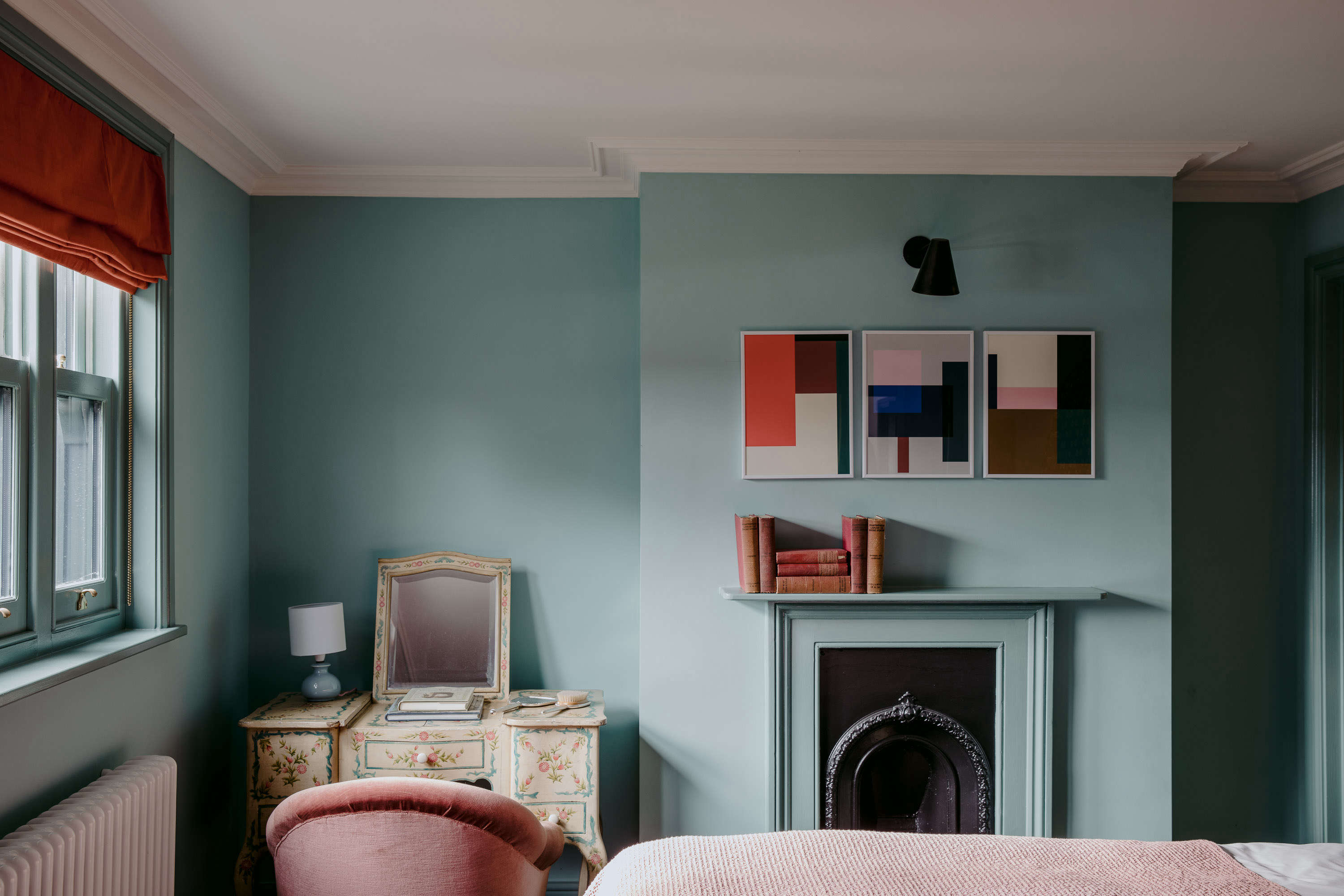
The Rose offers a compact collection of individually designed bedrooms rather than rows of identical accommodations. Room schemes include turquoise walls, rhubarb pinks, deep blues, golden accents, floral upholstery, hand-painted furniture, wicker mirrors, statement headboards, and restored fireplaces. Numbering may be orderly, but personalities most certainly are not.
One room may combine a vintage floral dressing table with crisp geometric art. Another may place warm wooden furniture against nautical wallpaper and blue-painted surfaces. A third may build its identity around an oversized velvet headboard and a dark freestanding bath. These are rooms guests remember by color and atmosphere, not merely by floor number.
The visual variety also makes choosing a room part of the experience. Travelers who prefer showers, freestanding tubs, movie projectors, record players, twin beds, or space for a small family should examine the individual room descriptions before booking. Some rooms welcome dogs, while others have restrictions, so reading the details is wiser than selecting solely on the basis of an excellent pink bathtub.
Analog pleasures for a slower stay
Several rooms include old-fashioned turntables, collections of vinyl records, or projectors for movie nights. Board games, books, retro snacks, tea stations, and nightcaps reinforce the inn’s nostalgic but unstuffy personality. These details give guests something to do besides stare at a phone while claiming to be “taking in the atmosphere.”
The analog touches feel especially appropriate beside the sea. A rainy evening becomes an excuse to play a record, pour a drink, run a bath, or start a board game that will inevitably reveal alarming facts about everyone’s character. The hotel does not attempt to eliminate bad weather; it simply makes staying indoors feel like a reward.
A Restaurant and Bar That Locals Actually Use
Food is not an afterthought
The Rose operates as a restaurant, bar, and neighborhood gathering place as much as a hotel. Its dining rooms combine dark wood, vintage seating, contemporary and retro artwork, velvet banquettes, and an open, convivial atmosphere. Because locals visit alongside overnight guests, the public spaces avoid the strange silence sometimes found in small hotels where everyone whispers as though breakfast were taking place inside a library.
The food program has evolved since the property opened. More recent menus have involved head chef David Gadd and executive chef Nuno Mendes, whose background includes prominent London restaurants. The cooking emphasizes seasonal ingredients, modern British comfort food, seafood, carefully prepared vegetables, and dishes substantial enough to justify a brisk walk along the promenade afterward.
The menu changes, but the philosophy remains compatible with the design: familiar foundations, clever details, and enough confidence to be playful. Breakfast receives similar attention, which matters because few things damage boutique-hotel romance faster than a tragic croissant and coffee that tastes like a workplace grievance.
Part of Deal’s wider creative scene
The Rose has been credited with helping draw attention to Deal as a destination for design-minded travelers and food lovers. It is part of a broader revival of English coastal hospitality in which independent hotels combine heritage, local culture, serious dining, wellness, and contemporary interiors.
The owners’ nearby ventures extend that experience. The Blue Pelican offers Japanese-influenced dining near the seafront, while the Pelican Rooms provide yoga, treatments, and wellness activities. Together, these spaces allow visitors to build a weekend involving colorful interiors, coastal walks, thoughtful food, natural wine, stretching, and the realization that they packed completely inappropriate shoes.
Design Lessons to Borrow from The Rose
Use one dark color as an anchor
Bold rooms need structure. The Rose frequently uses deep green, dark-painted floors, wood paneling, or substantial furniture to stabilize brighter shades. At home, a dark door, bookcase, trim color, or floor can perform the same job without requiring every wall to become dramatic.
Mix eras instead of buying a complete set
Vintage rooms feel convincing when objects come from different periods. Pairing an Edwardian sofa with midcentury lighting and contemporary art creates depth. Purchasing an entire “vintage-inspired collection” in one afternoon generally creates the opposite: a room that looks as though history was delivered in matching cardboard boxes.
Let one object be ridiculous in the best way
A yellow table, purple bathtub, floral bed, or oversized headboard can supply the energy for a whole room. The remaining pieces should support that feature instead of competing for the same applause.
Preserve useful imperfections
Old paneling, worn boards, repaired furniture, and irregular architectural details give The Rose authenticity. Not every scratch needs sanding away. Sometimes the smartest renovation decision is recognizing that a building already possesses the texture a designer would otherwise spend considerable money attempting to reproduce.
Who Will Enjoy Staying at The Rose?
The Rose is particularly well suited to couples, solo travelers, design enthusiasts, food-focused visitors, and anyone seeking a lively alternative to a conventional coastal hotel. It appeals to guests who value personality over uniformity and who consider a dramatic bathroom a legitimate vacation attraction.
It may be less suitable for travelers who require elevators, extensive business facilities, large resort amenities, or perfectly silent public spaces. The bedrooms are reached through a historic building above active hospitality areas, and a recent major review listed the property as not fully accessible. Guests with mobility requirements should contact the hotel directly before reserving.
Families and dog owners should also confirm the policy for their preferred room. Certain larger accommodations may accept young children, and manybut not necessarily allrooms welcome dogs. Room configurations, dining hours, wellness services, and prices can change, so current information should always take precedence over older reviews.
A Color-Drenched Day at The Rose: The Experience
Imagine arriving in Deal in the late morning after a train journey from London. The town feels immediately manageable: no grand arrival boulevard, no convoy of hotel vehicles, and no urgent need for a map the size of a dining table. You walk toward the High Street, passing narrow lanes, brick houses, independent storefronts, and signs pointing toward the sea.
The Rose initially looks like a handsome traditional pub. Then the door opens, and the interior changes the mood. Teal, green, crimson, ochre, patterned fabric, polished brass, and old wood appear in quick succession. The welcome feels informal. You are not processed through a marble lobby beneath a chandelier the size of a fishing boat. Instead, you enter a working bar and restaurant where someone is ordering coffee, someone else is studying the lunch menu, and a local dog appears to understand the entire operation.
Your room is ready upstairs. A velvet curtain and creaking staircase make the journey feel slightly theatrical. Inside, the colors are richer than they appeared in photographs. The headboard is enormous, the furniture mismatched in exactly the right way, and a restored fireplace reminds you that the building had a life long before boutique hotels became a searchable category.
You set down your bag, inspect the record collection, and spend an unreasonable amount of time admiring the bathroom. The tub is not white. The basin may not be white either. After years of hotels apparently decorated by committees terrified of pigment, this feels strangely liberating.
Lunch downstairs begins with a drink and something salty from the snack menu. The dining room is stylish, but it remains recognizably a pub. Conversations overlap, plates move quickly from the kitchen, and the atmosphere is relaxed enough that you do not need to pretend to understand every ingredient before ordering it.
Afterward, you walk to the shingle beach. The wind is enthusiastic. Deal Pier extends into the water with all the unapologetic concrete confidence of postwar British design. Fishing boats rest on the beach, gulls conduct hostile negotiations overhead, and the horizon is a cool strip of silver-blue.
You continue along the promenade, then turn back through the historic streets. A vintage shop becomes a 20-minute detour. A gallery becomes another. You purchase something small and impractical because The Rose has already convinced you that your home urgently needs more color.
Late afternoon is reserved for the room. A record plays while you make tea. Rain taps briefly against the window, which feels less like an inconvenience and more like the weather contributing sound effects. You run the bath, examine the unusual paint combinations, and begin mentally redecorating a room you do not currently own.
Dinner brings you downstairs again. The restaurant is busier now, with locals at the bar and weekend visitors settling into banquettes. The food feels considered but comforting, reflecting the coast without turning every plate into a maritime lecture. Dessert is followed by one final drink, because climbing a single staircase is the evening’s entire transportation plan.
Back in the bedroom, the building settles into its nighttime rhythm. The day has included design, history, food, sea air, shopping, and just enough weather to make returning indoors satisfying. The Rose has not tried to manufacture a flawless seaside fantasy. Instead, it has taken Deal as it iscreative, historic, windy, independent, colorfuland amplified its best qualities.
Conclusion: An English Seaside Inn with Its Own Point of View
The Rose succeeds because it is not simply a beautiful hotel. It is a revived local pub, a serious restaurant, an experiment in fearless color, and a comfortable base for experiencing one of Kent’s most characterful coastal towns.
Its interiors demonstrate that historic buildings do not need to be treated with timid reverence. Old paneling can sit beside modern art. Floral velvet can cooperate with turquoise paint. A vintage green sink can become desirable again, despite everything previous decades did to damage its reputation.
Most importantly, The Rose feels specific to its setting. It does not resemble an international luxury hotel that could be placed in any fashionable destination. Its quirks belong to Deal, to the English coast, and to a building that has welcomed drinkers, diners, neighbors, and travelers for generations.
For visitors seeking a colorful boutique hotel in Deal, memorable seaside dining, and rooms with genuine individuality, The Rose offers something increasingly rare: hospitality with a recognizable personality.