
In a city that already thinks of itself as part-human, part-salmon, it takes a special restaurant to stand out as truly “of the sea.”
For more than a decade, The Whale Wins in Seattle’s Fremont neighborhood did exactly that.
The restaurant, led by James Beard Award–winning chef Renee Erickson, wrapped guests in light, salt air, and the glow of a wood-fired oven while serving vegetables and seafood that felt like they’d traveled straight from local farms and beaches to your plate.
Even though the restaurant has now closed, its design and spiritimmortalized in a beloved Remodelista featurecontinue to influence how people think about coastal-inspired dining rooms and relaxed, ingredient-driven food.
Think of The Whale Wins as part beach cottage, part European wine bar, and part neighborhood pantry.
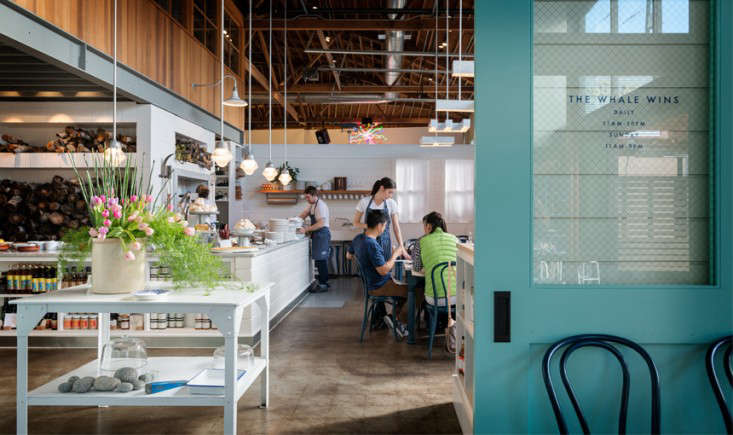
It was the kind of place where you could linger over wood-roasted vegetables, sip something crisp and minerally, then look up and notice how the space itself seemed to breathe: whitewashed walls, soaring ceilings, and big windows catching every last Pacific Northwest sunbeam.
The result was a restaurant that felt both stylish and lived-in, like a home you never wanted to leave.
A Sea-Inspired Restaurant with Remodelista Style
The Whale Wins was housed in a converted warehouse in Fremont, just uphill from the ship canal.
Rather than lean into kitschy nautical clichés (no ship wheels or plastic anchors here), the design team and Sea Creatures partners created a space that suggested the sea without shouting about it.
The palette was airy and coastal: soft whites, weathered wood, pale blues, and warm metal accents.
Natural light poured through floor-to-ceiling windows, bouncing off shiplap-style paneling and polished concrete floors.
One of the most striking things about the roomhighlighted in the Remodelista feature that gave this article its titlewas how open and generous it felt.
A long counter displayed pastries, jars of house-made pickles, and carefully chosen pantry items.
Behind it, the open kitchen and wood-fired oven kept the room in constant motion.
Stacks of cut firewood and shelves of wine bottles doubled as decor, making the space feel like a working larder rather than a stage set.
Instead of fussy table settings, tables were topped with butcher paper and simple white plates.
The chairs were sturdy, café-style bistro seatscomfortable enough for long, chatty meals but unfussy enough to survive spilled rosé and the occasional enthusiastic oyster mishap.
Overhead, simple pendant lights and industrial fixtures created a soft glow at night, turning the bright daytime café into a cozy evening dining room.
Meet the Team Behind The Whale Wins
The Whale Wins was part of the Sea Creatures restaurant family, a group of Seattle spots helmed by chef, restaurateur, and author Renee Erickson and her partners.
Erickson is best known for her Ballard oyster bar The Walrus and the Carpenter and for building an entire mini-universe of seafood and vegetable-focused restaurants around the city.
Her work has earned James Beard recognition and national press, but in Seattle she’s just as famous for championing farmers, oyster growers, and sustainable seafood.
At The Whale Wins, Erickson’s culinary vision was paired with a tight-knit team that thought as much about how diners felt in the room as what landed on their plates.
The restaurant was designed to be relaxed and welcoming: servers in striped aprons, cooks visible at the hearth, and a front-of-house crew that made it just as easy to drop in for a glass of wine and a snack as to settle in for a long multi-plate feast.
It was very “Seattle casual”which is to say, serious about quality, not at all serious about pretense.
A Menu Where Vegetables and the Sea Share the Spotlight
Although it was often filed mentally under “seafood spot,” The Whale Wins was, at its core, a wood-fired, vegetable-focused restaurant with a strong saltwater accent.
The oven was the heart of the kitchen, roasting everything from whole fish to carrots, leeks, and brassicas until they were smoky, caramelized, and just this side of charred.
The menu changed with the seasons, but regulars came to expect a few themes:
-
Bold, simple vegetables. Dishes might feature charred cabbage with anchovy dressing, roasted beets with creamy cheese, or leeks and hazelnuts finished with good olive oil and sea salt.
Vegetables weren’t sidekicksthey were main characters. - Seafood from nearby waters. Clams in brothy, buttery juices, smoked fish on toast, and seafood plates that nodded to the English and Southern European coasts showed up often, echoing Erickson’s love of both the Pacific and the Atlantic.
- Stellar roast chicken. The quietly legendary roast chicken, often served over a silky purée or with seasonal fruit and herbs, reminded guests that comfort food and fine dining can be the same thing if the ingredients and care are there.
- Toasts, tarts, and pantry treats. Thick slices of grilled bread piled with spreads, cheeses, and cured fish, plus rustic desserts and seasonal tarts, gave the menu a homey, shareable feel.
The food philosophy was straightforward: buy the best ingredients from local farms, beaches, and gardens; treat them respectfully; and let the fire do half the talking.
That approach helped earn The Whale Wins national acclaim, including James Beard recognition in its early years and a reputation as one of Seattle’s most distinctive dining rooms.
Design Details That Capture the Spirit of the Sea
A big part of why design lovers still talk about The Whale Wins is that it managed to feel nautical without resorting to sea-themed props.
Instead, it borrowed the feeling of a coastal workshop or boathouse and filtered it through a modern, Remodelista-approved lens.
Light, Air, and Honest Materials
The building’s high ceilings and large windows gave the restaurant an almost loft-like volume, which the designers softened with warm wood and human-scaled details.
Painted horizontal boardsthink classic shiplap, but cleanerwrapped the walls and bar.
Open shelving showcased ceramics, jars, and bottles, adding color and texture.
The exposed wood ceiling, beams, and rafters hinted at old boat sheds and warehouses along the waterfront.
On the floor, polished concrete kept things practical, especially for a high-traffic, high-spill restaurant.
Yet nothing about the room felt cold.
Big vases of seasonal branches and flowers, a blue sliding barn door, and stacks of firewood near the oven added warmth and a hint of wilderness, as if the forest and the sea had decided to share a dining room.
The Open Kitchen as a Stage
At The Whale Wins, the kitchen wasn’t hidden; it was essentially the main set piece.
Diners could watch cooks tending the wood fire, plating small dishes, and pulling pans from the oven with practiced choreography.
This transparency made the restaurant feel more like a home kitchen on an ambitious holiday than a traditional restaurant.
The counter between kitchen and dining room held platters of baked goods, tinned fish, pickles, and condiments.
It reinforced the idea that The Whale Wins was as much a pantry and larder as a place to sit and order from a menu.
The design expressed the restaurant’s mission visually: everyday ingredients elevated by care and context.
Neighborhood Living Room, Citywide Destination
Locals loved The Whale Wins because it worked for multiple moods.
You could slide in for a casual afternoon snack, stake out a weekend brunch spot, or bring out-of-town guests for a dinner that quietly showed off how good Seattle can be.
The dining room’s long communal tables encouraged conversation between neighbors; a quick compliment about someone’s roast carrots might turn into a full-blown conversation about favorite farmers’ markets.
At brunch, the room filled with sunlight and the smell of coffee and baked goods.
Later in the day, the focus shifted to wine, cocktails, and heartier plates.
Through it all, the atmosphere stayed relaxed: friendly service, a bit of bustle, and an easygoing soundtrack that made it feel comfortable to linger over that “we really don’t need dessert but we’re getting it anyway” course.
Sustainability and the Pacific Northwest Ethos
The Whale Wins wasn’t just inspired by the sea visually; it was deeply connected to the Pacific Northwest’s landscape and food systems.
Erickson and her team have long been advocates of sourcing from local growers, shellfish farmers, and small producers.
Across Sea Creatures restaurants, the emphasis has been on sustainable seafood and carefully grown vegetablesa philosophy that showed up on The Whale Wins menu in the form of seasonal shellfish, responsibly sourced fish, and vegetables from nearby farms.
That ethos matched the restaurant’s look.
The materials were unfussy and durable; the decor leaned on real objects rather than props.
It felt like a space built to be used and loved, not just photographed.
The result was a restaurant that reflected its citya little scruffy, very thoughtful, and deeply connected to the water that surrounds it.
A Beloved Restaurant’s Closingand Lasting Legacy
After more than a decade of service, The Whale Wins eventually closed, a victim of the same forces that have reshaped so many independent restaurants: rising costs, tough leases, and the challenge of maintaining profitability even with critical acclaim.
Its final service marked the end of an era for Fremont and for Sea Creatures fans who made it a regular stop for brunch, dates, and celebrations.
Yet the restaurant’s influence continues.
Designers still reference its bright, wood-and-white interior as a template for modern coastal dining rooms.
Home cooks and restaurateurs alike borrow the idea of vegetable-forward, wood-fired menus with plenty of seafood on the side.
And Seattle diners still talk about the meals they had there: the clams, the roast chicken, the vegetables that somehow tasted more like themselves after an encounter with that oven.
The Whale Wins may no longer serve dinner, but thanks to its design, philosophy, and coverage in design and food media, it remains a touchstone for how a restaurant can truly feel anchored to the sea without losing sight of comfort and community.
Experiences and Takeaways from “The Whale Wins”
Talk to someone who dined at The Whale Wins, and you’ll notice something: they rarely start by describing just one dish.
Instead, they remember the experience as a wholehow the sun moved across the room, how the wood smoke smelled when they walked in, how the meal felt like being invited into a friend’s very stylish kitchen.
For many guests, the first impression began at the door.
The blue sliding barn door set the tone before you even stepped inside, a hint of maritime color against the soft neutrals of the exterior.
Once you entered, your eyes were pulled toward the open kitchen and the glow of the oven, then to the shelves of jars, bottles, and tinned fish along the walls.
It felt a bit like wandering into a coastal general store where everything happened to be beautifully curated.
Seating at the long communal tables created plenty of unscripted moments.
One couple might arrive for a birthday dinner and find themselves trading dessert recommendations with a trio of friends at the other end of the table.
Strangers compared notes on favorite dishes, whether they were team “clams forever” or firmly in the “bring back that roasted carrot dish” camp.
This built-in sense of community made solo dining feel comfortable and group dinners feel celebratory rather than stiff.
For design lovers, each visit turned into a quiet scavenger hunt.
You might notice the rhythm of the pendant lights on one visit, then pay attention to the plates and flatware the next time, or the way the staff folded paper into tidy, functional placements.
The restaurant offered endless ideas for home kitchens: a simple vase of branches instead of elaborate flower arrangements, open shelving that mixes pantry goods and ceramics, a limited color palette that makes everything feel cohesive.
The food experience encouraged a kind of gentle adventure.
Menus leaned into sharing, so it was normal to order a few things you knew you’d love and one wild carda vegetable prepared in a new way, a cut of fish you didn’t usually choose, or an unexpected flavor combo like bitter greens with bright citrus and rich cheese.
Because the dishes were rooted in excellent produce and careful preparation, those experiments often turned into new favorites.
The Whale Wins also offered a lesson in seasonality that guests could carry home.
If you fell in love with a tomato dish in late summer, it wouldn’t be there in Januaryand that was the point.
Diners started to associate certain flavors with certain months: the briny comfort of shellfish in cooler weather, the snap of spring vegetables, the juicy generosity of summer fruit.
Many people left the restaurant feeling more attuned to what their own local markets offered throughout the year.
Perhaps most importantly, The Whale Wins proved that a restaurant can be both aspirational and relaxed.
It was a place you might dress up for, but also somewhere you could show up in your everyday clothes and feel perfectly at home.
The combination of thoughtful design, sincere hospitality, and unfussy, brilliant food set a standard that many newer restaurants still chase.
For anyone designing a dining room, planning a restaurant concept, or even just rethinking their kitchen at home, the legacy of The Whale Wins is clear:
lead with light, honor great ingredients, let the sea and the seasons guide your choices, and create a space where people are just as happy lingering over coffee as they are opening a bottle of celebratory bubbles.
When you get those elements right, the whale really does winand so does everyone lucky enough to pull up a chair.