This Online Group Showcases People Who Pretend They Didn’t Deliberately Do Something And Here’s 30 Of The Most Cringeworthy Examples

Everyone makes mistakes online. A thumb slips, an unfinished message escapes into the wild, or a camera opens at exactly the wrong moment and captures three chins plus half a ceiling fan. Those are believable accidents.
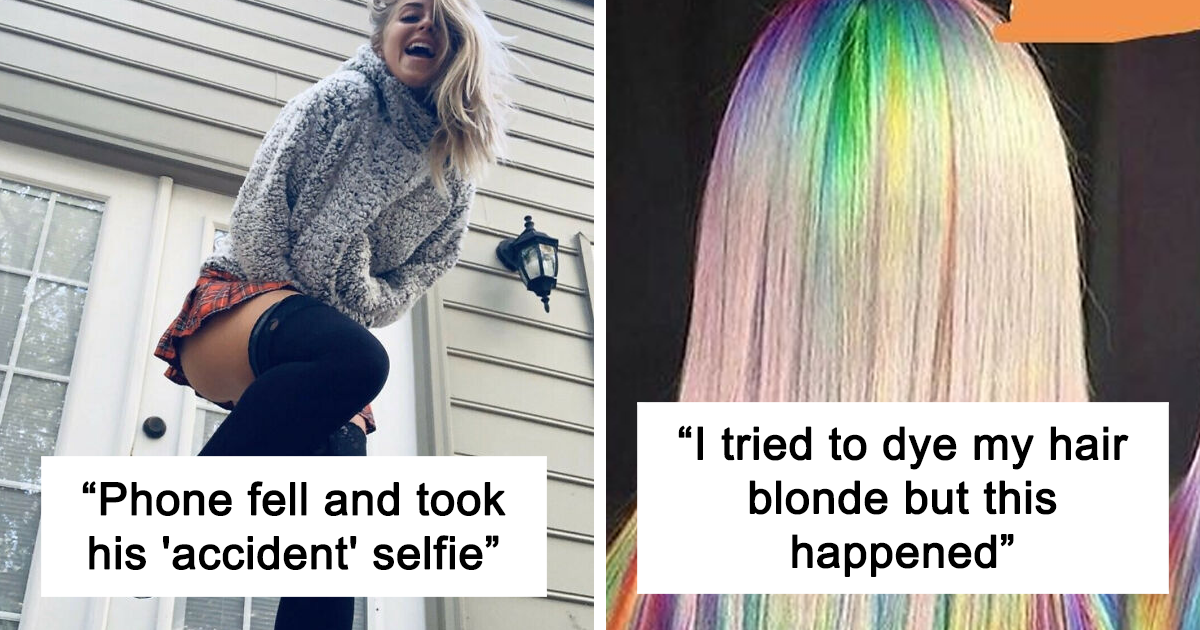
Then there are the suspiciously glamorous “accidents”: the phone that supposedly fell but photographed a perfectly posed body, the toddler who somehow unlocked a device and published a carefully filtered selfie, or the person who “accidentally” bought an expensive car. Apparently, modern technology can now compose photographs, write captions, apply filters, and initiate major financial transactions without human assistance.
The online community r/OopsDidntMeanTo became a home for screenshots of these questionable mishaps. Its members collect posts in which people appear to seek attention, admiration, sympathy, or plausible deniability while insisting that everything happened unintentionally. The featured material ranges from staged photographs and suspicious messages to corporate blunders and excuses that collapse under the weight of basic logic.
What Makes an “Oops, Didn’t Mean To” Post?
A genuine mistake usually requires little explanation. Someone apologizes, corrects it, and moves on. A fake accident comes with an entire screenplay.
The poster may blame a child, pet, friend, glitch, hacker, pocket, broken screen, predictive keyboard, or unusually ambitious household appliance. Meanwhile, the supposed mistake conveniently reveals something flattering: an attractive photograph, an expensive purchase, a desirable partner, an impressive achievement, or evidence that the poster is simply too fascinating for ordinary life.
This behavior overlaps with humblebragging, a form of self-promotion disguised as modesty or complaint. Harvard Business School researchers found that humblebragging often produces worse impressions than either straightforward bragging or honest complaining because audiences detect the insincerity. In other words, saying “I’m proud of this” may be less irritating than pretending your luxury vacation ruined your week.
Why These Posts Make Us Cringe
The Intention Is More Obvious Than the Poster Thinks
People generally understand why someone might want attention. The cringe begins when the person refuses to acknowledge that motive while presenting evidence so carefully arranged that it practically arrives with studio lighting.
Research on self-promotion suggests that people often overestimate how positively others will respond and underestimate how annoying the performance may appear. The poster sees a clever little flex. The audience sees a flex wearing a fake mustache.
Social Media Makes Performances Easier to Polish
Online communication gives users time to select photographs, edit messages, test captions, remove imperfections, and present a highly controlled version of events. Studies of computer-mediated communication have long observed that people can use editing time and selective disclosure to manage the impressions they create.
That control is not automatically dishonest. Everyone chooses what to share. The problem appears when a carefully manufactured post is sold as a completely spontaneous accident.
Sharing About Ourselves Feels Rewarding
There is also a simple reason people keep doing this: talking about ourselves can feel good. Research published in the Proceedings of the National Academy of Sciences found that self-disclosure carries intrinsic value. Social media provides a large audience, instant feedback, and tiny numerical rewards in the form of likes, reactions, and comments.
Unfortunately, when the hunger for attention meets an implausible excuse, the result is often comedy.
30 of the Most Cringeworthy “I Totally Didn’t Mean To” Examples
-
1. The Phone That Fell and Took a Perfect Selfie
The phone supposedly slipped, opened the camera, selected the ideal lens, captured a flattering pose, and saved a sharp photograph. Meanwhile, real dropped-phone pictures usually resemble surveillance footage from inside a washing machine.
-
2. The Mirror That Suddenly Appeared
A person posts a revealing mirror selfie and claims not to have noticed the reflection. Apparently, the mirror silently moved into the room, framed the subject, and disappeared before anyone could question it.
-
3. The Toddler Who Published a Filtered Portrait
The caption blames a small child for uploading the image. This remarkably advanced toddler unlocked the phone, found the best picture, adjusted the contrast, added a caption, and posted it without leaving any digital crayon marks.
-
4. The Friend Who “Stole My Phone”
A flirty message receives an awkward response, so the sender suddenly announces that a mischievous friend grabbed the device. The imaginary friend always vanishes before they can be questioned by the court.
-
5. The Accidental Luxury-Car Purchase
Buying a car usually involves research, identification, financing, signatures, and insurance. Yet one poster treats the entire transaction like accidentally adding extra guacamole to a lunch order.
-
6. The Computer That Somehow Cost Thousands
A person claims to have unintentionally purchased an extremely expensive gaming setup. One misplaced click is believable. Selecting premium components, entering payment details, and confirming shipping is a full afternoon of intention.
-
7. The Camera That Activated During a Perfect Pose
The subject is positioned beneath flattering light, with styled hair and carefully arranged clothing, but insists the camera opened unexpectedly. Even professional photographers would appreciate such cooperative chaos.
-
8. The Pet That Sent a Romantic Message
A cat supposedly walked across a keyboard and produced an emotionally coherent confession. Most cats type something closer to “jjjjjjjj;;7,” but perhaps this one has been secretly reading romance novels.
-
9. The Accidental Abs Photograph
The poster claims to be documenting a new haircut, broken sink, or stain on the wall. Strangely, the subject’s abdominal muscles occupy 80 percent of the frame while the stated topic appears as a distant rumor.
-
10. The “Caught Sleeping” Photo
Someone shares a beautifully composed image of themselves asleep, complete with flattering bedding and peaceful lighting. Unless the photographer was a ghost, another person was involved and probably took several versions.
-
11. The Wrong-Person Message Sent Repeatedly
One mistaken recipient is plausible. Sending similar flirtatious messages to multiple people and repeatedly claiming confusion suggests that the mistake may actually be the strategy.
-
12. The Account That Was “Hacked” After Embarrassment
A post receives little attention or heavy criticism, and suddenly the account owner reports a mysterious security breach. Curiously, the hacker writes with the owner’s vocabulary, punctuation, interests, and favorite emojis.
-
13. The Child Who Added a Recruiter or Crush
An unwanted social-media request is blamed on a child who allegedly wandered through the account. The child apparently understands networking, romantic preferences, and exactly which profile would produce the desired response.
-
14. The Coffee-Activated Camera
A relaxed café photograph is presented as a random technical accident. The phone somehow detected coffee, opened portrait mode, balanced the composition, and captured an expression best described as “casually available for sponsorships.”
-
15. The Screenshot That Conveniently Shows a Bank Balance
The stated purpose is to share a funny notification, but the crop also reveals an impressive account balance. The useful information occupies six pixels; the financial flex receives the remaining screen.
-
16. The Accidental Expensive-Watch Appearance
A photograph of lunch, a steering wheel, or a laptop just happens to place a luxury watch in the foreground. The sandwich may be the caption’s subject, but the wrist is clearly the executive producer.
-
17. The Unplanned Parade Leadership
A person claims not to have known that a public event was happening, yet somehow arrives in costume, stands at the front, and becomes the center of several photographs. That is less an accident and more a production schedule.
-
18. The Outfit Nobody Was Supposed to See
The poster says they were merely testing an outfit and did not intend to share it. Nevertheless, the image has polished lighting, a deliberate pose, a caption, and several hashtags patiently waiting nearby.
-
19. The “Don’t Look at My Profile” Invitation
Nothing attracts visitors like dramatically warning them not to visit. Announcing that an embarrassing photograph will be deleted “soon” is the digital equivalent of placing a velvet rope around it.
-
20. The Girlfriend or Boyfriend Accidentally in Frame
A partner appears prominently in the background while the poster pretends not to notice. Just in case the audience misses the detail, the caption often provides a helpful nudge disguised as surprise.
-
21. The Fitness Video That Started Recording Itself
The camera supposedly activated while the subject was exercising with excellent form in a clean room under balanced lighting. The equipment may be heavy, but the explanation is doing the real lifting.
-
22. The Autocorrect With an Ego
A boastful or suggestive statement is blamed on autocorrect. Predictive text can create strange substitutions, but it rarely writes three flattering sentences and adds a tasteful fire emoji.
-
23. The Mass Notification That Was “Just a Glitch”
A company promotes a piece of content to users who did not request it, then describes the event as an accident. People become suspicious when technical mistakes consistently resemble successful marketing campaigns.
-
24. The Public Statement That Was Never Intended Literally
After receiving backlash, a person claims that an earlier declaration was misunderstood, sarcastic, hypothetical, or merely “starting a conversation.” The explanation usually arrives only after the conversation starts going badly.
-
25. The Serious Act Rebranded as a Prank
When a deliberate action causes consequences, the person suddenly calls it a joke. Humor can involve surprise, but “I was kidding” is not a universal coupon for escaping responsibility.
-
26. The Accidental Influencer Tag
A user tags a celebrity, brand, or popular creator and then claims the mention was unintended. That is impressive aim for someone whose finger supposedly slipped across an entire username.
-
27. The Apology That Repeats the Achievement
The person apologizes for “accidentally” mentioning an award, salary, promotion, or exclusive invitation. The regretful explanation then describes the accomplishment in even greater detail, sometimes with dates and supporting statistics.
-
28. The Pocket That Wrote a Complete Post
Pocket dialing is real. Pocket writing a structured paragraph, selecting a photograph, adding location data, and publishing to the correct audience is less common outside the Harry Potter universe.
-
29. The “Natural” Photo With Several Visible Takes
The final image is described as spontaneous, but reflections, thumbnails, or behind-the-scenes details reveal repeated attempts. There is nothing wrong with taking 40 photographs; pretending the first one arrived by divine intervention is the awkward part.
-
30. The Mirror Selfie Taken by Someone Who Forgot the Mirror
The grand finale features a carefully posed mirror photograph accompanied by a claim that the reflective surface went unnoticed. The mirror is centered, the phone is visible, and credibility has quietly left the building.
When Self-Promotion Is Not Actually a Problem
Sharing good news is not automatically obnoxious. People should be able to celebrate graduations, promotions, fitness progress, creative work, relationships, and exciting purchases. Honest enthusiasm is usually easier to appreciate than theatrical modesty.
A direct caption such as “I worked hard for this and I’m proud” gives the audience a clear choice: celebrate, scroll past, or offer a polite reaction. A fake accident attempts to obtain praise while avoiding responsibility for seeking it. That mismatch between motive and presentation is what makes the post feel manipulative.
Authenticity does not require publishing every flaw or private thought. It simply means that the message, intention, and behavior are reasonably aligned.
The Experience of Browsing an Entire Collection of Fake Accidents
Scrolling through a few “oops, didn’t mean to” posts is amusing. Scrolling through dozens becomes a surprisingly educational tour of human impression management. At first, the viewer focuses on the weak excuses. After a while, recurring patterns become impossible to miss.
The first pattern is excessive preparation. Genuine accidents are untidy. They contain blurry images, incomplete sentences, strange angles, missing context, or immediate attempts to correct the problem. Manufactured accidents arrive polished. The lighting is flattering, the important object is centered, and the caption has already converted the alleged mishap into a tiny story with a beginning, punch line, and invitation for compliments.
The second pattern is convenience. These accidents rarely expose unpaid bills, stained sweatpants, failed recipes, or seventeen nearly identical photographs. Instead, they reveal luxury purchases, attractive bodies, desirable partners, prestigious opportunities, or proof of popularity. Fate apparently has excellent branding instincts.
The third pattern is deniability. By calling the post accidental, a person can test the audience’s reaction without fully owning the message. A romantic confession can become “my friend took my phone.” A boast can become “I can’t believe this happened.” A provocative photograph can become “the camera went off by itself.” If the response is positive, the person enjoys the attention. If it is negative, the person retreats behind the excuse.
This makes the browsing experience more than a gallery of awkward posts. It becomes a lesson in how audiences evaluate sincerity. Viewers may not know every detail of the situation, but they notice when the pieces do not fit. A perfectly composed image conflicts with a story about a falling phone. A multi-step purchase conflicts with a claim of one accidental click. A polished confession conflicts with an explanation involving a pet’s paws.
Cringe is part of that response. Psychological research describes cringe as closely related to vicarious embarrassment: discomfort experienced while observing another person violate social expectations, even when that person appears unaware or unbothered. We mentally recognize the gap between how the poster hopes to appear and how the performance is actually landing.
There is also an uncomfortable element of recognition. Most people have softened a boast, invented an excuse, deleted a message, or pretended not to care after an awkward interaction. The extreme examples are funny partly because they magnify ordinary impulses. We recognize the desire for approval, even while laughing at the execution.
The most useful lesson from the group is not “never promote yourself.” It is that directness usually ages better than elaborate deniability. Post the good photograph. Celebrate the purchase. Mention the award. Admit that you wanted someone’s attention. People may tease a straightforward brag, but they are far more likely to respect it than an implausible tale involving a brilliant toddler, a romantic cat, and a phone with independent artistic ambitions.
Conclusion
The funniest posts collected by communities such as r/OopsDidntMeanTo are not funny because someone wanted attention. Wanting attention is profoundly human. They are funny because the poster builds an unnecessarily complicated excuse around an intention everyone can already see.
Social-media audiences have become skilled at detecting staged spontaneity, disguised bragging, suspicious technical glitches, and convenient blame-shifting. The best defense against becoming the next cringeworthy screenshot is refreshingly simple: own the post. A little honesty can accomplish what 12 filters, three imaginary hackers, and one falsely accused toddler cannot.
Editorial note: This article was independently rewritten and synthesized from reporting, community archives, dictionaries, and behavioral research published by Reddit, Bored Panda, Harvard Business School, the American Psychological Association, the Association for Psychological Science, Carnegie Mellon University, MIT, the National Institutes of Health, PNAS, UC Berkeley, Psychology Today, and Cambridge Dictionary.