
Long-distance relationships are basically a real-life subscription service: you pay in time zones, shipping costs, and battery percentage… and you get love, connection, and the occasional “Can you hear me now?” glitch. So when your long-distance boyfriend is sad, it can feel extra hardbecause you can’t do the simplest comfort move in the universe: show up, sit next to him, and hand him snacks.
The good news: you can still be a steady, supportive partner from miles away. The secret isn’t having the perfect words or becoming his personal “Fix-It” department. It’s knowing how to show up emotionally, what to say (and what not to say), and when to involve real-world help if sadness turns into something heavier.
First, Pause: Is This “Sad Day” or “Sad Season”?
Sadness is a normal human emotion. Sometimes it’s triggered by something obvious (a fight with a friend, stress at work, family drama), and sometimes it’s just… a Thursday. But if his sadness feels intense, lasts a while, or starts affecting sleep, appetite, motivation, and daily life, it may be more than a temporary slump.
Quick reality-check questions (gentle, not detective-y)
- “Has something specific been weighing on you, or does it feel more general?”
- “Is this a rough week, or have you been feeling like this for a while?”
- “What’s been hardest: mood, sleep, energy, motivation, or stress?”
Why this matters: What you do next depends on what he needs. A rough day calls for comfort and connection. A longer, deeper struggle may also need professional support and a bigger care plan.
Step 1: Start with Connection, Not Solutions
When someone is sad, your brain may want to sprint into “Problem-Solving Olympics.” But most people feel better faster when they feel understood first. Before you offer advice, offer presence.
The “Three V’s” that work long-distance: Validate, Voice, Verify
- Validate: “That sounds really heavy. I’m sorry you’re carrying that.”
- Voice what you’re hearing: “It sounds like you’re exhausted and discouraged.”
- Verify (check you got it right): “Did I understand that correctly?”
This keeps you from guessingand helps him feel safe enough to open up.
Try these phrases (copy/paste friendly)
- “I’m here. Want to talk, vent, or just have quiet company on a call?”
- “Do you want comfort or solutions right now?”
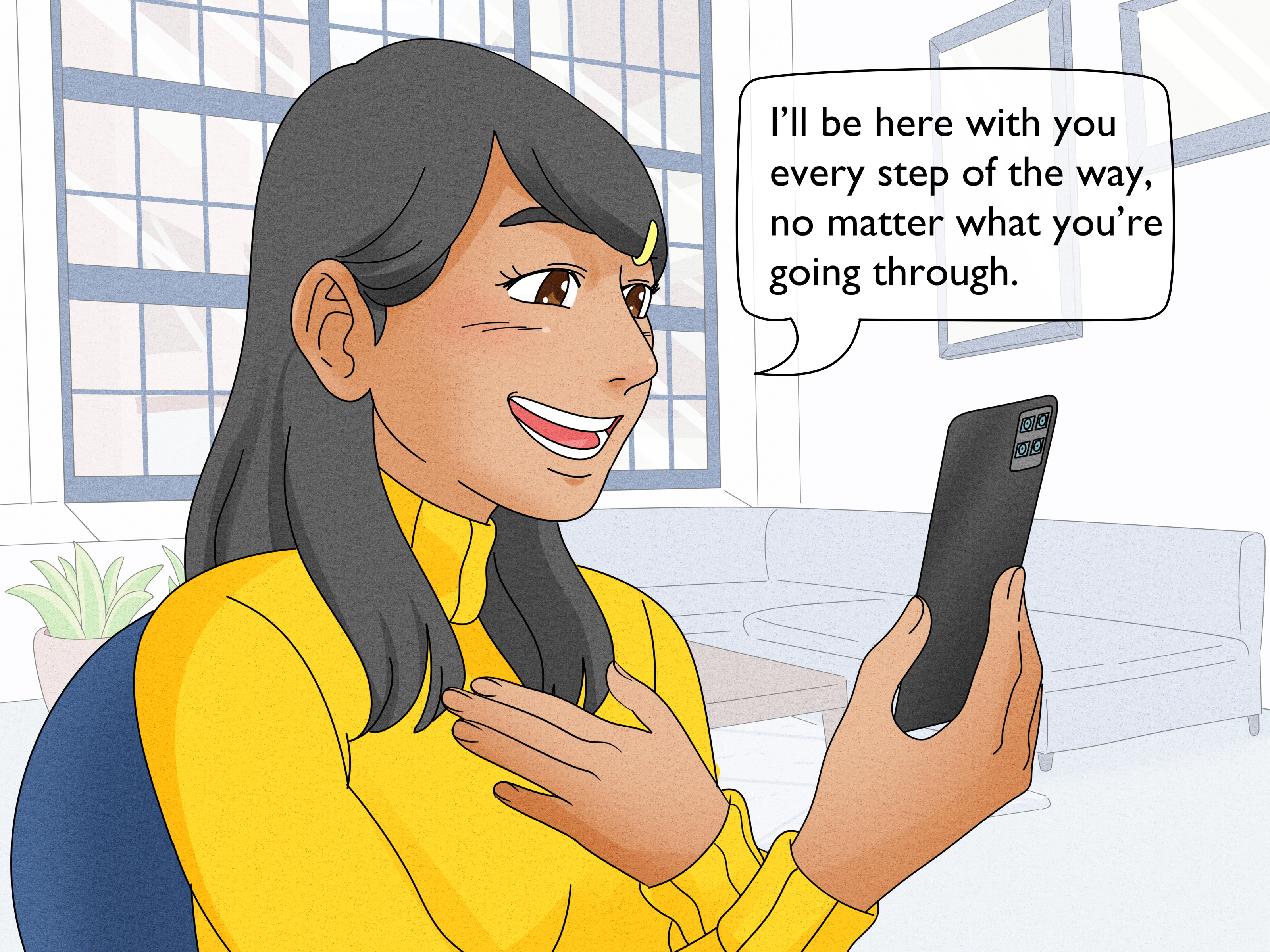
- “I can’t fix it from here, but I can be with you in it.”
- “Tell me what today has felt like.”
Step 2: Use the Right Channel for the Moment
Text is great for quick support, but it’s easy to misread tone when someone’s emotional. If he’s really downor if you’re discussing something sensitivevoice or video is usually better.
A simple rule
- Text: check-ins, encouragement, small updates, “thinking of you” moments.
- Voice/video: big feelings, misunderstandings, serious stress, reassurance talks.
Pro tip: During calls, be fully present. Multitasking can feel like emotional abandonment with Wi-Fi.
Step 3: Ask What Support Looks Like to Him
In long-distance, you can’t read body language as easily. So don’t guessask. This is especially important because people want different things when they’re sad.
Ask one of these “choose-your-own-support” questions
- “When you feel like this, what helps mosttalking, distraction, or time alone?”
- “What would feel supportive tonight: a call, a game, a movie together, or a calm check-in text?”
- “Do you want me to remind you of your strengths, or would that feel annoying right now?”
Green flag moment: He tells you what he needs. Super green flag moment: he also respects your limits.
Step 4: Master Long-Distance “Emotional First Aid”
Think of this as your long-distance support kit. It’s not about grand gestures every time. It’s about small, consistent signals: “I see you. I’m with you. You matter.”
1) The steady check-in (not interrogation)
Try a predictable, low-pressure routine:
- “Good morningone word for your mood?”
- “One win, one stress, one thing you need?”
- “Rate today from 1–10. Want company?”
2) The “ritual of connection”
Long-distance couples do better when they build habits that create closenesslike a nightly 10-minute call, a shared playlist update, or a Sunday “life planning” chat. It doesn’t have to be fancy; it just has to be reliable.
3) The “bid” response (tiny moments count)
Sometimes sadness shows up as small bids for attention: “I’m tired,” “Today sucked,” “I miss you.” Respond warmly instead of brushing past it. Even a quick, kind reply can reduce loneliness.
4) The validation sandwich (yes, like lunch)
Validate → Support → Empower
- “That sounds really painful.”
- “I’m here with youwant to talk it out?”
- “I believe you’ll get through this, and you don’t have to do it alone.”
Step 5: Know What NOT to Say (Even If You Mean Well)
Some phrases accidentally make sadness worse because they sound like pressure, judgment, or dismissal.
Avoid these (and what to say instead)
- Instead of: “Just cheer up.” Try: “I’m sorry it feels heavy. I’m here.”
- Instead of: “It’s not that bad.” Try: “I can see why that would hurt.”
- Instead of: “You always do this.” Try: “I’ve noticed you’ve been downwhat’s been hardest?”
- Instead of: “Here’s what you need to do…” Try: “Do you want ideas, or do you want me to listen?”
Comfort first. Strategy later.
Step 6: Offer Practical Help (From Far Away) Without Taking Control
Sadness can make simple tasks feel huge. You can help in practical wayswithout turning into a remote-control manager.
Long-distance practical support ideas
- Micro-planning: “Want to pick one small thing you can do in the next hour?”
- Body basics check: “Have you eaten? Drank water? Slept?” (Say it gently, not like a hydration police officer.)
- Co-working call: Stay on video while you both do chores, study, or work.
- Care package that actually helps: snacks, a cozy hoodie, a handwritten note, a puzzle, a stress ball, a photo strip, tea.
- Low-effort comfort delivery: send a meal gift card or groceries if that’s appropriate and welcome.
Step 7: Create “Togetherness” on Purpose
When he’s sad, loneliness often turns the volume up. Build moments that feel like real together time.
Virtual comfort date ideas (sad-friendly edition)
- Watch-party cuddle: same movie, video on, minimal talkingjust presence.
- Two-player calm games: cozy games, chess, word games, or anything non-competitive if he’s fragile.
- Walk-and-talk: both go for a short walk while on the phone.
- Playlist therapy: each add 5 songs: “how today felt” + “how I want tomorrow to feel.”
- Memory lane: “Tell me your top 3 favorite moments of us so far.”
Step 8: If His Sadness Might Be Depression, Support the Next Step
If he’s been down for a while, seems numb, withdrawn, hopeless, or his daily functioning is slipping, encourage professional support. You don’t have to diagnose himyou just have to care.
How to bring it up without sounding scary
- “I’ve noticed you’ve been hurting for a while, and I hate that you’re carrying it alone.”
- “Would you be open to talking to a counselor or doctor? I can help you find options.”
- “Getting support isn’t weaknessit’s a tool.”
If you’re a teen: it’s okay (and smart) to involve a trusted adultyour parent/guardian, school counselor, or another safe grown-upespecially if you’re worried about his safety or you’re feeling overwhelmed.
Urgent safety note
If he talks about wanting to hurt himself, says he doesn’t want to be here, or you feel like he might be in immediate danger, treat that as urgent. Contact local emergency services in his area right away, and alert a trusted adult near him who can physically check on him.
Step 9: Protect Your Own Mental Health (Yes, This Is Part of Love)
Supporting a sad partner can be emotionally intenseespecially long-distance, where you can feel helpless. You are allowed to have boundaries.
Healthy boundaries sound like this
- “I want to support you, and I also need sleepcan we talk tomorrow at ___?”
- “I can listen for 30 minutes, then I need a break. Let’s continue after.”
- “I’m worried, and I think this is bigger than what we can handle alone. Let’s get you more support.”
Being supportive doesn’t mean burning yourself out. Love is not a “24/7 on-call” job with no lunch break.
Step 10: A Simple Script for the Next Time He’s Sad
If you want a step-by-step you can follow without overthinking:
- Open: “Hey love, I can tell something’s off. I’m here.”
- Offer choices: “Talk, distraction, or quiet company?”
- Reflect: “It sounds like you feel ___ because ___.”
- Validate: “That makes sense. I’d feel hurt too.”
- Ask what helps: “What would feel supportive right now?”
- Make a micro-plan: “Let’s do one small thing togetherwater, food, shower, short walk.”
- Close with connection: “I’m proud of you for telling me. We’ll get through this.”
Extra Tips That Make a Big Difference in Long-Distance
Be careful with timing
Time zones can turn “I need you” into “I’m asleep.” Create a backup plan: a voice note, a comfort text, or a pre-agreed “SOS phrase” that means “Can you call when you wake up?”
Keep your tone warm in text
When someone is sad, neutral texts can read as cold. Add a tiny softness:
- “I’m here 🤍”
- “Sending you a big hug from my side of the map.”
- “No pressure to reply fastjust want you to feel less alone.”
Don’t take silence personally (but do address it)
If he withdraws, it might be copingnot rejection. Still, it’s fair to ask for clarity:
“When you go quiet, I worry. Can we agree on a quick message like ‘I’m okay, just need space’?”
of Experiences Couples Commonly Share (and What Helped)
Below are realistic, common long-distance experiences people describeespecially when one partner is sad. Think of these as “relationship field notes,” not rules. What matters is experimenting kindly until you find what works for your relationship.
Experience 1: “He’s sad, but he won’t talk.”
Many people shut down when they’re overwhelmed. In long-distance, that silence can feel like rejection. Couples often find it helps to offer structured choices instead of open-ended pressure. For example: “Do you want a 10-minute call, or should I send a voice note and you can reply later?” Another helpful move is naming the fear without blame: “When I don’t hear from you, I worry you’re alone in it.” That keeps the door open without forcing a conversation.
Experience 2: “Every call turns into a heavy talk.”
When one partner is sad for weeks, long-distance time can start to feel like a therapy appointment. Couples often do better when they plan a “two-lane” call: 15 minutes feelings + 15 minutes comfort. Comfort can be a funny video, a mini game, a shared meal, or reading the same short article. The point is to remind the relationship (and the nervous system) that connection can still feel safe and pleasant.
Experience 3: “He’s stressed about work/school and feels like a failure.”
When sadness is tied to performance pressure, reassurance works best when it’s specific. Instead of “You’ll be fine,” couples often say things like: “You’ve handled hard weeks before. Remember when you ___? That took grit.” People also share that “body basics” support helps more than expected: gentle reminders to eat, sleep, step outside, and take breaksespecially when framed as teamwork: “Want to do a 5-minute reset together?”
Experience 4: “I’m trying so hard, but I’m exhausted too.”
This is incredibly common. Support can quietly turn into burnout, especially for caring partners. Couples who last tend to build boundaries into the relationship language: “I’m here for you, and I also need to recharge so I can keep showing up.” Some people schedule support like a routine: one longer call on certain days, shorter check-ins on others, and one “no heavy stuff” date night weekly. This doesn’t mean you care lessit means you’re making care sustainable.
Experience 5: “We argued because I gave advice, and he wanted comfort.”
Classic. Couples often solve this with one magic question: “Comfort or solutions?” It sounds simple, but it prevents a lot of fights. Another common lesson: advice can feel like criticism when someone’s sad. People report better results when they ask permission: “Would you like an idea, or do you want me to just listen?” Permission turns “fixing” into “supporting.”
The big takeaway from all these scenarios: long-distance support works best when it’s clear, consistent, kind, and realistic. You’re not trying to cure sadness with a perfect text. You’re building a steady bridge across the distanceone check-in, one call, one “I’m here” at a time.
Conclusion
When your long-distance boyfriend is sad, the most powerful thing you can do is show up with emotional clarity: listen first, validate what he feels, ask what support he wants, and create small rituals of connection that make him feel less alone. If his sadness lingers or starts affecting daily life, encourage professional help and involve trusted adults if safety is a concern. And remember: supporting him doesn’t require you to sacrifice yourself. The healthiest love is steady, not self-destructive.
SEO Tags