What Would Cats Look Like As Anime Girls? This Japanese Illustrator Has The Answer

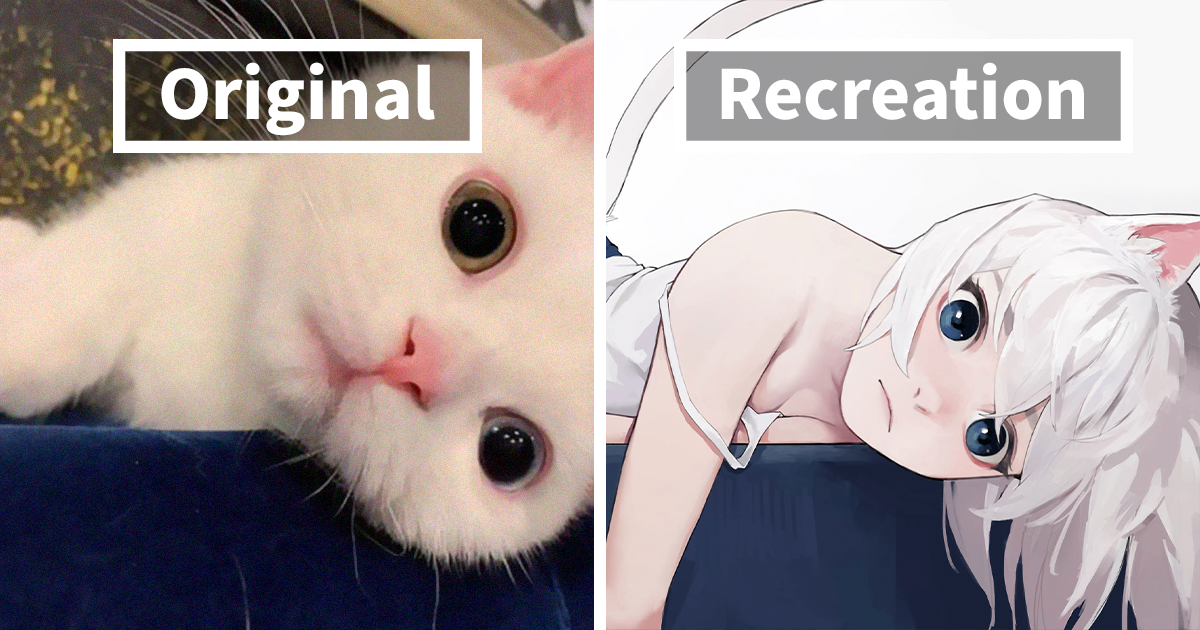
Some internet questions are deeply philosophical. Others are useful, like “Where did I leave my keys?” And then there are the truly important cultural mysteries, such as this one: What would cats look like as anime girls? Thanks to a Japanese illustrator known online as DHK, the internet got an answer that is equal parts charming, stylish, and just a little bit ridiculous in the best possible way.
DHK’s viral illustrations reimagine real cat photos as anime-style young women while preserving the little quirks that make each cat memorable. A puffed-up expression becomes dramatic bangs and an offended posture. A sleepy loaf turns into a soft, oversized sweater mood. A black cat with laser-beam eyes becomes the kind of anime heroine who looks like she knows your secrets and has already judged your snack choices. In other words, the drawings do not merely copy a cat’s coloring. They translate feline energy.
That is the whole magic trick. The best cat-to-anime-girl art does not ask, “How do I draw ears and call it a day?” It asks, “How do I turn attitude into character design?” That is why DHK’s work landed so well online. These illustrations are not random “cute girl” drawings with cat accessories stapled on top. They feel like visual interpretations of each cat’s personality, posture, fluff level, and emotional weather forecast.
Who Is the Illustrator Behind the Viral Cat-Girl Concept?
The headline that introduced many people to this idea came from a popular feature about Japanese illustrator DHK, whose series imagined funny cat photos as anime girls. The core appeal was simple but effective: the humanized versions still resembled the original cats in expression, styling, and mood. That balance matters. Plenty of artists can draw attractive anime characters. Far fewer can make you look at a character and immediately think, “Yes, that is absolutely a suspicious tabby who knocks glasses off tables for sport.”
DHK’s approach works because the art treats the cat as the source material rather than just a decorative excuse. Fur patterns become hair color placement. Body language becomes pose. Eye shape becomes emotional tone. Even the comic absurdity of a cat photo often survives the transformation. A startled cat does not become a generic pretty face. It becomes an anime girl whose soul has clearly left the chat.
That ability to preserve identity is what separates memorable anime cat girl art from forgettable trend-chasing. You are not just seeing a cat turned into a girl. You are seeing a very specific cat turned into a very specific kind of girl.
Why Cats Translate So Well Into Anime Girls
Cats may be the perfect animals for this kind of artistic experiment. They already come with dramatic silhouettes, oversized expressions, theatrical poses, and personalities that feel suspiciously human on a daily basis. If anthropomorphism is the act of assigning human traits to nonhuman beings, cats have basically been co-authoring the script for years.
Think about how often people describe cats in human terms. One cat is “bossy.” Another is “judgmental.” Another is “clingy but pretending not to care.” Pet owners constantly narrate cats as if they were roommates with stronger opinions and worse table manners. That habit is not random. Humans naturally humanize animals, especially pets, because we live with them closely, interpret their behavior socially, and read personality into their unpredictability.
And cats, in particular, make this very easy. A dog may be readable, but a cat is theatrical. A cat can look noble, annoyed, smug, shy, elegant, feral, sleepy, or personally offended by a curtain. That makes feline behavior unusually easy to convert into visual character tropes. In anime design language, every cat is already halfway to being a character sheet.
Eyes, Ears, Hair, and Attitude
Anime as a style is also built for exaggeration. Big eyes communicate mood quickly. Hair shape conveys energy before a character even speaks. Silhouettes matter. Accessories matter. The entire visual grammar of anime is good at turning personality into instantly legible design. Cats happen to bring a ready-made bundle of visual cues: pointed ears, expressive eyes, curved posture, swishing tails, and body language that oscillates between “angelic” and “tiny criminal.”
So when an illustrator like DHK turns cats into anime girls, the result feels surprisingly natural. A fluffy longhair becomes voluminous hair and layered clothing. A sleek black cat becomes a sharper, darker design with cool-girl energy. A calico becomes playful color blocking. A grumpy cat becomes, naturally, the kind of anime heroine who would roast everyone in the room with one sentence and then leave dramatically.
The Long History of Humanized Cats in Art and Pop Culture
DHK’s series feels modern, but the broader idea is much older. Human beings have been turning animals into stand-ins for human qualities for centuries. Reference works define anthropomorphism as interpreting nonhuman beings or things in human terms, and the arts have been doing that for a very long time. Cats, with their built-in mystery and attitude, have been especially irresistible subjects.
Long before social media was asking what your pet would look like as a magical girl, artists were already imagining cats with human habits, emotions, and social lives. The 19th-century illustrator Louis Wain became famous for drawings of cats behaving like peopleplaying, partying, socializing, and generally acting as if they had a stronger grasp of Victorian society than most Victorians. His work helped popularize humorous, endearing, anthropomorphic feline imagery in mass culture.
Fast-forward to Japanese pop culture, and the bridge becomes even clearer. Catgirls, or characters with feline features and human bodies, became a recognizable part of anime and manga culture over time. Fan and industry coverage has traced the catgirl lineage through older anime history, folklore influences, mascot culture, and later franchises that made the trope mainstream. By the time modern audiences encountered cat-eared heroines in anime, the visual language was already familiar enough that a project like DHK’s felt both fresh and instantly understandable.
From Folklore to Franchise
Part of that familiarity comes from the fact that Japanese pop culture has long embraced hybrid character design. Catgirls sit comfortably alongside other human-animal blends, mascot-inspired characters, and supernatural figures. In more commercial pop culture, franchises like Nekopara helped cement catgirls as a widely recognizable aesthetic category. The official description of Nekopara openly calls it a series about life with adorable catgirls, which tells you everything you need to know about how accepted the concept became in modern fandom.
So DHK’s art does not appear out of nowhere. It sits at the intersection of pet culture, internet humor, anime design, and a much older human desire to turn animals into mirrors of ourselves. Or, to put it less academically: humans saw a cat being weird and thought, “This would make an incredible protagonist.”
What Makes DHK’s Illustrations So Shareable?
The answer is not just “because they are cute,” although yes, they are aggressively cute. The bigger reason is that the artwork rewards comparison. Viewers instinctively look at the original cat and then the anime version, hunting for the visual translation choices. It becomes a tiny game of spot-the-personality. You notice the ears reflected in hair placement, the fur pattern reworked into clothing details, the annoyed face turned into a deadpan expression, the sleepy posture turned into slouchy body language.
That makes the art interactive without requiring any actual interaction. You do not just consume the image. You mentally decode it. That is catnip for internet culture.
It also invites personal projection. Every cat owner immediately begins wondering what their own pet would look like in the same style. The fluffy orange menace on your sofa? Probably a chaotic anime extrovert with untied shoelaces and terrible impulse control. The gray cat who hides from visitors but screams for dinner? A shy kuudere with a very loud internal monologue. The tiny tuxedo cat who rules the house like a tax auditor? A strict student council president, obviously.
This is where cats as anime girls becomes more than a visual gimmick. It becomes a language for talking about personality. The art gives people a fun, stylized way to describe the quirks they already see in their pets.
How Artists Turn a Cat Into a Character
If you strip the idea down to its bones, the process is part observation, part design, and part performance.
1. Start with the silhouette
A round cat may become a softer, cozier character design. A lean cat becomes more elegant or athletic. Big fur translates into bigger shapes, layered textures, or more dramatic hair.
2. Preserve the face, not literally but emotionally
No one wants a horrifying one-to-one human-cat mashup. The goal is not realism. The goal is emotional fidelity. If the cat looks sleepy, smug, confused, aloof, or mildly villainous, the humanized design should carry that same emotional frequency.
3. Use color smartly
Tabby stripes can become streaks in hair, ribbon patterns, sleeve details, or stockings. Calico patches can inspire asymmetrical color design. Black cats often invite sleek, minimalist styling. White cats usually lean ethereal, pristine, or deceptively innocent.
4. Translate behavior into trope
The cat who hides under the couch becomes the shy introvert. The cat who attacks your ankles becomes the impulsive gremlin. The cat who sits on a windowsill like a philosopher becomes the elegant, emotionally unavailable beauty who somehow still steals the whole story.
DHK’s drawings succeed because they understand all four levels. They are not just technically competent. They are narratively observant.
Why the Idea Feels Funny, Clever, and Weirdly Emotional
There is a reason this concept does more than make people laugh. Humanizing pets is often a form of affection. People do not invent elaborate personalities for animals they do not care about. They do it because emotional attachment pushes them to interpret behavior socially. In that sense, turning cats into anime girls is not just a joke. It is a love letter with better eyeliner.
The humor comes from contrast. Cats are famously inscrutable, yet anime is a medium that loves stylized emotional clarity. Put the two together and you get a delightful contradiction: a creature known for being impossible to read suddenly becomes a dramatic heroine whose haircut explains her entire attitude. The elegance of the joke is that it somehow feels both absurd and accurate.
That is why these illustrations linger in memory. They are cute, yes. But they also capture something true about how humans relate to cats. We do not merely observe them. We narrate them. We cast them. We assign genres to them. The sleepy one is slice-of-life. The chaotic one is action-comedy. The fluffy one belongs in fantasy. The black cat with the death stare is either a gothic antiheroine or the final boss.
The Experience of Looking at Cats Reimagined as Anime Girls
There is a very specific feeling that comes from scrolling through art like this, and it is part recognition, part surprise, and part pure internet joy. First, you see a normal cat photo. Maybe the cat is glaring into space like it just remembered an unpaid bill from 2017. Maybe it is loafing with the seriousness of a retired emperor. Then you swipe to the anime-girl version and your brain does this tiny, ridiculous leap: “Oh no. That is exactly right.”
That moment is the whole experience. You are not impressed only because the drawing is polished. You are impressed because the translation feels emotionally accurate. The cat’s mood survives the metamorphosis. The character design seems to reveal what cat owners already believe in secret: every cat is a fully formed personality wearing a fur coat and pretending not to understand basic rules.
For anime fans, the fun doubles. You start reading the transformed characters through familiar archetypes. The aloof cat becomes the cool beauty. The clingy cat becomes the affectionate chaos gremlin. The tiny furious cat becomes the short-tempered rival who absolutely bites people when annoyed. Suddenly, pet behavior and anime storytelling are speaking the same language, and the whole thing feels less like a joke and more like a bizarrely convincing crossover event.
For cat owners, it can feel personal in a different way. Many people already narrate their pets as little household celebrities. They know the look that means “feed me.” They know the look that means “I heard you, and I chose disrespect.” They know the look that means “I am sleeping here now, and that is your problem.” Seeing those private interpretations externalized in artwork can feel oddly validating, like someone has broken into your home, studied your cat’s personality, and then returned with fan art.
There is also something comforting about the playfulness of it. The internet can be a swamp of stress, arguments, and people dramatically misunderstanding commas. Then along comes a piece of art asking what a fluffy tabby would look like as an anime schoolgirl with chaotic bangs, and suddenly civilization feels worth preserving again. It is silly, yes, but it is creative silliness. It rewards attention. It celebrates observation. It turns affection into visual storytelling.
And maybe that is why the trend sticks. At its best, this kind of art does not flatten animals into generic humans. It honors their oddness. It says that this cat’s puffed cheeks, suspicious posture, and criminal little eyes are not random details. They are character notes. They mean something. They can become fashion, pose, color, and vibe. The result is a drawing that makes viewers laugh first, then nod, then immediately think about their own pet.
By the end of a gallery like DHK’s, most people are no longer asking whether cats would look good as anime girls. That question has already been answered. The new question is more urgent and far more dangerous to your free time: what would my cat look like as an anime girl, and why do I suddenly need twelve illustrations, a full backstory, and possibly a spinoff series?
Final Thoughts
DHK’s cat-to-anime-girl illustrations work because they sit on top of several truths at once. Humans love anthropomorphism. Cats are naturally theatrical. Anime character design is built to express personality quickly. And the internet will always make room for art that is clever, cute, and just self-aware enough to know how wonderfully absurd it is.
So what would cats look like as anime girls? According to this Japanese illustrator, they would look stylish, expressive, weirdly accurate, and almost certainly more emotionally complicated than the rest of us. Which, frankly, tracks.
Note: This feature is written in standard American English, based on real reporting and reference material, and intentionally excludes inline source links so it is ready for web publication.