
If you have ever stood in front of a window holding a shutter and wondering, “Which way do shutters go?” congratulationsyou have reached one of the quietest yet most surprisingly passionate debates in home improvement. Shutters look simple. They are rectangles with personality. But install them backward, upside down, or at the wrong size, and suddenly your house looks like it got dressed in the dark.
The short answer is this: for exterior louvered shutters, the louvers should generally point downward when the shutters are in the closed position, so water sheds away from the window. When fixed decorative shutters are mounted open on either side of a window, the louvers typically appear to angle down and back toward the wall. For interior plantation shutters, the “right” direction depends on whether you want privacy, light control, airflow, or less glare.
That sounds easy enough, but there are a few important details. Exterior shutters can be functional or decorative. Louvers can be fixed or operable. Plantation shutters are adjusted daily. Bahama shutters hinge from the top. Board-and-batten shutters have no louvers at all, so they politely skip the drama. Let’s walk through it carefully, with fewer headaches and more curb appeal.
The Basic Rule: Louvers Should Shed Water
The most common question about shutter direction involves louvered exterior shutters. Louvers are the angled slats that run horizontally across the shutter. Historically, they were not just there to look charming on a Colonial, Cape Cod, or Southern cottage. They helped allow air and filtered light into the house while blocking harsh sun, rain, and nosy weather.
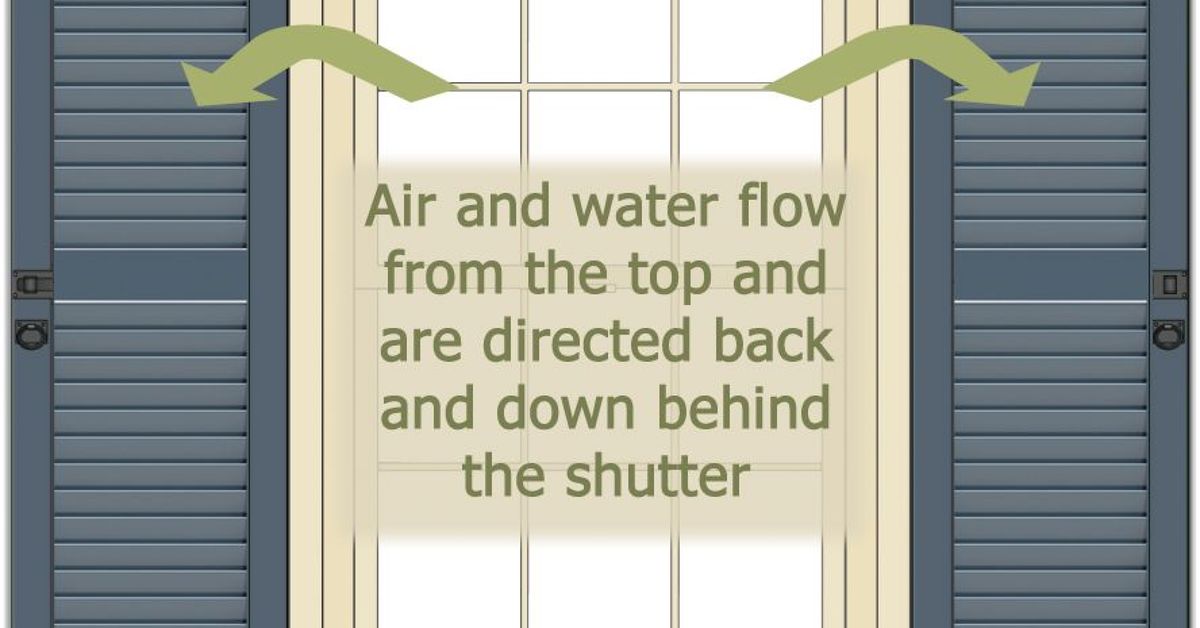
When a functional louvered shutter is closed over a window, the slats should angle downward toward the outside. Think of them like tiny roof shingles. Rain should hit the louvers and roll away from the glass, not funnel toward the window like your house is trying to hydrate itself.
So if you are asking, “Which way do shutters go on a house?” the classic answer is: louvers down, water out, window happy.
Which Way Do Exterior Shutters Go?
Exterior shutters are usually installed on both sides of a window. On older homes, true functional shutters were hinged so they could swing closed during storms, high heat, or cold weather. Today, many exterior shutters are decorative, meaning they are fixed to the wall and never close. Still, good design says they should look as though they could close.
For Functional Exterior Shutters
If your shutters actually open and close, orientation matters. When closed, the louvers should slope downward toward the exterior side. This helps shed rain away from the window and keeps water from sitting between the slats. It also matches the historical purpose of louvered shutters: ventilation, shade, and protection.
When opened and resting against the house, the louvers may look like they angle downward and back toward the siding. That is normal. The important test is simple: imagine closing the shutters over the window. Would the slats direct rain outward and downward? If yes, you are on the right track.
For Decorative Exterior Shutters
Decorative shutters are a little more forgiving because they do not actually protect the window. Some manufacturers note that stationary shutters can technically be installed either way because they are not performing the same water-shedding job. But visually, the most traditional look is still to install fixed louvered shutters so the louvers appear to point downward when viewed from the front.
Why? Because shutters are pretending to be functional even when they are just standing there looking pretty. Like a decorative fireplace, the illusion matters. If the louvers face upward, they can look like tiny shelves for rain, dust, leaves, and the occasional confused bug. Downward-facing louvers look more natural, more historically correct, and less like the shutter was installed during a caffeine emergency.
Which Way Do Interior Plantation Shutters Go?
Interior shutters work differently. Plantation shutters have adjustable louvers that tilt open and closed using a tilt rod or hidden mechanism. There is no single permanent direction because you adjust them depending on the time of day and your privacy needs.
For Privacy During the Day
During daylight hours, many homeowners tilt plantation shutter louvers upward if they want light to bounce toward the ceiling while limiting direct views from outside. This can brighten a room without making the living room feel like a storefront display.
If the sun is intense, tilting the louvers downward may help redirect glare toward the floor and reduce harsh light. This is especially useful in rooms with televisions, computer screens, or plants that have already filed a formal complaint about too much afternoon sun.
For Privacy at Night
At night, privacy changes because lights inside the house make it easier for people outside to see in. If your window faces a street or sidewalk, tilt the louvers so the outside view is blocked from normal eye level. In many cases, angling the louvers upward helps prevent passersby from seeing directly inside.
However, if someone could look down into the room from a higher position, such as a balcony, hill, or upper-floor building, tilting the louvers downward may provide better privacy. The best test is delightfully low-tech: stand outside at night with the lights on inside and see what angle blocks the view best.
Which Side of the Window Do Shutters Go On?
Traditional exterior shutters go on both sides of the window, one shutter on the left and one on the right. Each shutter should look like it could cover half the window opening if closed. This is where many homes go wrong. Tiny shutters beside a huge window look like decorative bookmarks. They may be cute, but they are not convincing.
For the most authentic appearance, each shutter should be close to half the width of the window opening and roughly match the window height. If the window is arched, the shutters should respect that shape. If the window is rectangular, rectangular shutters usually make sense. The goal is not just decoration; the goal is believable decoration.
How to Tell If Your Shutters Are Upside Down
Not sure whether your shutters are upside down? Use these practical checks:
- Look at the louver angle: On exterior louvered shutters, the slats should generally angle down, not scoop upward.
- Imagine rain falling: Water should run off the shutter, not collect in the louvers.
- Check the top and bottom rails: Some shutters have a slightly wider bottom rail, similar to a door. If the heavier rail is on top, something may be wrong.
- Compare both sides: Left and right shutters should mirror each other naturally.
- Step back from the curb: If something looks odd from the street, trust your eyes. Curb appeal has instincts.
Common Shutter Installation Mistakes
Installing Louvers Upward
This is the classic mistake. Upward-facing louvers can make exterior shutters look backward and less historically accurate. They may also collect dirt and moisture more easily. If your shutters are purely decorative vinyl panels, it may not cause major damage, but it can still look “off.”
Using Shutters That Are Too Narrow
Shutters should appear able to cover the window. If each shutter is only a skinny strip beside a wide window, the proportions feel wrong. This is especially noticeable on front elevations, where symmetry matters.
Skipping Hardware
Even decorative shutters look better when they include believable hardware, such as hinges or shutter dogs. These details create the impression that the shutters belong to the architecture rather than being glued on as an afterthought.
Putting Shutters on the Wrong Windows
Not every window needs shutters. Large picture windows, grouped windows, bay windows, and modern oversized windows often look better without them. Shutters work best when the window shape and size make functional sense.
Do Board-and-Batten Shutters Have a Direction?
Board-and-batten shutters do not have louvers, so the up-or-down question mostly disappears. However, they still have a correct visual orientation. The vertical boards should run up and down, while the battensthe horizontal or diagonal support piecessit across them. If there is a diagonal batten, consistency matters. Both shutters should mirror each other rather than slant randomly like they are arguing.
Board-and-batten shutters are popular on farmhouse, cottage, rustic, and Craftsman-inspired homes. They create a sturdy, casual look and can be a smart choice when louvered shutters feel too formal.
What About Bahama Shutters?
Bahama shutters, also called Bermuda shutters, are hinged at the top of the window instead of the sides. They prop outward from the bottom, creating shade while allowing air to pass through. These are common in coastal areas because they offer a breezy look and may provide storm protection when properly designed and installed.
For Bahama shutters, the louvers should still be positioned to block direct rain and sun while allowing ventilation. Because they sit at an outward angle, their installation depends heavily on the manufacturer’s hardware and instructions. If you live in a hurricane-prone region, decorative Bahama shutters are not the same as code-approved storm shutters. Check local requirements before assuming they provide serious protection.
Fixed Louvers vs. Operable Louvers
Fixed-louver shutters have slats that do not move. These are common on decorative exterior shutters. Operable-louver shutters have adjustable slats, which can open or close for ventilation, shade, and privacy. Operable shutters are more historically functional and usually more expensive, but they offer real performance.
If your shutters have fixed louvers, install them in the orientation that looks correct and sheds water visually. If they have operable louvers, test their movement and make sure the tilt rod, mouse holes, and hardware are positioned correctly. The louvers should not fight gravity, rain, or common sense.
Best Direction for Light, Privacy, and Airflow
For interior shutters, the best louver direction depends on your goal:
- More soft light: Tilt louvers upward to bounce light toward the ceiling.
- Less glare: Tilt louvers downward to reduce direct sun.
- Street-level privacy: Angle louvers to block the view from outside at eye level.
- Airflow: Open louvers enough to allow circulation while maintaining shade.
- Room darkening: Close louvers tightly, but remember shutters usually reduce light rather than create total blackout.
The beauty of plantation shutters is that they are adjustable. You do not need to choose one perfect angle forever. Morning sun, evening privacy, and weekend naps all have different demands. Your shutters can multitask. Honestly, they may be more organized than the junk drawer.
How to Install Shutters So They Look Right
Before installing shutters, measure the window carefully. For decorative shutters, height should generally match the window or window trim. For functional shutters, the pair should be sized to cover the window opening when closed. Always follow the manufacturer’s instructions for fasteners, spacing, and wall material, especially on brick, stucco, masonry, or vinyl siding.
Use a level, mark your holes, and do not overtighten fasteners. Shutters need to sit flat and even. If you are installing wood shutters, seal or paint all sides, including edges, to help protect against moisture. If your shutters are heavy, oversized, or functional, consider professional installation. Gravity is undefeated, and it loves poorly mounted hardware.
Real-World Experiences: What Homeowners Notice After Installing Shutters
One of the most common homeowner experiences with shutters is realizing that small details become obvious only after installation. A shutter may look fine on the garage floor, but once it is beside the window, the louver direction, size, and spacing suddenly matter. Many people discover this the dramatic way: they finish the project, step back proudly, and then notice one shutter looks like it is winking at the neighborhood.
In real homes, the biggest difference often comes from proportion. A homeowner replacing faded vinyl shutters may assume the same size is good enough because “that’s what was already there.” But older decorative shutters are often too narrow. When properly sized shutters go up, the whole facade can look more balanced. The windows feel grounded, the trim looks sharper, and the house seems more intentional. It is the architectural version of getting a good haircut.
Another common experience involves louver direction. Some homeowners install shutters with the louvers facing upward because the slats look more visible from below, especially when standing near the house. But from the street, upward louvers can create a strange shadow pattern. They also visually suggest that water would be caught rather than shed. Turning them the correct way can make the exterior look calmer and more authentic, even if guests cannot explain exactly why.
Interior plantation shutters bring their own learning curve. Many people assume they should always tilt the louvers the same way, but daily use teaches otherwise. In an east-facing bedroom, upward louvers may soften morning light without making the room too bright. In a west-facing living room, downward louvers may reduce afternoon glare on the television. In a bathroom, the best angle is usually the one that blocks the neighbor’s view while still letting in enough daylight to avoid turning the room into a cave.
Homeowners with street-facing windows often learn that privacy is not just about closing shutters. It is about sightlines. A person standing on the sidewalk sees from a different angle than someone sitting in a car or looking from a porch across the street. The practical solution is to test the shutters from outside at different times of day. It feels a little silly, but it works. Walk outside, look back, adjust, repeat. Congratulations: you are now doing shutter science.
Maintenance is another real-world lesson. Exterior shutters collect dust, pollen, spider webs, and rain streaks. Downward-facing louvers tend to look cleaner because they do not act like tiny shelves. A quick rinse, soft brush, and mild soap can refresh most shutters. Painted wood shutters may need occasional touch-ups, while vinyl and composite shutters usually require less maintenance but can still fade over time.
The best experience comes when shutters match the architecture. Louvered shutters can look graceful on traditional homes. Board-and-batten shutters can warm up a farmhouse exterior. Raised-panel shutters can suit Colonial and formal styles. Bahama shutters can make a coastal home feel relaxed and shaded. When the style, size, direction, and hardware all work together, shutters stop looking like accessories and start looking like they were always part of the house.
Final Answer: Which Way Do Shutters Go?
For most exterior louvered shutters, the louvers should point downward so they appear to shed rain away from the window. If the shutters are functional, this direction is especially important. If they are decorative, downward-facing louvers still usually look more traditional and believable.
For interior plantation shutters, there is no single permanent direction. Tilt the louvers upward, downward, or nearly closed depending on privacy, sunlight, glare, and airflow. The best angle is the one that solves the problem in that room at that moment.
Shutters may seem like small details, but they have a big effect on curb appeal. Install them with the right louver direction, proper proportions, and suitable hardware, and your home will look polished instead of puzzled. In other words: shutters should look like they know where they are going.
SEO Tags