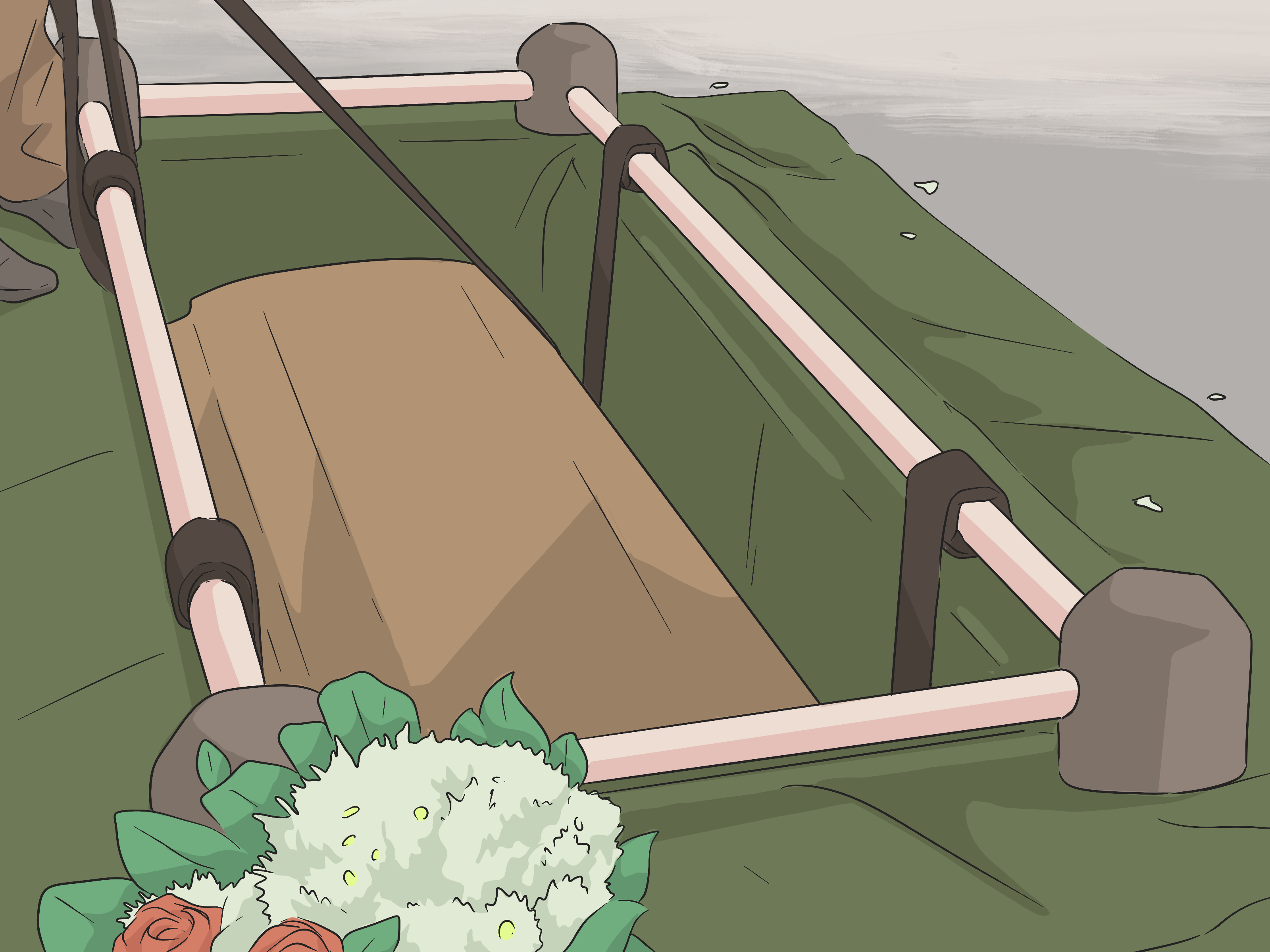

At an open-casket funeral, visitors usually see the deceased person’s face, shoulders, chest, and handsbut not the legs. That detail can spark an unexpectedly persistent question: Why do they cover the legs in a casket?
The explanation is usually far less mysterious than internet rumors suggest. Funeral directors are not concealing a secret compartment, an unusual embalming procedure, or evidence that someone’s legs were removed to make the body fit. In most cases, the legs are covered because the family selected a half-couch casket, a traditional design in which only the upper section of the lid opens.
Presentation, dignity, physical condition, clothing, cultural customs, and family preferences can also influence the decision. Together, these factors create a viewing that directs attention toward the person’s familiar features while helping mourners say goodbye in a calm, respectful setting.
Why Are the Legs Covered in a Casket?
Legs are generally covered during a viewing because many American funerals use a half-couch casket. This type has a two-piece lid: the section above the deceased person’s upper body opens, while the section over the legs remains closed. Full-couch caskets, which have a lid that opens along the entire length, are also available but are less commonly used for traditional viewings.
The arrangement naturally places the visual focus on the face and handsthe features most closely associated with recognition, personality, touch, and memory. Additional considerations may include the condition of the lower body, the difficulty of fitting shoes, the amount of restorative work required, and the family’s religious or cultural traditions.
There is no universal rule requiring funeral homes to cover a person’s legs. It is primarily a customary presentation choice, and families can discuss alternatives with the funeral director.
1. The Family Chose a Half-Couch Casket
The most straightforward reason is the construction of the casket itself. Half-couch caskets have a lid divided into two sections. During an open-casket viewing, the head panel is raised while the foot panel stays closed.
This design is so familiar in the United States that many people assume every open casket works the same way. It does not. A full-couch model has a single long lid or an opening arrangement that allows the entire body to be displayed. Some ceremonial caskets offer other configurations, but the half-couch remains a standard choice for conventional visitations and funerals.
The closed lower section is therefore not always an intentional attempt to hide the legs. It may simply be how the selected casket is designed. Asking why the legs are covered can sometimes be like asking why the back seats disappear when a convertible’s roof is folded down: the answer is mostly engineering, not intrigue.
2. The Viewing Is Meant to Focus on the Face
For most mourners, the face is the most emotionally meaningful part of an open-casket viewing. It allows relatives and friends to recognize the person, reflect on familiar expressions, and experience a tangible final farewell.
The hands may also remain visible because they carry strong personal associations. People remember a parent’s hands preparing meals, a grandparent’s wedding ring, or a friend’s habit of folding one hand over the other. Funeral directors frequently position the hands naturally over the abdomen or chest to create a peaceful appearance.
Keeping the lower body beneath the closed portion of the casket reduces visual distractions and draws attention toward these recognizable features. Funeral-planning resources commonly describe viewings as opportunities for loved ones to approach the casket, see the deceased, pray, reflect, or say goodbye.
The purpose is not to create a perfect illusion. It is to support remembrance. In that setting, showing every inch of the body rarely adds anything meaningful to the farewell.
3. It Creates a Formal and Dignified Presentation
Funeral customs often rely on visual structure. Flowers are arranged carefully, lighting is softened, clothing is selected thoughtfully, and the casket interior is adjusted to create a calm atmosphere. Covering the lower body is part of that traditional composition.
The closed foot panel frames the upper body almost like a portrait. It creates a defined viewing area and can make the presentation feel less clinical. Rather than seeing a person stretched from head to toe, mourners see the portion most closely connected with conversation and recognition.
A casket blanket, decorative throw, religious cloth, or floral arrangement may sometimes cover part of the body as well. These elements can convey warmth, modesty, military service, faith, cultural identity, or affection.
Of course, dignity does not require one particular casket style. Some families prefer a full-couch viewing. Others choose a closed casket, cremation, a natural burial, or a memorial service without the body present. The respectful choice is the one that reflects the deceased person’s wishes and gives the family appropriate space to grieve.
4. Illness, Swelling, or Injury May Affect the Lower Body
In some cases, the legs or feet may have been affected by illness, medical treatment, injury, surgery, or prolonged immobility. Edemaswelling caused by fluid trapped in body tissuescommonly affects the feet, ankles, and legs. Heart disease, kidney disease, liver disease, lymphatic problems, medications, injuries, and other conditions can contribute to it.
This does not mean every deceased person’s feet automatically become dramatically swollen. That popular explanation is too simplistic. The body’s condition varies widely depending on the cause of death, health history, time before the funeral, preservation method, and medical procedures performed.
When the lower body has visible swelling, discoloration, wounds, or trauma, leaving the foot section closed can help preserve a peaceful final image. The same principle applies to significant injuries elsewhere on the body. Licensed funeral professionals may use embalming, cosmetics, positioning, garments, and restorative techniques to make viewing possible, but families and funeral directors sometimes decide that limiting what is displayed is more appropriate.
This decision is usually made with care, not convenience. A funeral director may explain what can realistically be achieved and help the family choose an arrangement that protects both dignity and emotional well-being.
5. Shoes and Lower-Body Clothing May Not Fit Normally
Dressing a deceased person differs from helping a living person get dressed. Stiffness, swelling, changes in posture, fragile skin, medical devices, and the body’s position can make certain garments difficult to put on in the ordinary way.
Funeral professionals are skilled at adapting clothing while preserving its visible appearance. Garments may be opened along a seam or adjusted from the back, where alterations will not be seen. The result can look completely natural from the viewing angle.
Shoes, however, are often unnecessary when the legs and feet will remain beneath the closed casket panel. If the feet are swollen or rigid, forcing them into formal shoes serves little practical purpose. Families may still provide a favorite pair, especially when the shoes carry emotional significance, but they should not assume that the shoes must be worn.
Some funeral homes may place the shoes inside the casket rather than on the feet. Others may use slippers, socks, or no footwear at all. The decision depends on the body’s condition, the selected clothing, family wishes, religious expectations, and the casket setup.
In other words, the deceased may be wearing that treasured suit without the uncomfortable dress shoes. Frankly, avoiding stiff formal footwear might be the final small mercy many of us would request.
6. Preparation Is Concentrated on the Visible Areas
Preparing someone for an open-casket viewing can involve bathing, preservation or refrigeration, hair care, shaving, dressing, facial setting, cosmetics, positioning, and restorative work. Funeral professionals often use a recent photograph to understand the person’s usual hairstyle, complexion, facial shape, and preferred appearance.
When only the upper half of the body will be displayed, the most detailed cosmetic attention naturally goes to the face, hair, neck, hands, and visible clothing. The lower body is still handled respectfully and dressed according to the family’s instructions, but it may not require the same level of cosmetic presentation.
This can be especially relevant after serious illness or trauma. Restorative art may make an open viewing possible even in challenging circumstances, but it requires time, technical skill, and realistic expectations. Sometimes a partial viewing provides the best balance between honoring the family’s request and presenting the deceased in a recognizable way.
Covering the legs should not be interpreted as careless preparation. In professional funeral care, the entire person is treated with dignity, whether or not every part of the body is visible to guests.
7. Tradition, Religion, Culture, and Family Preference Matter
Funeral customs differ considerably across families and communities. Open-casket viewings are common in some Christian, Black American, Latter-day Saint, Hindu, Sikh, Buddhist, and regional traditions. Other faiths and cultures favor closed caskets, rapid burial, minimal preparation, or no public viewing at all. Traditional Jewish funerals, for example, generally do not display the body in an open casket.
Even within the same religion, practices can vary by congregation, family history, geographic region, and personal belief. There is no single American funeral format that everyone must follow.
Some families cover the legs simply because that is what they have always seen at funerals. Others choose a half-couch casket because the arrangement feels familiar and emotionally manageable. A family may also request a full-couch viewing, ask that a blanket cover the body, display only the hands and face, or keep the casket closed.
Consumer guidance encourages families to communicate whether they want a public or private viewing and whether the casket should be open or closed. The final arrangement should be a deliberate choice rather than an assumption.
Common Myths About Covered Legs in a Casket
Myth: Funeral homes routinely break or remove the legs
This gruesome rumor is not a standard funeral practice. Funeral homes offer caskets in different sizes, including oversized models when needed. Positioning and bedding can also help the body rest appropriately. Altering a body in such an extreme manner would not be a normal solution to an ordinary fit issue.
Myth: Organ donors cannot have an open-casket funeral
Organ, eye, and tissue donation generally does not prevent an open-casket viewing. Recovery procedures are performed carefully, and surgical incisions are closed afterward. Federal donation information specifically states that donors can still have open-casket funerals.
Covering the legs may be useful after certain types of tissue recovery, but it should not be presented as proof that donation occurred. Many donors have traditional viewings without guests noticing any evidence of the procedure.
Myth: Every open-casket funeral legally requires embalming
Embalming is not legally required in most circumstances or in most states. A funeral home may require it under its own policy for certain public viewings, particularly when the service is delayed, but consumers should ask about refrigeration, private identification, and other options. The Federal Trade Commission requires funeral providers to disclose relevant choices and obtain authorization before performing embalming when it is not otherwise required.
Can a Family Ask for the Entire Casket to Be Open?
Yes. A family can ask about a full-couch casket or another viewing arrangement that displays the entire body. Whether that option is advisable will depend on the casket, the condition of the body, the funeral home’s facilities, timing, and the family’s cultural or religious preferences.
Families can also request that the casket remain closed during the service after a private viewing. Some arrange a brief viewing for immediate family members and then close the casket before other guests arrive. Others decide that photographs, videos, clothing, flowers, or personal possessions provide a more comforting way to remember the deceased.
No mourner is generally obligated to approach an open casket. Guests who are uncomfortable can offer condolences to the family, sit quietly, sign the register, or participate in the service without viewing the body.
Questions to Ask the Funeral Director
Families planning a viewing may find it helpful to ask whether the casket is half-couch or full-couch, which portions of the body will be visible, whether embalming is required by the funeral home, and whether refrigeration or a private viewing is available.
They can also ask how clothing will be handled, whether shoes are necessary, what restorative work is recommended, and whether a recent photograph would help with preparation. If the body was affected by injury, surgery, donation, or significant illness, the funeral director should explain the options honestly and sensitively.
The FTC Funeral Rule gives consumers the right to select the goods and services they want, with limited exceptions, and to receive itemized pricing information. Families should feel comfortable asking questions before authorizing services.
What Families Commonly Experience During a Half-Couch Viewing
Consider a representative situation based on common funeral-planning experiences. A family arrives at a funeral home to make arrangements for an elderly parent. They have never selected a casket before and feel overwhelmed by wood types, metal gauges, interior fabrics, handles, flowers, service times, and prices. Somewhere between choosing music and locating a recent photograph, someone finally asks whether they need to buy shoes.
The funeral director explains that the family has selected a half-couch casket. Only the upper section will be opened, so the legs and feet will remain beneath the closed foot panel. Shoes are optional. The family can bring them if they are meaningful, but the parent’s favorite dress, jacket, jewelry, and glasses will have a much greater effect on the visible presentation.
That explanation often brings relief. Family members may have imagined that every detail had to be perfect from head to toe. In reality, the viewing is designed around the features people remember most. A daughter provides a photograph showing her mother’s usual hairstyle. A son brings the brooch she wore to weddings. The funeral director asks how she normally positioned her hands and whether she wore lipstick. These small choices make the farewell personal.
On the day of the visitation, the family notices the closed lower section but does not find it strange. A floral spray rests across part of the casket, and the upper panel frames their mother’s face and hands. Guests approach one or two at a time. Some whisper a goodbye. Some pray. Others stand near the family without looking into the casket at all.
Later, a relative quietly asks whether the legs were covered because something had gone wrong. The family explains that it was simply the casket style. That moment illustrates why the question appears so frequently online: most people attend funerals only occasionally, and funeral professionals perform much of their work behind closed doors. Ordinary customs can therefore acquire dramatic explanations.
Another family may have a different experience. Their loved one could have severe swelling in the feet after a long illness, injuries below the waist, or medical procedures that make a full-body viewing less desirable. In that case, the closed foot panel offers privacy without preventing relatives from seeing the person’s familiar face. It allows the family to preserve the memory they want to carry forward rather than concentrating on the physical effects of illness.
A third family may reject an open casket entirely. They might choose a closed casket with photographs, a cremation followed by a celebration of life, or a religious burial that avoids public viewing. None of these choices is emotionally superior. Grief does not award extra points for selecting the most traditional package.
The shared lesson is that families usually feel more comfortable once they understand the purpose of the arrangement. The covered legs are rarely the central story. The central story is the life being remembered, the people gathering together, and the final gestures of care chosen by those who remain.
Conclusion
So, why do they cover the legs in a casket? Most often, it is because a half-couch casket is being used. The design keeps the lower panel closed while displaying the face, hands, and upper body. Tradition, visual focus, modesty, clothing difficulties, swelling, injury, restorative considerations, and family preferences may also influence the arrangement.
The practice is generally ordinary, respectful, and customizablenot evidence of a disturbing funeral-home secret. Families who want a different presentation can ask about full-couch caskets, private viewings, closed-casket services, or alternative memorial options. A good funeral director should explain what is possible and help create a farewell that reflects both the deceased person and the people grieving.
Note: Funeral requirements and professional policies vary by state, funeral home, cemetery, religion, and the individual circumstances of the death. Families should discuss specific viewing, embalming, preparation, and casket choices directly with a licensed funeral provider.