
Note: This article is based on verified historical information and written for web publication without source links, as requested.
Yuri Gagarin is usually introduced with one spectacular sentence: he was the first man in space. That is a pretty good opening line. Most people would happily retire from the fame business after orbiting Earth once and making every newspaper editor on the planet spill coffee on deadline. But Gagarin’s story did not begin or end with Vostok 1. He became a pilot, a Cold War symbol, a global celebrity, a Soviet hero, a student of aerospace engineering, and one of the most recognizable faces in the history of human exploration.
On April 12, 1961, Gagarin launched aboard Vostok 1 and completed one orbit around Earth in a flight lasting about 108 minutes. He was only 27 years old. In less time than it takes to watch a long movie, he changed the way humanity saw itself. Before Gagarin, space was a mathematical dream, a military race, and a science fiction playground. After Gagarin, it had a human face: young, smiling, calm, and somehow looking as if he had just remembered a very good joke.
So, yes, Yuri Gagarin was the first human in space. But what else is he famous for? Quite a lot, actually. His life tells a larger story about courage, propaganda, technology, education, tragedy, and the strange power of one orbit to echo through generations.
Who Was Yuri Gagarin?
Yuri Alekseyevich Gagarin was born on March 9, 1934, in the village of Klushino, near Gzhatsk in the Russian Soviet Federative Socialist Republic. His family lived through the hardship of World War II, including the German occupation of their region. Like many children of his generation, Gagarin grew up with scarcity, danger, and the kind of chores that do not appear in glossy astronaut posters.
Before becoming a cosmonaut, Gagarin trained as a foundry worker and studied at a technical school. His path to space was not paved with silver rockets and inspirational background music. It began with machinery, discipline, and a fascination with flight. While studying in Saratov, he joined an aeroclub and learned to fly light aircraft. That early experience sparked the aviation career that eventually carried him into the Soviet Air Force.
Gagarin later trained as a fighter pilot, flying aircraft such as the MiG-15. He was not chosen for the Soviet space program because he was famous. He was chosen because he was physically fit, technically capable, disciplined under pressure, and short enough to fit comfortably into the cramped Vostok capsule. History sometimes turns on grand strategy. Sometimes it also turns on cockpit dimensions.
Why Yuri Gagarin Became the First Man in Space
The Soviet Union selected Gagarin as part of its first cosmonaut group in 1960. These candidates were tested intensely. They endured isolation, centrifuge runs, medical examinations, psychological evaluations, and technical training. The Soviet space program needed someone who could survive a mission that no human had ever attempted, while also becoming the public face of a national triumph.
Gagarin stood out for several reasons. He was calm, cheerful, cooperative, and respected by fellow trainees. His background as the son of workers fit the Soviet ideal of a hero rising from ordinary life. He also had a warm public personality, the kind that could make a space race victory look less like a military achievement and more like a human celebration.
On the morning of April 12, 1961, Gagarin climbed into Vostok 1 at Baikonur Cosmodrome. His famous launch phrase, often translated as “Let’s go!” became one of the most quoted lines in space history. It was casual, confident, and almost comically understated. Imagine being strapped to a rocket, about to become the first human to leave Earth, and sounding like someone starting a road trip.
The Vostok 1 Mission: One Orbit That Changed Everything
Vostok 1 launched at 9:07 a.m. Moscow time. The spacecraft carried Gagarin into orbit, where he circled Earth once. The flight lasted roughly 108 minutes from launch to landing. During the mission, most systems were controlled automatically because Soviet engineers were not fully certain how weightlessness might affect a person’s ability to operate controls.
Gagarin experienced weightlessness, looked down at Earth, and became the first person to see the planet from space. That view later became one of the most powerful ideas in space exploration: Earth as one fragile world, without the borders that seem so important from the ground.
Unlike early American astronauts who landed inside their capsules, Gagarin ejected from the Vostok capsule during descent and landed separately by parachute. This detail was not widely emphasized at first because international record rules were complicated, and Soviet officials wanted the mission recognized without controversy. Over time, the full landing story became part of the broader history of Vostok 1.
The mission was a technical success, a political earthquake, and a cultural thunderclap. The Soviet Union had already shocked the world with Sputnik in 1957. Gagarin’s flight made that achievement personal. A machine had gone into orbit before, but now a human being had gone there, returned alive, and smiled for the cameras.
What Else Is Yuri Gagarin Famous For?
1. He Became a Global Symbol of the Space Age
Gagarin did not simply become a Soviet hero. He became an international symbol of the Space Age. After his flight, he traveled widely and was greeted by huge crowds. People who knew little about orbital mechanics knew his face. His smile appeared in newspapers, magazines, posters, classrooms, and public celebrations.
For the Soviet Union, Gagarin was living proof that its science and technology could compete with, and in that moment surpass, the United States. For the rest of the world, he represented something larger than Cold War rivalry. He showed that humans could leave Earth and return. That idea was thrilling, unsettling, and impossible to ignore.
2. He Helped Turn Cosmonauts Into Cultural Icons
Before Gagarin, “cosmonaut” was not a household word. After Gagarin, cosmonauts became heroes with helmets instead of capes. His success helped shape the public image of space travelers as brave, disciplined, almost mythic figures. In the Soviet Union, he was celebrated with medals, parades, songs, posters, and official honors.
Gagarin was awarded the title Hero of the Soviet Union, one of the country’s highest honors. Streets, schools, monuments, and institutions were named after him. The town near his birthplace, Gzhatsk, was later renamed Gagarin. That is one way to know you have made an impression: your hometown changes its name.
3. He Inspired the United States to Move Faster in the Space Race
Gagarin’s flight had a major impact on the United States. Less than a month later, Alan Shepard became the first American in space, though his Mercury flight was suborbital. Gagarin’s full orbit intensified pressure on American leaders and helped shape the political urgency that led President John F. Kennedy to call for landing humans on the Moon before the end of the 1960s.
In that sense, Gagarin is famous not only for what he did directly, but also for what his achievement pushed others to do. The Moon landing did not happen because of one person, one speech, or one rocket. But Gagarin’s orbit was one of the sparks that made the race burn brighter.
4. He Became a Diplomatic Ambassador
After Vostok 1, Gagarin traveled internationally as a goodwill ambassador for the Soviet Union. He visited countries in Europe, Asia, Africa, and the Americas, meeting leaders and ordinary citizens alike. His youth and charm made him an unusually effective public figure.
Cold War politics could be stiff, suspicious, and full of speeches that sounded as if they had been assembled by a committee of filing cabinets. Gagarin was different. He laughed easily, greeted crowds warmly, and came across as approachable. Even people who opposed Soviet politics often admired the courage of the man who had ridden the rocket.
5. He Continued Training and Studying After His Flight
One common misconception is that Gagarin’s career ended after Vostok 1. In reality, he remained active in the Soviet space program. He trained, studied engineering, and worked at the cosmonaut training center. He also attended the Zhukovsky Air Force Engineering Academy, deepening his technical knowledge of aviation and aerospace systems.
Gagarin wanted to fly again. Soviet officials, however, were cautious. He had become too valuable as a symbol to risk easily. That is one of the strange burdens of fame: the achievement that makes a person legendary can also limit what they are allowed to do next.
6. He Was Connected to the Soyuz Program
Gagarin remained involved in the Soviet space effort during the development of later spacecraft. He served as a backup pilot for Soyuz 1, the mission flown by Vladimir Komarov in 1967. Soyuz 1 ended tragically when Komarov died during reentry after parachute failure. After that disaster, Soviet officials became even more protective of Gagarin, further reducing his chances of returning to space.
This part of his story is important because it shows that Gagarin was not merely a ceremonial figure. He remained close to the risks, ambitions, and technical challenges of human spaceflight. The Space Age was glamorous in newspapers, but behind the scenes it was dangerous, experimental, and unforgiving.
Yuri Gagarin’s Personality: Why People Remember the Smile
Gagarin’s smile became almost as famous as his flight. It mattered because it humanized the enormous machinery of the space race. Rockets were loud, complex, and terrifying. Gagarin made them seem connected to ordinary human hope.
Accounts of Gagarin often emphasize his modesty and warmth. He came from a rural background, worked with his hands, trained hard, and handled celebrity with surprising grace. Of course, public images are never the whole person. He lived under intense pressure, and Soviet propaganda shaped much of how he was presented. Still, the warmth people saw in him was not invented from nothing. It helped explain why his fame traveled so well across borders.
He was also famous for being young. At 27, he represented a new generation stepping into a future that seemed almost absurdly bold. Spaceflight was not an old empire planting a flag on a familiar hill. It was a young pilot proving that humanity had entered a new chapter.
The Tragic Death of Yuri Gagarin
Yuri Gagarin died on March 27, 1968, during a training flight in a MiG-15UTI jet with flight instructor Vladimir Seryogin. The crash occurred near Moscow, and Gagarin was only 34 years old. His death shocked the Soviet Union and the world.
The exact circumstances of the crash have been debated for decades. Investigations pointed to a sudden maneuver, difficult weather conditions, or the possible effect of another aircraft nearby. Because Soviet information was often secretive, rumors grew quickly. But the most responsible way to understand his death is not as a conspiracy thriller, but as another reminder of how dangerous aviation and early space-era training could be.
Gagarin’s ashes were buried in the Kremlin Wall, a place reserved for major Soviet figures. His death froze him in public memory as a permanently young hero: the smiling first man in space who never grew old.
How Yuri Gagarin Is Remembered Today
Gagarin’s legacy remains visible around the world. April 12 is celebrated in Russia as Cosmonautics Day, and it is also recognized internationally as a day honoring human spaceflight. Yuri’s Night, a global space-themed celebration held around April 12, keeps his name connected to science, exploration, and public enthusiasm for space.
Monuments, museums, schools, streets, medals, and space-related landmarks carry his name. A crater on the Moon is named after him. So is an asteroid. His launch site at Baikonur, often called “Gagarin’s Start,” became one of the most historic places in spaceflight. For decades, crews launching to space from Baikonur were connected, symbolically and physically, to the path he opened.
Gagarin is also remembered as part of a larger human story. He was not the first person to dream of space, and he was not the last person to risk his life reaching for it. But he crossed the boundary first. That gives his name a special gravity.
Why Yuri Gagarin Still Matters
Gagarin matters because his flight changed the scale of human imagination. Before 1961, leaving Earth was something people imagined, calculated, or wrote about. After Vostok 1, it was something people had done. That single fact altered education, politics, engineering, popular culture, and the ambitions of space programs around the world.
His story also shows how exploration is never just about technology. Rockets need engines, fuel, guidance systems, and mathematics. But they also need people willing to enter the unknown. Gagarin’s courage gave human spaceflight its first face, first voice, and first heartbeat in orbit.
He is famous for being first, but also for being memorable. If history had sent someone colder, harsher, or less approachable into orbit, the story might feel different today. Gagarin’s personality helped transform a geopolitical victory into a shared human milestone.
Experiences and Reflections Related to Yuri Gagarin’s Story
Learning about Yuri Gagarin often creates a surprisingly personal experience. At first, the facts seem simple: a date, a spacecraft, one orbit, 108 minutes. But the more you sit with the story, the more it grows. Suddenly, the mission is not just about a capsule flying above Earth. It is about a young pilot sitting inside a machine no human had tested in the same way before, trusting engineers, training, mathematics, and his own nerves.
For students, Gagarin’s story can make history feel less like a dusty timeline and more like a countdown clock. The launch of Vostok 1 was not guaranteed to succeed. The people involved were making decisions under pressure, with limited experience and enormous political expectations. Reading about that moment can make modern technology feel even more impressive. Today, people complain when a video call freezes for three seconds. Gagarin orbited Earth in a spacecraft controlled largely by automatic systems, at a time when computers were nowhere near the tiny supermachines now hiding in everyone’s pockets.
For space fans, Gagarin’s flight is often a gateway into the larger story of human exploration. It leads naturally to Sputnik, Valentina Tereshkova, Alexei Leonov, the Mercury astronauts, Apollo, space stations, reusable rockets, and modern missions to the Moon and Mars. His orbit becomes the first chapter in a book humanity is still writing. That is part of the fun: Gagarin’s achievement feels complete, yet it also feels like a beginning.
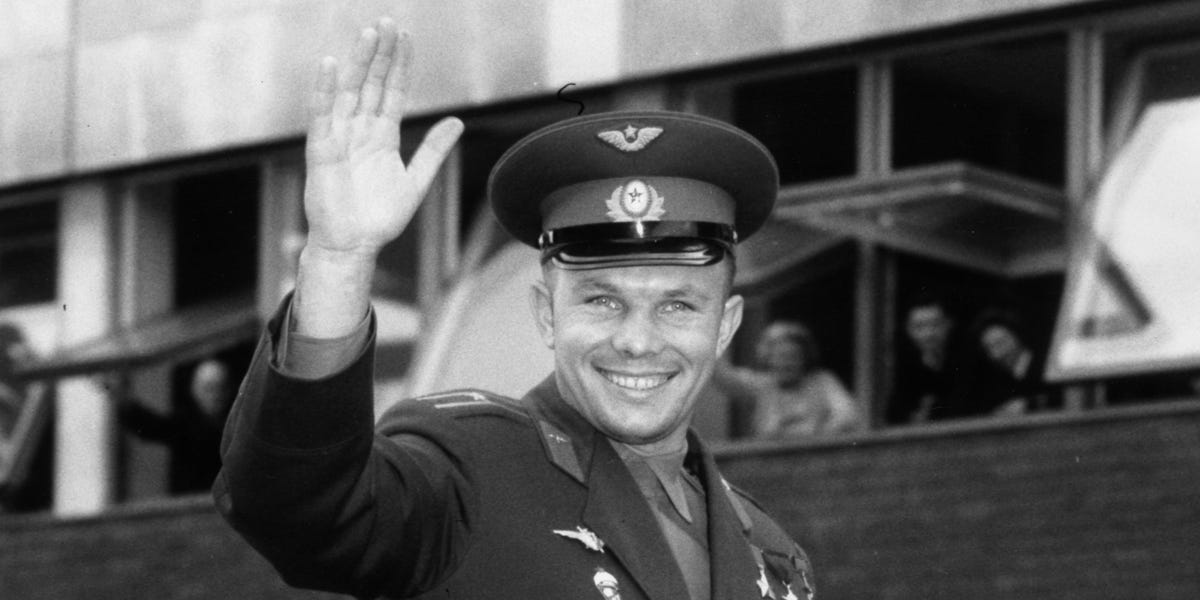
There is also an emotional experience in seeing photographs of him. He does not look like a distant mythological figure. He looks young, friendly, and very human. That matters. History sometimes turns pioneers into statues so quickly that we forget they had ordinary fears, jokes, families, and unfinished plans. Gagarin had all of those. His smile is famous not because it was perfect for propaganda posters, but because it made an impossible mission feel human-sized.
Visiting a planetarium, watching a documentary, or reading about Vostok 1 can also change how people look at the night sky. Space becomes less abstract. Every starry view carries the memory of the first person who crossed from atmosphere into orbit. Even if someone never studies aerospace engineering, Gagarin’s story offers a practical lesson: big achievements are built from small steps, repeated training, teamwork, and the willingness to face uncertainty without pretending it is easy.
In that sense, the experience of learning about Yuri Gagarin is not only about admiring a hero. It is about recognizing the strange combination of humility and ambition that exploration requires. He came from a modest village, learned technical skills, became a pilot, trained relentlessly, and then rode a rocket into history. That journey still speaks to readers because it suggests that the future is not built only by people born near power. Sometimes it is built by someone who starts in a small place, looks up, and keeps going.
Conclusion
Yuri Gagarin is famous as the first man in space, but that title is only the doorway into his larger legacy. He was a skilled pilot, a symbol of Soviet achievement, a global ambassador, an inspiration to future astronauts, and a lasting icon of human courage. His 108-minute flight aboard Vostok 1 proved that humans could survive spaceflight and return to Earth, but his influence lasted far longer than one orbit.
Gagarin’s life reminds us that history is often shaped by individuals who stand at the meeting point of preparation and risk. He did not build the rocket alone. He did not invent the space program. But he carried humanity’s first living presence into orbit, and that made him unforgettable. More than six decades later, his name still belongs wherever people talk about space exploration, scientific ambition, and the moment Earth first saw one of its own rise above it.