
Note: This article is educational and compassionate by design. It is not asking you to give up on grooming, style, health, confidence, dating, or joy. It is asking you to stop treating appearance as the only department in charge of your value.
Let’s begin with a mildly uncomfortable truth: almost everyone has looked in the mirror and thought, “Well, that was a bold choice by genetics.” Some people worry about their skin, weight, teeth, hairline, height, nose, body shape, wrinkles, scars, or the strange fact that cameras can turn a perfectly decent face into a missing-person poster.
Feeling unattractive can sting because appearance is tied to belonging, romance, social approval, and the very human desire to be seen kindly. But accepting that you may not match conventional beauty standards is not the same as accepting that you are less worthy, less lovable, or doomed to become a background character in your own life.
The real goal is not to force yourself to shout, “I am the most beautiful creature ever assembled!” every morning while your coffee quietly judges you. The goal is to build a steadier relationship with yourselfone where appearance matters a little, but does not control your confidence, choices, friendships, ambitions, or peace of mind.
Body image includes the thoughts, feelings, perceptions, and behaviors people have around their appearance. That means the problem is often bigger than a nose, a number on a scale, or one unfortunate school photo. It is also about the story a person tells themselves after noticing those things.
First, Understand What “Unattractive” Really Means
“Unattractive” sounds like a fact, but it is usually a conclusion shaped by culture, comparison, memory, and mood. Beauty standards change constantly. One decade wants thin eyebrows, another wants thick eyebrows, and somehow everyone is expected to keep a filing cabinet of previous eyebrow-related regrets.
There are features that some cultures reward more than others, of course. Pretending beauty standards do not exist would be as useful as pretending Mondays do not exist. But standards are not universal laws of nature. They are preferences, trends, social signals, and marketing opportunities wearing a fancy hat.
Your appearance may affect some first impressions. It does not accurately predict your humor, intelligence, tenderness, work ethic, creativity, loyalty, courage, or ability to make a friend laugh so hard they snort water through their nose. Those qualities matter deeply in relationships and in a meaningful life, even though they do not fit neatly into a selfie.
Social media can make appearance worries louder because people compare real, tired, unfiltered lives with edited photos, strategic lighting, cosmetic procedures, professional makeup, selected angles, and the occasional app that apparently believes humans should have poreless skin made of moonlight. Pediatric and mental-health guidance warns that polished online images and comparison can undermine confidence and intensify anxiety about appearance.
1. Stop Trying to Win a Beauty Contest You Never Entered
Recognize the comparison trap
One of the fastest ways to feel unattractive is to compare your everyday appearance with someone else’s highlight reel. You may compare your face to an influencer’s face, your body to a celebrity’s body, or your wardrobe to a stranger’s vacation photos. The brain then announces a winner, usually with the confidence of a game-show host who has never met either contestant.
But comparison is rarely fair. You know your own flaws in high definition because you live inside your body every day. You see the pimple, the scar, the uneven smile, the hair that refuses to cooperate, and the shirt that somehow looked better on the hanger. With other people, you usually see a quick glimpse, a curated image, or a version they intentionally chose to show.
Accepting being unattractive begins with questioning the competition itself. Ask: Who decided this was a contest? What prize am I trying to win? Would winning it actually make me feel secure for long?
Often, the answer is uncomfortable but freeing: you are trying to earn safety, admiration, romance, or belonging through appearance. Those needs are real. But beauty is a shaky ladder for reaching them because there will always be someone younger, trendier, richer, more edited, or simply standing under better bathroom lighting.
Try a “comparison interruption”
When you catch yourself ranking your appearance against someone else’s, pause and use a simple three-step reset:
- Name it: “I am comparing myself right now.”
- Normalize it: “Comparison is a common habit, not a final verdict.”
- Redirect it: “What do I want to do with my actual day?”
This does not require you to suddenly believe you are gorgeous. It simply prevents a passing thought from becoming a full-time emotional landlord.
Body neutrality can be useful here. Instead of pressuring yourself to adore every feature, body neutrality makes room for a calmer middle ground: your body and face are parts of you, but they do not need to be your favorite topic all day.
2. Build an Identity That Is Bigger Than Your Reflection
Move from appearance-based worth to whole-person worth
A person who believes, “I am unattractive, therefore I am inferior,” has accidentally turned a preference into an identity. That is like saying, “I am not great at karaoke, therefore I should not have friends, goals, hobbies, or access to snacks.” The logic does not hold.
Your value is not a scorecard based on facial symmetry, body shape, hair texture, or how well your jeans behave after lunch. A stronger form of self-acceptance says: I may not look the way I wish I looked, and I am still a complete person.
This shift becomes easier when you deliberately build other sources of self-respect. Consider the traits that make you useful, interesting, trustworthy, funny, knowledgeable, persistent, caring, or brave. Think about what people come to you for. Maybe you are the friend who remembers birthdays, the coworker who explains complicated things clearly, the sibling who makes family gatherings less awkward, or the person who can repair a broken shelf without producing a new hole in the wall.
Create a “proof of personhood” list
Write down ten things about yourself that are not physical. They can be skills, values, experiences, habits, accomplishments, interests, or relationships. Do not make the list sound like a résumé written by a robot. “I make excellent grilled cheese,” “I listen when people are upset,” and “I survived a horrible job and learned what I will not tolerate again” all count.
Review that list when appearance anxiety starts taking over. The point is not to deny that you care about how you look. The point is to remember that you are more than the face you happen to bring to the grocery store.
Self-compassion can also help. It means responding to your own struggles with kindness instead of treating yourself like a disappointing employee in a company called “Human Being, LLC.” Research-based guidance on self-compassion emphasizes noticing suffering, speaking to yourself with care, and recognizing that imperfection is part of being human.
Choose actions that make you feel capable
Confidence often grows from behavior, not from staring at a mirror until inspiration arrives. Learn something. Improve a skill. Volunteer. Build a routine. Practice a sport because it feels good, not because you are trying to punish your body into becoming someone else’s. Wear clothes that fit your current body comfortably instead of treating every outfit like a courtroom cross-examination.
When life becomes fuller, appearance tends to occupy less mental real estate. You still have a face. You simply stop letting it run the entire government.
3. Practice Acceptance Without Giving Up on Yourself
Acceptance is not resignation
Accepting being unattractive does not mean abandoning hygiene, ignoring your health, refusing a haircut, or dressing like you lost a bet. It means making choices from care rather than shame.
You can enjoy skincare, fitness, grooming, fashion, dental care, or cosmetic choices if they genuinely make you feel more comfortable. The key question is: Am I doing this because I enjoy caring for myself, or because I believe I am unacceptable without it?
There is a huge difference between “I like wearing clothes that express my personality” and “I cannot leave the house unless I look perfect.” One is self-expression. The other is a prison with excellent lighting.
Use kinder language with yourself
Notice how you speak to yourself after seeing a photo or looking in the mirror. Would you talk to a friend that way? Would you say, “You are disgusting,” “No one will want you,” or “You should hide until further notice”? Probably not, unless you are planning to become the villain in a low-budget teen movie.
Try replacing harsh comments with neutral, accurate language:
- Instead of “My face is ugly,” try “I am feeling critical about my appearance today.”
- Instead of “Everyone is judging me,” try “I am anxious about being judged, but I cannot read minds.”
- Instead of “I need to fix everything,” try “I can care for myself without attacking myself.”
- Instead of “I will never be attractive,” try “Attractiveness is subjective, and my worth is not up for debate.”
This is not empty positivity. It is a more accurate way to describe what is happening. A feeling is real, but it is not always reliable evidence.
Reduce behaviors that feed the obsession
Constant mirror checking, taking dozens of photos, deleting every picture of yourself, avoiding social events, repeatedly asking for reassurance, or spending hours researching ways to “fix” your face can make appearance distress stronger. When someone becomes intensely focused on perceived flaws and that preoccupation interferes with daily life, it may be a sign of body dysmorphic disorder or another mental-health concern worth discussing with a licensed professional.
A practical experiment is to reduce one appearance-checking habit for a week. For example, limit mirror checks to getting ready in the morning and before leaving home. Or take one photo at an event instead of forty-seven. The goal is not to look careless. The goal is to give your brain evidence that life continues when you stop inspecting yourself like a museum exhibit.
A Small Weekly Plan for Better Body Image
Try this simple routine for one week:
- Curate your feed: Unfollow or mute accounts that consistently make you feel inferior, ashamed, or obsessed with changing your appearance.
- Wear comfortable clothes: Choose clothing that fits now, not clothing that punishes you for having a body.
- Do one competence-building activity: Cook, exercise for enjoyment, study, make art, organize something, practice a hobby, or help someone.
- Say one neutral sentence about your body: “These are my hands.” “This is my face.” “My body carried me through today.”
- Make one plan that has nothing to do with appearance: Call a friend, apply for something, start a project, take a class, or go somewhere interesting.
These actions may sound small, but they gradually teach your mind that your life is not on hold until you become more conventionally attractive.
When Appearance Worries Need More Support
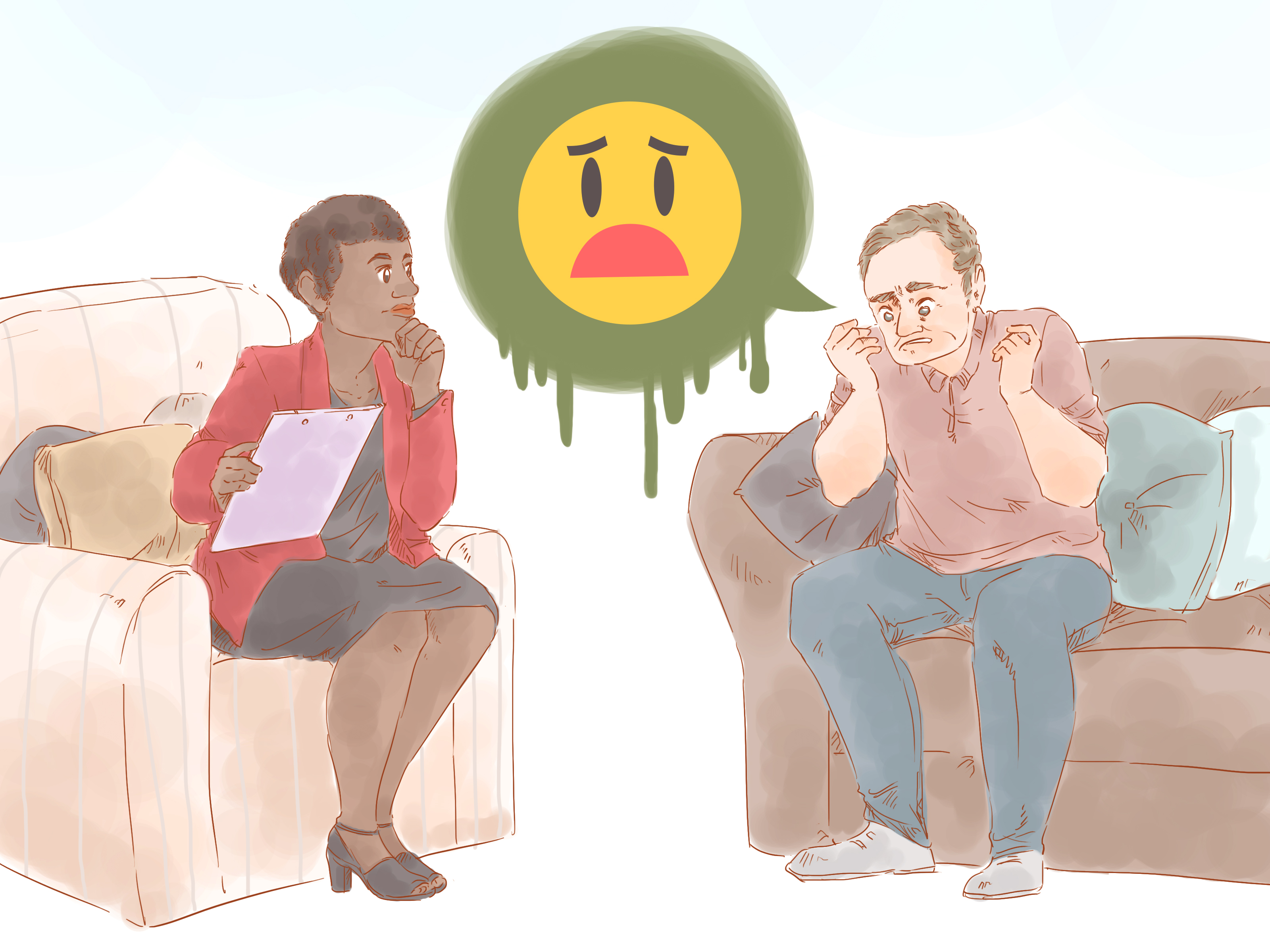
Everyone can have a rough body-image day. But professional support may be especially helpful if thoughts about appearance consume hours of your day, make you avoid work or school, interfere with eating or relationships, lead to repeated checking or concealment behaviors, or leave you feeling hopeless.
Cognitive behavioral therapy can help people identify thinking patterns that fuel distress and practice more useful responses. Eating disorders and body dysmorphic disorder are real mental-health conditions, not vanity or personal weakness.
Speaking with a therapist, physician, school counselor, or qualified mental-health professional is not an admission that you failed at confidence. It is a practical step toward having more room in your life for relationships, work, laughter, and whatever strange hobby makes you feel most alive.
Experiences: What Accepting Your Appearance Can Look Like in Real Life
The following examples are composite experiences based on common body-image struggles. They are not promises that acceptance happens overnight, because the brain enjoys a dramatic arc far more than a reasonable improvement schedule.
Jordan Stops Auditioning for Approval
Jordan spent years believing he was unattractive because he had acne scars, thinning hair, and a smile he thought looked “crooked” in photos. Before meeting new people, he would inspect his face in the mirror, change shirts repeatedly, cancel plans, and convince himself that everyone noticed his flaws before they noticed anything else.
His turning point was not suddenly loving every feature. It was realizing that he had become a spectator in his own life. He skipped parties, avoided dating, and stayed quiet during work meetings because he assumed his appearance made him less interesting. He began practicing a different thought: “I may feel insecure, but I do not have to obey insecurity.”
Jordan started small. He attended a friend’s birthday without checking his reflection in every bathroom. He joined a public-speaking workshop even though he hated seeing himself on video. He bought clothes that fit instead of clothes he hoped would fit after becoming a completely different person by Tuesday.
Months later, Jordan still had occasional bad appearance days. But he also had new friends, better work opportunities, and more evidence that people responded to his warmth and humor. His face had not become a different face. His life had become bigger than his worries about it.
Marisol Changes Her Feed Before Changing Herself
Marisol noticed that her mood dropped every time she opened social media. Her feed was full of filters, workout transformations, cosmetic procedure videos, and strangers explaining which facial features were “high value.” She began picking apart her jawline, skin tone, body shape, and hair texture with the intensity of someone reviewing a legal contract.
One afternoon, she realized that none of these accounts made her feel informed, entertained, or inspired. They made her feel defective. So she muted them. At first, the silence felt strange. She worried she would miss important beauty advice, as though the internet had appointed itself director of her face.
She replaced those accounts with comedians, artists, gardening pages, travel photographers, writers, and people who shared ordinary, unfiltered lives. Her insecurity did not vanish immediately, but it lost its constant fuel source. She also began asking herself whether she wanted a beauty routine because it was fun or because she was afraid of being seen without it.
Marisol still enjoys makeup. She still likes looking polished for special events. But she no longer treats every bare-faced grocery run as an act of rebellion against civilization. She learned that style can be playful when it is not carrying the entire weight of self-worth.
Dev Learns That Dating Is Not a Beauty Pageant
Dev avoided dating for years because he believed he was not attractive enough to be chosen. He imagined that dating apps and social events were secret casting calls where everyone else had received the correct face and he had missed the orientation.
Eventually, he noticed that his belief contained an impossible standard: he was waiting to feel completely confident before allowing himself to connect with anyone. Since complete confidence is a mythical creature often spotted near perfect parking spaces and affordable rent, he decided to act before he felt ready.
Dev updated his dating profile with clear, honest photos and descriptions of his interests. He focused on being curious during conversations instead of trying to perform attractiveness. Some people were not interested. That stung, but it also taught him something important: rejection is not proof of ugliness. It is part of human preference, timing, compatibility, and the weird mystery of whether two people both enjoy the same kind of pizza.
Over time, Dev became less focused on being universally desirable and more focused on finding people who appreciated his actual personality. That is a much more useful goal. Universal approval is exhausting. Real connection is specific.
Conclusion: You Do Not Need to Be Beautiful to Belong
Accepting being unattractive is not about declaring defeat in front of the mirror. It is about refusing to let appearance determine whether you participate in your own life. You can care about how you look while also understanding that your value is not a beauty score.
Stop competing with edited images. Build an identity rooted in values and abilities. Practice kinder self-talk. Reduce habits that turn appearance into an obsession. Seek professional support when body-image distress becomes overwhelming. Most importantly, remember that you do not have to become visually perfect before you are allowed to take up space, make memories, pursue love, wear the clothes you like, and enjoy being alive.