30 Times Know-It-Alls Shamed Moms For The Stupidest Reasons, As Shared In This Online Thread

There are two universal truths about motherhood: babies do not come with instruction manuals, and somehow, everyone at the grocery store believes they are the instruction manual. One mom buys yogurt, another skips socks on a warm day, another uses formula, another breastfeeds in public, and suddenly a self-appointed parenting inspector materializes from behind the cereal aisle with a full TED Talk and absolutely no invitation.
The viral online thread behind “30 Times Know-It-Alls Shamed Moms For The Stupidest Reasons” hit a nerve because the stories were funny, frustrating, painfully familiar, and occasionally so ridiculous they deserved their own tiny courtroom drama. Moms shared being judged for contact naps, daycare, baby carriers, ready-made formula, cloth diapers, stretch marks, public meltdowns, and even owning reptiles. Apparently, if you have a baby and a snake, some people assume your living room is one dramatic nature documentary away from disaster.
But under the humor is a serious truth: mom shaming is not just annoying background noise. It reflects how much pressure society places on mothers to be perfect, tireless, cheerful, informed, attractive, financially sensible, endlessly available, and somehow still relaxed enough to enjoy “every precious moment.” That is not motherhood. That is a job description for a mythical woodland creature with excellent health insurance.
What Is Mom Shaming?
Mom shaming happens when someone criticizes, mocks, questions, or publicly judges a mother’s parenting choices, often without context, compassion, or actual expertise. It can come from strangers, relatives, friends, medical providers, partners, social media commenters, or other parents who have mistaken one successful nap routine for a graduate degree in child development.
Some criticism is about safety, and safety matters. Car seats should be used correctly. Babies need safe sleep spaces. Infant feeding guidance should come from qualified health professionals, not a comment section with a profile picture of a sunset. But mom shaming is different from helpful support. Helpful support asks, “Do you want a hand?” Mom shaming announces, “I would never do that,” while the baby is actively smearing applesauce into a shoe.
Why This Online Thread Went Viral
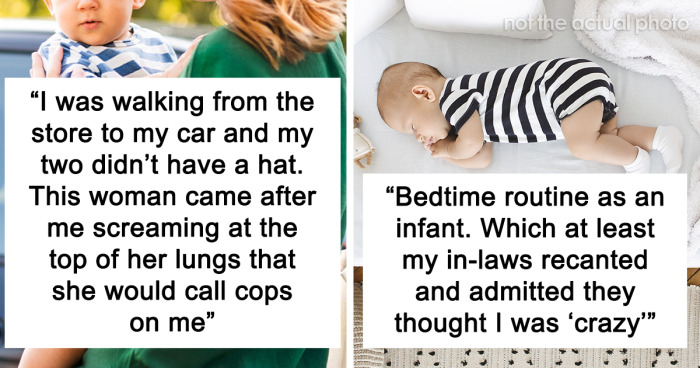
The online thread resonated because the examples were specific, ordinary, and absurd. One mom was criticized because her baby did not have a hat. Another was judged for not giving water to an infant. Another was shamed for using pumped milk instead of nursing directly. Someone else was told daycare was a terrible choice, even though both parents worked full time and childcare was not optional.
That is the strange genius of mom shaming: it often targets normal decisions. A mother can be judged for working and judged for staying home. She can be judged for breastfeeding and judged for formula feeding. She can be judged for holding a baby too much and judged for letting a baby cry. She can be judged for buying the expensive high chair and judged for buying the affordable one. It is less a parenting philosophy and more a carnival game where the rules change every three seconds.
30 Commonly Ridiculous Reasons Moms Get Shamed
Instead of copying the original thread, let’s look at the broader patterns behind those stories. These are the types of “stupidest reasons” moms often get criticized for, even when they are making reasonable, loving, informed decisions.
1. Not Putting Socks On the Baby
Few things activate public concern faster than a visible baby foot. A baby can be bundled like a tiny burrito in July, but if one sock is missing, someone will appear to announce that frostbite is imminent. In reality, parents often remove socks because babies overheat, kick them off, chew them, lose them, or treat them as disposable confetti.
2. Putting a Hat On the Baby
And yes, the opposite also happens. A mom puts a hat on the baby and someone warns about overheating. The same public that demanded socks five minutes ago is now deeply invested in ventilation. The better approach is simple: dress babies for the environment and check their comfort, not the emotional temperature of strangers.
3. Breastfeeding in Public
Some people are still scandalized by a baby eating in public, which is impressive because adults have been eating nachos in stadiums for decades without national debate. Breastfeeding is normal, legal, and practical. A hungry baby is not going to pause politely while everyone else resolves their feelings about human biology.
4. Formula Feeding
Formula shaming is one of the most exhausting forms of parenting judgment. Some babies need formula. Some parents choose formula. Some families use both breast milk and formula. The important thing is that the baby is fed safely and appropriately. The “best” feeding method is the one that supports the baby’s health and the parent’s real life.
5. Pumping Milk Instead of Nursing Directly
Pumping is work. It involves planning, washing parts, storing milk, managing supply, and sometimes feeling like a human espresso machine. Shaming a mom for pumping instead of nursing directly ignores the fact that expressed milk can be a practical, loving, and medically necessary option.
6. Feeding on Demand
Some older relatives still believe feeding a newborn whenever they are hungry “spoils” the baby. But newborns are not tiny executives manipulating the household. They are hungry, tired, gassy, or in need of comfort. Responding to an infant’s needs is not spoiling; it is parenting.
7. Contact Napping
Parents get criticized for letting babies nap on them, as though the baby is plotting to enroll in college still attached to someone’s shoulder. Contact naps can be soothing, especially in the early months. Families should follow safe sleep guidance when placing babies down, but comfort and closeness are not moral failures.
8. Using a Baby Carrier
One mom in the discussion was shamed for using a carrier instead of carrying the baby in her arms. This is especially absurd because carriers can help parents safely manage daily tasks, recover from injury, or simply keep their hands free. Babies like closeness. Parents like functioning wrists. Everybody wins.
9. Using Daycare
Daycare judgment is often wrapped in nostalgia and tied with a bow of unrealistic economics. Many families need two incomes. Many parents want to work. High-quality childcare can support children’s learning, routines, and social development. Choosing daycare does not mean outsourcing love.
10. Staying Home With the Kids
Of course, stay-at-home moms get shamed too. They may hear that they are “wasting potential,” “not contributing,” or “too attached.” This is the contradiction at the center of mom shaming: whatever choice a mother makes, someone will confidently explain why the opposite choice was correct.
11. Working Outside the Home
Working moms are often expected to perform as if they do not have children and parent as if they do not work. That is not a lifestyle; that is a circus act with email notifications. Shaming mothers for working ignores financial reality, ambition, identity, and the fact that children benefit from seeing caregivers pursue meaningful goals.
12. Buying Affordable Baby Gear
A baby does not know whether a high chair came from a designer showroom or a practical flat-pack store. If it is safe, stable, and appropriate, the baby’s main review will be: “Can I throw peas from here?” Parenting is expensive enough without turning every purchase into a status exam.
13. Buying Fancy Baby Gear
On the other side, moms are also shamed for using modern gadgets like smart bassinets, bottle warmers, wipe warmers, baby monitors, or soothing machines. If a tool helps a tired parent and is used safely, it does not make them lazy. It makes them a person living in the century they were assigned.
14. Using Ready-Made Formula
Ready-to-feed formula can be convenient, sterile, and useful, especially during travel, emergencies, or the newborn stage. Judging a parent for choosing it often says more about the critic’s need to comment than the parent’s actual decision-making.
15. Not Giving Water to an Infant
Some relatives insist babies need water, especially in warm weather. But for young infants, breast milk or properly prepared formula provides hydration. This is a perfect example of why updated guidance matters: loving advice can still be outdated advice.
16. Public Toddler Meltdowns
A toddler meltdown in a store is not evidence of failed parenting. It is evidence of a toddler. Young children are still learning emotional regulation, and hunger, fatigue, noise, transitions, and disappointment can send them into full opera mode. The parent is usually already handling enough without audience commentary.
17. Stretch Marks
Shaming a mother for stretch marks after pregnancy is like shaming a marathon runner for sweating. Bodies change. Pregnancy can leave marks, scars, softness, strength, pain, and stories. None of those require public review.
18. Baby Nails Not Being Trimmed
Baby nails are tiny, sharp, fast-growing, and attached to fingers that never stop moving. If someone is deeply concerned, they can offer to help. Otherwise, the nail salon for infants is not taking walk-in critics today.
19. Letting a Child’s Hair Look Like Child Hair
Toddlers have curls, cowlicks, sticky patches, mystery crumbs, and opinions about brushes. A child’s hair being frizzy, wild, or in their eyes for five minutes is not a parenting scandal. It is a Tuesday.
20. Cloth Diapering
Some moms choose cloth diapers for cost, environmental reasons, skin sensitivity, or personal preference. Others choose disposables because they are convenient and practical. Both groups deserve fewer lectures and more functioning laundry machines.
21. Disposable Diapering
Yes, disposable diaper users get judged too. Parenting culture has a remarkable ability to turn even waste management into a moral identity. The baby, meanwhile, has one clear priority: please handle the situation quickly.
22. Choosing Snacks
Food judgment is a major mom-shaming category. Yogurt has too much sugar. Crackers have too much salt. Fruit is sticky. Pouches are lazy. Homemade puree is too much effort. The reasonable middle ground is feeding children a generally balanced diet while remembering that one snack does not define a childhood.
23. Taking Children to Public Places
Children learn how to behave in public by going into public. That means sometimes they will be loud, clumsy, emotional, curious, or inconvenient. Adults are allowed to have patience. It is free, portable, and pairs nicely with minding one’s business.
24. Not Having Family Provide Childcare
Some relatives assume family childcare is always better than daycare. But not every family member is safe, available, healthy, reliable, respectful, or aligned with the parents’ values. “But we’re family” is not a childcare license.
25. Living Far From Extended Family
Mothers may be criticized for not living near grandparents, siblings, or cousins. But housing costs, jobs, schools, safety, marriage, and personal boundaries all shape where families live. A mother is not required to organize her entire ZIP code around other people’s expectations.
26. Having Pets
Some moms get shamed for having dogs, cats, reptiles, or other pets while raising children. Responsible pet ownership requires supervision, hygiene, boundaries, and common sense. It does not automatically mean the baby is starring in a survival thriller.
27. Asking Medical Questions
One particularly frustrating pattern is shaming moms for being cautious. A rash, allergy concern, feeding issue, fever, or breathing question deserves professional attention when a parent is worried. Asking for medical help is not overreacting; it is part of caring for a child.
28. Not Following Old Parenting Rules
Every generation parents with the information it has. But safe sleep, car seat use, allergy guidance, infant feeding, and child development recommendations evolve. Respecting grandparents does not mean freezing parenting advice in 1987.
29. Following New Parenting Rules
Modern parents are sometimes mocked for being “too careful.” Yet many safety practices exist because research, injury prevention, and public health guidance improved. Buckling a car seat correctly or avoiding loose bedding is not paranoia. It is prevention.
30. Simply Existing as a Mother
At a certain point, the pattern becomes obvious: moms are not being judged because they are doing everything wrong. They are being judged because motherhood is public, emotional, and culturally overloaded. A mother with a baby becomes a walking invitation for projection, nostalgia, fear, and unsolicited advice.
The Psychology Behind Know-It-All Parenting Criticism
Why do people shame moms over such tiny things? Sometimes it is anxiety. People see a baby and panic because babies look fragile, which they are, but not so fragile that every bare toe requires a civic emergency response. Sometimes it is identity. A person who did things one way may feel threatened when another parent chooses differently, as if a bottle, daycare, or baby carrier is a personal insult.
Other times, mom shaming comes from social comparison. Parenting is uncertain, and uncertainty is uncomfortable. Criticizing someone else can make people feel briefly more confident about their own choices. Unfortunately, that confidence is often built on someone else’s exhaustion.
Online spaces can amplify the problem. Parenting communities can be helpful, especially for isolated parents seeking advice at 2 a.m. while holding a baby who believes sleep is a rumor. But online groups can also become judgment arenas where every choice is debated without nuance. A short post rarely contains the full context: the baby’s health, the family budget, the parent’s mental health, the pediatrician’s advice, the childcare options, or the fact that everyone involved is running on four hours of broken sleep.
When Advice Helps and When It Hurts
Not all advice is bad. New parents often need support, and good advice can prevent injury, reduce stress, and make daily life easier. The difference is delivery. Helpful advice is specific, kind, evidence-based, and welcome. Harmful advice is dramatic, public, shaming, outdated, or centered on the critic’s ego.
For example, “Would you like help checking the car seat installation?” is useful. “You clearly don’t know what you’re doing” is not. “Your baby may be hungry; do you need a quiet spot?” is supportive. “Back in my day, we never did that” is a history lecture disguised as concern.
The best parenting support respects three truths at once: children need safety, parents need dignity, and outsiders rarely know the full story.
Why Mom Shaming Can Be Harmful
Mom shaming may look small when it is about socks, snacks, or strollers, but repeated criticism can wear parents down. Many mothers already carry guilt about work, money, feeding, sleep, screen time, discipline, body changes, relationships, and whether they are doing enough. Add constant public commentary, and ordinary parenting becomes a performance review that never ends.
Stress matters. Parents who feel unsupported may become more anxious, isolated, or burned out. They may stop asking questions in public forums because they fear judgment. They may second-guess reasonable decisions. They may feel like every choice must be defended with a spreadsheet, a pediatrician’s note, and three peer-reviewed studies taped to the diaper bag.
That is not good for mothers, and it is not good for families. Children benefit from caregivers who are supported, rested when possible, and trusted to make everyday decisions without being treated like suspects in a snack-related crime.
How Moms Can Respond to Unwanted Criticism
Every mom needs a few polite-but-firm lines ready for the next unsolicited parenting audit. Try: “Thanks, we’ve got it handled.” Or: “Our pediatrician is comfortable with our plan.” Or: “That works for your family; this works for ours.” These phrases are short, calm, and do not open the floor for debate.
For relatives, boundaries may need to be clearer. “I know you care, but repeated comments about feeding are not helpful.” For strangers, brevity is usually best. You do not owe a full explanation to someone who met your child 11 seconds ago near the bananas.
Online, the healthiest response may be not responding at all. Delete, mute, block, leave the group, or find communities with evidence-based moderation and actual empathy. Your peace is allowed to have a security system.
How Everyone Else Can Do Better
If you are not the parent, start with humility. Before commenting, ask yourself: Is the child in immediate danger? Am I qualified to help? Did the parent ask? Can I offer support instead of criticism? If the answer is no, the best contribution may be silence, a smile, or holding the door.
If you are a grandparent, aunt, uncle, friend, neighbor, or fellow parent, remember that modern families are balancing costs, work schedules, medical advice, safety standards, and mental load in ways previous generations may not fully see. The goal is not to win a parenting debate. The goal is to help the child and respect the caregiver.
Related Experiences: What These Stories Reveal About Real Motherhood
The funniest mom-shaming stories usually become funny later. In the moment, they can feel humiliating. Imagine being in a store with a crying baby, trying to find your keys, your phone, and the one pacifier that has not fallen onto the floor of civilization, when a stranger decides this is the perfect time to critique your child’s temperature management. You are not thinking, “What an interesting public health discussion.” You are thinking, “Please let the earth open gently under the checkout line.”
Many mothers describe these moments as tiny emotional ambushes. They are already solving ten problems at once: Is the baby hungry? Did the toddler nap? Is there enough money for daycare this month? Did the pediatrician call back? Is the diaper bag stocked? Did I answer that work email? Will anyone notice if dinner is just toast with confidence? Then someone comments on socks, and suddenly the smallest detail becomes the final straw.
There is also a deep loneliness in being judged by people who do not understand the full situation. A mother using formula may have struggled with supply, medication, trauma, adoption, work logistics, or personal choice. A mom sending her child to daycare may be protecting her career, paying rent, or choosing a structured environment her child loves. A mom holding a baby through naps may be surviving reflux, colic, postpartum anxiety, or just a season that will pass. Outsiders see the decision; they do not see the story.
The online thread also shows how often mothers are blamed for normal child behavior. Babies cry. Toddlers melt down. Preschoolers say shocking things near very quiet people. Children are not tiny adults with tax folders and emotional regulation skills. They are learning, and learning is messy. Public patience is not a luxury; it is part of living in a society that includes children.
One of the most relatable experiences is the double bind. A mom who sets boundaries is “cold.” A mom who comforts quickly is “spoiling.” A mom who researches is “anxious.” A mom who trusts her instincts is “careless.” A mom who works is “absent.” A mom who stays home is “dependent.” The rules are impossible because they are not rules at all. They are projections.
That is why these stories matter beyond entertainment. They remind readers that motherhood is not a single correct aesthetic. It is not always beige nurseries, homemade snacks, calm voices, and matching socks. Sometimes it is a baby with one bare foot, a parent drinking cold coffee, a toddler wearing pajamas to the pharmacy, and everyone still being loved and cared for.
The better cultural habit is simple: assume most moms are doing their best with the information, resources, and energy they have. Offer help when it is truly needed. Share advice when it is requested. Save emergency concern for actual emergencies. And when in doubt, remember the golden rule of parenting commentary: if you would not say it to a sleep-deprived raccoon holding a car seat, maybe do not say it to a mother in Target.
Conclusion: Less Shaming, More Support
The online thread about know-it-alls shaming moms for the stupidest reasons is funny because the examples are ridiculous. It is also powerful because the frustration is real. Moms are judged for feeding choices, sleep choices, childcare choices, work choices, body changes, baby clothes, public outings, and ordinary survival tactics. The criticism often says less about the mom and more about a culture that expects mothers to perform perfection while pretending they need no help.
Parenting would be healthier if more people replaced judgment with curiosity and criticism with support. Babies do not need perfect mothers. They need safe, loving, responsive caregivers. Mothers do not need a jury in every grocery aisle. They need respect, evidence-based resources, practical help, and maybe five minutes to drink coffee while it is still legally a liquid.
So the next time you see a mom doing something differently than you would, pause. Unless a child is in real danger, consider offering grace. The baby without socks may be perfectly fine. The mom using formula may be doing exactly what her family needs. The toddler melting down may simply be tired. And the mother you are about to judge may already be carrying more than you can see.