Neil deGrasse Tyson Says Top Gun’s Maverick Wouldn’t Survive Ejecting at Mach 10.5

Top Gun: Maverick asks audiences to believe that Pete “Maverick” Mitchell can escape a disintegrating hypersonic aircraft, stroll into a rural diner, and request a glass of water looking only slightly more toasted than usual. Astrophysicist Neil deGrasse Tyson famously objected. Was he correct, or could advanced aerospace engineering give Hollywood’s favorite pilot a narrow path to survival?
The Mach 10.5 Scene That Launched a Physics Debate
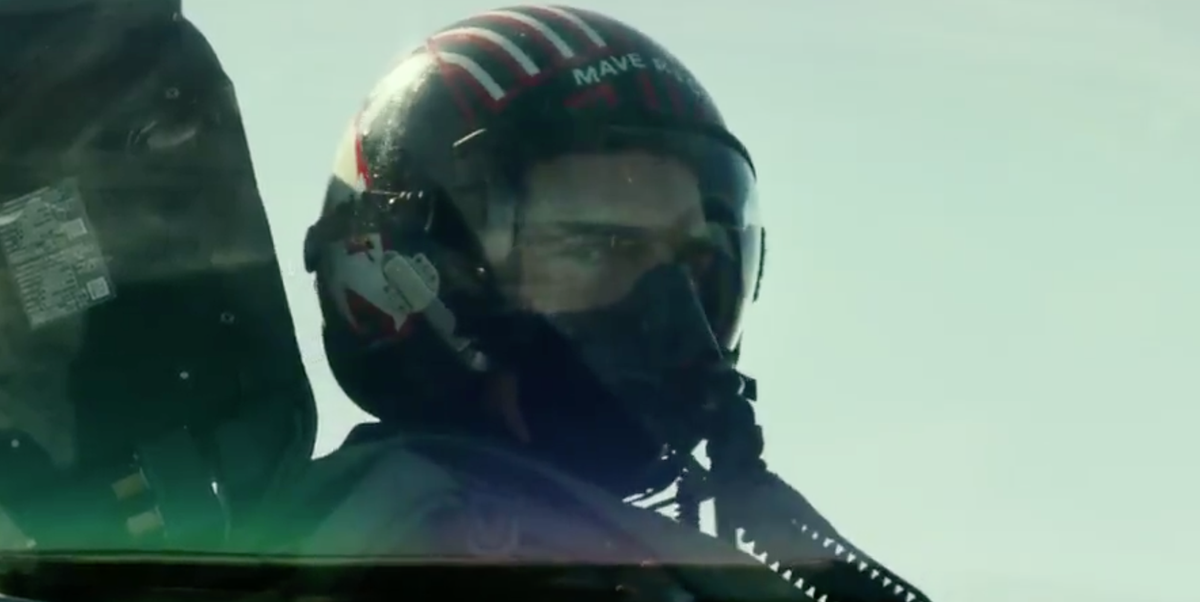
The opening sequence of Top Gun: Maverick wastes no time reminding viewers that Captain Pete Mitchell treats safety limits as polite suggestions. Assigned to test the fictional Darkstar aircraft, Maverick is supposed to reach Mach 10 before the program is canceled.
He reaches the target, celebrates for approximately three seconds, and then pushes the aircraft to Mach 10.5 because apparently the most dangerous phrase in aviation is not “engine failure.” It is “Maverick has another idea.”
The Darkstar begins to break apart. The movie cuts away before showing precisely how Maverick escapes. A short time later, he walks into a diner wearing a battered flight suit and asks where he is. The joke works beautifully, but the missing escape sequence left a hypersonic hole large enough for scientists, pilots, engineers, and internet commenters to fly through.
Neil deGrasse Tyson joined the discussion in October 2022. He argued that Maverick would not survive being exposed to the atmosphere while traveling at Mach 10.5, describing the result in characteristically colorful terms. Popular Mechanics, Business Insider, IndieWire, and other outlets subsequently examined his criticism and the science behind the scene.
Tyson’s central conclusion is difficult to dispute if the movie expects us to imagine a conventional fighter-style ejection: seat fires, canopy disappears, pilot enters the airflow, parachute eventually deploys, and everyone goes home for nachos. At Mach 10.5, that sequence becomes a very different event.
How Fast Is Mach 10.5?
Mach numbers compare an object’s speed with the local speed of sound. Because the speed of sound changes with atmospheric temperature, Mach 10.5 does not correspond to one universal miles-per-hour figure. At the high altitudes where a hypersonic aircraft would likely operate, however, Maverick would be moving at roughly 7,000 miles per hour or more.
For comparison, NASA’s uncrewed X-43A reached nearly Mach 10 during a 2004 research flight. It traveled at approximately 7,000 miles per hour at an altitude of about 110,000 feet, setting a record for an air-breathing aircraft. That achievement required a small, purpose-built research vehicle, a booster rocket, careful mission planning, and no test pilot insisting on “just a little faster.”
Hypersonic flight generally begins at Mach 5. At these speeds, engineers must manage problems that ordinary airplanes rarely encounter at such intensity, including shock waves, extreme heating, structural expansion, difficult engine operation, and rapidly changing airflow.
The North American X-15, one of history’s most important experimental aircraft, reached Mach 6.7 in 1967. Even at lower speeds than the Darkstar’s fictional flight, aerodynamic heating, stability, specialized materials, and pilot control demanded enormous engineering effort. Smithsonian accounts of early hypersonic research describe how heating could weaken or distort aircraft structures and how stability generally became more challenging as speed increased.
Why a Conventional Ejection Would Be Catastrophic
The Atmosphere Becomes a Wall
A pilot inside a hypersonic aircraft is protected by the vehicle’s shape, pressure system, thermal protection, and carefully controlled airflow. Once exposed, the pilot is no longer sitting comfortably inside the aerodynamic solution. He becomes part of the aerodynamic problem.
The danger is not simply “wind” in the everyday sense. The pilot would encounter an enormous change in airflow, pressure, temperature, and force. Air moving around the body would form shock waves. NASA explains that pressure, density, and temperature increase sharply across a shock wave. That is excellent news when teaching a fluid-dynamics lesson and less excellent news when the experimental object is Tom Cruise.
Loose arms and legs could be whipped violently backward. The helmet and oxygen equipment would experience severe loading. Any exposed surface, strap, seam, or attachment could become a point of failure. The pilot would also need to remain stable rather than tumbling uncontrollably.
Rapid Deceleration Is the Real Killer
Speed alone does not injure a person. A passenger on a smoothly flying airliner may be moving hundreds of miles per hour while calmly negotiating with a bag of pretzels. The danger comes when velocity changes rapidly or forces are applied unevenly.
A pilot entering the airflow at hypersonic speed could decelerate extremely quickly relative to the surrounding atmosphere. The body, seat, helmet, limbs, and internal organs would not necessarily slow at identical rates. That mismatch creates dangerous loads.
Aerodynamic force is related to dynamic pressure, which depends on both velocity and air density. NASA expresses dynamic pressure as one-half of air density multiplied by velocity squared. This matters because the Darkstar’s altitude is crucial. Thin upper-atmosphere air would reduce aerodynamic loading compared with the same speed near sea level. Nevertheless, velocity is squared in the equation, so Mach 10.5 remains a spectacularly unfriendly starting point.
The Parachute Cannot Simply Open
Even if Maverick remained conscious and attached to his seat, the parachute could not deploy immediately into hypersonic airflow. It would probably fail, injure the pilot, or both.
Real ejection systems use sequenced events and sensors. Depending on altitude and speed, the seat may delay parachute deployment, stabilize the occupant, separate the pilot from the seat, and wait for safer atmospheric conditions. The system must create enough distance from the aircraft without opening the parachute while the pilot is still moving dangerously fast.
This is complicated during ordinary combat-aircraft emergencies. At Mach 10.5, “complicated” packs its bags and moves to another planet.
Real Ejection Seats Are Already Violent
Modern ejection seats are extraordinary machines. They can save pilots at low altitude, low speed, during inverted flight, and in situations where only fractions of a second remain. However, successful ejection does not mean the pilot gently floats away while inspirational music plays.
The seat must remove the occupant from the aircraft with explosive speed. The pilot may experience intense acceleration, spinal compression, bruising, fractures, limb injuries, or damage caused by equipment and airflow. Medical reports describe ejection injuries as complex and potentially involving multiple body systems. One published study of rocket-assisted ejections reported much better survival for ejections occurring within the designed operating envelope than for those taking place outside it.
Public specifications for several Martin-Baker seat families list maximum ejection speeds around 600 knots or slightly higher. Exact capabilities vary by seat, aircraft, altitude, configuration, and operating conditions, but these figures remain nowhere near Mach 10.5.
There have been remarkable high-speed survivals. Pilots have ejected at supersonic speeds and lived, sometimes with serious injuries. Those cases demonstrate the value of escape technology, not proof that the human body has secretly unlocked an invincibility setting.
Does Altitude Make Tyson’s Claim Too Simple?
Tyson’s broad conclusion is persuasive, but the exact physics require more nuance than “Mach 10.5 automatically equals death.” Mach number alone does not tell us the full force placed on Maverick.
At extremely high altitude, air density may be only a small fraction of sea-level density. A person traveling at high true airspeed in very thin air can experience lower aerodynamic pressure than someone moving much more slowly in dense air. This distinction is why spacecraft, rocket planes, and high-altitude research vehicles can reach enormous velocities without experiencing the same loads they would encounter near the ground.
Felix Baumgartner and Alan Eustace, for example, exceeded the speed of sound during stratospheric jumps. They did so in exceptionally thin air while wearing pressure suits and using carefully designed stabilization and recovery systems. Their achievements do not make Mach 10.5 ejection practical, but they illustrate why altitude cannot be ignored.
The Darkstar scene does not provide enough information to calculate Maverick’s precise dynamic pressure, heating, deceleration, or escape trajectory. We do not know the aircraft’s exact altitude, atmospheric conditions, protective equipment, angle of flight, breakup sequence, or escape-system design.
Therefore, the scientifically careful answer is not that survival is mathematically impossible under every imaginable set of conditions. It is that direct exposure through a standard ejection-seat sequence would be overwhelmingly unlikely to produce the nearly uninjured Maverick shown in the movie.
Could an Escape Capsule Save Maverick?
This is where the fictional pilot’s defense attorney finally receives a useful exhibit.
The movie never clearly shows Maverick leaving the Darkstar in an exposed ejection seat. Because the aircraft is fictional, it could theoretically include a detachable, pressurized escape capsule. Instead of firing the pilot directly into hypersonic airflow, the aircraft could separate an enclosed cockpit section designed to protect him while it decelerates.
This idea is not pure science fiction. The Convair B-58 Hustler used individual enclosed escape capsules for its crew. The F-111 used a complete crew escape module in which the cockpit separated from the aircraft and descended under a parachute. The National Museum of the United States Air Force describes the F-111 system as separating the complete cockpit section rather than ejecting each crew member in an exposed seat.
A Darkstar escape module could theoretically provide thermal shielding, aerodynamic stability, oxygen, restraints, and a controlled deceleration sequence. It might remain attached to part of the vehicle until speed dropped, use small control surfaces or thrusters, deploy drogue devices in stages, and open its main parachute only after reaching a safer speed and altitude.
That would be far more plausible than Maverick being launched into the atmosphere wearing only a pressure suit, optimism, and the contractual requirement to appear in the rest of the movie.
However, an escape capsule capable of surviving separation at Mach 10.5 would be a major aerospace vehicle in its own right. It would need to withstand shock interactions, heating, tumbling, debris, enormous uncertainty during breakup, and the transition from hypersonic flight to parachute descent. The engineering challenge would resemble designing a compact reentry vehicle more than upgrading a conventional ejection seat.
Such a system does not make the scene realistic without explanation. It merely creates a technically imaginable route through which Maverick might survive.
The Darkstar Was Designed to Look Convincing
One reason the debate persists is that the Darkstar does not look like a random movie prop assembled from plywood and positive thinking. Paramount worked with Lockheed Martin’s Skunk Works team to create the aircraft’s appearance. Lockheed Martin has confirmed that its engineers helped design the conceptual vehicle used in the film.
The long, sharp fuselage, small windows, blended surfaces, and engine arrangement evoke real hypersonic concepts, including the proposed SR-72. A full-scale physical model was built using aerospace-style materials and fabrication methods, although it was not a flyable aircraft.
That visual credibility encourages audiences to apply real engineering standards to the scene. Had Maverick escaped from a flying toaster shaped like a bald eagle, nobody would have opened a dynamic-pressure calculator.
The Darkstar sequence blends authentic design language with unapologetic movie logic. Its purpose is to establish Maverick’s personality, demonstrate that he remains addicted to speed, and launch the story with an unforgettable spectacle. As storytelling, it succeeds before the first shock wave has time to complain.
What the Movie Gets Right About Hypersonic Flight
Although Maverick’s survival is doubtful, the scene includes several ideas grounded in real aerospace challenges.
Heat Is a Serious Constraint
Hypersonic aircraft must manage intense aerodynamic heating, particularly around leading edges and other areas where air is compressed. Engineers study exotic materials, thermal barriers, active cooling, and vehicle shapes that control heat transfer.
Small Decisions Can Become Large Problems Quickly
At hypersonic speed, an aircraft covers enormous distances in seconds. Structural damage, control instability, or an engine problem can develop faster than a pilot can evaluate a long checklist. This is one reason autonomous control systems are central to modern hypersonic research.
Vehicle Shape Matters Enormously
A hypersonic aircraft cannot simply be a conventional fighter with a larger engine. Shock waves, propulsion, inlet design, thermal expansion, control authority, and stability interact. Darkstar’s specialized appearance reflects that reality, even when the screenplay asks the aircraft to perform beyond publicly demonstrated crewed capabilities.
Was Neil deGrasse Tyson Right?
Under the interpretation most viewers initially assumea conventional ejection seat placing Maverick directly into the airflowyes. Tyson was essentially right.
A nearly unprotected human body exposed at Mach 10.5 would face extreme aerodynamic loading, violent deceleration, shock waves, equipment failure, instability, and serious thermal and physiological hazards. Walking away without obvious major injuries would be extraordinarily implausible.
Tyson’s explanation becomes less absolute when altitude and hypothetical escape technology are considered. A high-altitude breakup would not subject Maverick to the same dynamic pressure as a Mach 10.5 event in dense lower atmosphere. An enclosed escape capsule could also protect him while slowing down.
Still, the movie provides no clear evidence that such a sophisticated system saved him. The most reasonable verdict is therefore:
A normal ejection would almost certainly be unsurvivable. An advanced escape capsule could make survival conceivable, but Maverick’s quick recovery would remain a generous serving of Hollywood magic.
Experience-Based Reflections: Why the Scene Feels So Effective
For many viewers, the Darkstar sequence creates two consecutive experiences. The first is pure exhilaration. The second arrives several minutes later, when the rational part of the brain catches up and quietly asks, “Wait, how is that man still assembled?”
The scene is constructed to keep the audience emotionally ahead of its skepticism. The engine sounds build. Ground controllers watch the numbers rise. Maverick reaches Mach 10, accomplishing the mission and saving the test program. At that moment, viewers receive a complete dramatic payoff.
Then Maverick pushes farther.
Anyone who has driven a car, flown in an aircraft, tested machinery, or ignored a software warning recognizes the temptation. A system has reached its target, but one extra step promises a more satisfying result. Sometimes the outcome is a slightly faster benchmark. Sometimes it is an experimental aircraft becoming a cloud of extremely expensive confetti.
The diner scene also transforms a potentially grim event into character comedy. Maverick walks through the door looking stunned but functional. The customers stare. He asks where he is. A child answers, “Earth.” The exchange tells us everything the film wants us to know: Maverick has gone beyond the normal boundaries of speed, survived, and returned to civilization as though this were merely an inconvenient commute.
Real pilot accounts make that casual recovery the least convincing part. Survivors often describe ejection as instantaneous, confusing, and brutally physical. The body can experience severe acceleration from the seat, followed by airflow, tumbling, parachute opening, landing, and possible exposure to hostile terrain. Even a technically successful ejection may produce spinal injuries, fractures, dislocations, hearing damage, bruising, or temporary disorientation.
A pilot surviving an extreme escape would also face a post-ejection emergency. At high altitude, oxygen and pressure protection matter. At lower altitude, terrain and weather become immediate threats. Equipment may be damaged. The pilot may need to locate survival supplies, communicate with rescuers, treat injuries, and determine whether the wreckage presents additional danger.
That reality changes how the Darkstar scene can be appreciated. It does not need to become a failed science lesson. Instead, it can be viewed as a modern aviation myth built from recognizable engineering ingredients.
The aircraft looks plausible because real experts influenced its design. The control room feels authentic because the production borrows the language and tension of flight testing. The danger feels real because hypersonic flight genuinely pushes materials, propulsion, software, and human performance toward their limits.
The survival itself belongs to the legend of Maverick.
This is the same character who has spent decades escaping consequences at approximately the same rate that he escapes enemy missiles. His survival tells audiences that he remains a force of natureolder, perhaps wiser, but still willing to fly beyond the line everyone else considers reasonable.
Knowing the physics can even make the scene more enjoyable. The viewer gains two stories at once. On the surface, Maverick breaks a speed record and survives. Underneath, engineers, pilots, and physics enthusiasts can debate dynamic pressure, atmospheric density, thermal protection, escape capsules, and parachute sequencing.
Few action scenes inspire audiences to cheer in the theater and calculate air density afterward. On that score, Darkstar may be one of the most successful fictional aircraft ever built.
Conclusion: Great Cinema, Questionable Survival
Neil deGrasse Tyson’s criticism captures the biggest scientific problem in the opening of Top Gun: Maverick. Directly ejecting into the atmosphere at Mach 10.5 would expose Maverick to forces far beyond the operating range of conventional ejection systems and far beyond what an unprotected human body could reasonably survive.
Altitude complicates the calculation, and a fictional enclosed escape module offers a possible explanation. Yet even the most advanced capsule would face a demanding sequence of separation, thermal protection, stabilization, deceleration, and recovery. Maverick emerging with little more than soot and confusion remains a cinematic miracle.
That does not ruin the scene. It may improve it. The sequence combines credible aerospace design, genuine hypersonic challenges, a spectacular disregard for operational limits, and the comforting knowledge that movie heroes are protected by the strongest material known to Hollywood: sequel-grade plot armor.