
Note: This is body-only HTML, ready for easy copying and web publishing.
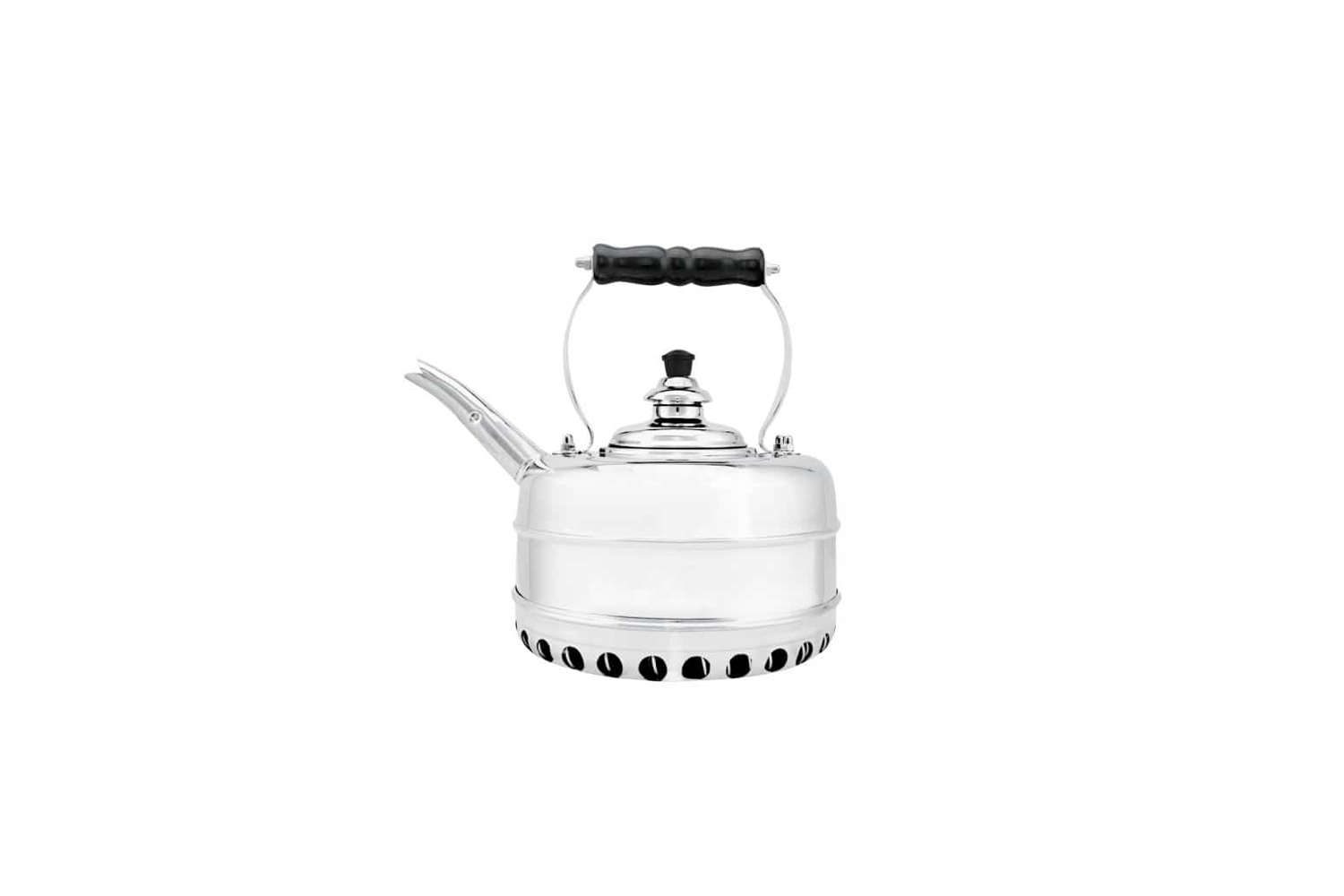
If a regular tea kettle is the kitchen’s reliable background actor, the Richmond No. 4 Chrome Gas Tea Kettle is the impossibly well-dressed lead who somehow knows how to hit the light just right. It is not a gadgety, beep-happy, app-connected piece of countertop tech. It is a handcrafted stovetop kettle built for people who still enjoy the small ceremony of heating water, hearing a whistle, and pretending for a moment that life is elegant and not just a blur of emails and laundry.
The Richmond No. 4 sits in a very specific lane. It is a chrome-plated copper whistling kettle made for gas stovetops, with a 1.7-liter capacity, a coil base designed to improve heat distribution, a classic silhouette, and the kind of polished finish that can make a stove look far more sophisticated than it has any right to. In a market full of practical kettles, this one aims for practical beauty. That is a dangerous combination for wallets everywhere.
And yet, the appeal is not just visual. Good kettle reviews from major American food and home publications keep circling the same qualities: heating speed, smooth pouring, durability, ease of cleaning, and whether a kettle is attractive enough to leave on the stove instead of hiding it in a cabinet like an awkward wedding gift. The Richmond No. 4 checks many of those boxes in a way that feels old-school rather than trendy. It does not try to be futuristic. It tries to be worth keeping.
What the Richmond No. 4 Actually Is
The Richmond No. 4 Chrome Gas Tea Kettle is best understood as a specialty stovetop kettle for people who value craftsmanship as much as function. Product descriptions in the U.S. market present it as a handcrafted kettle made from solid copper, finished in bright mirrored chrome, and fitted with a gas-friendly coil base. It also features an ebonized beech wood handle, a melodic whistling lid, decorative brass fittings, and a hand-applied pure tin lining. That combination gives it a distinctly heritage feel, but the polished chrome keeps it from drifting into full museum-piece territory.
The 1.7-liter capacity is especially practical. It is roomy enough for several mugs of tea, a French press setup, or a round of pour-over coffee when guests wander into the kitchen and suddenly develop opinions. At the same time, it is not so massive that it becomes awkward to lift, store, or fill. It lives in the sweet spot where daily use still feels easy.
Why the Gas-Specific Design Matters
This is not just another pretty kettle with a whistle slapped on for nostalgia points. The Richmond No. 4 was designed specifically for gas stovetops, and that matters. The coil bottom is there to improve heat distribution, which helps explain why this model has a stronger reputation among people who actually use a flame rather than simply admire one. Gas already gives you fast, responsive heat; a copper-based kettle designed to work with that heat can make the whole process feel quicker and more controlled.
Copper has long been valued in cookware because it responds quickly to heat and distributes warmth more evenly than many other materials. In plain English, that means less waiting around and less chance that one part of the vessel is doing all the work while another part is just there for moral support. For a tea kettle, that responsiveness adds up to a more satisfying boil and a more natural fit for daily use.
Why This Kettle Stands Out in a Crowded Market
Let’s be honest: the tea kettle market is crowded with decent options. There are stainless steel workhorses, colorful enamel classics, sleek electric models, goosenecks for the coffee purists, and budget kettles that quietly do their job without ever asking for compliments. So why does the Richmond No. 4 keep drawing attention?
First, it looks expensive because, well, it is. But unlike plenty of overpriced kitchen objects, it also looks intentional. The chrome finish gives it a mirrored, jewel-like quality. The shape feels timeless rather than trendy. The wood handle softens the metal-heavy design so it looks warm instead of cold. It is the kind of kettle that can sit out all day and make the whole room seem more considered. A lot of modern kettles are functional. Far fewer are genuinely display-worthy.
Second, it leans into the ritual of stovetop brewing. Many top-rated stovetop kettles earn praise because they make boiling water feel like a pleasant kitchen moment instead of a chore. The Richmond No. 4 plays that role beautifully. The whistle is part signal, part ceremony. The polished body reflects the room. The act of filling it, setting it on the burner, and waiting for that telltale sound is a reminder that not every useful thing has to be invisible.
It Balances Performance and Personality
That balance is harder to find than it sounds. Some kettles are efficient but forgettable. Others are gorgeous but delicate enough to make you nervous every time you move them. The Richmond No. 4 aims for the middle: a kettle that performs well on gas and still has the sort of presence that makes guests ask, “Where did you get that?” That is a very nice question to hear in a kitchen. Much nicer than, “Why is the smoke alarm going off?”
It also benefits from being a whistling kettle instead of a silent one. A whistle is not just charming. It is useful. It gives you a clear cue without forcing you to hover over the stove like a suspicious detective. That may sound simple, but in real life it matters, especially when you are juggling breakfast, a phone call, and the fact that you still have not answered that text from three days ago.
How It Compares to Modern Tea Kettle Expectations
Today’s best kettles are often judged on a few familiar criteria: how quickly they heat, how well they pour, how comfortable they feel to use, how easy they are to clean, and whether they fit into the user’s daily routine. The Richmond No. 4 is strongest for buyers who prioritize stovetop use, visual design, and material quality over modern convenience features like variable temperature control or automatic shutoff.
So no, this is not the best choice for someone who wants a one-touch electric kettle for office speed and sleepy 6 a.m. efficiency. It is also not trying to be the best gooseneck for precision coffee nerds who measure bloom time like it is a science fair project. The Richmond No. 4 is for someone who wants a classic stovetop kettle that feels substantial, heats well on gas, and adds genuine character to the kitchen.
That is an important distinction. Buying this kettle is not just buying a water-boiling tool. It is choosing a type of kitchen experience. Some people want maximum convenience. Others want a little tactile pleasure in the middle of an ordinary day. The Richmond No. 4 clearly belongs to the second camp.
What Buyers Should Know Before Spending the Money
This is the point in the article where common sense clears its throat. The Richmond No. 4 is beautiful, but it is not a carefree, toss-it-around kettle. If you want something cheap, dishwasher-friendly, and emotionally unbothered by rough treatment, this is not your match. Copper-based, hand-finished kettles require more respect than a bargain-bin stainless steel model that considers scratches a personality trait.
Its finish deserves soft handling. Its materials reward proper care. And the price means expectations will be high. That is not necessarily a problem, but it does mean you should buy it because you genuinely want the experience and the craftsmanship, not because you got hypnotized by a polished product photo at midnight.
Care Is More Specific Than With Standard Kettles
This is one of the most important details. Many mainstream tea kettle cleaning guides in the United States recommend descaling with vinegar or lemon. That is perfectly normal advice for many kettles. But Richmond’s care instructions take a different approach: do not use acidic descalers such as vinegar or lemon juice on the pure tin lining. That is a big deal because it means the usual internet cleaning shortcut is not the right move here.
Instead, this kettle asks for gentler treatment. The brand’s care notes recommend purified or balanced drinking water to reduce limescale buildup, caution against filling a hot kettle with cold water, and advise avoiding abrasive cleaners altogether. Medium to medium-high heat is recommended, and heating the kettle empty is a firm no. In other words, the Richmond No. 4 rewards thoughtful use. It is not high-maintenance in a dramatic way; it just expects better manners.
Best Ways to Use the Richmond No. 4 in Everyday Life
The obvious use is tea, of course, but this kettle earns its keep in more ways than one. It is great for French press coffee, pour-over setups that do not require a gooseneck, instant oatmeal, broth cups, ramen emergencies, and speeding up recipes that call for hot water. A good stovetop kettle often becomes one of the most-used items in a kitchen simply because hot water solves more problems than people think.
Because it is so visually striking, it also works well in open kitchens where appliances are part of the decor. If you are the kind of person who wants every object on the stovetop to contribute to the room rather than distract from it, the Richmond No. 4 has obvious appeal. It does not need to be hidden away. It earns counter visibility.
And for anyone who enjoys hosting, a kettle like this adds something extra to the room. There is a difference between making tea with a forgettable pot and making tea with something that looks like it has a backstory. The second one tends to make even a simple cup feel more special. That may not be measurable in a lab, but it is measurable in vibes, and the vibes here are excellent.
Who Should Buy the Richmond No. 4 Chrome Gas Tea Kettle
This kettle makes the most sense for a few specific kinds of buyers. First, it is ideal for people with gas stovetops who actually want a gas-optimized kettle rather than a one-size-fits-all design. Second, it is a strong choice for anyone who values handcrafted kitchenware and does not mind putting in a little extra care. Third, it is perfect for style-conscious home cooks who want something functional that also acts as visual punctuation in the kitchen.
It is also a smart gift for the person who already has the basics and now wants fewer, better things. Not everyone needs a luxury kettle. But for the right person, a thoughtfully made one can become part of their daily rhythm for years. That is a far more satisfying gift than another novelty mug with a joke that stopped being funny in 2019.
On the other hand, if your priority is low price, zero-maintenance ownership, or exact digital temperature control, you will probably be happier with another style of kettle. The Richmond No. 4 is not trying to win the convenience Olympics. It is trying to be beautiful, durable, and deeply enjoyable to use on the right stove in the right kitchen.
Experience: Living With the Richmond No. 4 Chrome Gas Tea Kettle
There is something quietly satisfying about living with a kettle that feels like a real object rather than a temporary appliance. The Richmond No. 4 Chrome Gas Tea Kettle changes the mood of a kitchen before it even boils a drop of water. In the morning, the mirrored finish catches light from the window and throws it back into the room in a way that makes the counter look cleaner and the day look more organized than it probably is. That alone is a small miracle.
Using it becomes part of a rhythm. You fill it, set it over the flame, and hear the low buildup toward the whistle. Unlike an electric kettle that often feels purely transactional, this one creates a few extra beats in the routine. You notice the handle. You notice the lid. You notice the sound. You become just a little more present, which is not a bad trade for the extra minute or two it may ask of you. The process feels less like “boiling water” and more like “beginning the morning properly,” which sounds dramatic until you try it.
It also changes how guests respond to the kitchen. People comment on it. They ask about it. They assume you are more refined than you probably are, which is one of the overlooked benefits of excellent cookware. A chrome kettle with a classic shape sends a very different message from a scorched old pot you found in the back of a cabinet. One says, “I appreciate beautiful daily tools.” The other says, “I survive on caffeine and luck.”
Over time, the experience becomes less about novelty and more about attachment. You start reaching for it automatically when making tea in the afternoon or hot water for a late-night cup of herbal tea. It becomes part of your kitchen scenery, but in the best way: familiar, useful, and oddly reassuring. The whistle becomes one of those household sounds that marks a pause in the day. Not loud enough to feel chaotic, just clear enough to pull you back into the room.
Of course, ownership is not completely carefree. You do have to respect the finish and pay attention to care instructions. This is not a kettle for careless scrubbing or mystery cleaning shortcuts. But for many people, that is part of the pleasure. Caring for a well-made object can feel less like a burden and more like a reminder that some things are worth maintaining. In a world full of disposable products, that feels refreshing.
What really lingers, though, is the way the Richmond No. 4 makes ordinary tasks feel a little elevated. A quick mug of tea after work feels more intentional. Making hot water for guests feels more welcoming. Even leaving the kettle on the stove when it is not in use feels right, because it contributes something visually instead of just occupying space. That is the difference between a kettle you own and a kettle you enjoy. The Richmond No. 4 clearly aims for the second category, and for the right buyer, it gets there with style to spare.
Final Verdict
The Richmond No. 4 Chrome Gas Tea Kettle is not for everyone, and that is exactly why it is appealing. It is a handcrafted, gas-focused, chrome-plated copper kettle built for people who care about materials, design, and the daily ritual of making hot drinks. It stands out because it combines real stovetop function with a showpiece look that many kettles never achieve.
Its strongest selling points are its gas-stove-friendly design, handsome 1.7-liter form, whistle, and undeniable kitchen presence. Its main trade-offs are price and the need for more thoughtful care, especially because its tin-lined construction should not be treated like an average kettle that can be descaled with any random vinegar trick from the internet. If that sounds like too much work, there are simpler kettles available. If that sounds reasonable, the Richmond No. 4 may feel like one of those rare purchases that improves both the function and the personality of your kitchen.
In the end, this kettle succeeds because it understands something many modern products forget: usefulness and beauty do not have to be enemies. Sometimes the best kitchen tool is the one that does its job well, looks fantastic while doing it, and makes you strangely happy every time it whistles.