
Note: This article is written for educational SEO content and is based on real U.S. safety history synthesized from reputable public sources, including OSHA, FDA, CPSC, CDC, NHTSA, MSHA, NFPA, and historical public-health records.
Safety laws rarely arrive wearing a cape. More often, they show up late, carrying a clipboard, after something terrible has already happened. That is the uncomfortable truth behind many of the rules Americans now take for granted: unlocked exits, seat belts, child-resistant caps, drug testing, workplace protections, mine inspections, and refrigerators that can be opened from the inside. None of these ideas appeared because society suddenly had a tidy Monday-morning meeting and said, “Let’s be sensible.” Usually, people had to suffer first. Then the public got angry. Then lawmakers discovered urgency, which is government-speak for “we probably should have done this years ago.”
The gruesome origins of safety laws reveal a pattern: disaster exposes a hidden danger, investigators uncover preventable failures, newspapers amplify public outrage, and eventually a law turns “common sense” into a requirement. In other words, regulations are often written in hindsight. They are receipts from the past, stamped with grief, reform, and the occasional bureaucratic coffee stain.
Below are seven safety laws and regulations with dark beginnings. The point is not to sensationalize tragedy, but to understand why these rules exist. A locked door, an untested medicine, a missing seat belt, or a simple bottle cap can become the difference between an ordinary day and a national lesson learned the hard way.
1. Workplace Fire Safety Laws After the Triangle Shirtwaist Factory Fire
The tragedy that made locked exits impossible to ignore
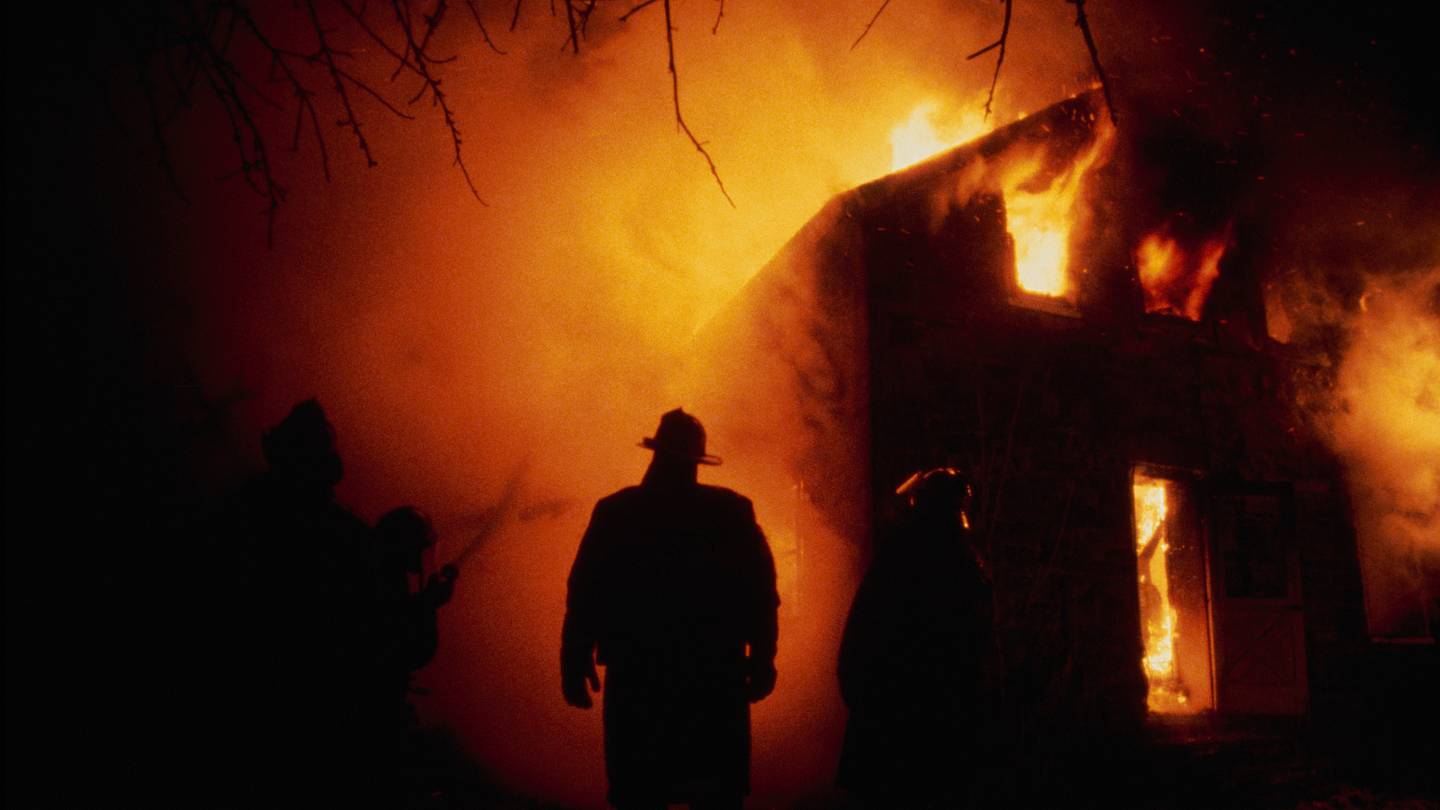
In 1911, the Triangle Shirtwaist Factory fire in New York City killed 146 garment workers, many of them young immigrant women. The factory occupied upper floors of a building, and workers faced blocked or locked exits, inadequate fire escape options, and crowded conditions. The fire became one of the most infamous workplace disasters in American history because so many deaths were preventable.
Before Triangle, industrial safety was often treated as a business inconvenience. Employers worried about theft, productivity, and cost. Workers worried about getting through the day. Fire drills, unlocked exits, clearly marked escape routes, and proper building inspections were not always priorities. After Triangle, they could no longer be dismissed as fussy details.
The outrage helped drive major reforms in New York labor law and building safety. It also influenced the broader movement toward modern workplace protections, including fire prevention standards, exit requirements, factory inspections, and eventually the philosophy behind federal occupational safety. The fire also shaped the development of life safety codes, which focus on getting people out of buildings quickly during emergencies.
The lasting lesson is brutally simple: an exit is not an exit if workers cannot use it. Today, when a workplace has fire drills, illuminated exit signs, occupancy limits, sprinkler systems, and doors that cannot simply be chained shut, part of that safety culture traces back to the Triangle disaster. It is not glamorous. It is not dramatic. It is a door that opens when it must. That is exactly the point.
2. Fire Exit and Public Assembly Laws After the Cocoanut Grove Nightclub Fire
When nightlife became a fire-code wake-up call
On November 28, 1942, a fire at the Cocoanut Grove nightclub in Boston killed 492 people. The venue was crowded, exits were hard to access, and the design of doors and decorations made escape difficult. The disaster became a turning point for fire safety in restaurants, theaters, clubs, and other public gathering places.
Before modern fire codes, many entertainment venues were designed more for atmosphere than evacuation. Owners loved decorative materials, dim lighting, winding layouts, and dramatic entrances. Unfortunately, fire does not care about ambiance. It does not pause politely because the wallpaper is tropical-themed.
The Cocoanut Grove fire pushed lawmakers and safety organizations to strengthen rules for public assembly spaces. Reforms focused on outward-opening exit doors, visible exit signs, emergency lighting, restrictions on flammable decorations, occupancy limits, and the requirement that emergency exits remain usable. Revolving doors, which could become choke points during panic, were no longer acceptable as the only practical way out.
This disaster also advanced medical understanding of emergency burn care and mass-casualty response, but its most familiar legacy is the modern fire exit. The next time you see an exit sign glowing above a door in a movie theater or restaurant, remember: that little rectangle is not decor. It is a memorial disguised as a building feature.
3. Drug Safety Laws After the Elixir Sulfanilamide Disaster
The medicine that forced America to demand proof of safety
In 1937, a Tennessee drug company sold Elixir Sulfanilamide, a liquid version of a drug used to treat infections. The problem was not the active medicine itself, but the solvent used to make it drinkable. The company used diethylene glycol, a toxic chemical, without proper safety testing. More than 100 people died, many of them children.
At the time, federal law did not require drug manufacturers to prove a medicine was safe before selling it. The government could act against misbranding or false claims, but it had limited power to stop a dangerous product before it reached families. That gap in the law became painfully obvious.
Public outrage helped lead to the Federal Food, Drug, and Cosmetic Act of 1938. This law gave the FDA much stronger authority and required manufacturers to demonstrate the safety of new drugs before marketing them. It also expanded federal oversight of foods, drugs, cosmetics, labeling, factory inspections, and legal enforcement.
The Elixir Sulfanilamide disaster changed the basic expectation of medicine in America. A product could no longer be sold simply because a company said it was useful, tasty, or profitable. Safety had to come first. It sounds obvious now, but obvious ideas sometimes need a disaster to become law. The grim origin of modern drug approval is a reminder that “raspberry-flavored” is not the same thing as safe. Marketing may sell the bottle; testing protects the patient.
4. The Refrigerator Safety Act After Children Were Trapped Inside Old Appliances
Why modern refrigerator doors open from the inside
Modern refrigerators use magnetic seals and can be pushed open from the inside. That feature seems so ordinary that most people never think about it. But older refrigerators often had mechanical latches that sealed tightly and could only be opened from the outside. When discarded appliances were left in yards, alleys, garages, or vacant lots, children sometimes climbed inside while playing and became trapped.
By the 1950s, refrigerator entrapment had become a recognized public danger. Public-safety campaigns urged people to remove refrigerator doors before disposal, but voluntary warnings were not enough. Children are excellent at hide-and-seek and famously terrible at reading appliance safety bulletins.
Congress passed the Refrigerator Safety Act in 1956. The law required household refrigerators to be designed so the door could be opened from the inside. It also restricted the sale or transport of refrigerators that did not meet the safety standard. Over time, magnetic door closures replaced dangerous latch systems.
The law is a powerful example of design-based safety. Instead of relying only on parents, neighbors, or scrap dealers to notice every abandoned appliance, the law changed the product itself. The safest accident is the one engineered out of existence. A refrigerator door that opens with a push is not just convenient when your hands are full of leftovers. It is the result of a legal response to a hazard most people today never have to fear.
5. Child-Resistant Packaging Laws After Accidental Poisonings
The cap that became a tiny safety guard
Child-resistant packaging is one of the most familiar safety features in American homes. It is also one of the most complained-about, especially when an adult is trying to open a medicine bottle at 2 a.m. with a headache and the cap appears to have been designed by a puzzle-loving raccoon.
But the reason for those push-and-turn caps is serious. In the mid-20th century, accidental poisonings among young children were a major public-health concern. Medications, cleaning products, and other household chemicals were often stored in containers that children could open easily. Bright colors, sweet flavors, and ordinary-looking bottles made the danger worse.
In 1970, Congress passed the Poison Prevention Packaging Act. The law required child-resistant packaging for many hazardous household substances, including many prescription drugs and certain over-the-counter products. The goal was not to make containers impossible to open. It was to make them significantly difficult for children under five to open within a reasonable time, while still usable by adults.
This law shows how safety often lives in small frustrations. That stubborn cap on a medicine bottle may slow you down, but it can slow down a curious toddler much more. It buys time. And in poison prevention, time is often the difference between a scare and a tragedy. The cap is not being rude. It is doing its job.
6. Mine Safety Laws After the Monongah Mine Disaster
The explosion that forced federal attention underground
Mining has always carried risk, but early American coal mining was especially dangerous. Explosions, collapses, poor ventilation, coal dust, methane, and weak oversight created deadly working conditions. On December 6, 1907, the Monongah mine disaster in West Virginia killed 362 miners, making it the deadliest mining disaster in U.S. history.
The disaster helped push Congress to create the U.S. Bureau of Mines in 1910. The bureau was tasked with studying mine safety, investigating disasters, improving rescue methods, and reducing explosions. Later reforms, including the Federal Coal Mine Health and Safety Act of 1969 and the Federal Mine Safety and Health Act of 1977, strengthened inspections, enforcement, health protections, and safety standards. The 1977 law created the Mine Safety and Health Administration, better known as MSHA.
Mine safety law grew from the recognition that workers should not have to gamble their lives against dust, gas, and darkness every time they clock in. The law also marked a shift in public thinking. Mine disasters were not acts of fate. They were events that could be studied, prevented, inspected, and regulated.
The Monongah disaster remains a haunting example of why safety oversight matters in dangerous industries. A mine is not a normal workplace with worse lighting. It is an environment where one ignored hazard can affect hundreds of lives at once. Mine safety laws are written for the workers underground, but they are also written for the families waiting above.
7. Auto Safety and Seat Belt Laws After Rising Crash Deaths
How cars went from stylish machines to regulated safety systems
For much of the early automobile age, car safety was treated as a driver problem. If crashes happened, the assumption was often that drivers were careless. Vehicle design received less scrutiny. Dashboards were hard, steering columns were unforgiving, windshields could shatter dangerously, and seat belts were not always standard equipment. Cars looked sleek, but in a crash, sleek was not enough.
By the 1960s, rising highway deaths and consumer advocacy changed the conversation. Ralph Nader’s 1965 book Unsafe at Any Speed criticized the auto industry’s resistance to safety improvements and helped bring national attention to vehicle design. In 1966, Congress passed the National Traffic and Motor Vehicle Safety Act and the Highway Safety Act, giving the federal government authority to set motor vehicle safety standards.
These laws helped lead to Federal Motor Vehicle Safety Standards covering seat belts, windshields, braking systems, tires, head restraints, crash protection, and many other features. Later, state seat belt laws increased actual belt use. New York enacted the first state mandatory seat belt law in 1984, and other states followed.
The core lesson is that safety cannot depend only on perfect human behavior. People get distracted. Roads get slick. Tires fail. Other drivers make bad decisions. Vehicle safety laws recognize that crashes will happen and that design can reduce the harm. Seat belts, airbags, crumple zones, and safety glass are not signs of pessimism. They are signs that engineers and lawmakers finally admitted physics always gets a vote.
What These Safety Laws Have in Common
These seven examples come from different worlds: factories, nightclubs, pharmacies, kitchens, coal mines, medicine cabinets, and highways. Yet they share a common structure. First, a danger becomes visible through tragedy. Then investigators uncover patterns: blocked exits, untested ingredients, poor design, weak oversight, missing warnings, or preventable exposure. Finally, the law changes so that the same mistake becomes harder to repeat.
That is why safety laws can feel annoying in daily life but profound in historical context. Occupancy limits may seem strict until you learn what happens when too many people are trapped in a crowded room. Drug approval may seem slow until you remember what happened when medicines reached the market without safety testing. Seat belts may feel routine until a crash turns routine into survival.
Good safety law is not about removing all risk from life. That would be impossible, and frankly, very boring. It is about removing risks that are unreasonable, invisible, or preventable. It is about making sure a child cannot easily open a bottle of toxic pills, a worker is not locked inside a burning factory, a miner is not sent underground without enforceable protections, and a car is not sold as though crash physics are merely a personal opinion.
Real-Life Experiences and Reflections Connected to These Safety Laws
Most people experience the legacy of these laws in tiny, forgettable moments. You push open a clearly marked exit door at a restaurant. You buckle your seat belt before driving to the store. You twist a medicine cap, fail once, mutter something unprintable, then try again. You toss an old appliance responsibly instead of leaving it where kids might play. None of these actions feel historic. They feel normal. That is the strange success of safety law: when it works, it becomes invisible.
Think about walking into a crowded theater. You probably notice the screen, the seats, the popcorn smell, and the person in front of you who somehow brought a crinkly snack bag the size of a weather balloon. You probably do not notice the exit signs, emergency lighting, fire-rated materials, sprinkler systems, or occupancy limits. Yet all of those features are part of a safety ecosystem shaped by past disasters. The building is quietly making promises: if something goes wrong, you will have a path out.
The same is true in the car. Buckling a seat belt takes two seconds. Most drivers do it automatically, without a heroic soundtrack. But that click connects you to decades of crash research, public-health campaigns, federal standards, state laws, and hard lessons from roads where vehicle design once lagged behind reality. The belt is humble technology. It does not look impressive. It simply holds the human body where it has the best chance of surviving sudden force. That is not glamorous, but neither is gravity.
Parents and caregivers experience these laws even more directly. Child-resistant caps, warning labels, cabinet locks, car seats, and product recalls can feel like an endless obstacle course. Still, these protections are built around one honest truth: children explore first and understand later. A toddler does not know the difference between candy and medicine, between a toy chest and an entrapment hazard, or between a safe hiding place and a dangerous appliance. Safety design gives adults backup in a world where curiosity moves faster than caution.
Workers also live inside the legacy of safety reform. Fire drills, protective equipment, hazard communication, ventilation rules, machine guarding, and inspection rights may feel routine now, but they represent a major shift in power. Early industrial workers often had little control over dangerous conditions. Modern safety laws say, at least in principle, that earning a paycheck should not require accepting preventable danger as part of the bargain. A job can be hard without being reckless. A workplace can be productive without being a trap.
These experiences show why safety laws matter beyond the courtroom or the history textbook. They shape ordinary behavior. They create habits. They make safe choices easier and dangerous shortcuts harder. They also remind us that “common sense” is often just history we have forgotten. People call safety rules obvious only after someone else has paid the price for discovering them.
Of course, laws are not magic spells. A rule on paper does not unlock a door, inspect a mine, test a medicine, or buckle a seat belt by itself. Safety depends on enforcement, design, education, and culture. It also depends on ordinary people refusing to treat warnings as decorative suggestions. The best law can still fail if ignored, underfunded, or treated as a box to check instead of a life to protect.
The practical takeaway is simple: when a safety rule seems irritating, ask what happened before the rule existed. That question changes everything. The child-resistant cap becomes a shield. The exit sign becomes a promise. The seat belt becomes a quiet bodyguard. The drug label becomes a layer of accountability. The workplace inspection becomes a voice for someone who might otherwise be told to keep working and keep quiet.
The gruesome origins of safety laws are not just old stories. They are reminders that prevention has a memory. Every modern safety feature carries a lesson from someone else’s worst day. Respecting those lessons is one of the easiest ways to make sure the same tragedy does not get a sequel.
Conclusion
The dark history behind America’s safety laws proves that regulation is often society’s way of saying, “Never again,” and then trying to make that promise enforceable. The Triangle Shirtwaist fire changed workplace safety. Cocoanut Grove reshaped public fire codes. Elixir Sulfanilamide transformed drug regulation. Refrigerator deaths changed appliance design. Child poisonings led to safer packaging. Monongah pushed mine safety into federal focus. Rising car crash deaths forced vehicle safety standards into the national spotlight.
These laws were born from pain, but their purpose is prevention. They remind us that safety is not a luxury, a nuisance, or a boring paragraph in a rulebook. It is accumulated wisdom. Sometimes it looks like a glowing exit sign. Sometimes it looks like a stubborn bottle cap. Sometimes it looks like a seat belt click before the engine starts. Small? Yes. Powerful? Absolutely. History may be grim, but the lesson is hopeful: when society pays attention, tragedy can become protection.
SEO Tags