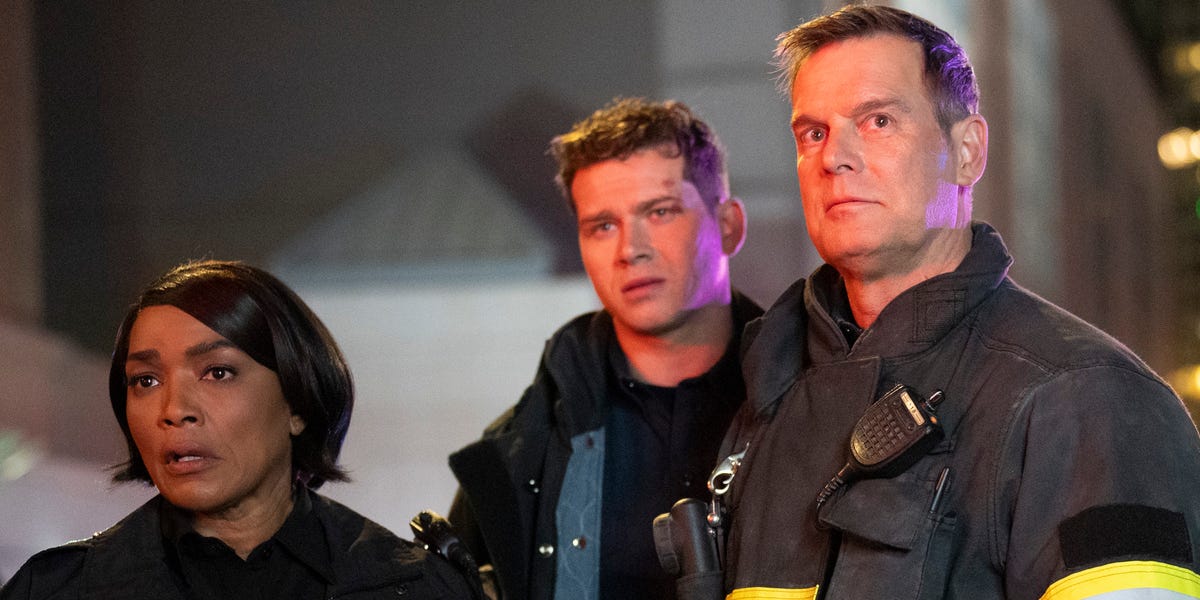

The 9-1-1 fandom has survived earthquakes, cruise ship disasters, lightning strikes, emotional cliffhangers, near-death fake-outs, and enough Buck-related anxiety to power a small city. But apparently, one shiny new TV promo for 9-1-1: Nashville was enough to make fans collectively sit up, squint at the screen, and say: “Excuse me, read the room.”
ABC’s first promo push for 9-1-1: Nashville, the newest spinoff in the wildly dramatic first-responder franchise, should have been simple. New city. New firehouse. New characters. Big emergencies. A little country music sparkle because, yes, Nashville. Instead, the promo landed in the middle of an emotional fandom storm, with many longtime 9-1-1 viewers still furious over the death of Captain Bobby Nash, played by Peter Krause.
The result? A marketing moment that was supposed to create excitement became a digital complaint desk with flashing lights. Fans were not simply rejecting a new show. They were reacting to grief, franchise fatigue, timing, loyalty to the original cast, and the fear that ABC was moving on before the audience was ready to move even one emotional inch.
The Short Version: Fans Are Still Mourning Bobby Nash
To understand the anger over the 9-1-1: Nashville TV promo, you have to start with Bobby Nash. Bobby was not just another character in the original 9-1-1. He was the emotional center of Station 118, the calm voice in chaos, the leader who could walk into a disaster zone and somehow make everyone feel like dinner would still be on the table by 7 p.m.
When 9-1-1 killed Bobby in Season 8, the reaction was immediate and intense. The show framed his death as a heroic sacrifice, but many fans felt the storyline was rushed, painful, and unnecessary. For a character who had carried so much emotional weight across the series, some viewers believed his sendoff did not give him, Athena, or the 118 family enough room to breathe.
So when the franchise began promoting 9-1-1: Nashville, many fans saw the timing as awkward at best and tone-deaf at worst. From their perspective, the original series had just taken away one of its most beloved characters, and now the network was asking them to clap politely for a new firehouse. That is a tough sales pitch. It is like taking away someone’s favorite coffee mug and immediately saying, “Great news, we bought a whole new kitchen.”
What Is ‘9-1-1: Nashville’?
9-1-1: Nashville is a new ABC spinoff in the 9-1-1 universe, following the original Los Angeles-based drama and the Texas-set 9-1-1: Lone Star. The Nashville version brings the franchise to Music City, mixing high-stakes emergency rescues with family drama, Southern atmosphere, and a cast led by Chris O’Donnell.
The series features O’Donnell as Captain Don Hart, a veteran firefighter connected to Station 113. The cast also includes Jessica Capshaw, Kimberly Williams-Paisley, LeAnn Rimes, Michael Provost, Hailey Kilgore, Juani Feliz, and Hunter McVey. Like the original 9-1-1, the show is built around first responders, dispatchers, personal secrets, dangerous calls, and the kind of emergencies that make viewers wonder whether the writers have a secret wheel labeled “most chaotic thing possible.”
On paper, the concept makes sense. The 9-1-1 brand is built for expansion. Different cities mean different emergencies, different cultures, and different firehouse dynamics. Nashville gives the franchise a recognizable identity: music, family legacies, class tension, celebrity-adjacent drama, and big emotional rescue stories.
The problem is not that 9-1-1: Nashville exists. The problem is that it arrived in front of an audience already carrying emotional baggage from the parent show.
Why the Promo Hit a Nerve
1. Fans Felt the Franchise Was Moving Too Fast
One major reason 9-1-1 fans were furious over the 9-1-1: Nashville promo is simple: the timing felt too soon. Bobby’s death was still fresh in the fandom conversation. Viewers were still debating whether the show had made a mistake. Many were still hoping for a twist, a dream sequence, a coma reveal, a secret twin, a soap-opera miracle, or literally anything that would undo the loss.
Then came the promotional energy for a new spinoff. To some fans, it felt as if the network was asking them to redirect their attention instead of acknowledging the emotional damage. In fandom terms, that is risky. Dedicated viewers do not experience major character deaths as disposable plot points. They experience them like an emotional group project where everyone got assigned heartbreak.
2. Bobby Was More Than a Character
Bobby Nash represented stability. He was a mentor to Buck, Chimney, Hen, Eddie, and the rest of the 118. He was Athena’s partner, not just romantically but spiritually. Their relationship was one of the show’s strongest emotional anchors, and fans invested years in that bond.
When a show removes that kind of figure, it does not just change the cast list. It changes the emotional architecture. Viewers begin asking: Who leads now? What happens to Athena? What is the 118 without Bobby? Can the show still feel like itself?
That is why a cheerful or dramatic promo for a new spinoff could feel jarring. It was not competing with a normal episode. It was competing with a fandom funeral.
3. The Original Show Still Has Unresolved Emotional Business
Another reason fans pushed back is that the original 9-1-1 still had major emotional threads to process. After Bobby’s death, viewers wanted space for grief, rebuilding, and meaningful character development. They wanted to see Athena’s journey handled with care. They wanted to see the 118 deal with losing their captain and father figure.
When a franchise expands at the same time its flagship series is dealing with a massive loss, fans may interpret the expansion as a distraction. They do not want to feel that a new show is being offered as a replacement. Even if that is not the network’s intention, perception matters. And on social media, perception can turn into a five-alarm fire before anyone has finished watching the promo.
Was the Anger Really About ‘9-1-1: Nashville’?
Not entirely. That is the important nuance. Many angry comments were aimed at the promo, but the deeper frustration was about the overall direction of the 9-1-1 franchise.
Some fans were upset that 9-1-1: Lone Star had ended, leaving them protective of the franchise’s previous spinoff. Others were upset that the original series had lost Bobby. Some were worried that ABC was focusing on brand expansion instead of protecting the emotional core of the flagship show. And some simply did not want to meet new characters while still grieving an old one.
That makes the backlash more complicated than “fans hate Nashville.” In fact, many viewers are open to a Nashville-set emergency drama. The city is rich with storytelling possibilities. Country music disasters, stadium emergencies, bachelorette-party chaos, severe weather, celebrity incidents, and family secrets all sound extremely 9-1-1-coded. The issue is not the setting. The issue is trust.
The ‘Read the Room’ Problem
The phrase “read the room” comes up often in fan reactions because it captures the emotional mismatch. A network sees a promo as marketing. Fans see it as a message. When viewers are grieving a beloved character, a promotional post for the next franchise chapter can accidentally communicate, “Anyway, here’s the new thing.”
That may not be fair to the new cast or creative team, but fandom is rarely a courtroom. It is more like a group chat with sirens. Emotions move fast, jokes get sharp, and one awkward promotional beat can become symbolic of every unresolved complaint.
For 9-1-1 fans, Bobby’s death was not just a plot twist. It was a test of whether the show understood what made its audience care. The 9-1-1: Nashville promo happened to arrive while many viewers were still grading that test with red pens.
Why Spinoffs Always Face Extra Pressure
Spinoffs have a difficult job. They must feel connected enough to attract existing fans but fresh enough to justify their own existence. If they copy the original too closely, fans call them unnecessary. If they feel too different, fans ask why the franchise name is attached. Congratulations, new show: your welcome basket includes impossible expectations.
9-1-1: Nashville faces that challenge with extra weight because the original 9-1-1 is not just a procedural. It is a character-driven comfort disaster machine. Viewers return for the emergencies, yes, but they stay for the found family. They care about Buck’s growth, Eddie’s emotional walls, Hen and Karen’s family, Chimney and Maddie’s resilience, Athena’s strength, and Bobby’s legacy.
A new firehouse has to earn that kind of attachment. It cannot simply inherit it. Fans may sample the show because it carries the 9-1-1 name, but they will only stay if the characters feel real, layered, and emotionally specific.
The Cast Is Not the Real Target
One thing worth emphasizing: much of the backlash is not about the performers. Chris O’Donnell, Jessica Capshaw, LeAnn Rimes, Kimberly Williams-Paisley, and the rest of the cast are stepping into a franchise with a loyal audience and a complicated mood. That is not their fault.
In fact, the cast may be one of the show’s strongest advantages. O’Donnell brings network-drama credibility. Capshaw has a built-in audience from Grey’s Anatomy. Rimes adds Nashville authenticity and musical star power. Williams-Paisley brings warmth and familiarity. The younger cast members give the show room to build new relationships and fan favorites.
The anger is more about franchise management than acting talent. Fans are asking whether ABC and the creative team understand why the original show worked. They want reassurance that 9-1-1: Nashville is an addition, not a replacement. They want the original series respected, not treated like a launchpad that can lose its emotional foundation and keep rolling like nothing happened.
Why Bobby Nash’s Death Still Dominates the Conversation
Bobby’s death continues to dominate fan reaction because he was woven into nearly every emotional layer of the original show. He was a captain, husband, mentor, survivor, and moral compass. His backstory involved guilt, recovery, faith, leadership, and second chances. That gave him a rare kind of emotional gravity.
When a character like that dies, the audience needs time to believe the story has a purpose beyond shock value. Some fans accepted the sacrifice as heroic. Others felt it was a creative mistake. Many landed somewhere in the middle: devastated, curious, and suspicious.
That suspicion matters. If fans believe a major character was removed for behind-the-scenes or franchise-management reasons, they may become less generous toward new projects. Every promo becomes evidence. Every scheduling decision becomes a clue. Every cheerful teaser feels like someone changing the subject at the worst possible moment.
Could ‘9-1-1: Nashville’ Still Win Fans Over?
Yes, absolutely. Fan anger can be loud, but it is not always permanent. Television history is full of spinoffs that arrived under skepticism and eventually built their own loyal audiences. The key is execution.
9-1-1: Nashville can win viewers over by doing three things well. First, it needs strong characters who are more than archetypes in turnout gear. Second, it needs emergencies that feel big, strange, emotional, and specific to Nashville. Third, it needs to respect the wider 9-1-1 universe without leaning too hard on nostalgia.
If the show delivers compelling rescues and messy but meaningful relationships, some skeptics may soften. Fans can be furious on Monday and emotionally attached by Thursday. That is the magic and danger of TV fandom. The door is often slammed, but rarely locked.
What ABC Can Learn From the Backlash
The backlash over the 9-1-1: Nashville TV promo offers a useful lesson for networks: timing is storytelling. Marketing does not exist outside the emotional world of the audience. When a franchise has just made a controversial creative choice, promotional material for a new installment will be judged through that lens.
ABC does not need to apologize for expanding a successful franchise. But it does need to understand that 9-1-1 fans are not casual passengers. They are emotionally buckled into the firetruck. They notice tone. They remember character arcs. They analyze captions. They treat promotional posts like evidence boards, minus the red string only because Instagram does not support it yet.
A smarter rollout would emphasize respect for Bobby’s legacy, clarity about the original show’s future, and confidence that Nashville is a new chapter rather than a shiny distraction. The audience does not need to be coddled, but it does need to feel heard.
Fan Experience: Watching a Promo Become a Fandom Wildfire
There is a particular experience that comes with being part of a passionate TV fandom. You do not just watch episodes. You live in the aftershocks. You check reactions after the credits. You read interviews looking for clues. You notice whether a cast member liked a post. You become, against your will, a part-time emotional detective.
That is why the reaction to the 9-1-1: Nashville promo felt so intense. For casual viewers, it was just a teaser for another ABC drama. For invested 9-1-1 fans, it landed in the middle of a much bigger emotional conversation. Bobby Nash had been a source of comfort for years. His death did not feel like a normal character exit. It felt like the show had removed one of its support beams and then asked everyone to admire the new wallpaper.
The experience of seeing that promo probably depended on where a viewer stood emotionally. Some fans may have thought, “Great, more emergencies, more chaos, more dramatic people making questionable life choices near firetrucks.” Others likely felt their stomach drop because they were not ready to associate the franchise with excitement yet. They were still in the phase of rewatching old Bobby scenes and pretending the writers might reverse time if enough people complained politely but firmly.
That emotional split is what makes the backlash interesting. It was not just negativity for sport. It was grief turning into criticism. Fans wanted to protect the version of 9-1-1 that had mattered to them. They wanted the original series to prove it still had a heart after Bobby. They wanted Athena’s pain to matter. They wanted the 118’s loss to shape the story instead of becoming a quick stepping stone to the next brand extension.
At the same time, there is also a familiar fandom contradiction at work. Many viewers who complain about a spinoff will still watch the premiere, partly out of curiosity and partly because ignoring a new chapter of a beloved universe is harder than it sounds. They may watch with arms crossed, snacks ready, and judgment fully charged. But they will watch. And if the Nashville crew delivers one great rescue, one emotional monologue, or one character dynamic that sparks interest, some of that anger may turn into cautious investment.
That is the strange power of franchise television. Fans can be furious because they care. The anger is not always a rejection; sometimes it is a demand for better storytelling. The 9-1-1: Nashville promo became a lightning rod because it arrived at the intersection of mourning, loyalty, suspicion, and curiosity. In other words, it was a very 9-1-1 kind of emergency: messy, emotional, loud, and impossible to ignore.
Conclusion: The Promo Was Only the Spark
The fury over the 9-1-1: Nashville TV promo is not really about one teaser. It is about everything the teaser represented. Fans were still angry over Bobby Nash’s death. They were protective of the original 9-1-1 cast. They were cautious after the end of 9-1-1: Lone Star. They were worried that franchise expansion might come at the expense of emotional storytelling.
That does not mean 9-1-1: Nashville is doomed. It means the show has to earn trust from an audience that has already been through a lot. If it respects the franchise’s emotional DNA while creating characters worth caring about, it can still become more than “the spinoff fans yelled about online.”
For now, the backlash proves one thing very clearly: 9-1-1 fans are not passive viewers. They are invested, vocal, dramatic, funny, wounded, and deeply loyal. Honestly, the franchise taught them well.