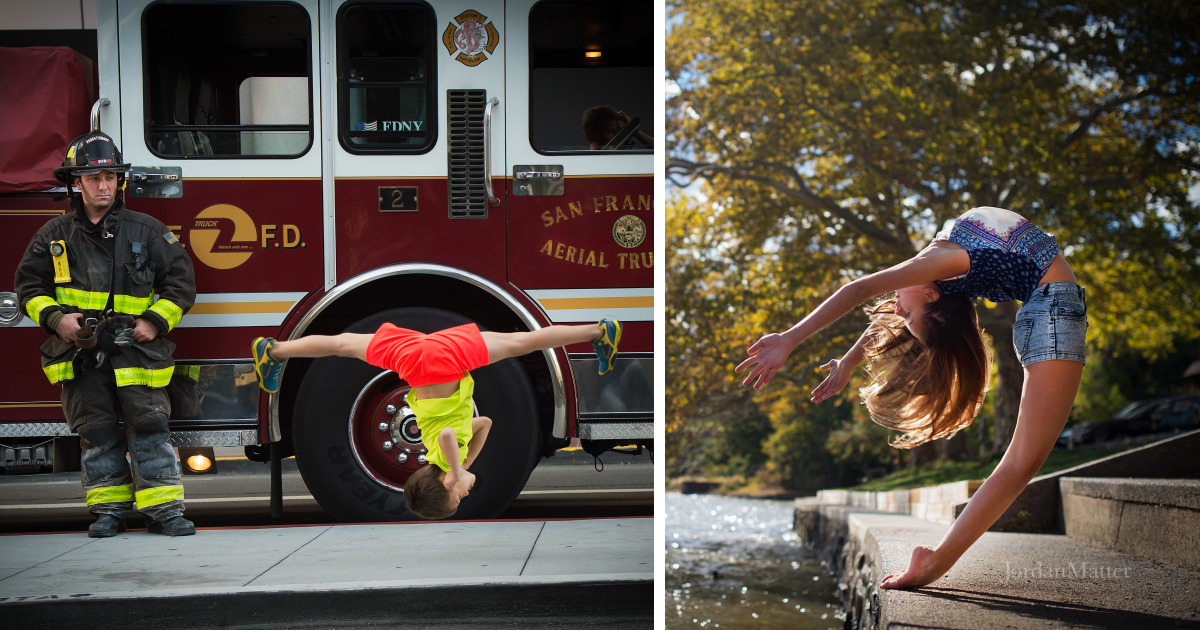

Some children need reminders to put their shoes on the correct feet. Others apparently use those same feet to execute backflips, lightning-fast tap combinations, robotic isolations, and ballet lines that make gravity look like a mild suggestion.
The young dancers featured below became memorable through television competitions, recitals, concerts, cultural performances, and viral videos. Their styles are wildly different, ranging from classical ballet and Irish dance to hip-hop, contemporary movement, tap, and spontaneous arena grooves. What connects them is the ability to make extremely difficult movement appear playful.
Of course, “effortless” is only what the audience sees. Behind a clean turn or perfectly timed pop is usually repetition, coaching, muscle control, musical awareness, and enough practice to make the family living room nervous. Here are 20 children whose remarkable dance moves made viewers pause, replay, and wonder whether youngsters secretly receive upgraded knees.
Why Young Dancers Can Look Almost Superhuman
Children often approach movement with curiosity rather than self-consciousness. They experiment, imitate, fall, laugh, and try again. That willingness to explore can help them develop rhythm, coordination, spatial awareness, and confidence.
Dance can also contribute to the physical activity children need. The Centers for Disease Control and Prevention recommends that children and adolescents ages 6 through 17 receive at least 60 minutes of moderate-to-vigorous activity each day. Dancing may provide aerobic exercise while movements involving running, jumping, lifting, or supporting body weight can strengthen bones and muscles.
Still, flexibility and enthusiasm are not substitutes for safe instruction. The American Academy of Pediatrics notes that repeated jumping, turning, pointing, arching, and intensive training may contribute to ankle injuries, back pain, tendinosis, or stress fractures. Advanced tricks should therefore be taught progressively, on suitable surfaces, with qualified supervision and adequate recovery time.
20 Children Who Made Difficult Dance Moves Look Easy
1. Anthony Madu Turned a Rainy Street Into a Ballet Stage
Anthony Mmesoma Madu captured international attention at age 11 when he was filmed practicing ballet barefoot in the rain outside his dance school in Nigeria. The setting was simple, but his controlled turns, extended lines, balance, and concentration transformed the wet pavement into a stage. The viral performance later helped him receive scholarship opportunities, proving that disciplined technique can shine without scenery, costumes, or even dry socks.
2. Ivanah Packed Grown-Up Musicality Into a Six-Year-Old Frame
South African dancer Ivanah became a viral sensation at six through videos filled with sharp accents, expressive gestures, and wonderfully confident footwork. What made her dancing special was not simply flexibility or speed. She understood how to respond to changes in the music, shifting from tiny controlled movements to larger bursts of energy without losing her personality. Her face performed almost as much choreography as her feet.
3. Johanna Colón Demanded “Respect” With Every Tap
Johanna Colón was only six when her dance-recital performance to Aretha Franklin’s “Respect” reached millions of viewers. She attacked the tap routine with comic timing, commanding facial expressions, and emphatic arm movements. The steps were entertaining, but her stage presence made the clip unforgettable. Johanna did not merely follow the choreography; she appeared to be negotiating a better contract with the audience.
4. Ty Cash Made Graduation Look Like a Music Video
Bronx dancer Ty Cash celebrated his middle-school graduation with an energetic routine performed in his cap and gown. Having started dancing at four, he displayed polished timing, rapid directional changes, and the relaxed confidence of someone completely at home inside the beat. Graduation robes are not exactly performance-friendly, yet Ty moved as though the outfit had been designed by a hip-hop choreographer.
5. Scarlett Rae Backflipped Down a Wedding Aisle
Nine-year-old competitive dancer Scarlett Rae gave one wedding a finale that no floral arrangement could possibly upstage. Serving as a flower girl, she exited the ceremony by completing several backflips down the aisle and sticking the final landing. She reportedly planned the memorable exit herself. Even more alarming to ordinary ankles, she performed the sequence while wearing sandals.
6. Joseph Became an Unofficial Ed Sheeran Backup Dancer
At six, a young concertgoer named Joseph went viral for dancing enthusiastically during an Ed Sheeran show. His movements combined joyful jumps, fast footwork, and fearless improvisation. There was no competition score, carefully lit stage, or serious dance faceonly a child responding naturally to live music. Sheeran’s team even joked that the singer might need another backup dancer.
7. Keegan Powers Danced His Way Onto a Pop Star’s Stage
Twelve-year-old Keegan Powers drew attention after enthusiastically dancing at a Dua Lipa concert. His confidence, rhythm, and full-body commitment helped the moment travel far beyond the arena. After publicly sharing his dream of dancing with Katy Perry, he was eventually invited onstage during one of her shows. His story illustrates how one uninhibited performance can turn a distant stage into a surprisingly reachable destination.
8. Kuanaoo Burke Practiced Hula Before Mastering Walking
Kuanaoo “Kua” Burke was only 18 months old when footage of him practicing hula with his parents’ hālau attracted millions of views. Barely steady on his feet, he eagerly copied stomping patterns and responded to the group around him. The moment was adorable, but it also represented cultural learning: movement, family, language, rhythm, and community being passed to a new generation.
9. A Tiny Raptors Fan Won the Timeout
During a Toronto Raptors game, a young fan spotted himself on the arena screen and immediately delivered a spontaneous routine of bouncing steps, fist pumps, and side-to-side movement. The crowd’s reaction grew as his confidence increased. He had no elaborate choreography and apparently needed none. The child turned a timeout into his personal tour stop and temporarily made professional basketball feel like the opening act.
10. Beckham Brought Pop-Star Drama to a School Talent Show
Eight-year-old Beckham and three friends created a Benson Boone-inspired performance for their school talent show in Oregon. Beckham committed fully to the pop-star character, helping the routine succeed through exaggerated gestures, jumps, timing, and fearless theatricality. Technical perfection matters in dance, but commitment matters too. A simple move performed halfway looks awkward; performed at 110 percent, it becomes entertainment.
11. Austin Proved Group Timing Is Harder Than It Looks
Austin was part of the same viral four-child talent-show act. Coordinating with friends requires listening, peripheral awareness, and the ability to recover when someone reaches a position a fraction early. The boys reportedly approached the performance with excitement rather than serious nerves, which may explain why the routine felt so natural. Their synchronization turned childhood enthusiasm into legitimate stagecraft.
12. Korver Used Confidence as a Choreographic Superpower
Korver’s contribution showed how much confidence affects the way an audience experiences movement. Young performers do not always possess years of technique, but they can project enormous energy. By matching the group’s gestures and embracing the playful concept, he helped create the illusion that four elementary-school friends had suddenly become a touring pop ensemble with a very early bedtime.
13. Clark Completed the Viral Talent-Show Quartet
Clark rounded out the Benson Boone-inspired group, whose performance accumulated hundreds of thousands of social-media views. The appeal was not based on one dangerous trick. It came from teamwork, comic presentation, musical enthusiasm, and the willingness to look gloriously dramatic in matching costumes. Sometimes the “impossible” move is simply performing in front of an entire school without becoming part of the curtain.
14. Sean Lew Turned Contemporary Dance Into Conversation
Sean Lew appeared alongside Kaycee Rice on the second season of NBC’s World of Dance. Their routines were praised by viewers for emotional storytelling, intricate partnering, and precise contemporary movement. Sean’s control allowed him to shift smoothly between grounded steps and explosive accents. Rather than arranging difficult moves like separate tricks, he connected them into sentences, making choreography feel like a conversation.
15. Kaycee Rice Matched Precision With Emotional Detail
Kaycee Rice’s dancing in the same celebrated partnership demonstrated how stillness can be as powerful as speed. Her isolations, changes in focus, and controlled extensions gave each phrase a purpose. She could hit a sharp musical accent and then soften instantly, a contrast that requires considerable body awareness. Beside Sean Lew, she helped make complex partnering look less like labor and more like two people sharing one nervous system.
16. Merrick Hanna Made His Body Move Like a Machine
Merrick Hanna reached a national audience on season 12 of America’s Got Talent with animation-style dance. His robotic isolations, waves, freezes, and imaginative storytelling created the illusion that different parts of his body were operating independently. That style demands exact muscular control; a shoulder, wrist, chest, or head may move while everything else remains still. Merrick made the mechanical technique feel emotional rather than cold.
17. Artyon Celestine Combined Dance With Acrobatics
Artyon Celestine competed on America’s Got Talent as one half of the young duo Artyon and Paige. His performances mixed dance steps with acrobatic tricks, energetic jumps, and theatrical character work. The difficult part was not merely completing individual skills. He had to enter and exit each trick on the correct musical count while staying connected to his partner and the story of the routine.
18. Paige Glenn Kept Pace With Every Trick
Paige Glenn brought matching energy, flexibility, and performance quality to the duo. Partner routines require trust: both dancers must know where the other person will be before a lift, turn, or traveling sequence begins. Paige’s ability to maintain facial expression and musical timing during physically demanding choreography made the act appear carefree, even when the underlying coordination was anything but simple.
19. Blue Ivy Carter Was Storytelling Through Movement at Five
A throwback family video showed Blue Ivy Carter dancing at age five during a baby shower for her younger siblings. Her grandmother Tina Knowles later observed that the child’s steps appeared to tell the story of the song. That instinct is central to compelling dance. Memorizing counts is useful, but connecting gestures to meaning is what turns movement into communication.
20. Everly Tatum Tackled the Precision of Irish Dance
Everly Tatum has participated in Irish dance competitions, a form known for rapid footwork, controlled posture, rhythm, and stamina. In traditional performance, the upper body may appear calm while the legs complete fast, detailed patterns below. That contrast can make the dancer seem almost unreal: serene from the waist up, powered by two extremely organized lightning bolts underneath.
What These Young Performers Reveal About Great Dancing
Musicality Matters More Than Showing Off
The most memorable children in this collection do not simply complete difficult movements. They react to music. A head turn lands with a lyric, a jump arrives with a drum hit, or a pause creates anticipation before the next phrase. Musicality makes even an uncomplicated step satisfying.
Personality Can Elevate Basic Choreography
Johanna Colón’s tap recital and the young Raptors fan’s arena routine became compelling because the children were visibly enjoying themselves. Neither moment depended on an endless sequence of elite tricks. Personality made the movements larger, funnier, and more memorable.
Advanced Skills Are Built Gradually
Backflips, deep extensions, repeated jumps, pointe work, and complex lifts should never be treated as casual challenges for untrained children. Progress depends on foundational strength, age-appropriate instruction, safe flooring, warmups, nutrition, sleep, and recovery. Pain is not proof that training is working. Persistent pain, swelling, weakness, or changes in movement deserve attention from a qualified health professional.
Joy Is the Ingredient Viewers Remember
Technique attracts attention, but joy creates a connection. Whether the setting is a prestigious television stage or a wet street, viewers respond when a child appears fully absorbed in the movement. That happiness reminds adults why people danced before cameras, scores, followers, and comment sections existed.
The Experience of Watching Children Attempt the “Impossible”
Watching a talented child dance creates a very specific sequence of emotions. First comes delight. Then disbelief. Finally, most adults glance suspiciously at their own knees and wonder when basic turning became an administrative task.
The most surprising part is often not flexibility. Children may naturally possess a wider range of motion than many adults, but flexibility alone does not produce a clean performance. What impresses viewers is the combination of coordination, timing, memory, expression, and courage. A dancer must remember what comes next while controlling momentum, recognizing musical cues, maintaining spacing, and presenting emotion to an audience. That is a crowded little control room inside one young brain.
Trying to imitate even a basic section of a child’s viral routine quickly changes the viewing experience. A movement that looks like a casual shoulder roll may require the chest, head, ribs, and hips to move separately. A “simple” turn depends on spotting, posture, balance, foot placement, and control of the arms. The professional-looking child finishes three turns and smiles. The inexperienced adult finishes half a turn and begins negotiating with the furniture.
These performances also reveal how different dance styles reward different abilities. Ballet emphasizes alignment, placement, strength, and the illusion of lightness. Hip-hop may use grooves, isolations, grounded weight, freestyle, and sharp musical accents. Tap turns the dancer into a percussionist. Irish dance requires remarkable lower-body speed and rhythmic accuracy while maintaining a comparatively controlled upper body. Contemporary choreography may ask a child to combine technique with vulnerable emotional storytelling.
For parents, the healthiest lesson is not that every child should become a prodigy. It is that movement can be valuable without fame, trophies, or viral numbers. A child who dances enthusiastically in the kitchen is still practicing rhythm, creativity, and body awareness. The goal should be to support interest without turning joy into a full-time performance review.
A positive dance experience usually includes teachers who explain technique clearly, adapt instruction to a child’s development, encourage questions, and avoid humiliating comparisons. Children need permission to rest and participate in other activities. They also need adults who praise effort, consistency, creativity, and kindnessnot just flexibility or winning.
There is another useful lesson hidden in these clips: memorable performances are rarely flawless. A child may wobble, improvise, exaggerate a gesture, or recover from a missed count. Audiences often love those moments because they reveal confidence and presence. The performer does not freeze and apologize to the universe. The performer continues.
That willingness to continue may be the most “impossible” move of all. Children often dance before they learn to judge every motion. They hear music and respond. They do not hold a committee meeting about whether their arms look strange. Their freedom is a reminder that dance is not reserved for people with ideal bodies, expensive costumes, or television contracts. It begins whenever someone decides the rhythm deserves a physical reply.
The next time a young dancer flies across a screen, it is worth appreciating both sides of the performance: the visible ease and the invisible work. Celebrate the artistry, respect the training, protect the growing body, and resist attempting a wedding-aisle backflip in formal footwear. Scarlett already handled that assignment.
Conclusion
These 20 children demonstrate that extraordinary dance can appear in almost any setting: a recital, a television competition, a concert aisle, a basketball arena, a wedding, a family celebration, or a rain-soaked street. Some impressed viewers with acrobatics, while others relied on musicality, storytelling, cultural tradition, or pure personality.
Their performances may look effortless, but great movement is rarely accidental. It develops through curiosity, repetition, supportive instruction, physical preparation, and the confidence to keep dancing when people begin watching. The best young performers do more than execute difficult steps. They make audiences feel the music with them.
Note: The word “impossible” is used figuratively. Children should not copy acrobatic tricks, extreme flexibility exercises, lifts, or advanced dance techniques without qualified instruction, appropriate progression, and adult supervision. This article synthesizes reporting and guidance from established U.S. media and health organizations, including ABC News, NBC, People, the Centers for Disease Control and Prevention, and the American Academy of Pediatrics.
SEO Information