
Real-world problems rarely arrive in neat little boxes labeled “Chapter 7 Review Questions.” They show up as flooded streets, confusing medical bills, broken supply chains, stressed-out teams, noisy classrooms, polluted rivers, awkward group projects, and budgets that look like they were attacked by raccoons with calculators. Grappling with real-world problems means learning how to face messy situations without pretending they are simple, and without running away just because the answer does not fit on a multiple-choice bubble sheet.
In education, business, community life, and personal growth, the ability to solve real-world problems has become one of the most valuable skills a person can build. It combines critical thinking, creativity, communication, collaboration, research, emotional resilience, and the deeply underrated ability to say, “I might be wrong; let’s test it.” Whether students are designing a school recycling plan, employees are improving customer service, or neighbors are organizing after a storm, the same truth applies: meaningful solutions come from active engagement, not passive complaining from the snack table.
This article explores what it means to grapple with real-world problems, why these challenges matter, how project-based learning and practical experience build problem-solving skills, and how anyone can become better at handling complexity without melting into a dramatic puddle.
What Does “Grappling With Real-World Problems” Really Mean?
To grapple with a problem is to wrestle with it thoughtfully. It does not mean grabbing the first idea that walks by and declaring victory. Real-world problem solving requires investigation, testing, revision, and reflection. It asks people to look at causes, consequences, stakeholders, resources, constraints, and unintended side effects.
A textbook problem might ask, “What is the area of this rectangle?” A real-world problem asks, “How can we redesign this classroom so students can collaborate better, spend less money, reduce clutter, and avoid creating a fire hazard that makes the principal twitch?” One is clean. The other has people, opinions, budgets, safety rules, and at least one chair with a mysterious wobble.
Real Problems Are Messy by Nature
Real-world problems are often open-ended. There may be several good answers, several bad answers wearing nice shoes, and several answers that work only until reality coughs loudly. This messiness is exactly why real-world problem solving is so powerful. It forces learners and leaders to move beyond memorization and into analysis, judgment, and adaptation.
For example, a community garden project is not just about planting tomatoes. It may involve soil quality, water access, volunteer schedules, neighborhood safety, local rules, fundraising, accessibility, and long-term maintenance. The tomatoes are the cute part. The system behind the tomatoes is where the real learning happens.
Why Real-World Problem Solving Matters More Than Ever
The modern world rewards people who can connect ideas across subjects. Employers want people who can analyze information, communicate clearly, work with others, and respond to change. Schools increasingly use project-based learning, career-connected learning, service learning, internships, simulations, and authentic assessments because these approaches help learners practice skills that matter outside the classroom.
Students who work on real-world problems do more than remember facts for Friday’s quiz. They learn how to ask better questions, evaluate evidence, test ideas, listen to feedback, and improve a solution. These are not “extra” skills. They are survival tools for college, careers, civic life, and the terrifying moment when a group chat tries to plan anything.
It Builds Transferable Skills
Transferable skills are abilities that travel well from one setting to another. Critical thinking developed in a science investigation can help with financial decisions. Collaboration learned during a community project can help in a workplace. Research skills used to study local air quality can help a person evaluate health claims online. Real-world problem solving turns knowledge into something portable.
This matters because life does not separate itself into school subjects. A public health issue may involve biology, statistics, communication, ethics, technology, and policy. A small business challenge may involve math, design, psychology, customer service, and digital tools. Real problems are interdisciplinary. They are not impressed by the bell schedule.
The Role of Project-Based Learning
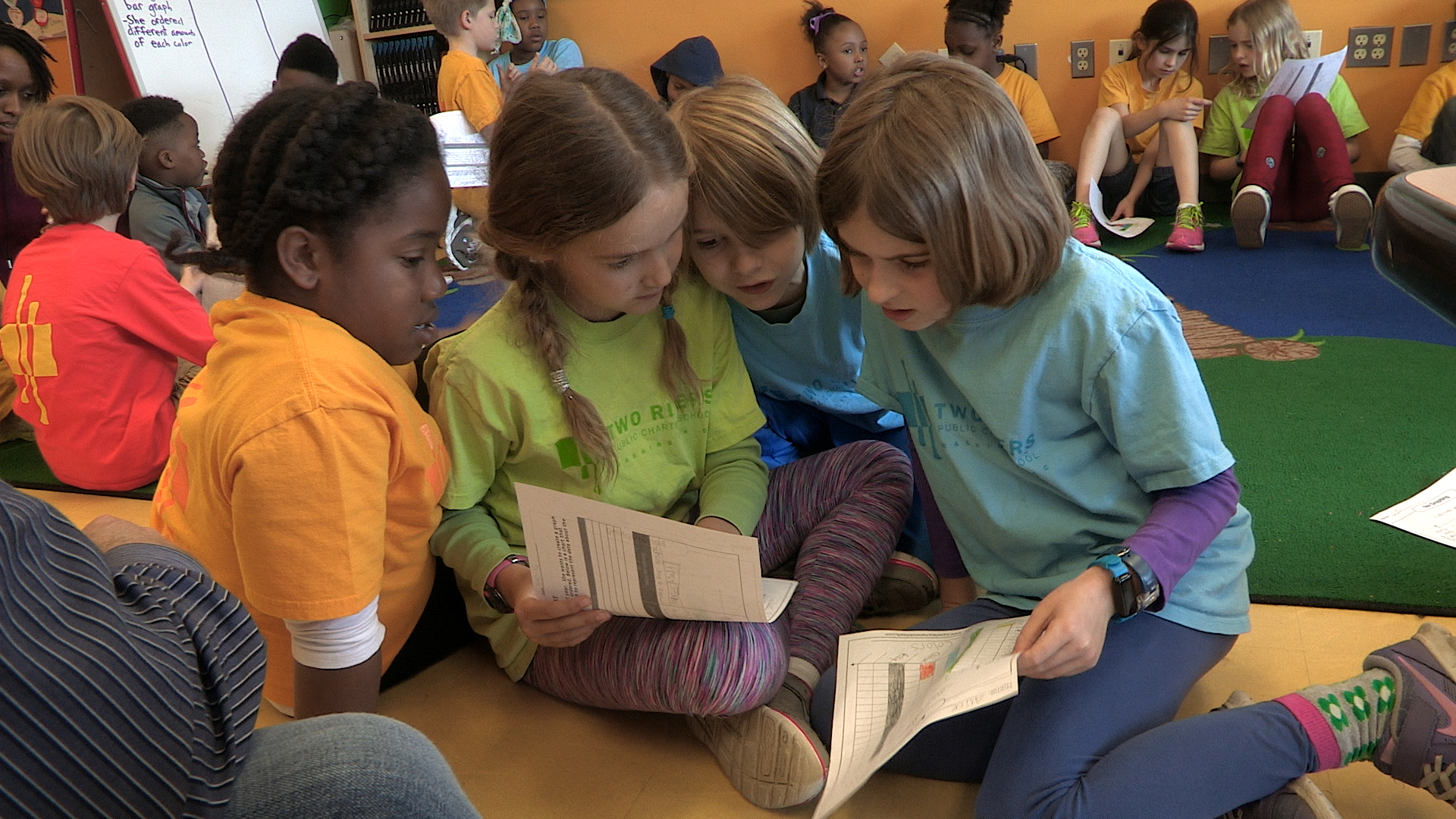
Project-based learning, often called PBL, is one of the strongest educational approaches for helping students grapple with real-world problems. Instead of learning information in isolation, students investigate a meaningful question or challenge over time. They may create a product, presentation, campaign, design, experiment, report, or public solution.
Good project-based learning is not “make a poster and hope for the best.” It includes a challenging problem, sustained inquiry, authenticity, student voice, reflection, critique, revision, and a public product. In other words, students do not simply complete an assignment; they enter a process. That process teaches them how real improvement happens.
Authenticity Makes Learning Stick
Authenticity is the secret sauce. When students see that their work connects to an actual issue, motivation rises. A math lesson about percentages may feel dry until students use it to compare grocery prices, analyze sports statistics, calculate interest, or build a budget for a school event. Suddenly, math is not just numbers on a page. It is a tool with shoes on.
Authentic learning also helps students understand why knowledge matters. A writing assignment becomes more meaningful when students prepare a letter to local officials. A science lesson becomes more memorable when students test water quality. A technology project becomes more engaging when students design an app prototype for a community need. Purpose gives learning a backbone.
How Critical Thinking Enters the Picture
Critical thinking is the ability to examine information carefully, question assumptions, compare evidence, and make reasoned decisions. When grappling with real-world problems, critical thinking keeps people from falling in love with the first idea that sounds clever. This is important because clever ideas are sometimes just bad ideas wearing cologne.
Strong problem solvers ask questions such as: What do we know? What do we still need to find out? Who is affected? What evidence supports this solution? What could go wrong? What trade-offs are involved? How will we measure success?
Structured Problem Solving Helps
Real-world problem solving works best when people have a structure. A simple process might look like this: define the problem, gather information, identify stakeholders, brainstorm solutions, choose a promising approach, test it, collect feedback, revise, and reflect. The structure does not remove creativity. It gives creativity a steering wheel.
For students, structured thinking tools can reduce frustration. Instead of staring at a complex challenge like it is a dragon guarding the Wi-Fi password, learners can break it into smaller parts. This approach supports confidence, especially for students who may feel overwhelmed by open-ended tasks.
Collaboration: The Human Part of Problem Solving
Real-world problems usually involve other humans, which is both the magic and the migraine. Collaboration teaches people how to divide responsibilities, listen actively, manage disagreement, and combine different strengths. A team with diverse perspectives can often see more of the problem than one person working alone.
However, collaboration is not automatically productive. Anyone who has survived a group project knows that teamwork can become one person working, two people disappearing, and one person choosing fonts. Effective collaboration requires clear roles, shared goals, honest communication, and accountability.
Feedback Makes Solutions Stronger
Feedback is essential when solving authentic problems. In real life, a solution is not finished because someone says, “Looks good to me.” It is finished when it works well enough for the people who need it. That means problem solvers must seek input from users, experts, peers, teachers, clients, or community members.
Feedback can sting, but it is also a gift. It reveals blind spots. It prevents wasted effort. It turns a decent idea into a stronger one. Revision is not failure; it is the gym where good ideas get stronger.
Examples of Real-World Problems Worth Grappling With
Real-world problems can be local, national, or global. They can be large enough to involve governments or small enough to affect one classroom. The best problems for learning are meaningful, manageable, and connected to real people.
Example 1: Reducing Food Waste at School
A school cafeteria throws away large amounts of food each week. Students can investigate the causes by collecting data, interviewing cafeteria staff, surveying classmates, researching nutrition rules, and comparing waste from different meal options. Possible solutions might include share tables, better menu feedback, composting, smaller portion options, or awareness campaigns.
This project blends science, math, communication, health, environmental studies, and civic responsibility. Students learn that a banana in the trash is not just a banana in the trash. It is a data point with a peel.
Example 2: Improving Public Spaces
A neighborhood park may be underused because it lacks shade, seating, safety, accessibility, or activities for different age groups. A real-world project could ask students or community members to study the space, observe usage patterns, interview residents, review local guidelines, and propose improvements.
The final product might be a design plan, budget proposal, presentation to a community board, or volunteer improvement day. This type of work teaches design thinking, empathy, budgeting, persuasive communication, and practical planning.
Example 3: Making Technology More Helpful
Technology can be used to solve problems, but only when people understand the problem first. Students might design a simple digital guide for new students, create a map of accessible routes through a school, build a website for a local nonprofit, or analyze data to identify patterns in community needs.
The key is not using technology because it is shiny. The key is using technology because it helps. A flashy tool without a clear purpose is just a digital tambourine.
Common Mistakes When Tackling Real-World Problems
Even smart people make mistakes when approaching complex challenges. One common mistake is defining the problem too quickly. If a school says, “Students are lazy,” it may miss deeper issues such as unclear instructions, lack of relevance, anxiety, transportation barriers, or limited support. A better problem statement might be, “Many students are not completing assignments because they do not understand expectations or see the purpose of the work.” That shift changes the solution.
Another mistake is ignoring stakeholders. A solution designed without the people affected by it often fails. For example, a new scheduling system may look efficient on paper but create chaos for families, teachers, or transportation staff. Real-world problem solving requires empathy and consultation.
Beware of the “One Big Fix” Fantasy
People love the idea of one big fix. It feels heroic. Unfortunately, real problems often need layered solutions. Improving student engagement might require better curriculum, stronger relationships, flexible supports, clearer feedback, family communication, and opportunities for meaningful work. One assembly with a motivational speaker named Chad is probably not enough.
How to Get Better at Grappling With Real-World Problems
Problem-solving ability grows with practice. The more people engage with authentic challenges, the more comfortable they become with uncertainty. They learn that confusion is not a stop sign; it is part of the route.
1. Start With Better Questions
Great problem solvers do not rush to answers. They ask better questions. Instead of asking, “What should we do?” they ask, “What is really happening?” “How do we know?” “Who experiences this problem most?” and “What would success look like?” Better questions create better solutions.
2. Use Evidence, Not Vibes Alone
Instinct can be useful, but evidence keeps instinct from driving into a mailbox. Collect data, observe patterns, review credible sources, and compare perspectives. Evidence does not remove judgment, but it improves it.
3. Prototype Before Going Big
A prototype is a small test version of a solution. It might be a sample lesson, draft design, pilot program, mock-up, survey, or trial event. Prototyping helps people learn quickly and cheaply. It is much better to discover a flaw in a small test than after spending six months and enough money to make the budget committee breathe into a paper bag.
4. Reflect Honestly
Reflection turns experience into learning. After working on a problem, ask what worked, what failed, what changed, what surprised the team, and what should happen next. Without reflection, people may repeat mistakes with impressive confidence.
Experiences Related to Grappling With Real-World Problems
One of the clearest lessons from real-world problem solving is that the problem you begin with is rarely the problem you end with. Imagine a student team trying to improve attendance at an after-school tutoring program. At first, they might assume students do not come because they do not care. That explanation is simple, tidy, and probably wrong. After interviewing classmates, they may discover that some students lack transportation, others feel embarrassed to attend, and some do not understand what help is available. The team then realizes the solution is not a louder announcement. It may require peer ambassadors, flexible meeting times, clearer messaging, and a ride-sharing plan approved by adults.
This experience teaches humility. Real-world problems push people to stop guessing from a distance and start listening up close. The best solutions often come after someone admits, “We need to understand this better.” That sentence may not sound dramatic, but it is a superhero cape for the brain.
Another valuable experience comes from working with people who disagree. In a classroom project about reducing plastic waste, one student may want to ban single-use bottles immediately. Another may point out that some students rely on affordable bottled drinks. A teacher may raise concerns about cost. A custodian may explain how recycling is actually handled after collection. What begins as a simple environmental project becomes a lesson in systems thinking. The group learns that a solution must be practical, fair, and sustainable.
Real-world problem solving also builds resilience because things go wrong. Surveys get ignored. Budgets shrink. Materials arrive late. A beautiful design turns out to violate a safety rule. Someone forgets the meeting. Someone else brings muffins, which helps emotionally but not logistically. These setbacks are not interruptions to learning; they are part of learning. People discover how to adjust plans, communicate under pressure, and keep moving without pretending everything is perfect.
In workplaces, the same pattern appears. A team may try to improve customer support by adding new software, only to realize the real issue is unclear communication between departments. A small business may launch a marketing campaign and discover that customers love the product but do not understand the pricing. A nonprofit may organize volunteers and learn that enthusiasm is not the same as coordination. Each experience shows that solving problems requires both strategy and flexibility.
Personal life offers plenty of practice too. Managing time, choosing a career path, saving money, repairing a relationship, or caring for a family member all involve real-world problem solving. There is no answer key hidden in the back of life. People must gather information, seek advice, make decisions, observe results, and revise. Sometimes the best solution is not glamorous. It may be a calendar, a difficult conversation, a small habit, or the courage to ask for help.
The biggest takeaway is that grappling with real-world problems changes how people see themselves. They stop being passive receivers of information and become active investigators, designers, collaborators, and decision-makers. They learn that problems are not just obstacles. They are invitations to build skill, character, and confidence. And while nobody becomes perfect at problem solving, everyone can become more prepared, more curious, and less likely to panic when reality walks in carrying a clipboard.
Conclusion
Grappling with real-world problems is not about having all the answers. It is about developing the habits that help people find better answers: asking thoughtful questions, using evidence, listening to stakeholders, testing ideas, accepting feedback, and revising with courage. In schools, workplaces, and communities, these skills turn learning into action.
The world does not need more people who can only solve problems that have already been solved for them. It needs people who can face uncertainty, collaborate across differences, and create practical solutions with both intelligence and empathy. Real-world problems may be messy, stubborn, and occasionally rude, but they are also powerful teachers. Grapple with them long enough, and they teach you how to think, adapt, and contribute.
Note: This article is designed as original, publication-ready educational content for readers interested in real-world problem solving, project-based learning, critical thinking, and practical skill development.