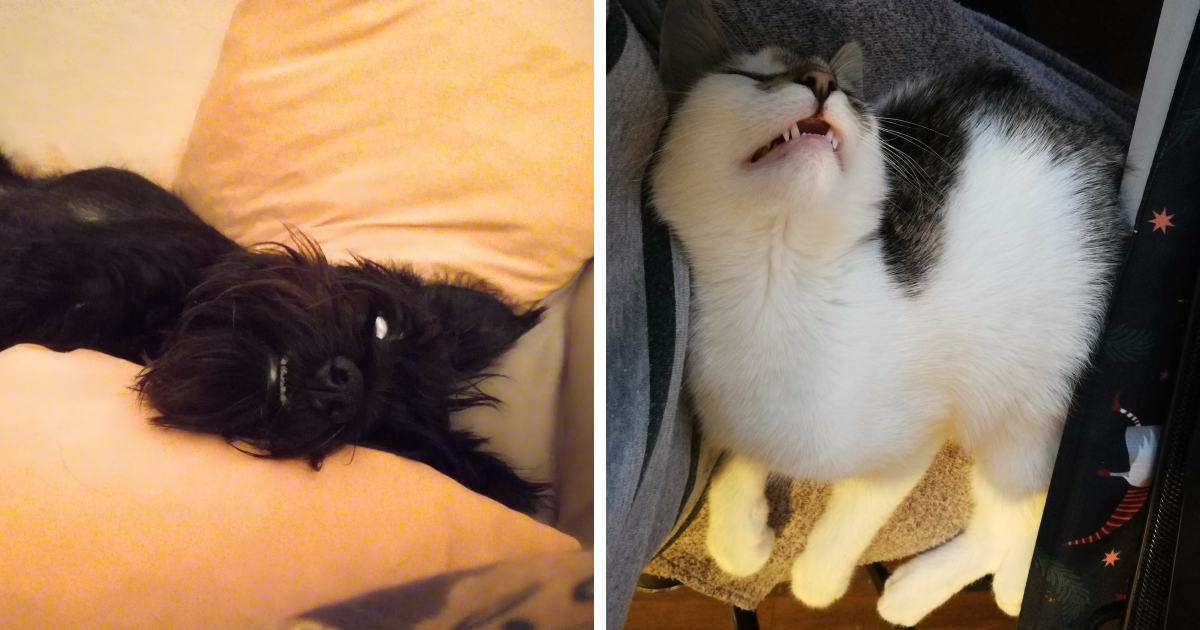

There is a special kind of comedy that only happens after a pet falls asleep. The invisible bicycle. The cat who refuses to acknowledge your authority curls into a pretzel, snores like a tiny lawn mower, and drapes one paw over her face as though the household has exhausted her. A rabbit performs a dramatic side flop, causing everyone in the room to briefly forget how breathing works.
So, Pandas, this is your invitation: post the weird things your pet does while sleeping. Share the upside-down poses, dream barks, whisker trembles, blanket thefts, synchronized snores, and photographs that make your animal look as though it was assembled without instructions. Most sleepy oddities are harmless parts of normal rest, but some behaviors are worth watching more closely. Let us explore the funny, fascinating, and occasionally important world of strange pet sleep.
Why Pets Become Tiny Weirdos in Their Sleep
Dream Sleep Can Turn Paws Into Theater
Dogs and cats move through different stages of sleep, including rapid eye movement, or REM, sleep. During REM sleep, the brain is active and dreaming is likely to occur. A normal biological mechanism reduces large muscle movements, but small motions can still slip through. That is why a sleeping pet may twitch its whiskers, flick an ear, wag the tip of its tail, paddle its paws, make chewing motions, or release a soft bark or meow. Puppies, kittens, and senior pets may show more noticeable twitching than healthy middle-aged adults. ot interview a dog about the plot of last night’s dream, unfortunately. Still, research and veterinary observations support the idea that companion animals replay familiar experiences during sleep. Perhaps the dog is pursuing a squirrel with a suspiciously cinematic soundtrack. Perhaps the cat is finally catching the red dot. Perhaps both are dreaming about the sound of a cheese wrapper opening three rooms away. Positions Mix Comfort, Temperature, and Instinct
A pet’s position can offer clues, although it should never be treated like a perfect personality test. A dog sleeping belly-up may be cooling off and feeling secure. A tightly curled pet conserves warmth and protects vulnerable areas. Side sleeping often appears during deeper, more relaxed rest. Cats may loaf with their paws tucked underneath when they are resting but still prepared to respond, while an exposed belly commonly suggests that they feel safe in the environment. ere is the “acrobat” position: spine curved, head upside down, rear legs pointing east, and front legs apparently applying for separate citizenship. Cats are especially talented at sleeping in shapes that would send a human directly to an orthopedic specialist. When your pet wakes comfortably, walks normally, and chooses the same bizarre position again, the simplest explanation is usually that animals have very different opinions about furniture and anatomy.
The Funniest Things Pets Do While Sleeping
Running Without Going Anywhere
Sleep-running is a classic. The paws begin with a gentle twitch, progress to determined paddling, and occasionally add a tail wag for aerodynamic support. These brief, intermittent movements are commonly associated with dreaming. Let sleeping pets sleep rather than grabbing or startling them; a suddenly awakened animal may be confused and react defensively before fully recognizing where it is. gs appear to be jogging through a meadow. Others seem to be escaping a rapidly approaching vacuum cleaner. Cats may swipe at invisible prey, move their jaws as if chewing, or launch one sudden rear-leg kick into an innocent blanket. The performance is usually over within moments, leaving the pet peacefully asleep and the human wondering whether dream squirrels have organized a competitive sports league.
Holding Secret Midnight Conversations
Some pets are quiet dreamers. Others apparently host a podcast. Dogs may whine, yip, puff their cheeks, growl softly, or produce a single muffled “woof” that sounds as if it came from inside a couch cushion. Cats may chirp, squeak, purr, or meow. Occasional vocalization during sleep is generally consistent with dreaming, especially when the pet remains relaxed and behaves normally after waking. niest part is often the timing. A pet can remain silent through fireworks, traffic, and three delivery trucks, then wait until 3:14 a.m. to whisper one mysterious complaint into the darkness. Nobody knows what happened in the dream, but customer service has clearly failed.
Sleeping With the Eyes Partly Open
Nothing says “peaceful nap” like visible eyeballs. Some dogs and cats sleep with their eyelids partially open, and rapid eye movements may be visible beneath the lids during REM sleep. It can look eerie, particularly when combined with twitching, but it is often normal. Persistent eye redness, cloudiness, discharge, squinting, or obvious discomfort is a separate issue and deserves veterinary attention. leeping with one eye partly visible may look like it is monitoring the household from another dimension. Resist the urge to wave a hand in front of its face or poke it to see whether it is awake. Quiet observation is safer and considerably less rude.
Snoring Like They Pay the Mortgage
A relaxed pet may snore lightly because of sleep position, temporary nasal congestion, body condition, or the shape of its face and airway. Flat-faced dogs are especially prone to noisy breathing because their shortened anatomy can restrict airflow. Snoring that is new, suddenly louder, accompanied by gasping, repeated pauses in breathing, blue or gray gums, distress, or daytime exhaustion should not be filed under “cute.” Those signs warrant a veterinary conversation, and breathing difficulty is an emergency. y pet snoring ranges from gentle whistles to the sound of a motorcycle trying to start in a distant garage. Some animals even change pitch when they roll over, turning the bedroom into a low-budget woodwind concert. Record new or unusual breathing sounds so your veterinarian can hear exactly what you are describing.
Choosing the Least Sensible Bed Available
You can buy a supportive orthopedic pet bed with cooling foam and a washable cover. Your cat may still sleep in the shipping box. Dogs wedge themselves beneath desks, rabbits nap beside the expensive tunnel rather than inside it, and cats occupy laundry baskets as if warm towels were prepared by palace staff. Familiar scents, warmth, shelter, and a sense of security can all influence where pets choose to rest. A safe sleeping space should be quiet, comfortable, easy to enter, and free from cords, unstable objects, or places where an animal could become trapped. opular choices include the single piece of paper on an otherwise empty desk, the human’s clean black shirt, the narrow strip of mattress directly behind the human’s knees, and the exact pillow the human intended to use. Pet-bed economics remains a mysterious field.
Becoming Suddenly Boneless
Some pets melt. A sleeping cat slowly slides off a cushion but refuses to wake. A dog’s lips flatten against the floor until its face resembles a dropped sandwich. Rabbits may perform a full side flop when relaxed, a move that can look alarmingly dramatic to new rabbit guardians. The comedy usually comes from the contrast: an animal that is agile, alert, and opinionated while awake transforms into a warm scarf with feet.
Other pets prefer the opposite technique and become completely rigid-looking while maintaining an absurd position. A dog may sleep with one leg pointing straight upward. A cat may balance its chin on the edge of a table. As long as the animal wakes easily, moves comfortably, and shows no signs of pain, the posture may simply be another entry in its personal catalog of poor decisions.
Normal Dreaming or Something That Needs a Vet?
Funny pet sleep behavior is usually harmless, but knowing your animal’s normal pattern matters. Record a short video when a new or unusual episode occurs. Note how long it lasts, whether the pet can be gently roused by voice, what the body looks like, and how the pet behaves afterward. Video can give a veterinarian far more useful information than the description, “He did a strange wiggly thing at approximately 2:13 a.m.”
Signs That Fit Ordinary Dreaming
Typical dream movements tend to be brief, loose, and intermittent. A paw twitches, the eyes move behind the lids, breathing changes slightly, or a small sound escapes. The animal usually wakes normally and quickly returns to familiar behavior. The movement often stops when the pet wakes. g also tends to occur after a pet has settled into deeper sleep. The movements may come and go rather than remaining continuous. A dreaming dog might paddle for several seconds, relax completely, twitch an ear, and then return to stillness.
Signs That May Fit a Seizure or Another Disorder
Seizures can vary, but concerning features may include rigid limbs, forceful full-body convulsions, loss of consciousness, excessive drooling, uncontrolled urination or defecation, repeated episodes, unusual behavior before or after the event, or prolonged confusion. Focal seizures may be subtler and can involve repetitive twitching, chomping, staring, or unusual behavior. Do not place your hands near a seizing pet’s mouth, and do not try to restrain violent movement. Move hazards away, time the episode, record it when safe, and contact a veterinarian. cy care is appropriate when an episode lasts several minutes, episodes cluster together, breathing is impaired, the pet does not recover normally, poisoning or trauma is possible, or the event is the first severe episode you have witnessed. Rare REM sleep behavior disorders can also cause unusually forceful dream enactment, including movements strong enough to propel an animal into nearby objects. tention to Changes, Not Just Quirks
A lifelong gentle snore is different from sudden choking sounds. A kitten twitching during naps is different from an adult cat developing constant tremors while awake and asleep. A senior dog sleeping more gradually may be experiencing normal age-related changes, while an abrupt shift combined with pacing, disorientation, appetite loss, weakness, pain, or nighttime distress deserves evaluation. Veterinary and behavior professionals emphasize that changes from an individual pet’s baseline can be more meaningful than a single isolated behavior. e pet sleep diary can help. Record the time, duration, movement, sounds, breathing pattern, medications, recent meals, and behavior after waking. You do not need to become a sleep scientist with a tiny lab coat. A few clear notes and videos may reveal whether an event is isolated, increasing, or connected to another change.
How to Support Better Pet Sleep
Give your pet access to a quiet, secure resting area where household activity is less likely to interrupt deeper sleep. Some animals prefer enclosed beds, crates, boxes, or covered spaces. Others want an open cushion that lets them monitor the entire household even while pretending not to care.
Keep feeding, exercise, play, bathroom breaks, and bedtime routines reasonably consistent. Daily physical activity and mental stimulation can help dogs and cats settle, while age-appropriate bedding may improve comfort for older pets or animals with joint problems. Temperature also matters. Provide warm, draft-free choices during cold weather and cooler resting options during hot weather.
Avoid using human sleep medication, supplements, essential oils, or sedatives unless a veterinarian has specifically approved them for your pet. Products that are harmless to humans can be dangerous to animals, and the correct treatment depends on the cause of the sleep disturbance.
How to Share Your Pet’s Sleep Weirdness Safely
The best sleepy-pet posts capture the moment without creating it. Do not reposition an animal into a “funnier” pose, use a flash inches from its face, poke it for a reaction, or place props around an unaware pet. Keep the camera quiet, preserve a comfortable distance, and let the star remain asleep. Natural weirdness is always better than staged weirdness, and pets are already working with an impressive creative department.
When you post, add context. Tell us your pet’s name, species, age, and the nickname you have given the pose. Does your dog perform the “invisible stair climber”? Does your cat sleep with one fang out? Does your rabbit flop so hard that guests prepare a memorial speech? Does your bird tuck its head so completely that it appears to have misplaced it? The story turns a funny picture into the kind of community moment that makes other pet owners shout, “Mine does that too!”
Pet-Owner Experiences: The Night Shift Nobody Applied For
The following are representative, composite pet-owner experiences inspired by common sleep behaviors. They are storytelling examples, not claims about specific real animals.
The Dog Who Patrols Dreamland
One household describes a rescue dog who begins every night with military precision. He circles the bed three times, sighs as though he has completed a difficult annual audit, and collapses against the pillows. Soon the night patrol begins: paws paddle, nose twitches, one ear rises like a satellite dish, and a tiny bark escapes.
Because the movements are brief and he wakes normally, his family recognizes the routine as dreaming. They avoid touching his face and simply say his name softly when a dream seems intense. Usually, he stretches, rearranges himself, and resumes whatever imaginary security assignment requires four paws and no actual travel.
The Cat Who Violates Several Laws of Geometry
Another pet parent reports that her cat owns three beds but prefers the narrow back of a sofa. She sleeps with her front half facing the window, her rear half facing the hallway, and her head hanging upside down. One paw covers her eyes; the other grips the upholstery as if gravity is optional but not entirely trustworthy.
The cat wakes without stiffness, steps down gracefully, and looks at the human as though the human is sleeping incorrectly. Photos of the “sofa croissant” have become a family tradition: photograph quietly, never adjust the model, and accept that the best bed is always the surface least intended to be one.
The Rabbit Flop That Caused a Household Emergency
A first-time rabbit guardian once watched her bunny sprint across the room, stop, and fall dramatically onto his side. She rushed over, certain that disaster had arrived. The rabbit opened one annoyed eye, stretched his back feet, and returned to sleep.
After learning that relaxed rabbits may perform dramatic flops, the family began treating the move as a sign of comfort. It still looks less like “going to sleep” and more like an actor collapsing at the end of a tragic opera.
The Kitten Who Orders Snacks While Unconscious
A foster kitten kneads the blanket while asleep, makes tiny nursing motions, and squeaks like a shopping cart with one bad wheel. Because she eats, plays, grows, and wakes normally, the family lets the performance continue. As an adult, she still kneads whenever comfortableonly now it feels less like a massage and more like bread production on a human rib cage.
The Senior Dog Whose New Sleep Pattern Mattered
Not every sleep story is a joke. One family notices that their older dog has begun waking repeatedly, pacing at night, and seeming confused in familiar rooms. Unlike his lifelong soft snoring, this is a clear change. They record the behavior and bring the information to their veterinarian.
The lesson is useful: knowing a pet’s normal weirdness makes abnormal changes easier to recognize. A family can laugh at an occasional dream kick while taking new disorientation seriously. Humor and careful observation belong together in attentive pet care.
Conclusion: Show Us Your Sleepiest Little Oddball
Pets spend their waking hours convincing us that they are graceful hunters, fearless guardians, or independent household supervisors. Sleep reveals the truth. They are twitchy marshmallows who bark at invisible mail carriers, fold themselves into impossible shapes, snore without paying rent, and steal blankets with the confidence of experienced criminals.
Most strange pet sleeping habitsincluding gentle twitching, brief paw movements, soft vocalizations, odd positions, and partially open eyesare normal parts of rest and dreaming. The key is to know your pet’s usual behavior and notice meaningful changes. Forceful convulsions, rigid limbs, breathing difficulty, prolonged episodes, repeated events, injury, or abnormal behavior after waking call for veterinary advice.
Now it is your turn, Pandas. Post the photo. Tell the story. Name the pose. Let the world meet the “upside-down shrimp,” the “blanket burrito,” the “dream squirrel marathoner,” or whatever sleepy creature currently occupies three-quarters of your bed.
Note: This article provides general educational information and is not a substitute for veterinary diagnosis or treatment. Contact a veterinarian promptly when a pet’s sleep behavior is new, severe, associated with breathing trouble, or followed by confusion, weakness, pain, or other concerning symptoms.