
Note: This article examines India’s March 27, 2019 Mission Shakti anti-satellite test. The “surprise test” description reflects how the event was announced at the time; it is not a report of a newly conducted test today.
For decades, space was marketed as humanity’s shared attic: a place for weather satellites, moon missions, television signals, and the occasional lost wrench. Then India reminded the world that orbit can also be a military neighborhood with very expensive consequences.
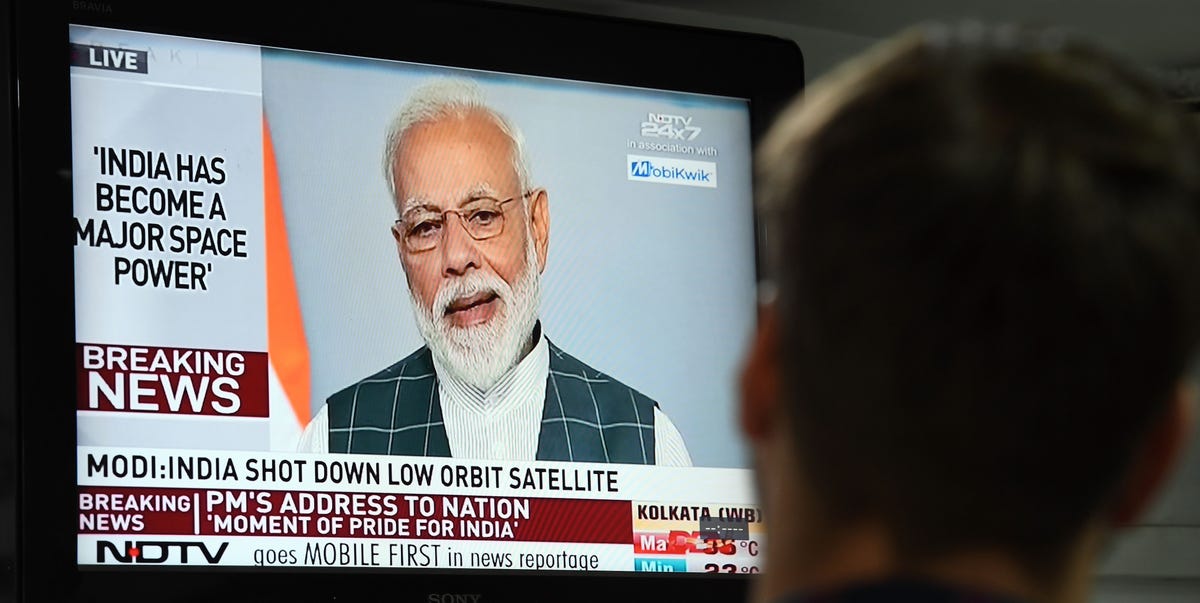
On March 27, 2019, India announced that it had successfully destroyed one of its own satellites in low Earth orbit using a ground-launched anti-satellite weapon. The operation, known as Mission Shakti, demonstrated that India could track, target, and physically strike an object moving hundreds of miles above Earth at enormous speed. In other words, it was not a fireworks display. It was a high-stakes proof that India had joined a small club of nations capable of knocking satellites out of the sky.
The test immediately raised two very different reactions. One was strategic: India had displayed an important military capability in an increasingly contested space environment. The other was practical: smashing things in orbit tends to create debris, and orbital debris has the annoying habit of not respecting borders, press conferences, or patriotic slogans.
What Happened During India’s Mission Shakti Test?
Mission Shakti was a direct-ascent anti-satellite, or ASAT, test. India used a Prithvi Delivery Vehicle Mark-II interceptor to strike Microsat-R, an Indian satellite that had been placed into a relatively low orbit shortly before the test. Analysts concluded that the target satellite was positioned specifically for the interception demonstration, which occurred at roughly 300 kilometers above Earth.
The weapon did not use a bomb in space. Instead, it relied on a kinetic kill vehicle. That phrase sounds like something created by a defense contractor after three cups of coffee, but the meaning is simple: the interceptor destroys the target through direct impact. At orbital velocities, even a relatively small object becomes a very persuasive argument.
This type of technology is related to missile defense. A system designed to intercept an incoming ballistic missile must solve many of the same problems as an anti-satellite system: detecting a fast-moving object, predicting where it will be, guiding an interceptor toward it, and achieving a collision with extraordinary precision. Mission Shakti therefore demonstrated more than a one-time stunt. It showed that India’s missile-defense research had matured into a capability with potential counterspace applications.
India became the fourth country generally recognized as having successfully demonstrated a direct-ascent anti-satellite interception capability, after the United States, Russia, and China. That milestone carried strategic weight because satellites support military communications, navigation, intelligence gathering, early warning, missile operations, and battlefield coordination. A nation that can threaten satellites can complicate an opponent’s ability to see, communicate, navigate, and respond.
Why India Tested an Anti-Satellite Weapon
India presented Mission Shakti as a defensive and deterrent-oriented achievement. The official logic was straightforward: if other nations possess capabilities that could endanger Indian satellites, India must be able to protect its own interests in space. That argument sits within a broader shift in global security. Satellites are no longer optional accessories for advanced militaries; they are part of the nervous system.
India depends on space systems for communications, weather forecasting, disaster management, remote sensing, navigation support, and national security. Losing access to satellite services during a crisis could affect everything from troop movements to civilian emergency response. A country with growing military, economic, and technological ambitions is unlikely to treat that vulnerability as a minor footnote.
Strategically, Mission Shakti also sent a message beyond the technical details. India showed that it could not only launch satellites and explore the Moon but also defend its space interests through force if necessary. RAND researchers have noted that India framed the test as a contribution to space deterrence in response to rising threats to its space systems.
Still, deterrence in space is not as tidy as deterrence in a textbook. A missile test can signal strength, but it can also encourage competitors to develop more counterspace weapons, improve satellite defenses, disperse their systems, or pursue their own demonstrations. Space security often behaves like a group chat where nobody wants to be the first person to leave, but everyone is worried about who has screenshots.
Why Destroying a Satellite Creates So Much Concern
The central problem with destructive anti-satellite testing is orbital debris. When a satellite is hit, it does not simply disappear in a dramatic puff of cinematic smoke. It breaks into fragments that can travel around Earth at extremely high speeds. A tiny bolt, panel fragment, or piece of insulation can become dangerous when it is moving faster than a rifle bullet.
NASA officials initially identified roughly 400 pieces of debris from the Mission Shakti event, including about 60 large enough to be tracked. NASA also stated that 24 tracked pieces reached orbital altitudes above the International Space Station, raising concern about risks to astronauts and other spacecraft in low Earth orbit.
India chose a relatively low altitude for the test, and that mattered. Many pieces of debris eventually encountered atmospheric drag and reentered Earth’s atmosphere. Compared with China’s 2007 anti-satellite test, which created more than 3,000 pieces of debris, India’s debris cloud was considerably smaller. NASA later described the Microsat-R event as a smaller debris-producing event because of its low altitude.
But “less debris” is not the same as “no debris.” Some fragments traveled into higher orbits than originally suggested, and independent assessments noted that trackable pieces remained in orbit for years. This is why critics argued that even a lower-altitude ASAT test could not be treated as harmless. Space junk does not need a passport, an invitation, or a diplomatic clearance. It simply keeps moving.
Low Orbit Does Not Mean Low Risk
It is tempting to think of a test at 300 kilometers as a carefully controlled event because the debris is expected to decay faster than debris produced at higher altitudes. That is partly true, but the word “controlled” deserves caution. The collision itself can throw fragments into a broad range of trajectories. Some pieces may fall rapidly. Others can be kicked upward, cross operational satellite orbits, or create temporary collision hazards for human spaceflight.
Mission Shakti illustrated a difficult reality: a nation can attempt to minimize debris while still creating an event that puts other spacecraft at risk. The question is not only how much debris is produced. It is also where it goes, how long it remains there, how much can be tracked, and whether satellite operators have enough warning to maneuver safely.
The Bigger Space Security Picture
Anti-satellite weapons are not limited to hit-to-kill missiles. Satellites can potentially be disrupted through cyberattacks, electronic jamming, signal spoofing, lasers, ground-station attacks, or co-orbital spacecraft that operate suspiciously close to another satellite. A destructive interceptor is simply the most visible and dramatic version of a larger counterspace toolbox.
That distinction matters because a future space conflict may not begin with a spectacular explosion. It could start with navigation signals failing, communications links degrading, imagery feeds becoming unreliable, or operators losing control of a satellite. These actions may be harder to attribute and easier to deny, which makes them potentially more tempting during a crisis.
Mission Shakti therefore should not be understood as proof that a satellite-smashing missile is the only important space weapon. It is better understood as a symbol of a broader competition over space resilience, surveillance, satellite protection, missile defense, and the ability to deny an adversary the benefits of orbital infrastructure.
Does International Law Ban Anti-Satellite Weapons?
Not completely. The 1967 Outer Space Treaty prohibits placing nuclear weapons and other weapons of mass destruction in orbit, but it does not create a comprehensive ban on conventional anti-satellite weapons launched from Earth. That legal gap leaves governments with room to develop or test systems that are politically controversial but not clearly prohibited by a single universal treaty.
Because a full treaty ban has been difficult to negotiate, many experts and governments have focused on behavioral norms. The United States announced in 2022 that it would not conduct destructive direct-ascent ASAT missile testing and encouraged other nations to adopt the same restraint. The goal is to make debris-generating satellite destruction increasingly unacceptable, even when no comprehensive global ban exists.
That approach has limits. A voluntary commitment is not the same as a legally binding treaty. Still, norms can shape behavior over time, especially when tests are observable and debris is measurable. In space, embarrassing evidence tends to remain in orbit longer than press releases.
What Mission Shakti Meant for India
For India, Mission Shakti was a declaration of technological confidence. It demonstrated advanced guidance, tracking, propulsion, and interception capabilities. It also reinforced India’s status as a major spacefaring power with interests that extend beyond civilian launches and scientific exploration.
The test arrived during a period when India was expanding its national-security focus in space. Civilian and military technologies often overlap, especially in launch systems, remote sensing, navigation, communications, and tracking. Mission Shakti highlighted how quickly a country’s peaceful space infrastructure can gain strategic significance when regional security tensions increase.
At the same time, the event complicated India’s long-standing public support for peaceful uses of outer space. India could reasonably argue that space security requires deterrence and self-defense. Critics could reasonably argue that blowing up satellites makes the environment less safe for everyone, including India. Both ideas can be true at the same time, which is exactly why space policy is so much harder than simply planting flags on the Moon.
Lessons and Experiences From India’s Satellite-Killer Test
The most valuable experiences related to Mission Shakti are not about celebrating a missile hit. They are about understanding what the event revealed about decision-making, technical risk, public communication, and the future of space security. India’s ASAT test was a reminder that orbital capability is no longer just about launching rockets. It is also about managing responsibility once those rockets arrive in a crowded environment.
Experience One: Early Numbers Can Be Misleading
In the days after a satellite interception, debris estimates can change quickly. Initial statements may focus on the intended altitude, the expected decay rate, or the number of large fragments that can be tracked. But orbital debris includes many smaller pieces that may be difficult to detect. Mission Shakti showed why journalists, analysts, and policymakers should avoid treating the first official estimate as the final story.
For readers following future space incidents, the practical lesson is simple: ask what is known, what is still uncertain, and who is doing the tracking. A government may know the intended design of a test, but international tracking networks reveal the actual behavior of debris after impact. The difference between intention and outcome can be enormous.
Experience Two: “Responsible” Testing Is a High Bar
India selected a lower target orbit partly to reduce the lifetime of debris. That was a more cautious choice than destroying a satellite at a much higher altitude. However, the test still generated debris that concerned NASA and other operators. The experience shows that responsible behavior in space cannot be measured only by whether most fragments eventually burn up.
A more demanding standard asks whether the activity creates avoidable danger for astronauts, commercial spacecraft, scientific missions, and other countries’ satellites. By that standard, any destructive ASAT test faces a serious problem: even a carefully planned collision can create trajectories that nobody can fully control afterward.
Experience Three: Space Deterrence Requires More Than One Big Missile
Mission Shakti demonstrated a visible form of deterrence, but true space security depends on resilience. A country’s satellites can be protected through redundancy, distributed constellations, backup ground systems, encrypted communications, maneuver capability, improved tracking, rapid replacement launches, and partnerships with allies or commercial providers.
That may sound less dramatic than a missile launch, but resilience is often more useful. A nation that can quickly restore satellite services after an attack reduces the incentive for an adversary to strike in the first place. In other words, the best answer to a space weapon may not always be another space weapon. Sometimes it is a better backup plan.
Experience Four: Civilian Space and Military Space Are Now Tightly Connected
Modern satellites support banks, aircraft, farmers, emergency responders, shipping companies, weather agencies, researchers, and armed forces. A military action in orbit can therefore create civilian consequences far from the battlefield. Mission Shakti demonstrated that space security is not an abstract concern for scientists in windowless control rooms. It can affect services that people use every day without realizing that a satellite is involved.
This makes international cooperation more important, not less. Even geopolitical rivals depend on the same orbital environment. They may disagree on almost everything else, but a debris cloud is an equal-opportunity nuisance.
Experience Five: Public Communication Matters
When governments announce major space-security events, precision matters. Public statements should distinguish between a successful interception, an operational weapon, a technology demonstration, and a lasting military deployment. They should also describe debris risks honestly rather than relying on broad assurances that the problem will disappear quickly.
Mission Shakti showed why transparency is essential. Clear information about the target orbit, predicted debris behavior, tracking data, and collision-risk assessments helps other satellite operators make informed decisions. In a domain where a fragment the size of a screw can damage a spacecraft worth hundreds of millions of dollars, vague language is not a safety feature.
Experience Six: The Future Test Is the One That Matters Most
Mission Shakti happened in 2019, but its legacy is forward-looking. The important question is whether countries treat destructive anti-satellite testing as a precedent to repeat or as a warning to avoid. The growth of commercial satellite constellations, human spaceflight, lunar missions, and military reliance on orbital systems means the cost of debris-generating behavior is rising every year.
The next era of space power should not be judged only by who can destroy a satellite. It should also be judged by who can protect space infrastructure, avoid creating debris, share tracking information, and keep orbit usable for everyone. That is less flashy than smashing a target in the sky, but it is probably the smarter long game.
Conclusion
India’s Mission Shakti test was a major strategic milestone. It proved that India could use a ground-launched interceptor to destroy a satellite in low Earth orbit and reinforced the country’s position as a serious military and technological space power. At the same time, it exposed the uncomfortable truth behind anti-satellite weapons: even a relatively low-altitude strike can create debris, elevate collision risks, and make the shared orbital environment more dangerous.
The lasting message of Mission Shakti is not merely that India can hit a satellite. It is that space security now requires a balance between deterrence, resilience, transparency, and sustainability. The world has learned how to reach orbit. The harder challenge is learning how not to turn it into a cosmic junkyard with missiles.
Research note: This article synthesizes documented reporting and analysis from U.S.-based government, scientific, security, defense, and space-policy sources, including NASA, NASA’s Office of Inspector General, the U.S. Department of State, CSIS, RAND, Secure World Foundation, Arms Control Association, Space.com, Breaking Defense, Wired, Forbes, and orbital-debris research organizations. No external source links are included in the publishable copy.
SEO Tags