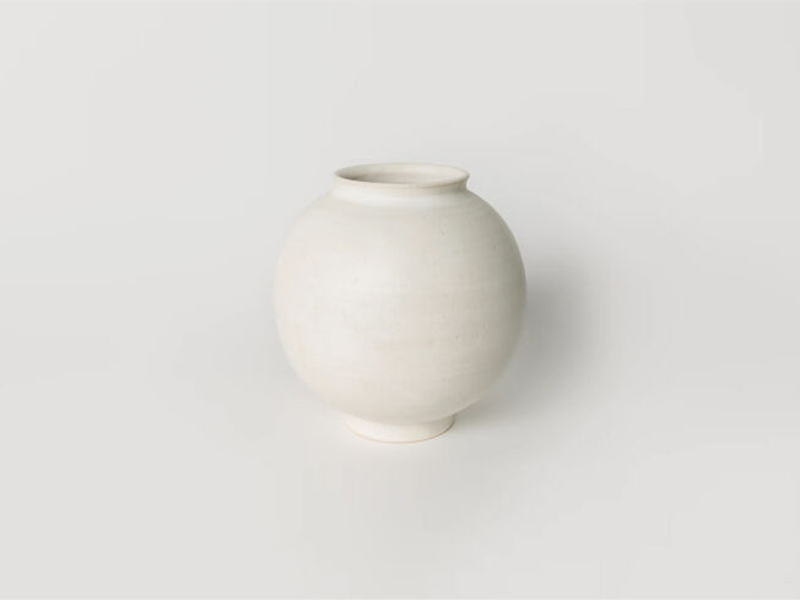

A Milk Moon Jar sounds like something you might find in a dreamy kitchen at midnight: a quiet white vessel, round as a full moon, glowing softly beside a window while everyone else is asleep. In reality, the phrase points us toward one of the most admired forms in Korean ceramic history: the moon jar, or dalhangari, a large white porcelain jar whose milky glaze and imperfect roundness have fascinated collectors, artists, designers, and museum visitors for generations.
The classic Korean moon jar is not flashy. It does not shout, sparkle, or demand that the room rearrange itself around it. Instead, it sits with the confidence of a person who does not need to check whether everyone noticed their outfit. Its beauty comes from restraint: a nearly spherical body, a pale white surface, a subtle seam at the middle, and small irregularities that make each piece feel alive. That is why the “milk” in Milk Moon Jar matters. It suggests not just whiteness, but warmth, softness, nourishment, and a porcelain glow that is never cold or sterile.
Today, milk-white moon jars appear in museum collections, contemporary ceramic studios, interior design projects, auction houses, and handmade pottery shops. They are historical objects, cultural symbols, decorative pieces, and philosophical reminders that perfection is sometimes less interesting than a graceful wobble. In a world addicted to shiny upgrades and suspiciously perfect product photos, the moon jar quietly says, “Relax. A little asymmetry never ruined the moon.”
What Is a Milk Moon Jar?
A Milk Moon Jar is best understood as a moon jar with a creamy, milky-white porcelain surface. Traditional moon jars originated in Korea during the Joseon dynasty, especially from the late 17th to the 18th century. They are usually large, round, undecorated white porcelain vessels that resemble a full moon. The Korean name dalhangari combines “moon” and “jar,” which is refreshingly direct. No marketing committee needed.
Unlike highly decorated ceramics covered in dragons, flowers, cobalt-blue landscapes, or gold details, the moon jar relies on form and glaze. Its round shape is rarely mathematically perfect. Many historic examples lean slightly, bulge unexpectedly, or show a visible line where the upper and lower halves were joined. These features are not considered flaws in the ordinary sense. They are part of the jar’s personality.
The “milk” description emphasizes the unique color of the glaze. A moon jar is not always bright refrigerator-white. It may appear ivory, cream, snow-white, gray-white, or faintly peach depending on clay, glaze, firing atmosphere, age, and lighting. In natural light, a milk moon jar can look almost luminous, as if it is storing a quiet piece of dawn inside its walls.
The Korean Origins of the Moon Jar
Moon jars belong to the tradition of Korean white porcelain, which became especially important during the Joseon dynasty. White porcelain was admired by the royal court and elite scholars because it aligned with Confucian values such as purity, modesty, discipline, and restraint. While earlier Korean ceramics such as celadon were famous for their jade-green beauty, Joseon white porcelain represented a different kind of elegance: quieter, more moral, and more austere.
Many moon jars were made at official kilns near present-day Gwangju, close to Seoul. These kilns produced white porcelain for courtly, ritual, and domestic use. Historic moon jars were often practical vessels before they became museum celebrities. They may have been used to store food, grains, liquids, sauces, flowers, or household materials. In other words, before they stood dramatically under gallery lighting, they had jobs. A moon jar was not born wearing a velvet rope.
Over time, however, these jars became more than containers. Their soft roundness, plain surface, and milky glow came to symbolize Korean aesthetics. They represented an appreciation for naturalness rather than rigid perfection. Instead of hiding the touch of the maker, moon jars preserved it. That human trace is one reason they continue to feel modern, even when they are centuries old.
Why Moon Jars Are Made in Two Halves
One of the most important facts about moon jars is also one of the most charming: traditional large moon jars were typically made in two separate halves. A potter would throw the lower half and upper half on the wheel, then join them around the middle before glazing and firing. This method was necessary because large porcelain forms are difficult to throw in one piece. Porcelain clay can be demanding, and gravity is not known for being emotionally supportive.
The joining process often leaves a subtle seam around the belly of the jar. On some pieces the seam is visible; on others it is softened by glaze and firing. This construction method also contributes to the slight irregularity of the finished form. The top and bottom halves may not align with machine-like precision, giving the jar its famous organic shape.
That middle seam is deeply symbolic for many viewers. It suggests union, balance, and the meeting of opposites: upper and lower, sky and earth, emptiness and fullness, control and accident. The result is not a perfect sphere but a living form. A milk moon jar seems to breathe, which is quite an achievement for something that technically does not have lungs.
The Beauty of Imperfection
The appeal of a milk moon jar lies in its imperfections. A perfectly round, perfectly white, perfectly polished object might be impressive, but it can also feel lifeless. Moon jars are different. They may tilt slightly. Their glaze may pool unevenly. Tiny marks, tonal variations, or firing effects may appear across the surface. These details make the jar feel less like an industrial product and more like a quiet conversation between clay, fire, air, and hand.
This is why moon jars are often associated with natural beauty. They do not pretend that beauty must be symmetrical to be meaningful. Their unevenness creates warmth. In design terms, they soften a room. In cultural terms, they reflect a long-standing Korean preference for understated elegance. In emotional terms, they remind us that a person, a home, or a life does not need to be perfectly centered to be beautiful.
Collectors and curators often describe moon jars as both simple and complex. At first glance, the jar looks plain: white, round, quiet. But the longer you look, the more you see. A surface that seemed blank begins to reveal cloudy tonal shifts. A round silhouette becomes gently unpredictable. A humble vessel becomes almost meditative. The moon jar is minimalism with a pulse.
Milk-White Porcelain and the Power of Color
White is never just white in ceramics. A milk-white moon jar can carry shades of cream, pearl, gray, ivory, or soft blue. The color depends on the composition of the clay, the minerals in the glaze, the kiln temperature, oxygen levels during firing, and the thickness of the glaze. Historic Korean porcelain required refined clay and high firing temperatures, making white porcelain a technically demanding achievement.
The milky tone is important because it prevents the jar from feeling clinical. Modern white objects can sometimes look cold, like appliances waiting for instructions. A milk moon jar, by contrast, has body and depth. It catches light gently rather than reflecting it sharply. In the morning it may look pale and calm; in evening light it may become warmer and more intimate.
This subtle color quality is one reason moon jars work so well in contemporary interiors. They pair naturally with wood, stone, linen, paper, plaster, concrete, and plants. They do not fight with other objects. They create a visual pause, like a comma in a sentence that was getting a little too excited.
Moon Jars in Museums and Modern Culture
Historic moon jars can be found in major museum collections, including institutions in the United States that collect and exhibit Korean art. Museums such as The Metropolitan Museum of Art, the Art Institute of Chicago, the Cleveland Museum of Art, the Brooklyn Museum, and the Asian Art Museum in San Francisco have helped introduce American audiences to the form’s quiet power.
The moon jar has also become a symbol of Korean cultural identity. Its shape has inspired exhibitions, contemporary ceramic practice, photography, design, and even public symbols. The form’s influence reached global audiences when moon jar aesthetics were connected to the visual language surrounding Korea’s modern cultural presentation, including references to the 2018 Pyeongchang Winter Olympics.
Contemporary artists continue to reinterpret the moon jar. Some potters stay close to the Joseon tradition, focusing on white porcelain, roundness, and subtle surface variation. Others stretch the form, break it open, darken it, paint it, photograph it, or use it as a symbol of memory and identity. The moon jar survives because it is not trapped in the past. It is old enough to carry history and flexible enough to keep making new friends.
How a Milk Moon Jar Fits Into Interior Design
A Milk Moon Jar is one of those decorative objects that can change a room without acting like it owns the lease. Its round shape balances hard edges, while its pale color brightens dark corners. It works in minimalist homes, traditional spaces, modern apartments, Japandi-inspired interiors, Korean-style rooms, gallery-like living areas, and even farmhouse settings where it can politely coexist with wooden tables and linen curtains.
On a Console Table
Placed on a console table, a milk moon jar creates an immediate focal point. It works especially well with negative space around it. Resist the urge to crowd it with twelve candles, three picture frames, a bowl of keys, and that one mysterious receipt you keep meaning to throw away. Let the jar breathe.
On a Bookshelf
On a bookshelf, a smaller moon jar can break up the rectangular rhythm of books. Its round body adds softness and visual relief. Pair it with art books, a small branch, or a single sculptural object. The key is balance: the jar should look intentionally placed, not like it wandered in looking for snacks.
As a Vase
Some moon jars can hold branches or flowers, though valuable antique examples should be treated with great care and not casually filled with water. For decorative versions, a few bare branches, white blossoms, or dried grasses can emphasize the jar’s lunar quality. Avoid overstuffing it. The moon does not need a floral hat.
Buying a Milk Moon Jar: What to Look For
If you are buying a modern milk moon jar for your home, focus on proportion, glaze, craftsmanship, and feeling. A good moon jar does not have to be antique or expensive to be meaningful. Many contemporary ceramic artists create beautiful pieces inspired by the Korean tradition. The best examples have presence: they feel calm, balanced, and quietly alive.
Look at the silhouette first. Is it round but not stiff? Does it have a gentle fullness? Next, study the glaze. A milk-white glaze should have depth rather than looking like flat white paint. Subtle variations, small speckles, or soft pooling can add character. Then consider scale. A large jar can anchor a room, while a small one can add a poetic note to a desk, shelf, or bedside table.
It is also wise to distinguish between museum-quality antiques, studio ceramics, decorative reproductions, and mass-produced vases. Each has its place. An antique moon jar belongs in the care of serious collectors and institutions. A studio-made jar supports living artists and carries the touch of the maker. A decorative version can still bring beauty into everyday life, especially if your budget currently says, “Let us admire the auction world from a safe distance.”
How to Care for a Milk Moon Jar
Porcelain is durable, but that does not mean it enjoys reckless adventure. Place a milk moon jar on a stable surface away from edges, busy walkways, and wagging tails with Olympic-level enthusiasm. If the jar is valuable, avoid direct handling and use two hands when moving it. Never lift a large jar by the rim alone.
For cleaning, use a soft dry cloth or a lightly damp microfiber cloth. Avoid harsh chemicals, abrasive pads, or soaking unless the maker specifically says it is safe. If the jar is antique, consult a conservation professional before attempting any deep cleaning. A centuries-old porcelain surface deserves better than a surprise attack with kitchen cleaner.
Lighting also matters. Natural light brings out the glaze, but strong direct sunlight for long periods may not be ideal for surrounding materials or display settings. A softly lit corner, a pedestal, or a simple wooden table can make the jar glow. The goal is to create an atmosphere where the jar looks discovered, not staged for a furniture catalog that uses the word “curated” too many times.
Why the Milk Moon Jar Still Feels Modern
The moon jar feels modern because it understands something timeless: simplicity is not emptiness. A plain white surface can hold enormous visual and emotional depth. A round form can suggest fullness, calm, and continuity. A handmade imperfection can feel more luxurious than flawless repetition.
In contemporary life, we are surrounded by screens, alerts, updates, and objects designed to become obsolete by next Tuesday. The milk moon jar offers the opposite experience. It does not update. It does not beep. It does not ask you to agree to new terms and conditions. It simply exists, quietly and generously.
That stillness is powerful. Whether displayed in a museum gallery or on a small apartment shelf, a milk moon jar invites slow looking. It rewards attention. It gives the eye a place to rest and the mind a place to wander. In SEO language, one might say it has excellent user engagement. In human language, one might simply say it is beautiful.
Personal Experiences and Reflections on the Milk Moon Jar
The first time many people encounter a moon jar, they are surprised by how quiet it is. We often expect important art objects to announce themselves with color, detail, drama, or a label full of dates that makes us feel undereducated. A milk moon jar does something different. It waits. At first, you may think, “That is a nice white jar.” Then, after a minute, the shape begins to shift in your perception. You notice that it is not perfectly round. You notice the creamy glaze. You notice the middle seam, the slight lean, the soft tension between fullness and fragility.
Living with a moon-jar-inspired piece, even a modest contemporary one, can change the way you arrange a room. It teaches restraint. You begin removing objects around it because too much visual noise weakens its effect. A milk moon jar looks best when it has space, and that space becomes part of the design. Suddenly the empty area around the jar feels intentional rather than unfinished. This is a useful lesson for decorating and, frankly, for email inboxes.
There is also something emotionally grounding about the form. A moon jar does not look sharp, rushed, or anxious. Its roundness feels generous. Its pale surface reflects light without aggression. On a difficult day, seeing that calm shape on a table or shelf can feel oddly comforting. It is not magic, of course. It will not answer messages, fold laundry, or convince your internet provider to behave. But it can create a small pocket of stillness, and sometimes that is exactly what a home needs.
One practical experience with milk-white ceramics is learning how dramatically they respond to light. Under cool artificial lighting, a jar may look crisp and almost gray. Near a sunny window, it can become warmer and softer. At dusk, it may appear more sculptural, with shadows emphasizing its curves. This makes placement important. Moving the same jar from a crowded shelf to a simple wooden surface can make it feel like a completely different object.
The moon jar also encourages appreciation for handmade irregularity. In a culture where many products are judged by flawless consistency, the moon jar suggests another standard: character. A small lean can make a vessel more engaging. A faint glaze variation can become the most memorable part of the piece. The jar reminds us that beauty can come from negotiation between intention and accident. The potter plans, the clay responds, the kiln decides, and the final object keeps the record of that conversation.
For anyone interested in ceramics, the milk moon jar is a perfect starting point because it is easy to recognize but difficult to fully understand. Beginners can enjoy its shape and color immediately. Deeper study reveals history, technique, philosophy, and cultural meaning. That layered experience is what makes the form so enduring. You can admire it in five seconds or study it for five years, and it will still have more to say.
Conclusion: The Quiet Power of the Milk Moon Jar
The Milk Moon Jar is more than a beautiful white vessel. It is a bridge between Korean ceramic history and contemporary design, between utility and art, between simplicity and depth. Its milky glaze, rounded body, visible humanity, and soft imperfections make it one of the most poetic forms in ceramic culture.
Whether you approach it as a collector, decorator, artist, student, or curious browser wondering why a white jar has so many admirers, the answer is the same: the moon jar gives more than it takes. It does not dominate a space. It deepens it. It does not chase trends. It outlasts them. It does not pretend to be perfect. It proves that imperfection can glow.
In the end, a milk moon jar is like the moon itself: familiar, mysterious, calm, and always worth another look.
Note: This article was written from synthesized, real information about Korean moon jars, Joseon white porcelain, museum collections, ceramic techniques, and contemporary design use, with no source links included as requested.