Pennsylvania’s Paul Miller’s Law Takes EffectNew Distracted Driving Rules Explained

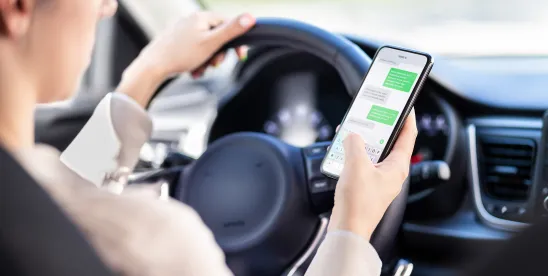
That quick glance at a notification while waiting at a red light may now cost Pennsylvania drivers more than a guilty conscience. Paul Miller’s Law, the Commonwealth’s expanded distracted driving law, prohibits motorists from holding or otherwise physically using an interactive mobile device while drivingincluding during those deceptively harmless moments when a vehicle is stopped in traffic.
The law initially took effect on June 5, 2025, beginning a one-year period in which police generally issued written warnings. That educational runway ended on June 5, 2026. Drivers convicted of violating the law can now receive a $50 fine, plus court costs and other fees.
The change is larger than a simple texting ban. It addresses calling, scrolling, social media, video recording, gaming, internet browsing and nearly every other activity that can turn a smartphone into a pocket-sized attention thief. Here is what Pennsylvania drivers need to know, what remains legal and how to adjust without transforming every commute into an awkward wrestling match with the dashboard.
What Is Paul Miller’s Law?
Paul Miller’s Law is Pennsylvania’s comprehensive hands-free driving law. Formally enacted as Act 18 of 2024, it amended the Pennsylvania Vehicle Code to prohibit drivers from using an interactive mobile device while operating a motor vehicle.
Governor Josh Shapiro signed the bipartisan legislation on June 5, 2024. The general prohibition became effective one year later, on June 5, 2025, followed by a 12-month warning period. As of June 5, 2026, violations can result in citations and financial penalties.
The law made Pennsylvania one of the growing number of states to replace narrow texting restrictions with broader rules targeting the physical handling of phones. That distinction matters because a driver does not have to be composing a text to become distracted. Choosing a podcast, filming a highway sunset or checking a sports score can take the same eyes and hands away from driving.
Why the Law Is Named After Paul Miller Jr.
The legislation honors Paul Miller Jr., a 21-year-old Pennsylvania man who was killed in a 2010 crash in Monroe County. A tractor-trailer driver became distracted while reaching for a phone, crossed the center divider and struck Miller’s vehicle head-on.
After his death, his mother, Eileen Miller, became a prominent advocate for stronger distracted driving laws. Her campaign continued for more than a decade and helped turn one family’s loss into a statewide safety measure. The law’s name serves as a reminder that distracted driving is not merely rude, inconsiderate or annoying. It can be fatal in a fraction of a second.
What the New Pennsylvania Distracted Driving Law Prohibits
Paul Miller’s Law prohibits a driver from using an “interactive mobile device” while driving. The definition covers much more than a traditional cellphone. It may include smartphones, tablets, portable computers, personal digital assistants and similar electronic devices capable of communicating or exchanging data.
Prohibited activities can include:
- Holding a phone in one or both hands
- Supporting a phone against the shoulder, lap or another body part
- Typing, reading or sending text messages and emails
- Browsing websites or social media
- Watching, recording or broadcasting video
- Taking or transmitting photographs
- Playing games or using entertainment apps
- Dialing or answering through multiple button presses
- Reaching for a device in a way that pulls the driver out of the normal seated position
In other words, balancing a phone between your ear and shoulder does not magically convert it into hands-free technology. Neither does resting it on the steering wheel like a tiny, extremely distracting hood ornament.
The Law Applies at Red Lights and in Traffic
One of the most important details is the law’s definition of “driving.” It includes operating a vehicle while temporarily stopped because of traffic, a traffic signal or another momentary delay.
Therefore, drivers cannot legally pick up a phone simply because the light is red, traffic is backed up or a construction flagger has stopped the lane. The vehicle may not be moving, but the driver is still participating in traffic and must be ready to react.
To use a handheld device, the driver should move to the side of or off the highway and stop in a place where the vehicle can safely remain stationary. A red light is temporary. A safely parked vehicle is parked. The law recognizes the difference, even when an impatient group chat does not.
What Is Still Allowed?
Paul Miller’s Law does not require drivers to abandon navigation, emergency communication or every modern vehicle feature. It focuses on handheld physical interaction.
Drivers may generally use:
- Voice commands
- Bluetooth calling systems
- Dashboard-integrated controls
- Hands-free accessories
- Mounted navigation devices
- Vehicle infotainment systems
- Audio directions and preselected music
The statute is also written to permit limited single-button interaction. However, repeated tapping, entering an address, scrolling through playlists or holding the device can cross the legal line. The safer approach is to arrange navigation, music and communication before placing the vehicle in motion.
Emergency Use Exception
A driver may use an interactive mobile device when communication with law enforcement or emergency services is necessary to prevent injury to a person or damage to property.
That exception is intended for genuine emergencies, such as reporting a dangerous crash, an impaired driver, a fire or an immediate threat. It is not an all-purpose escape hatch for calling a friend because the coffee shop accidentally supplied almond milk.
When circumstances permit, pulling over before making an emergency call remains the safer choice.
Other Limited Exclusions
The statutory definition contains exclusions for certain equipment and authorized uses, including devices affixed to mass transit vehicles, qualifying amateur radio use, emergency notification devices, on-duty emergency responders and some commercial-driver equipment permitted under federal regulations.
These exclusions are narrow. Most ordinary motorists should follow the simplest rule: mount it, connect it, control it by voice or leave it alone.
Penalties Under Paul Miller’s Law
Using a handheld mobile device while driving is a primary offense. That means an officer does not need to observe speeding, swerving or another violation before initiating a traffic stop. Seeing the unlawful device use can be sufficient.
During the first year of enforcement, from June 5, 2025, through June 5, 2026, violators generally received written warnings. The Pennsylvania State Police reported issuing 1,616 warnings during that period.
Now that the warning period has ended, a conviction carries:
- A $50 statutory fine
- Court costs
- Additional applicable fees
The total amount paid can therefore exceed the advertised $50. Think of the fine as the appetizer; court costs may be the entrée nobody wanted to order.
Enforcement became visible almost immediately. During the Pennsylvania State Police’s three-day “Operation Hands Off” initiative from June 8 through June 10, 2026, troopers issued 694 citations and 308 warnings related to Paul Miller’s Law.
Crashes Can Bring Much More Serious Consequences
The ordinary handheld-device violation is a summary offense, but the stakes become dramatically higher when distracted driving contributes to serious injury or death.
A person convicted of homicide by vehicle along with a qualifying distracted driving violation may face an additional prison term of up to five years. A conviction involving aggravated assault by vehicle may also result in enhanced sentencing.
The message is straightforward: the law is not simply trying to punish phone use. It is trying to prevent the catastrophic events that can follow it.
Why Pennsylvania Expanded Its Distracted Driving Rules
Pennsylvania previously prohibited texting while driving, but that older rule focused on a particular activity. It could be difficult for an officer to distinguish texting from dialing, changing music or using another application.
A broader prohibition is easier to understand and potentially easier to enforce. If the driver is physically holding or supporting the device, the officer does not necessarily have to determine whether the screen contained a text message, a map, a video or a photograph of somebody’s lunch.
The safety data provide an urgent backdrop. Pennsylvania reported more than 11,000 crashes involving distracted drivers in 2023. Nationally, the National Highway Traffic Safety Administration reported that 3,208 people were killed and more than 315,000 were injured in crashes involving distracted drivers during 2024.
Distracted driving data are also widely believed to be underreported. Unless a driver admits to using a phone, a witness observes it or digital evidence is available, distraction may never appear in the official crash report.
Three Types of Driver Distraction
Traffic-safety experts generally divide distraction into three categories:
- Visual distraction: Looking away from the road
- Manual distraction: Removing one or both hands from vehicle control
- Cognitive distraction: Thinking about something other than driving
A smartphone can create all three simultaneously. A driver looks at the screen, holds or manipulates the phone and mentally processes the message. That is a remarkably efficient way to stop paying attention to driving.
Hands-free technology reduces manual and visual interaction, but it does not eliminate cognitive distraction. A heated business call, complicated voice command or emotionally charged conversation can still occupy mental resources. Legal does not always mean risk-free.
Will Hands-Free Laws Reduce Crashes?
Research generally shows that broad handheld-device bans can reduce visible phone handling. Evidence about the exact effect on crashes is more complicated because enforcement intensity, public awareness, statutory wording and driver behavior differ among states.
Some studies have found reductions in crash rates under strong, clearly worded handheld bans. Other research has found that phone use declined without a corresponding measurable reduction in insurance collision claims. Drivers may switch to hands-free systems, conceal their phones lower in the vehicle or replace one distraction with another.
That does not make the law pointless. Reducing the amount of time drivers spend looking down, typing and holding devices removes identifiable risks. The strongest results are likely to come from combining clear laws with education, consistent enforcement, safer road design and personal habits.
Traffic-Stop Transparency Is Also Part of the Law
Paul Miller’s Law does more than regulate phones. The legislation also created traffic-stop data collection and reporting requirements intended to improve transparency and public accountability.
Pennsylvania State Police and covered local police departments must collect specified information during qualifying self-initiated traffic stops. The data include the reason for the stop, perceived race and ethnicity, gender and age, whether a search occurred, the result of any search and whether the encounter ended in a warning, citation, arrest or another action.
Aggregate analysis is to be made publicly available through annual reporting. This component reflects an effort to enforce the hands-free rule while also monitoring how traffic-stop authority is exercised.
How Drivers Can Avoid a Pennsylvania Distracted Driving Citation
- Mount the phone properly. Place it where directions can be viewed without holding it or blocking the windshield.
- Enter the destination before moving. Programming a route at 55 mph is not efficient multitasking; it is auditioning for trouble.
- Enable driving mode. Most smartphones can silence notifications and send automatic replies.
- Use voice controls sparingly. Keep commands brief and avoid complex tasks.
- Prepare entertainment in advance. Select the playlist, audiobook or podcast before leaving.
- Let a passenger manage the device. A human copilot is more useful than a human cupholder.
- Pull over safely. Stop off the roadway when a message, route change or call requires extended attention.
Real-World Experiences Under Pennsylvania’s New Hands-Free Rules
The practical effect of Paul Miller’s Law becomes clearer when applied to ordinary driving situations. The following examples are representative scenarios based on the law’s requirements rather than accounts of specific traffic stops.
The Red-Light Notification
A commuter stops at a long red light in Harrisburg. The phone buzzes in the center console, and the driver instinctively reaches for it. Under the previous habits of many motorists, this might have felt harmless because the vehicle was not moving.
Under Paul Miller’s Law, the temporary stop still counts as driving. The better response is to leave the phone untouched. Enabling a driving focus mode can prevent the screen from lighting up and remove the temptation altogether. The message will still exist in three minutes. Human patience has survived worse.
The Delivery Driver With a Route Change
A delivery driver near Pittsburgh receives an updated address while traveling between stops. Holding the phone to enter the new destination would create an obvious legal and safety risk.
A compliant routine would involve pulling into a safe parking area, stopping the vehicle and entering the address before returning to traffic. Another option is to use an approved mounted device with voice navigation, provided the driver does not begin tapping through several menus.
Employers can make this easier by designing schedules that allow drivers to stop safely rather than quietly rewarding employees for manipulating devices on the move.
The Parent Managing a Busy Family
A parent driving to school pickup may receive messages about schedule changes, groceries, sports practice and the mysterious disappearance of one child’s left shoe. The pressure to respond can feel immediate even when it is not.
Before leaving, the driver can activate an automatic reply stating that messages will be answered after arrival. Family members can also agree that only urgent matters warrant a phone call. Even then, the safest response is usually to pull over rather than conduct a complicated conversation in moving traffic.
The Older Vehicle Without Bluetooth
Not every Pennsylvanian owns a vehicle with a touch screen, voice assistant and enough computing power to launch a small satellite. Drivers of older vehicles can still adapt inexpensively.
A secure phone mount, a simple Bluetooth receiver or a speaker system with one-button operation can reduce handheld use. Directions can also be started before departure and delivered through audio. The goal is not to transform an older sedan into a luxury command center. It is to keep the driver’s hands available and eyes forward.
The Rural Road With Poor Reception
On a rural trip, the navigation signal disappears and the driver realizes the next turn is unclear. Repeatedly lifting the phone and refreshing the map would violate the spirit and potentially the text of the law.
Downloading an offline map before departure is a useful precaution. When that preparation has not happened, the responsible choice is to find a safe place to stop. Missing a turn may add ten minutes. A crash can alter decades.
The Genuine Emergency
A driver witnesses a vehicle leave the road and sees smoke coming from the engine compartment. Paul Miller’s Law allows necessary communication with emergency services to prevent injury or property damage.
The driver may call 911, but should still stop safely when possible and avoid creating a second emergency. Hazard lights, a secure stopping location and concise information for the dispatcher are more helpful than attempting to drive, talk, watch the crash scene and perform amateur traffic control simultaneously.
These scenarios reveal the real adjustment required by the law: drivers must stop treating every notification as an instruction. The phone may be smart, but it does not know whether traffic ahead has suddenly stopped. That remains the driver’s job.
Conclusion: Put the Phone Away Before Pennsylvania Makes You Pay
Paul Miller’s Law marks a significant expansion of Pennsylvania’s distracted driving rules. Since June 5, 2026, the warning period has been over, and drivers can be cited for holding or physically using a mobile device while drivingeven at a red light or during a traffic delay.
The $50 fine and added court costs are important, but they are not the strongest reason to change driving habits. The stronger reason is the person in the next lane, the pedestrian entering the crosswalk, the road worker behind the cones and the family expecting everyone to arrive safely.
Set the route, choose the music and silence unnecessary notifications before moving. When the phone truly needs attention, pull over somewhere safe. No message, video or playlist is important enough to turn an ordinary drive into another family’s reason to campaign for a new law.
Note: This article provides general educational information and is not legal advice. Pennsylvania laws, court costs and enforcement guidance may change, so motorists should consult current Commonwealth resources or a qualified attorney regarding specific legal questions.