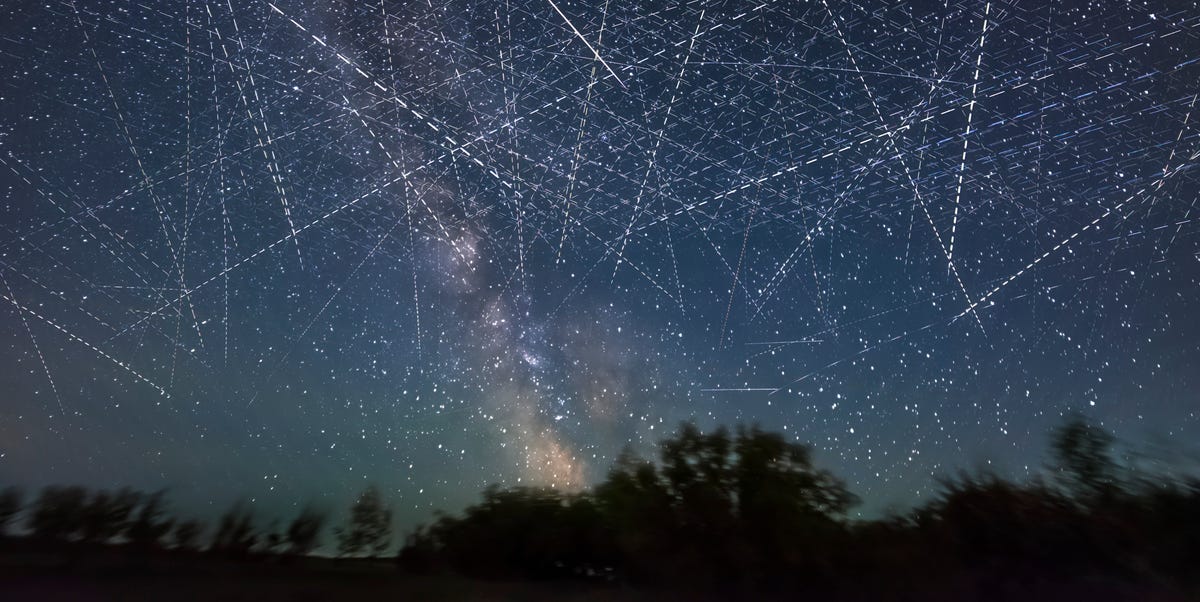

Look up on the wrong night and you might see something dramatic: a slow, glittering streak crawling across the sky, breaking into glowing pieces like a cosmic sparkler with a Wi-Fi bill. No, it is probably not a meteor. It may be another SpaceX Starlink satellite ending its career the only way most low-Earth orbit satellites can: by diving into the atmosphere and burning up.
The phrase “SpaceX’s satellites are falling from the sky every single day” sounds like the opening line of a disaster movie. In reality, the situation is more complicated, less Hollywood, and still worth paying attention to. Starlink satellites are not randomly raining onto neighborhoods like metal confetti. Most are intentionally lowered from orbit after years of service, then destroyed by the intense heat of atmospheric reentry. That process helps prevent long-term space junk, but it also raises new questions about satellite pollution, orbital traffic, astronomy, and the future of mega-constellations.
Recent tracking and expert commentary have placed Starlink reentries at roughly one to two satellites per day in busy periods, with expectations that the number could rise as mega-constellations expand. SpaceX has built the world’s largest satellite network, and the math is simple: when you launch thousands of satellites with limited lifespans, you eventually have to retire thousands of satellites. Space, as it turns out, has a housekeeping problem. And Earth’s atmosphere is currently the broom.
Why Are Starlink Satellites Falling Back to Earth?
The first thing to understand is that “falling” does not always mean “failing.” Many Starlink satellites reenter because they are supposed to. Starlink operates in low Earth orbit, much closer to Earth than traditional geostationary communications satellites. This lower orbit helps reduce internet latency, which is great for customers trying to stream, work, game, or upload a video of their cat judging them. But low orbit also means satellites are still brushing against the outer edges of Earth’s atmosphere.
Even hundreds of kilometers above the planet, there are faint traces of atmospheric gas. Over time, those particles create drag. Drag slows a satellite down. When a satellite slows down, it loses altitude. When it loses enough altitude, it reenters the thicker atmosphere and burns up. This is not a bug in physics. It is physics doing exactly what physics does, without asking the marketing department for permission.
Starlink satellites also have a limited operational life, often discussed in the range of about five years. As older units age, SpaceX can replace them with newer models that may offer improved capacity, performance, and maneuvering abilities. That replacement cycle is central to why Starlink reentries are becoming routine. A satellite constellation is not a monument; it is more like a fleet of delivery vehicles. Eventually, every vehicle needs to be retired.
Controlled Deorbit vs. Uncontrolled Chaos
A major difference between a responsible satellite retirement and a space-debris nightmare is control. SpaceX says Starlink satellites are designed to be “demisable,” meaning they are intended to break apart and burn up during atmospheric reentry. The company has also described a targeted reentry approach that lowers satellites over open ocean areas, away from heavily populated regions and major routes. In plain English: the plan is for the satellite to disappear in the sky, not become a surprise lawn ornament.
That does not mean every reentry is perfectly predictable down to the last glowing bolt. Atmospheric drag, solar storms, satellite health, and tracking uncertainty all affect the final descent. Still, a planned deorbit is much safer than leaving dead satellites drifting for years or decades. The real danger in orbit is not only what falls down. It is what stays up.
Low Earth orbit is increasingly crowded. Dead satellites, spent rocket bodies, fragments from old collisions, and active spacecraft all share the same orbital neighborhood. If objects collide at orbital speeds, the result can be thousands of debris fragments. Those fragments can then hit other objects, creating even more debris. This chain-reaction scenario is often called Kessler syndrome, and while it is not a tomorrow-morning certainty, it is the kind of problem space agencies take very seriously.
The FCC’s 5-Year Rule Changed the Cleanup Clock
For years, the space industry often worked around a 25-year post-mission disposal guideline. That might have made sense when fewer satellites were being launched. In the mega-constellation era, 25 years is a long time to let dead hardware loiter above Earth. The Federal Communications Commission adopted a new rule in 2022 requiring many low-Earth orbit satellites licensed by the FCC to be disposed of within five years after mission completion.
This shorter timeline reflects a practical reality: the more satellites we launch, the faster we must clean up. A satellite that remains in orbit after it stops working is not just old equipment. It is an uncontrolled object traveling at tremendous speed. Even a small piece of debris can damage spacecraft, because orbital velocity turns tiny fragments into serious hazards.
SpaceX’s strategy of lowering satellites and letting atmospheric drag finish the job fits into this broader shift toward faster disposal. In many ways, daily Starlink reentries are evidence that the cleanup system is working. The uncomfortable part is that the cleanup system involves burning large numbers of spacecraft in the atmosphere. That is where the next debate begins.
Are These Reentries Dangerous to People on the Ground?
For Starlink satellites specifically, the risk to people on the ground appears low. The satellites are designed to break up and burn during reentry. Most material is expected to vaporize high above Earth. This is different from larger rocket bodies or older spacecraft that may contain denser components capable of surviving reentry.
Still, “low risk” does not mean “zero risk.” Space debris has reached the ground before, and some rocket reentries have caused public concern. The key point is scale and design. A Starlink satellite is much smaller than many rocket stages, and SpaceX says it designs these satellites with reentry breakup in mind. That is good news for anyone who enjoys not being bonked by orbital hardware while taking out the trash.
The more immediate concern may not be falling debris. It may be the chemical and environmental effect of reentry itself. When satellites burn up, their materials do not simply vanish into a magical space dishwasher. Metals and other compounds can become tiny particles in the upper atmosphere. Scientists are still studying what those particles do, how long they remain, and whether massive future reentry rates could affect ozone chemistry, atmospheric heating, or climate-related processes.
Satellite Pollution: The Problem We Are Still Measuring
For a long time, space debris discussions focused mainly on collision risk. Could a dead satellite hit another satellite? Could debris threaten astronauts? Could an orbital traffic jam make parts of low Earth orbit harder to use? Those questions still matter. But now atmospheric pollution from reentries is becoming a major research topic.
Spacecraft contain aluminum, lithium, copper, titanium, and other materials. During reentry, extreme heat can transform some of these materials into oxides and aerosols. Scientists have detected metallic particles in the stratosphere that are linked to spacecraft and rocket reentries. Recent research has also measured pollution plumes from reentering space hardware, giving scientists a better look at what actually happens when human-made objects vaporize above us.
The open question is not whether reentries leave traces. They do. The question is whether the amount matters at future scale. One or two Starlink satellites per day is already notable. Five per day would be more notable. Add future constellations from multiple companies and countries, and the atmosphere could receive a steady stream of satellite-derived particles for decades.
To be fair, satellites also provide enormous benefits. They connect remote communities, support disaster response, improve mapping, assist ships and aircraft, and expand internet access where cables are impractical. The point is not “satellites bad.” The point is that the space industry has grown faster than the public conversation about its long-term environmental footprint.
Why Solar Activity Makes Satellites Drop Faster
The Sun also gets a vote. During periods of high solar activity, solar storms heat Earth’s upper atmosphere. When the upper atmosphere warms, it expands outward. Satellites in low Earth orbit then encounter more drag than expected. More drag means faster orbital decay. This can shorten a satellite’s life or make reentry predictions harder.
A famous example happened in 2022, when a geomagnetic storm contributed to the loss of a batch of newly launched Starlink satellites. They had not yet reached their intended operating orbit, and the increased atmospheric drag helped pull them down sooner than planned. It was a reminder that space is not empty, calm, or especially interested in quarterly business goals.
Solar cycle 25 has been active, and researchers studying Starlink reentries have found that geomagnetic activity can affect reentry timing and prediction accuracy. That matters because mega-constellations depend on precise tracking and collision avoidance. If the upper atmosphere becomes harder to model during storms, satellite operators need better forecasting, more fuel margins, and strong coordination.
What Starlink Means for Astronomy
Even before satellites reenter, they can create problems for astronomers. Starlink satellites can appear as bright moving points or long streaks in telescope images, especially soon after launch. SpaceX has worked on reducing brightness, but astronomers remain concerned about the sheer number of objects planned for low Earth orbit.
Modern observatories are designed to survey huge areas of the sky with extreme sensitivity. When thousands of satellites pass overhead, they can leave trails in images, interfere with observations, and complicate data processing. Radio astronomy can also face interference concerns from satellite communications. The night sky is not just pretty wallpaper. It is a scientific instrument, a cultural inheritance, and one of the few free shows humans have not yet put behind a subscription login.
The challenge is balance. Global internet coverage is valuable. So is the ability to study asteroids, supernovae, galaxies, and the early universe. The future likely depends on smarter satellite design, better orbit coordination, transparent data sharing, brightness reduction, and rules that treat the sky as a shared resource.
Is Starlink the Biggest Space Junk Threat?
Starlink is the most visible example because SpaceX has launched so many satellites. But it is not the only space-debris concern. Higher-altitude satellites can be more dangerous over the long term because atmospheric drag is weaker there. If a satellite fails at a higher orbit, it may remain for decades or centuries. Low-orbit satellites, by contrast, are more likely to decay naturally within a shorter time, especially if operators intentionally lower them.
This is why daily Starlink reentries are both reassuring and concerning. Reassuring, because satellites are being removed instead of abandoned. Concerning, because the rate hints at the scale of future orbital turnover. If humanity builds a sky filled with short-lived machines, then constant launch and constant reentry become normal. That is a new industrial cycle, and it deserves serious oversight.
What Should Regulators and Companies Do Next?
The next phase of space sustainability will require more than good intentions and impressive engineering. It will require international coordination. Space does not respect national borders. A satellite launched by one country can pass over another country dozens of times per day. Debris created in one orbital shell can threaten spacecraft owned by many different operators.
Stronger rules could include clearer reentry reporting, shared tracking data, independent verification of demisability claims, stricter end-of-life fuel requirements, and improved atmospheric impact research. Companies should also publish more transparent information about satellite failures, collision-avoidance maneuvers, and reentry plans. Trust is easier to build when the public does not have to learn about falling satellites from blurry social media videos titled “WHAT IS THIS???”
Governments, meanwhile, need to fund space traffic management and atmospheric science. The cost of better tracking and research is tiny compared with the cost of losing reliable access to important orbits. We do not need panic. We need maintenance. Space is infrastructure now, and infrastructure needs rules, inspections, and occasionally someone with a clipboard asking annoying but necessary questions.
Personal Experience: Watching the Sky Feel Busier Than Ever
The first time many people see a satellite train, the reaction is usually wonder. A line of bright dots moves across the night sky, silent and strangely elegant. It looks futuristic, almost poetic. Then someone explains that the dots are communication satellites, and the moment shifts. The sky suddenly feels less like wilderness and more like a highway.
That emotional shift is important. For most of human history, looking up meant seeing stars, planets, the Moon, meteors, and the occasional aircraft in modern times. Now, depending on where you live and when you look, you may see human-made satellites sliding overhead with surprising regularity. It can be beautiful. It can also feel intrusive, like finding a blinking router light in the middle of a campfire story.
Imagine standing in a quiet backyard after sunset. The air is cool, the neighborhood has finally stopped making leaf-blower noises, and the sky is dark enough to show a few constellations. Then a slow streak appears. It breaks into smaller lights. It lasts longer than a meteor. It is graceful, eerie, and slightly unsettling. You are watching technology return to Earth by turning itself into fire.
That experience captures the Starlink debate better than any spreadsheet. On one hand, satellites are useful. A student in a rural area may get better internet. A family in a disaster zone may reconnect when ground networks fail. A ship far offshore may maintain communication. Those benefits are real, human, and practical. On the other hand, the sky is changing in ways that feel bigger than customer convenience.
Daily satellite reentries make the change impossible to ignore. A single reentry might be a curiosity. Hundreds per year become a pattern. Thousands over time become an environmental question. The experience of watching one burn up is not just “cool space stuff.” It is a glimpse of a new system we are building above our heads: launch, operate, replace, burn, repeat.
There is also a strange humility in seeing advanced technology meet the atmosphere. A satellite may be packed with antennas, thrusters, solar arrays, processors, and precision engineering. It may have crossed the planet thousands of times. It may have moved data across oceans and deserts. Then, at the end, it becomes a bright line in the sky and disappears. The atmosphere gets the final word. It always does.
For everyday observers, the best response is curiosity without panic. Learn how to tell satellites from meteors. Follow reputable satellite trackers. Support policies that keep orbit usable and protect the atmosphere. Appreciate the technology, but do not let the excitement erase the responsibility. Space is not a dumping ground, and the upper atmosphere is not a free incinerator with unlimited capacity.
The most useful mindset is not anti-satellite or blindly pro-progress. It is stewardship. We can want fast internet and a clean orbital environment. We can admire SpaceX engineering and still ask hard questions about long-term effects. We can enjoy a glowing reentry and still wonder what invisible particles it leaves behind. Mature technology deserves mature oversight, even when it arrives wearing a rocket logo and making the future look shiny.
Conclusion: The Sky Is Not Falling, But It Is Changing
SpaceX’s satellites are falling from the sky every single day, but that sentence needs context. Most Starlink reentries are part of a planned retirement cycle, not a sign that satellites are crashing uncontrollably into Earth. Designed deorbiting helps reduce long-term space debris, and low Earth orbit gives old satellites a natural path back into the atmosphere.
Still, the daily burn-up of satellites marks a turning point. Humanity is no longer launching the occasional spacecraft into orbit. We are building massive, replaceable networks above the planet. That brings benefits, but it also creates new responsibilities: protecting orbital safety, reducing harm to astronomy, understanding atmospheric pollution, and making sure space remains usable for future generations.
The real story is not that Starlink satellites fall. The real story is that falling satellites are becoming routine. The future of space will depend on whether we treat that routine as normal enough to ignore, or important enough to manage wisely.