This Is How Reopening Looks Around The World And It’s Different From What We’re Seeing In The US (32 Pics)

Note: This article is written as an original, SEO-optimized photo-essay style feature based on real reopening patterns, public-health guidance, and documented examples from around the world.
Reopening after the COVID-19 shutdowns was never going to look like flipping a light switch. It looked more like trying to restart an old lawn mower: a few pulls, some coughing, a weird noise, and everyone standing six feet away wondering if it was safe to approach. Around the world, countries reopened schools, shops, offices, restaurants, parks, transit systems, and borders in wildly different ways. Some places used strict mask rules, temperature checks, contact tracing, staggered schedules, outdoor dining, and tiny classroom groups. Others moved faster, argued louder, and treated the whole process like a national group project where half the class forgot to read the assignment.
In the United States, reopening often became a patchwork of state rules, city rules, business rules, school-board rules, and family rules. One county might require masks while the next county treated them like an optional fashion accessory. Meanwhile, other countries leaned into centralized messaging, national reopening phases, border controls, aggressive testing, or cultural habits that made public-health measures easier to follow. The result was a global slideshow of cautious optimism, plastic dividers, elbow greetings, taped floors, masked baristas, outdoor classrooms, and signs politely begging people not to breathe directly on strangers.
This is how reopening looked around the worldand why it often felt different from what Americans were seeing at home.
Reopening Was Not One Story. It Was 195 Different Experiments.
The first big lesson from global reopening is simple: there was no universal “back to normal.” Countries were not reopening from the same starting line. Some had low community transmission. Some were still fighting major outbreaks. Some had strong public-health systems and centralized data. Others had fragmented systems, political tension, or limited testing capacity. Even the word “reopening” meant different things depending on where you were standing.
In New Zealand, early reopening followed a strict elimination strategy. The country used lockdowns and border controls to drive cases down before reopening most businesses. For a while, daily life there looked almost shockingly normal compared with places still deep in restrictions. People could gather again, shops could reopen, and the country became a global example of how fast action could buy more freedom later. But even New Zealand eventually adjusted as more infectious variants changed the game.
In South Korea, the approach was less about closing everything and more about testing, contact tracing, isolation, and quick response. Reopening there came with a powerful public-health surveillance system. When outbreaks appeared, officials could move fast. Schools could be delayed, neighborhoods could be warned, and contacts could be traced. It was reopening with a dashboard, not reopening with crossed fingers.
In parts of Europe, reopening was often phased and cautious. Germany allowed some shops to reopen before schools fully returned. Denmark reopened younger students first, with handwashing routines, smaller groups, outdoor learning, and distancing. France, Italy, Spain, Greece, and the Czech Republic all experimented with different mixes of mask rules, capacity limits, public transport rules, and school changes. The common theme was not perfection. It was adjustment.
Why the U.S. Reopening Looked So Different
The United States had one major complication: federalism. That is a fancy civics-class word meaning the country had national guidance, state-level decisions, county-level realities, and local-level argumentssometimes all before lunch. In practice, reopening in the U.S. often depended on governors, mayors, school boards, courts, employers, and individual businesses.
This created flexibility, but also confusion. A restaurant owner in Texas, a teacher in California, a parent in Florida, and a nurse in New York might all be living through completely different reopening timelines. Even when public-health agencies recommended layered protectionmasking, distancing, ventilation, testing, vaccination, and staying home when sickimplementation varied widely. Some communities followed strict protocols. Others reopened more quickly, sometimes while case numbers were still high.
In many countries, reopening rules were nationally branded and easier to recognize: Level 1, Level 2, Phase 3, traffic-light systems, green passes, QR-code check-ins, or national mask mandates. In the U.S., the rules could change not just by state, but by school district, workplace, grocery store, or political mood. The result was a reopening experience that often felt less like a coordinated plan and more like everyone trying to assemble furniture from different instruction manuals.
Schools Became the World’s Biggest Reopening Test
If reopening had a final exam, schools were the essay question. Across the world, governments had to decide when children should return to classrooms, how to protect teachers, and what to do when cases appeared. The answers varied dramatically.
Denmark: Small Groups, Soap, and Outdoor Space
Denmark was one of the first European countries to reopen schools for younger children. The plan included smaller student groups, more outdoor activities, frequent handwashing, and distancing where possible. It was not carefree. Parents worried, teachers adjusted, and schools had to rethink daily routines. But the Danish model showed that schools could reopen with detailed preparation when community spread was relatively controlled.
In photo-essay terms, Denmark’s reopening looked like children washing hands again and again, teachers turning playgrounds into classrooms, and school bags returning to hallways under new rules. It was cute, practical, and slightly exhaustingbasically parenting, but with more hand sanitizer.
Vietnam: Temperature Checks at the Gate
In Vietnam, school reopening included visible safety routines such as temperature checks, masks, shortened school days, and hygiene measures. The image of students lining up at school entrances while staff checked temperatures became one of the clearest examples of how reopening could look different in countries that moved early and aggressively.
For American readers, this kind of reopening may have seemed unusually formal. But in many Asian countries, routine masking and public-health compliance were already more familiar due to past outbreaks such as SARS. That cultural memory mattered. When health officials asked people to mask up, there was less need to explain why every nose deserved a tiny cotton roof.
South Korea: Reopening With a Backup Plan
South Korea’s schools did not simply reopen and hope for the best. When new clusters appeared, officials postponed school reopenings or shifted plans. Contact tracing, testing, and digital alerts helped the country respond quickly. This made reopening feel conditional: yes, schools could return, but the virus did not get a free hall pass.
That flexibility is one reason South Korea became a frequent comparison point. Its system was not without privacy debates, but it showed how reopening could be tied to real-time data rather than wishful thinking. The country’s message was not “everything is fine.” It was closer to “we are watching closely, and we brought spreadsheets.”
Restaurants Reopened, But Dinner Got Weird
Few parts of reopening were more visually strange than restaurants. Around the world, dining rooms turned into geometry lessons. Tables were spaced out, plexiglass barriers appeared, menus went digital, servers wore masks, and some countries limited group sizes. Suddenly, grabbing dinner felt like entering a tiny airport security checkpoint with appetizers.
In Italy, reopening came after one of the earliest and hardest lockdowns in Europe. Restaurants, cafes, and shops returned gradually, often with distancing rules and limits. In Spain, terraces became precious real estate. In Greece, rules included capacity limits and mask requirements in certain spaces when cases rose. In France, reopening depended on the type of business and regional conditions. In Germany and Austria, phased reopenings often began with smaller shops before expanding to restaurants and schools.
The U.S. had outdoor dining too, especially in major cities. Sidewalks, parking spaces, streets, and patios became improvised dining rooms. Some setups were charming. Others looked like someone had asked a restaurant to survive using plywood, patio heaters, and pure emotional stamina. But the biggest difference was consistency. In many other countries, restaurant rules were national or regional. In the U.S., customers often had to decode rules town by town.
Masks Became a Cultural Mirror
No reopening symbol was more recognizable than the mask. In East Asia, masks were already more socially accepted before COVID-19. In many Western countries, masks initially sparked confusion, mixed guidance, and public debate. Over time, masks became common in shops, public transport, schools, and crowded places. But adoption varied widely.
In countries such as Japan, South Korea, Taiwan, and Vietnam, masks were quickly normalized in public life. Wearing one did not necessarily feel like a political statement. It was more like carrying an umbrella when the sky looked suspicious. In parts of Europe, mask use expanded as evidence and guidance evolved. In the U.S., masks became one of the most visible signs of division. A small piece of fabric somehow became a national personality test.
This difference shaped reopening. Where masks were broadly accepted, businesses and schools could rely on them as part of a larger safety package. Where masks were controversial, reopening plans had to fight two battles at once: reducing transmission and surviving public argument.
Public Transportation Showed the Practical Side of Reopening
Reopening was not only about restaurants and classrooms. Millions of people needed buses, trains, subways, ferries, and trams to function. Around the world, public transport reopened with floor markings, reduced capacity, mask requirements, cleaning routines, open windows, and signs reminding riders to keep distance.
In Madrid, commuters saw social distancing markers and mandatory mask rules on public transport. In France, transit systems introduced cleaning and spacing measures. In cities across Asia, temperature checks and mask use became part of daily movement. The photos from this period often showed quiet train platforms, masked passengers, and seats marked off with tape. It was public transit, but with the awkward energy of a middle-school dance: everyone present, everyone spaced apart, nobody quite sure where to stand.
In the U.S., public transportation challenges varied sharply by city. New York, Washington, Chicago, San Francisco, and other metro areas faced major ridership drops and safety concerns. In car-dependent regions, reopening focused more on roads, retail, workplaces, and schools. Again, the American reopening experience depended heavily on local infrastructure.
Contact Tracing: The Invisible Difference
Some of the biggest differences in global reopening were not always visible in pictures. Contact tracing, testing capacity, isolation support, and data systems played a huge role behind the scenes.
South Korea used extensive contact tracing and testing to identify clusters quickly. Singapore and Taiwan also became known for strong border controls, tracing systems, and public-health coordination. Germany expanded testing and local health-office response. New Zealand combined border control with isolation and lockdown measures. These systems helped governments reopen while watching for sparks before they became wildfires.
The U.S. attempted contact tracing too, but scale, funding, staffing, privacy concerns, and fragmented health systems made the effort uneven. Some states and cities built strong programs. Others struggled. In a country of more than 330 million people, tracing every chain of infection was a bit like trying to find one dropped AirPod in a stadium during halftime.
What the “32 Pics” Would Show About Reopening
A global reopening photo essay would not just show people going outside again. It would show how societies translated risk into daily behavior. Imagine these scenes: children in Denmark learning outdoors, Vietnamese students getting temperature checks, South Korean workers scanning QR codes, New Zealand cafes filling up after days without new cases, Italian construction crews returning to job sites, Spanish commuters standing on marked floors, Greek markets operating at reduced capacity, German shops opening under size limits, and American restaurants building sidewalk patios out of plywood and hope.
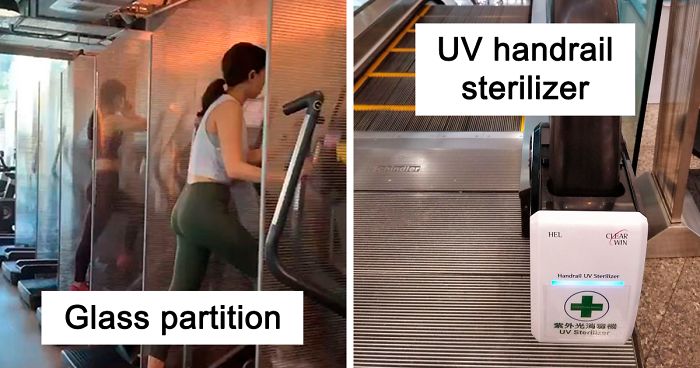
The photos would look hopeful, but also strange. Tape on floors. Stickers on seats. Masks on statues. Sanitizer bottles at every entrance. Barriers between cashiers and customers. Teachers carrying spray bottles like they had joined a very nervous gardening club. The world reopened not by pretending the pandemic was gone, but by redesigning ordinary life one tiny inconvenience at a time.
The Biggest Difference: Trust
Policies matter, but trust may matter more. Countries with higher trust in public institutions often found it easier to ask citizens to follow shared rules. When people believed that reopening rules were based on evidence and applied fairly, compliance became easier. When people suspected rules were political, inconsistent, or unfair, every guideline became a fight.
This is one reason the U.S. experience felt so turbulent. Americans were not only debating health measures; they were debating authority, freedom, science, economics, education, and identity. In many communities, reopening was less about “How do we reduce risk?” and more about “Who gets to decide what risk is acceptable?” That is a much harder question, and it does not fit neatly on a sign outside a coffee shop.
Reopening Around the World: What Worked Best?
No country found a magic button. The strongest reopening strategies usually combined several tools: low community transmission before reopening, clear phases, testing, contact tracing, ventilation, masks in crowded indoor spaces, school-specific plans, support for isolation, and quick response when outbreaks appeared.
Public-health experts often described this as layered protection. Think of it like dressing for bad weather. A raincoat helps. Boots help. An umbrella helps. None of them makes you invincible, but together they reduce the chance that you arrive at school looking like a wet raccoon. In reopening terms, masks, ventilation, testing, vaccines, distancing, and staying home when sick all worked better together than alone.
The countries that reopened more smoothly generally did not treat reopening as a finish line. They treated it as a dial. If cases rose, restrictions could tighten. If cases fell, rules could ease. That flexibility was frustrating, but it was also realistic. Viruses do not care about press conferences, business plans, or how badly everyone wants brunch.
500 More Words: Personal and Social Experiences From the Reopening Era
The experience of reopening was deeply personal because it changed small routines that people used to perform without thinking. Before the pandemic, walking into a store meant grabbing a cart, browsing, paying, and leaving. During reopening, that same trip became a tiny obstacle course. Was there a line outside? Did the store require masks? Was there a one-way aisle system? Was the cashier behind plexiglass? Could you touch the apples, or were the apples now emotionally unavailable?
For many people, the strangest part of reopening was the emotional whiplash. One day, staying home was responsible. The next, going back to work was necessary. People were told to support small businesses but avoid crowds, send children to school but watch for symptoms, visit family but protect older relatives, enjoy public spaces but keep distance. It felt like life had become a rulebook written during a thunderstorm.
Parents carried a particularly heavy load. School reopening was not just an education issue; it was a work issue, a childcare issue, a mental-health issue, and a safety issue. Some parents were desperate for classrooms to reopen because remote learning had turned their homes into chaotic tech-support centers with snacks. Others worried about medically vulnerable relatives, crowded classrooms, or inconsistent safety rules. Teachers, meanwhile, had to become educators, health monitors, technology troubleshooters, and professional calm voices all at once.
Workers had their own reopening stories. Restaurant servers returned to tables where customers sometimes forgot rules the moment bread arrived. Retail employees had to enforce policies they did not create. Office workers debated whether productivity required pants with buttons. Healthcare workers watched the public argue about precautions while hospitals prepared for the consequences. For essential workers, reopening often meant more exposure without enough appreciation. A “thank you” sign in a window was nice, but paid sick leave would have looked better in a frame.
Social life also reopened awkwardly. People forgot how to greet each other. Handshakes became suspicious. Hugs required negotiation. Birthday parties moved outdoors. Weddings got smaller, then bigger, then smaller again. Families invented risk calculators in their heads: indoor or outdoor, vaccinated or not, crowded or spacious, quick visit or full dinner, one sneeze or suspicious seasonal allergies. Everyone became an amateur epidemiologist, which is impressive until Uncle Bob starts explaining aerosol science using barbecue smoke.
Yet reopening also revealed creativity. Restaurants built patios. Teachers used sidewalks and courtyards. Musicians performed outdoors. Museums created timed entries. Families rediscovered parks. Cities reimagined streets. People learned that normal life was not one fixed thing; it could be redesigned. Some changes were temporary, but others stuck. Outdoor dining, hybrid work, better ventilation awareness, curbside pickup, telehealth, and flexible sick-day policies all became part of the post-reopening conversation.
The most human lesson from reopening is that people wanted the same basic things: safety, income, school, connection, freedom, and a little joy. The conflict came from how differently people ranked those needs when fear, fatigue, politics, and uncertainty entered the room. Around the world, reopening looked different because societies had different tools, cultures, risks, and levels of trust. But the emotional core was shared: everyone was trying to step back into life without knowing exactly where the floor was.
Conclusion: Reopening Was a Global Mirror
Reopening around the world showed that public health is not only about rules. It is about timing, trust, communication, culture, and practical support. The U.S. experience stood out because it was decentralized, politically charged, and uneven from place to place. Other countries often appeared more coordinated, whether through strict border controls, national phases, school-specific systems, mask norms, or aggressive contact tracing.
But no country’s reopening was flawless. Every nation had to balance risk and recovery. Every government made trade-offs. Every family made decisions with incomplete information. The most successful reopening strategies were not the loudest or fastest. They were the ones that treated reopening as a careful process, not a victory lap.
If those 32 pictures teach us anything, it is this: “normal” is surprisingly flexible. It can wear a mask, stand on a sticker, eat dinner on a sidewalk, learn math outdoors, scan a QR code, and still keep going. The world reopened in different ways, but everywhere, people were trying to answer the same question: how do we live again without pretending nothing happened?