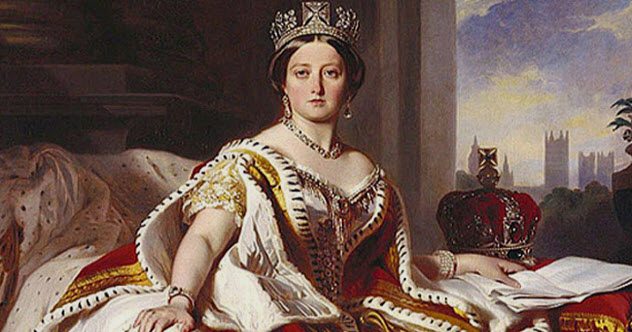

Queen Victoria is usually remembered as a stern widow wrapped in black, staring into the middle distance as though someone had just tracked mud across the palace carpet. That familiar image, however, represents only one chapter of a far more complicated life.
Born in 1819, Victoria became queen at 18 and ruled for more than 63 years. During that time, Britain experienced industrial expansion, political reform, scientific breakthroughs, imperial conquest, social upheaval, and enough elaborate furniture to make every modern minimalist break into a nervous sweat.
Behind the official portraits was an emotional, stubborn, curious, and sometimes contradictory woman. She proposed marriage to Prince Albert, experimented with new technology, survived repeated attacks, studied Hindustani, disliked pregnancy, and helped transform everything from wedding fashion to public mourning. These surprising facts about Queen Victoria reveal a monarch who was much more humanand much less predictablethan her famously serious photographs suggest.
10 Fascinating Queen Victoria Facts
1. Queen Victoria Was Born Alexandrina Victoria
The future queen did not enter the world with the compact, marketable name by which history remembers her. She was christened Alexandrina Victoria, with “Alexandrina” honoring her godfather, Tsar Alexander I of Russia. As a child, she was reportedly known as “Drina.”
When she became monarch in 1837, she signed official documents simply as Victoria. The choice was more than a convenient name edit. It helped separate the young queen from a childhood in which adults had attempted to control nearly every part of her identity.
The name Victoria also proved remarkably useful for public branding. It eventually labeled an age, an architectural style, a moral code, a fashion aesthetic, and a seemingly endless collection of sofas designed to discourage relaxed sitting. Few people have transformed their middle name into an entire civilization’s adjective.
2. Her Childhood Was Controlled by the “Kensington System”
Victoria’s royal childhood was privileged, but it was hardly carefree. After her father died when she was still an infant, she grew up at Kensington Palace under a strict collection of rules known as the Kensington System.
The system was developed by her mother, the Duchess of Kent, and the duchess’s adviser, John Conroy. Victoria’s activities, education, friendships, and movements were closely supervised. She was rarely permitted to be alone and was even expected to hold an adult’s hand while using the stairs.
The apparent goal was to make the princess dependent on her mother and Conroy, allowing them to exercise influence if she inherited the throne while still young. Instead, the system produced the opposite result. Victoria came to resent Conroy intensely and distanced herself from his control after becoming queen.
This difficult upbringing helps explain several features of her adult personality: her fierce attachment to personal independence, her emotional intensity, and her determination to decide who belonged in her private circle. The palace may have been luxurious, but Victoria’s early life shows that a gilded cage still comes with bars.
3. She Proposed Marriage to Prince Albert
In the standard fairy-tale version of royal romance, a prince kneels before a princess and nervously produces a ring. Victoria and Albert reversed the script.
Because Victoria was already the reigning monarch, court convention meant that Albert could not formally propose to her as an ordinary suitor might. During his visit to Windsor Castle in October 1839, Victoria initiated the marriage proposal herself. Albert accepted, and they married on February 10, 1840.
The match had been encouraged by relatives, and Victoria and Albert were first cousins. Nevertheless, surviving diary entries indicate that Victoria was genuinely captivated by him. She admired his appearance, intelligence, musical ability, and seriousness. Their marriage became both an emotional partnership and a political working relationship, although it was not free from arguments or struggles over authority.
The proposal is surprising because it challenges the passive image later associated with respectable Victorian womanhood. Victoria may have publicly promised to obey her husband during the wedding ceremony, but she was still the sovereignand she was the one who started the engagement.
4. She Did Not Invent the White Wedding Dressbut She Made It Famous
Queen Victoria is frequently described as the inventor of the white wedding dress. That is not entirely accurate. Brides had worn white before 1840, but it was not yet the dominant Western wedding uniform.
Royal brides traditionally favored rich colors, metallic embroidery, velvet, jewels, and other visual reminders that their family possessed a considerably larger clothing budget than everyone watching. Victoria instead chose a white satin gown decorated with Honiton lace. She wore an orange-blossom wreath rather than a crown.
The choice highlighted British-made lace and presented Victoria as a romantic bride rather than merely a political monarch. Newspaper reports, illustrations, paintings, and later reproductions spread the image widely. As photography and mass media developed, white bridal gowns became increasingly fashionable among wealthy women and eventually among the broader public.
Victoria therefore did not create the first white wedding dress. She did something culturally more powerful: she turned it into the dress millions of brides believed they were supposed to want. That is influence worthy of a modern fashion campaign, achieved without a single sponsored social-media post.
5. She Had Nine Children but Strongly Disliked Pregnancy
Victoria and Albert had nine children between 1840 and 1857. Their growing family became central to the monarchy’s public image, with paintings and photographs presenting the royal household as a model of respectable domestic life.
Privately, Victoria’s feelings were far less sentimental. She disliked pregnancy, feared childbirth, and complained about the physical and emotional demands of motherhood. She referred to pregnancy as the dark or “shadow” side of marriage and was not especially fond of newborn babies.
Her experience also played an important role in medical history. In 1853, physician John Snow administered chloroform during the birth of Victoria’s eighth child, Prince Leopold. She used it again when Princess Beatrice was born in 1857. At the time, pain relief during labor faced religious, moral, and medical opposition.
Because the queen used chloroform and approved of the relief it provided, the procedure gained considerable social legitimacy. Her decision did not single-handedly settle every medical debate, but it helped make obstetric anesthesia more acceptable. In this case, royal influence was not merely fashionable; it changed attitudes toward women’s pain.
6. Her Family Spread Royal Connectionsand HemophiliaAcross Europe
Victoria’s children and grandchildren married into many European royal houses, earning her the nickname “the grandmother of Europe.” Her descendants were connected to the ruling families of Germany, Russia, Spain, Romania, Greece, Norway, Sweden, and several other countries.
These marriages created an extraordinary network of royal cousins. By the early 20th century, monarchs who faced one another across political alliances and battle lines were sometimes close relatives. Family photographs could look like diplomatic summits in which everyone had accidentally worn military uniforms.
The family tree also transmitted hemophilia, an inherited disorder that prevents blood from clotting normally. Victoria’s son Leopold had the condition, while her daughters Alice and Beatrice carried the genetic mutation into other royal families. Their descendants included children in the Russian and Spanish royal houses who suffered from the disease.
Genetics was not understood during most of Victoria’s lifetime, so no one could have predicted how widely the mutation would travel. Her family history later became one of the best-known examples used to explain sex-linked genetic inheritance. The “grandmother of Europe” shaped international dynasties in ways that were political, personal, and biological.
7. She Survived Eight Assassination Attempts and Attacks
Victoria’s long reign could have ended much earlier. Historians traditionally count eight assassination attempts or serious attacks against her, beginning in 1840 when Edward Oxford fired pistols at the royal carriage.
Other incidents followed. John Francis attempted to shoot her twice in 1842. John William Bean aimed a weapon loaded with paper and tobacco. In 1850, former army officer Robert Pate struck Victoria on the head with a cane. The final shooting attempt occurred in 1882 when Roderick Maclean fired toward her carriage near Windsor station.
Some weapons failed, some attackers missed, and several perpetrators were later judged mentally ill. Victoria was physically injured during the cane attack but recovered.
Her behavior following these incidents was remarkably defiant. After some attacks, she continued appearing in public rather than retreating indefinitely behind palace walls. Public sympathy often increased after an attempt on her life, turning would-be assassins into accidental contributors to royal popularity.
Eight attacks sound excessive even by the standards of a turbulent century. Most people would reconsider open-carriage travel after the second pistol. Victoria, apparently, regarded danger as an irritating interruption to the schedule.
8. Queen Victoria Was an Early Photography Enthusiast
The grim photographic portraits associated with Victoria can create the impression that she disliked cameras. In reality, she and Prince Albert were enthusiastic supporters of photography during the medium’s early development.
The royal couple collected photographs, commissioned portraits, supported photographers, attended exhibitions, and recognized that the camera could serve artistic, historical, and political purposes. Photography allowed the monarchy to distribute carefully constructed images of royal family life to an expanding public.
Victoria also lived long enough to appear in moving pictures. Rare film from her 1900 visit to Ireland shows the elderly queen sitting in a carriage, wearing sunglasses, accepting flowers, and briefly smiling. The footage is striking because it replaces the frozen monarch of formal portraiture with a living person reacting to the world around her.
Her use of photography was an early form of image management. Family portraits emphasized stability, mourning photographs communicated devotion to Albert, and jubilee images projected imperial continuity. Victoria understood a lesson modern public figures know extremely well: the camera does not merely record authority; it helps manufacture it.
9. The Empress of India Never Visited Indiabut Studied Hindustani
Victoria received the title Empress of India in 1876, and the title was formally proclaimed at the Delhi Durbar in 1877. Yet she never traveled to India, the vast territory over which she symbolically ruled.
Late in life, she developed a close relationship with Abdul Karim, an Indian servant who arrived in Britain during her Golden Jubilee year in 1887. Karim became her teacher, secretary, and confidant. Victoria referred to him as her “Munshi,” a term associated with a teacher or language instructor.
Under Karim’s guidance, Victoria studied Hindustani, wrote exercises in notebooks, learned about Indian culture, and developed an interest in Indian food. Their friendship angered members of the royal household, some of whom objected to Karim’s social position, religion, influence, and ethnicity.
The relationship reveals both curiosity and contradiction. Victoria showed personal warmth toward Karim and expressed concern for Indian subjects, yet she remained the symbolic head of an imperial system built on unequal power, economic exploitation, and political domination. Studying a language did not erase the realities of empire, but it complicates the image of a monarch entirely uninterested in the cultures governed in her name.
10. Her Private Grief Became a Public Cultural Force
Prince Albert died in December 1861 at only 42 years old. Victoria was devastated and withdrew from many public duties. She wore black for the rest of her life, preserved rooms and personal objects associated with Albert, commissioned memorial works, and repeatedly presented herself as his grieving widow.
Extended mourning traditions already existed, especially among the upper classes, but Victoria’s behavior gave them unmatched visibility. Mourning clothing, jewelry, etiquette, memorial photography, and rituals surrounding death became major parts of Victorian culture.
Her prolonged withdrawal also created a political problem. Many subjects questioned why the queen remained absent from public life while continuing to receive public funding. Republican sentiment increased, and ministers pressured her to resume more visible duties.
Over time, however, the image of the devoted widow became central to Victoria’s public identity. Her grief appeared sincere because it was sincere, but it also developed political power. The black dress communicated loyalty, sacrifice, continuity, and personal suffering.
Victoria’s mourning demonstrates how private emotion can become public symbolism. She did not merely grieve within Victorian culture; her behavior helped define what “Victorian grief” looked like for generations afterward.
What These Queen Victoria Facts Reveal
Queen Victoria’s life cannot be reduced to either heroic nostalgia or simple condemnation. She was a restricted child who became a determined sovereign, a powerful queen who declared obedience in marriage, a mother of nine who disliked pregnancy, and an empress who studied an Indian language while presiding over a deeply unequal empire.
Her reign coincided with enormous technological and social change, but she was not merely an observer. Her choices influenced medicine, photography, marriage customs, mourning practices, royal public relations, and European dynastic politics.
At the same time, the term “Victorian” should not be treated as a synonym for everything that happened between 1837 and 1901. Governments, inventors, activists, workers, writers, scientists, colonized peoples, and reformers shaped the period alongside the queen. Victoria was its most recognizable symbol, not its sole author.
The most surprising fact may therefore be that the solemn woman in black was never a simple figure. She was emotional, modern, conservative, curious, controlling, vulnerable, and politically significantsometimes all before lunch.
Experiencing Queen Victoria’s World Beyond the Top 10 Facts
The most rewarding way to experience Queen Victoria’s history is to move beyond memorizing dates and approach her life through places, images, objects, and personal writing. Each method reveals a different Victoria, and the contradictions between them are precisely what make the subject so compelling.
Begin With Her Journals and Letters
Reading selections from Victoria’s journals can feel surprisingly intimate. The formal monarch disappears, replaced by a young woman who comments on handsome men, family arguments, music, food, travel, childbirth, political personalities, and moments of overwhelming grief.
A useful exercise is to compare entries from different stages of her life. Place an enthusiastic description of Albert from the 1830s beside a mourning entry written after 1861. Then compare both with her late-life observations about Abdul Karim. This reveals how her emotional world changed while certain traitspossessiveness, curiosity, strong opinions, and a gift for dramatic emphasisremained remarkably consistent.
Study the Images as Carefully as the Words
Queen Victoria’s portraits should not be treated as transparent snapshots. Look at what each image is trying to communicate. A youthful coronation portrait emphasizes legitimacy and freshness. Family photographs present domestic stability. Widowhood portraits transform personal loss into moral authority. Jubilee photographs communicate longevity and imperial power.
Then watch the surviving 1900 film footage. Seeing Victoria move, smile, and respond to people can instantly challenge the stereotype created by still photography. It is a useful reminder that historical figures were not born in sepia. They laughed, complained, became impatient, and adjusted uncomfortable clothing just as modern people do.
Follow the Geography of Her Life
Victoria’s story becomes clearer when connected to its major settings. Kensington Palace represents her controlled childhood and sudden accession. Buckingham Palace reflects the public business of monarchy. Windsor Castle served as both a working residence and a center of family life. Osborne House expressed Victoria and Albert’s desire for privacy, while Balmoral became associated with Scotland, outdoor life, and the queen’s later relationships with trusted servants.
Even without visiting Britain, readers can explore museum collections, digitized letters, architectural plans, paintings, clothing, photographs, and newspaper archives online. Building a virtual map of these locations turns an abstract biography into a physical journey.
Examine the Everyday Objects
A wedding dress, mourning brooch, language notebook, family photograph, or handwritten diary page can explain more than a grand political speech. These objects show how power was expressed through daily habits.
Victoria’s white gown demonstrates how elite fashion becomes mass tradition. Her Hindustani exercises reveal curiosity that official imperial portraits rarely convey. Her mourning jewelry shows how grief became wearable. Her photographs illustrate how a royal family could be presented as both extraordinary and reassuringly domestic.
Keep the Contradictions in View
The richest experience comes from resisting the temptation to make Victoria either lovable or monstrous. Admiring her determination does not require ignoring imperial violence. Criticizing her politics does not require pretending her grief was fake. History becomes more useful when people are allowed to remain complicated.
Approached this way, the top 10 surprising facts about Queen Victoria become more than entertaining trivia. They become entry points into questions about gender, monarchy, medicine, media, family, genetics, celebrity, colonialism, and the creation of public identity. Victoria’s world may appear distant, but many of its central questionswho controls an image, how private life affects public leadership, and why famous people become symbolsremain extremely modern.