Best Beer-Battered Fish Sandwiches Recipe – How To Make Beer-Battered Fish Sandwiches

Note: This recipe is written as a family-friendly, pub-style fish sandwich using cold sparkling water to create the same light, fizzy batter texture people associate with beer-battered fish. The result is crisp, golden, flaky, and sandwich-shop worthy without requiring alcoholic ingredients.
If a great fish sandwich had a résumé, it would list “crunchy,” “juicy,” “tangy,” and “dangerously good with fries” under special skills. The best beer-battered fish sandwiches are all about contrast: a shatteringly crisp coating, tender white fish, creamy tartar sauce, cool lettuce or slaw, and a soft toasted bun that bravely holds everything together without collapsing like a soggy paper towel.
This recipe gives you that classic pub-style experience at home with simple ingredients and a smart method. The secret is not complicated. Use mild white fish, keep the batter cold, add cornstarch for crunch, fry at the right temperature, and build the sandwich with toppings that cut through the richness. Think of it as a tiny engineering project, except the final structure is edible and covered in tartar sauce.
Why This Fish Sandwich Recipe Works
A great battered fish sandwich depends on three things: the fish, the batter, and the build. Mild white fish such as cod, haddock, pollock, halibut, or flounder works beautifully because it cooks quickly, flakes easily, and does not overpower the sauce or toppings. The batter uses flour for structure, cornstarch for crispness, baking powder for lift, and cold sparkling water for bubbles. Those bubbles help create an airy coating that fries up light instead of thick and doughy.
The sandwich build matters just as much. A soft brioche bun or potato roll gives the fish a tender landing pad. Tartar sauce adds tang and creaminess. Pickles bring snap. Shredded lettuce or slaw adds crunch. A squeeze of lemon wakes everything up like a tiny citrus alarm clock.
Ingredients for the Best Beer-Battered Fish Sandwiches
For the Fish
- 1 1/2 pounds mild white fish fillets, cut into 4 sandwich-size portions
- 1 teaspoon kosher salt, plus more to finish
- 1/2 teaspoon black pepper
- 1/2 cup all-purpose flour, for dredging
- Neutral oil for frying, such as canola, vegetable, or peanut oil
For the Crispy Batter
- 1 cup all-purpose flour
- 1/2 cup cornstarch
- 1 teaspoon baking powder
- 1 teaspoon paprika
- 1/2 teaspoon garlic powder
- 1/2 teaspoon onion powder
- 1/4 teaspoon cayenne pepper, optional
- 3/4 teaspoon kosher salt
- 1 cup very cold sparkling water, plus 1 to 2 tablespoons more if needed
For the Tartar Sauce
- 3/4 cup mayonnaise
- 2 tablespoons finely chopped dill pickles or relish
- 1 tablespoon capers, chopped
- 1 tablespoon lemon juice
- 1 teaspoon Dijon mustard
- 1 tablespoon chopped fresh parsley or dill
- Black pepper, to taste
For Assembling
- 4 brioche buns, potato rolls, or soft sandwich buns
- Butter or mayonnaise for toasting the buns
- Shredded lettuce, cabbage slaw, or leaf lettuce
- Dill pickle slices
- Tomato slices, optional
- Lemon wedges
Best Fish for Beer-Battered Fish Sandwiches
Cod is the classic choice because it is mild, flaky, and sturdy enough to handle batter and frying. Haddock is another excellent option with a slightly sweeter flavor. Pollock is budget-friendly and commonly used in fish sandwiches because it has a clean taste and soft texture. Halibut tastes luxurious, but it costs more and can dry out if overcooked. Flounder is delicate and delicious, though it needs gentle handling.
Whatever fish you choose, look for fillets that are skinless, boneless, and roughly the same thickness. Uniform pieces cook evenly, which means nobody gets one perfect fillet and one sad little overcooked fish plank.
How To Make Beer-Battered Fish Sandwiches
Step 1: Make the Tartar Sauce
In a small bowl, stir together mayonnaise, chopped pickles, capers, lemon juice, Dijon mustard, herbs, and black pepper. Taste and adjust. Want more tang? Add lemon. Want more crunch? Add pickles. Want it extra bold? Add a pinch of cayenne or a few drops of hot sauce. Cover and refrigerate while you prepare the fish.
Step 2: Prepare the Fish
Pat the fish very dry with paper towels. Moisture is the enemy of crispy batter. Season both sides with salt and pepper. Let the fish sit for 10 minutes while you heat the oil and mix the batter. This short rest helps the seasoning settle into the fish.
Step 3: Heat the Oil
Pour 2 to 3 inches of neutral oil into a heavy Dutch oven or deep skillet. Heat to 350°F to 365°F. A thermometer is the easiest way to stay accurate. If the oil is too cool, the batter absorbs oil and turns heavy. If it is too hot, the outside browns before the fish cooks through. Hot oil is not the time for guesswork, bravery, or multitasking with social media.
Step 4: Mix the Batter
In a bowl, whisk together flour, cornstarch, baking powder, paprika, garlic powder, onion powder, cayenne, and salt. Add very cold sparkling water and stir just until combined. A few small lumps are fine. Overmixing can make the coating tough, and nobody came here for fish wrapped in a fried sweater.
Step 5: Dredge and Dip
Place the extra flour in a shallow dish. Lightly coat each fish fillet in flour, shaking off the excess. This dry layer helps the batter cling. Dip the fish into the batter, let the extra drip back into the bowl, then carefully lower it into the hot oil.
Step 6: Fry Until Golden and Crisp
Fry 1 to 2 pieces at a time, depending on the size of your pot. Do not crowd the oil. Cook for 3 to 5 minutes, turning once if needed, until the batter is golden brown and the fish is opaque and flakes easily. The safe internal temperature for fish is 145°F. Transfer the fried fish to a wire rack set over a baking sheet. Sprinkle lightly with salt while hot.
Step 7: Toast the Buns
Spread the cut sides of the buns with butter or a thin layer of mayonnaise. Toast in a skillet until golden. This step adds flavor and creates a barrier that helps keep the bun from getting soggy. It is a small move with big sandwich energy.
Step 8: Build the Sandwich
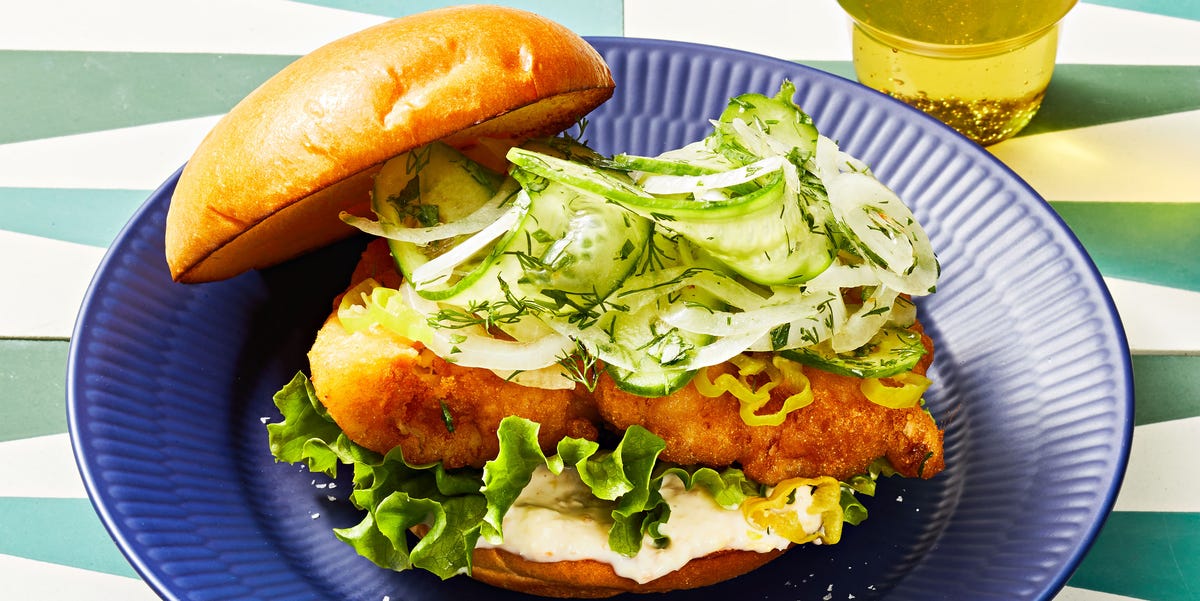
Spread tartar sauce on both sides of the bun. Add lettuce or slaw to the bottom bun, place the crispy fish on top, then add pickles, tomato if using, and another spoonful of sauce. Finish with the top bun and serve immediately with lemon wedges.
Pro Tips for Extra-Crispy Fish Sandwiches
Keep the Batter Cold
Cold batter hitting hot oil creates a crisp, light shell. Keep the sparkling water chilled until the last moment. If your kitchen is warm, place the batter bowl over another bowl filled with ice.
Use Cornstarch for Crunch
Cornstarch lightens the coating and helps create that delicate crispness you want in a fried fish sandwich. Flour alone can work, but flour plus cornstarch gives the batter a better snap.
Drain on a Wire Rack
Paper towels can trap steam under fried food. A wire rack lets air circulate around the fish so the bottom stays crisp. This is the difference between “wow” and “why is my sandwich wearing a damp coat?”
Season in Layers
Season the fish, season the batter, and add a tiny pinch of salt after frying. Layered seasoning makes the sandwich taste balanced from crust to center.
Best Toppings for Beer-Battered Fish Sandwiches
The best toppings add freshness, acidity, and crunch. Shredded iceberg lettuce gives a classic fast-casual feel. Cabbage slaw adds more texture and holds up well against hot fish. Pickles are practically mandatory because their acidity cuts through the richness. Tomato is optional but welcome when it is ripe and flavorful.
For a spicy version, add jalapeño slices, hot sauce, or chipotle mayo. For a coastal-style sandwich, use lemony slaw and fresh dill. For a Southern-inspired twist, add chowchow or a creamy pepper slaw. The fish is the star, but the toppings are the backup singers making the chorus work.
What To Serve With Crispy Fish Sandwiches
French fries are the obvious choice, and they are obvious because they are correct. Potato chips, hush puppies, coleslaw, cucumber salad, roasted corn, or a simple green salad also work well. If you want something lighter, serve the sandwich with vinegar slaw or a citrusy cabbage salad. If you want full comfort-food mode, add fries and extra tartar sauce. No judgment. This is a fish sandwich, not a tax audit.
Storage and Reheating Tips
Beer-battered fish sandwiches are best eaten right away, when the coating is crisp and the fish is hot. If you have leftovers, store the fried fish separately from the buns and toppings. Refrigerate in an airtight container for up to 2 days.
To reheat, place the fish on a wire rack over a baking sheet and warm in a 375°F oven or air fryer until hot and crisp. Avoid the microwave unless you enjoy turning crispy food into a steamy fish pillow.
Recipe Variations
Spicy Fish Sandwich
Add cayenne to the batter and mix hot sauce into the tartar sauce. Top with pickled jalapeños and shredded lettuce.
Lemon-Dill Fish Sandwich
Add lemon zest and chopped dill to the tartar sauce. Serve with cucumber slices and crisp lettuce.
Southern-Style Fish Sandwich
Use catfish or cod, add a pinch of Cajun seasoning to the batter, and top with creamy slaw and pickles.
Extra-Crunchy Fish Sandwich
Replace 2 tablespoons of the flour with rice flour for an even lighter crunch. Keep the batter thin enough to coat the fish without clumping.
Common Mistakes To Avoid
Using wet fish: Always pat the fillets dry before seasoning and dredging. Wet fish makes batter slide off.
Overmixing the batter: Stir just until combined. A slightly lumpy batter is better than a tough one.
Crowding the pot: Too much fish lowers the oil temperature and leads to greasy results. Fry in batches.
Skipping the thermometer: Oil temperature matters. A thermometer helps you fry with confidence instead of vibes.
Building too early: Assemble the sandwiches right before serving so the buns and toppings stay fresh.
My Experience Making the Best Beer-Battered Fish Sandwiches at Home
The first time I made a pub-style fish sandwich at home, I learned a very important kitchen truth: crispy fish does not forgive impatience. I had the fish ready, the buns waiting, the tartar sauce chilling, and the confidence of someone who had watched exactly enough cooking videos to become dangerous. Then I dropped too many fillets into the pot at once. The oil temperature fell, the batter absorbed oil, and the fish came out looking less “golden and crisp” and more “tired after a long day.”
The next round was much better because I slowed down. I fried fewer pieces at a time, kept the batter cold, and let the oil climb back to temperature between batches. That small adjustment changed everything. The coating puffed lightly, the fish stayed tender, and the crust made that tiny crackle sound when bitten. That sound is important. It is the applause of fried food.
I also learned that the sandwich is only as good as its balance. The fish can be perfect, but if the bun is cold, the sauce is bland, or the toppings are limp, the whole thing feels unfinished. Toasting the bun became non-negotiable. So did adding pickles. A fried fish sandwich needs acidity the way a movie needs a good ending. Without it, everything feels a little too heavy.
Homemade tartar sauce was another turning point. Store-bought sauce works in a pinch, but a quick homemade version tastes brighter and fresher. The combination of mayonnaise, pickles, capers, lemon juice, Dijon, and herbs gives the sandwich a clean tang that cuts through the fried coating. It takes five minutes and makes the sandwich taste like it came from a place with a chalkboard menu and excellent fries.
One of my favorite experiments was swapping plain lettuce for a quick cabbage slaw. I tossed shredded cabbage with lemon juice, a spoonful of mayo, a pinch of salt, and a little black pepper. The slaw stayed crunchy even against the hot fish, and it gave every bite more texture. For a casual weeknight dinner, lettuce is easy. For guests, slaw makes the sandwich feel special without creating extra chaos in the kitchen.
The biggest lesson is that great fish sandwiches are about timing. Make the sauce first. Prep the toppings before frying. Toast the buns while the oil heats. Fry the fish last. Once the fish comes out of the oil, the clock starts ticking. You want to build and serve while that crust is still crisp and the inside is still juicy. This is not the kind of dinner that improves after sitting around while everyone debates what to watch.
After several batches, this became my favorite method because it is reliable. The sparkling batter gives a crisp pub-style coating, the fish stays moist, and the sandwich feels indulgent without being fussy. It is the kind of meal that makes people go quiet for the first few bites, which is usually the highest compliment a sandwich can receive.
Conclusion
The best beer-battered fish sandwiches are crispy, flaky, tangy, and easy to love. With mild white fish, a cold sparkling batter, hot oil, homemade tartar sauce, and a toasted bun, you can make a restaurant-quality fish sandwich right in your own kitchen. The keys are simple: dry the fish well, keep the batter cold, fry in small batches, and assemble the sandwich just before serving.
Whether you top it with pickles and lettuce or go all-in with slaw and spicy sauce, this recipe delivers the kind of crunch that makes dinner feel like an event. Serve it with fries, chips, or a bright salad, and you have a homemade fish sandwich that tastes fresh, satisfying, and just a little bit legendary.