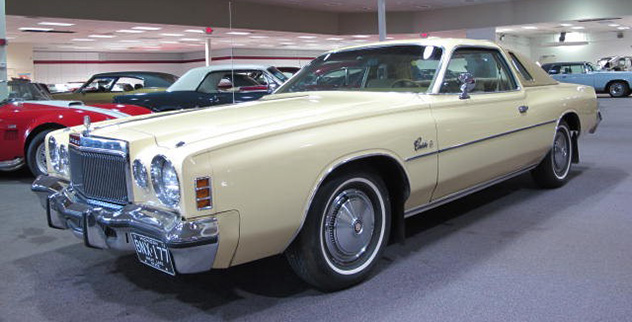

The 1970s gave America disco, waterbeds, bell-bottoms, and cars that sometimes looked as if a living room, a casino, and a yacht club had been blended into one gas-guzzling object. It was a strange, fascinating decade for automotive design. Detroit was dealing with new safety rules, stricter emissions standards, fuel crises, rising import competition, and changing consumer tastes. In response, automakers often compensated with comfort, chrome, vinyl, fake wood, padded everything, and enough “luxury” branding to make a couch feel underdressed.
To be fair, many 1970s cars are now charming classics. A Lincoln Continental Mark V, Pontiac Firebird Trans Am, Chevrolet Monte Carlo, Chrysler Cordoba, Cadillac Eldorado, AMC Matador, or Ford LTD can still stop people in their tracks at a car show. But charm and tackiness can ride in the same lane. The decade’s automotive features were bold, theatrical, and occasionally baffling. Some were practical ideas buried under questionable styling. Others were pure showroom drama.
This guide ranks the top 10 tacky automotive features of the 1970s, with real examples, historical context, and affectionate teasing. Buckle up; the seat may be covered in crushed velour.
Why 1970s Car Features Became So Over-the-Top
The 1970s were not an easy time for American automakers. The Clean Air Act pushed manufacturers toward cleaner engines, catalytic converters, unleaded gasoline, exhaust gas recirculation, and lower compression ratios. Safety rules brought larger bumpers. The 1973 oil crisis made fuel economy matter in a way many buyers had never seriously considered. Meanwhile, the muscle car era was fading, horsepower ratings dropped, and automakers needed new ways to sell excitement.
When raw speed became harder to advertise, style had to shout louder. That is why the decade leaned into personal luxury coupes, padded roofs, opera windows, bold graphics, extra trim, plush interiors, and “special edition” packages. Cars became rolling statements. Sometimes the statement was, “I am elegant.” Sometimes it was, “I own four leisure suits and one extremely confident mustache.”
Top 10 Tacky Automotive Features of the 1970s
1. Vinyl Roofs That Pretended Every Car Was a Limousine
If one feature defines 1970s automotive tackiness, it is the vinyl roof. Originally, vinyl tops suggested the look of an old convertible carriage or a formal luxury car. By the 1970s, they appeared on everything from premium personal luxury coupes to ordinary sedans trying very hard to look like they had a trust fund.
Full vinyl roofs, half vinyl roofs, landau roofs, halo roofs, canopy roofs, padded carriage roofsDetroit treated vinyl like seasoning and poured it on generously. Models such as the Chevrolet Monte Carlo, Chrysler Cordoba, Ford Thunderbird, Lincoln Continental Mark IV, and Cadillac Eldorado wore vinyl tops with total confidence. Some looked elegant. Others looked like someone glued a handbag to the roof.
The tacky part was not only the material; it was the message. A vinyl roof promised old-world sophistication while usually covering a mass-produced steel body. It could trap moisture, fade, crack, and age badly, but in the showroom it whispered, “Luxury.” In reality, it sometimes whispered, “Future rust repair.”
2. Opera Windows: Tiny Portholes for Maximum Drama
Opera windows were small fixed windows placed in the C-pillars, often surrounded by padded vinyl. They were especially common on American personal luxury coupes. The 1972–1976 Lincoln Continental Mark IV helped popularize the oval opera window look, and soon similar windows appeared across Detroit.
In theory, opera windows improved visibility and added a formal, carriage-inspired touch. In practice, they made cars look like they were prepared to attend a black-tie event at sea. The small glass openings were often too tiny to be truly useful, yet too dramatic to ignore. Some were oval, some rectangular, and some came with decorative emblems that made the whole design feel like jewelry for a 5,000-pound coupe.
Still, opera windows have become beloved because they capture the decade perfectly. They were unnecessary, theatrical, and oddly irresistible. If a 1970s car had an opera window, it was not merely transportation. It was a conversation starter with whitewall tires.
3. Landau Bars That Suggested a Convertible Without the Fun
Landau bars were decorative S-shaped ornaments attached to the vinyl roof area, meant to evoke folding carriage hardware from a much earlier era. On actual convertibles or horse-drawn landaus, similar hardware had a purpose. On 1970s coupes, it was mostly costume jewelry.
The landau bar became a visual shortcut for luxury. It said, “This car has class,” even when the car underneath was a standard two-door with extra trim. Combined with padded vinyl and opera windows, landau bars created the ultimate 1970s formal-roof package. The result was often less “European aristocrat” and more “suburban nightclub owner.”
That said, landau bars are delightfully honest about the era’s priorities. The 1970s loved symbolism. If something looked expensive, that was almost as good as being expensive. A shiny little bar on the side of the roof could transform a regular coupe into a personal luxury statementor at least into something that photographed well in a newspaper ad.
4. Fake Woodgrain Paneling on Station Wagons
The faux woodgrain station wagon is one of the most recognizable American family-car images of the 1970s. Real wood-bodied “woodie” cars had roots in earlier decades, but by the 1970s, most woodgrain was simulated with vinyl film or plastic trim. It appeared on Ford Country Squire wagons, Mercury Colony Parks, Chevrolet Caprice Estates, Plymouth Furys, and many other family haulers.
Fake woodgrain was meant to suggest craftsmanship, warmth, and country-club charm. But when slapped onto a giant station wagon with acres of brown paneling, it could also look like a basement rec room escaped onto the highway. These wagons were practical, roomy, and beloved by families. They also looked as if they came with a complimentary fondue set.
The tackiness came from the illusion. Nobody thought the side of a 1977 wagon was made from hand-finished mahogany. Everyone understood it was a decorative skin. Yet buyers loved it because it made a family car feel special. Today, faux woodgrain has become nostalgic, but in its prime it was peak domestic kitsch.
5. Crushed Velour Interiors That Turned Cars Into Sofas
Step inside many 1970s luxury cars and you entered a world of velour, velvet-like fabric, thick cushions, and button-tufted seating. Automakers sold softness as sophistication. Cars such as the Lincoln Continental, Cadillac DeVille, Oldsmobile Ninety-Eight, Chrysler New Yorker, and Mercury Grand Marquis often offered interiors that felt less like cockpits and more like lounges.
Velour had real appeal. It was comfortable, warm-looking, and less slippery than vinyl or leather. But the execution could be spectacularly excessive. Seats became overstuffed. Door panels grew plush. Color choices included burgundy, avocado, harvest gold, chocolate brown, and shades of blue that looked borrowed from a motel carpet.
When paired with wood-look trim and a thin steering wheel, a velour interior could make driving feel like piloting a rolling sofa. Was it tacky? Absolutely. Was it comfortable? Also absolutely. This is where 1970s cars confuse the critic: the bad taste often felt wonderful.
6. “Rich Corinthian Leather” and Luxury Marketing Magic
The Chrysler Cordoba became famous in the mid-1970s partly because of Ricardo Montalbán’s smooth advertising delivery and the phrase “rich Corinthian leather.” The phrase sounded exotic, refined, and expensive. It also became one of the most memorable examples of 1970s automotive marketing.
The brilliance of the phrase was that it sold atmosphere more than material. The Cordoba was an intermediate personal luxury coupe, not a European grand tourer. Yet the advertising made it feel elegant, tasteful, and worldly. In a decade when buyers wanted comfort and status, language mattered almost as much as horsepower.
The tackiness lies in the theatrical branding. “Leather” was no longer just upholstery; it was a lifestyle. The same era that gave us padded roofs and opera windows also gave us interior descriptions that sounded like wine labels. The Cordoba remains a classic example of how 1970s cars did not merely sell transportation. They sold fantasy, preferably with soft seats and a serious voice-over.
7. Giant 5-MPH Bumpers That Looked Like Chrome Park Benches
Federal bumper standards changed the look of American cars in the 1970s. Starting with the 1973 model year and tightening for 1974, passenger cars had to better withstand low-speed impacts without damage to safety-related equipment. The goal made sense: reduce repair costs and protect important components. The styling results were often less graceful.
Many cars received large, protruding bumpers that looked bolted on after the design team had already gone home. Chrome bumpers grew heavier, thicker, and more awkward. On some models, they stuck out like diving boards. On others, they disrupted previously clean body lines.
The tacky part was not the safety purpose. Safer, more durable cars were a serious goal. The problem was the early adaptation. Automakers had to respond quickly, and many designs looked like emergency solutions. A sleek early-1970s body could suddenly gain a pair of massive metal lips. It was not subtle. Then again, subtlety was not the decade’s favorite hobby.
8. Over-the-Top Hood Decals and Tape Stripes
As muscle cars lost some of their horsepower swagger, graphics got louder. The most famous example is the Pontiac Firebird Trans Am hood bird, often nicknamed the “screaming chicken.” Introduced as a Trans Am hood decal option in the early 1970s, it became an icon, especially after the black-and-gold Trans Am gained pop-culture immortality in the late decade.
Decals and tape stripes were not limited to Pontiac. Dodge, Plymouth, Ford, Chevrolet, AMC, and others used stripes, callouts, blackout panels, hood treatments, and special graphics to give cars visual attitude. Sometimes the graphics looked great. Other times they resembled athletic wear stretched over a car.
The tackiness came from the gap between appearance and performance. A hood scoop, stripe package, or giant bird could promise thunder even when emissions controls and insurance pressures had softened the engine’s bite. Still, the graphics worked because they gave buyers a sense of excitement. A 1970s performance car might not always be the fastest thing on the road, but it could still arrive wearing a superhero costume.
9. 8-Track Players and Dashboard Entertainment Clutter
The 8-track tape player was a defining in-car entertainment feature of the 1970s. Before cassettes fully took over, 8-tracks let drivers bring albums on the road. The format was bulky, clunky, and famous for switching tracks at awkward moments, but it gave cars a soundtrack.
Dashboards began to feel like entertainment centers. Add an 8-track player, a row of tapes, a cigarette lighter, an ashtray, perhaps an aftermarket equalizer, and suddenly the front seat became a mobile rec room. Later in the decade, cassette decks gained ground, but the 8-track remained an unmistakable symbol of the era.
The tackiness was partly technological and partly cultural. A stack of plastic cartridges sliding around the cabin looked messy, and the audio experience could be hilariously imperfect. But there is romance in it too. A 1970s road trip with an 8-track of Fleetwood Mac, the Eagles, or Earth, Wind & Fire has more personality than a silent touchscreen ever will.
10. CB Radios and Antennas for Everyday Highway Heroes
The CB radio craze exploded in the 1970s, boosted by trucking culture, road movies, novelty songs, and a national fascination with highway communication. Drivers adopted handles, learned radio slang, and mounted antennas on cars that otherwise had no business looking like long-haul rigs.
In practical terms, CB radios helped drivers share traffic warnings, fuel information, police sightings, and road conditions. In cultural terms, they made ordinary commuters feel like outlaw truckers with a mission. A family sedan with a CB antenna suddenly looked prepared to join a convoy across three states.
The tackiness came from the performance of identity. You could be a dentist, a salesman, or a suburban dad, but with a CB handle and a microphone clipped under the dash, you were “Road Falcon” until dinner. It was silly, social, and very 1970s. Today, that analog charm feels almost wholesome.
Other Honorable Mentions From the 1970s Tacky Car Hall of Fame
Not every wild feature made the top 10, but the decade offers plenty of runners-up. Whitewall tires remained popular on luxury cars, even as performance styling moved toward raised white letters. Hood ornaments grew large enough to double as desktop sculptures. Chrome trim outlined windows, wheel openings, rocker panels, grilles, and nearly anything that stayed still long enough. Some cars had padded dashboards, padded doors, padded roofs, and seats so cushioned they seemed medically concerned about your spine.
There were also swivel seats, bold plaid cloth inserts, color-keyed wheel covers, wire-look hubcaps, fake vents, fake louvers, fake scoops, and special edition badges that sometimes promised more than the mechanical package delivered. The 1970s was a decade of appearance packages, and many automakers discovered that a stripe, badge, roof treatment, or interior fabric could create excitement without redesigning the engine.
Were 1970s Automotive Features Really That Bad?
It is easy to laugh at 1970s car design, but the decade deserves more credit than it often receives. Automakers were adapting to major changes quickly. Emissions technology was still developing. Safety regulations forced new engineering priorities. Fuel economy became a national concern. Buyers still wanted comfort, presence, and style, even as the old horsepower formula became harder to sustain.
Many tacky features were attempts to preserve glamour during a difficult transition. Vinyl roofs and opera windows made downsized or detuned cars feel luxurious. Velour interiors made long trips comfortable. Decals kept performance dreams alive. 8-track players and CB radios reflected a culture obsessed with mobility, music, and communication.
In other words, the tackiness was not random. It was a response to its time. The 1970s car was trying to be safe, clean, stylish, comfortable, affordable, and exciting all at once. Sometimes the result was awkward. Sometimes it was wonderful. Often, it was both before breakfast.
Experiences and Reflections: Living With the Tacky Charm of 1970s Cars
Anyone who has spent time around a well-preserved 1970s car knows that photos do not tell the whole story. You have to open the long, heavy door. You have to hear the latch close with a deep metallic clunk. You have to sit on a wide velour bench seat that feels more like furniture than automotive equipment. Suddenly, the tackiness becomes less like bad taste and more like time travel.
At a classic car meet, 1970s vehicles often attract a different kind of attention than perfect muscle cars from the 1960s. A Hemi car may draw admiration, but a brown station wagon with fake woodgrain draws stories. People remember family vacations, gas station maps, hot vinyl seats, grocery bags in the rear cargo area, and parents yelling, “Do not make me pull this car over.” These cars were part of everyday life, and their tacky features became emotional landmarks.
The vinyl roof, for example, may seem ridiculous today, but it once helped owners feel proud of their purchase. A mid-priced coupe with a padded landau top looked more upscale in the driveway. The owner may not have had a Cadillac budget, but the car still had presence. That matters. Cars are never just machines; they are public expressions of identity. In the 1970s, identity often came with chrome trim and a padded C-pillar.
Driving one of these cars also changes your sense of pace. Many 1970s American cars were not sharp in the modern sense. The steering could be light, the suspension soft, and the brakes less confidence-inspiring than today’s systems. But they cruise beautifully. A large coupe or sedan from the era encourages you to relax, rest one hand on the wheel, and let the hood stretch toward the horizon like the deck of a ship. The experience is not sporty; it is cinematic.
The interiors create another layer of charm. Modern cars often use black plastic, screens, and minimalist controls. A 1970s cabin may greet you with woodgrain trim, square gauges, chrome-edged knobs, patterned cloth, and an ashtray large enough to hold a sandwich. Some details are laughable, but they are tactile and memorable. You can understand why people feel nostalgic. Even the strange color combinations have personality. Green vinyl? Burgundy velour? Tan-on-brown everything? Questionable, yes. Forgettable, absolutely not.
The audio experience is equally nostalgic. An 8-track player may be outdated, but it gives the car a ritual. You choose a cartridge, push it into the slot, hear the mechanical click, and accept that the song may change tracks at the worst possible second. That imperfection is part of the fun. It reminds us that convenience is not the only measure of enjoyment.
CB radios offer the same lesson. They were social technology before smartphones made every driver reachable. The language, handles, and highway chatter gave driving a sense of community. Was it cheesy? Of course. But it was participatory. It turned empty miles into conversation.
The best way to appreciate 1970s automotive features is to see them as cultural artifacts. They tell us what buyers wanted: comfort, status, individuality, entertainment, and a little fantasy. They also reveal what automakers were struggling with: regulation, fuel economy, changing technology, and fading performance traditions. Tacky features filled the gap between old confidence and new uncertainty.
That is why these cars remain fascinating. Their excesses are visible, honest, and oddly lovable. A 1970s car does not hide its personality behind perfect design restraint. It arrives with a vinyl roof, opera windows, fake wood, soft seats, chrome bumpers, and maybe a giant bird on the hood. It may not be tasteful, but it has stories to tell. In an era when many modern cars look increasingly similar, the tacky features of the 1970s feel refreshingly human.
Conclusion
The top tacky automotive features of the 1970s were more than design mistakes. They were expressions of a decade caught between glamour and regulation, comfort and crisis, muscle-car memories and fuel-economy realities. Vinyl roofs, opera windows, landau bars, faux woodgrain, velour interiors, dramatic decals, giant bumpers, 8-track players, and CB radios all helped define the look and feel of American roads during a complicated era.
Were these features tasteful? Not always. Were they memorable? Completely. The 1970s proved that cars do not need to be perfect to be loved. Sometimes the tackiest details become the ones people remember most fondly. After all, anyone can design a sensible car. It takes a special decade to put a padded vinyl roof, oval opera windows, fake wood paneling, and a CB antenna on the same dream machine and call it luxury.
Note: This article is based on real 1970s automotive history, including period design trends, U.S. safety and emissions changes, and documented examples from American classic cars. Source links are intentionally not inserted, per publishing requirements.